
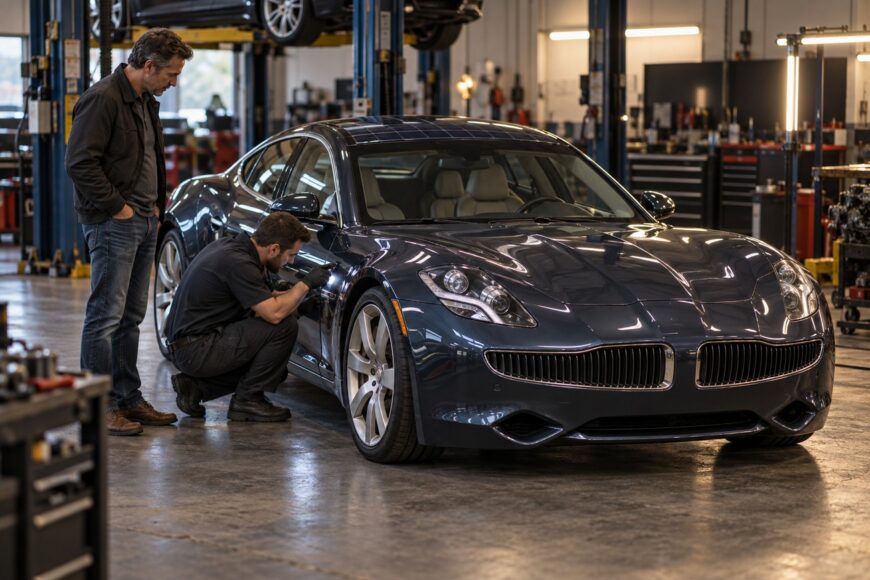
The Fisker Karma can stop you in your tracks with its low, sculpted shape. A minor electrical fault can do the same to the car, leaving an otherwise sound example stranded. That tension defines the used-car decision: the appeal is immediate, while the repair risk may only become clear after purchase.
The asking price and odometer reading tell you little about whether a particular Karma will be easy to live with. Its documented condition, storage and service history, and access to a specialist matter more than mileage alone. Before treating a promising listing as a bargain, establish who can diagnose the car near you and how they would obtain the parts it might need.
- The short verdict: who should buy a Fisker Karma now?
- What the Karma still gets right—and what its range means today
- The failure risks that matter more than the petrol engine
- Fisker Karma pre-purchase checks: evidence and deal-breakers
- Ownership costs include downtime and the exit plan
- The buying decision: when to proceed and when to walk away
- Frequently asked questions
- How much does it cost to replace the battery in a Fisker Karma?
The short verdict: who should buy a Fisker Karma now?
A Karma can make sense for an enthusiast who wants its unusual design and electric driving character, can commission an independent specialist inspection, and has room for downtime. That buyer needs a repair route as well as a purchase budget. A seller’s assurance that the car runs well is a starting point, not the evidence needed to commit.
It is a difficult choice for someone who needs dependable primary transport. Fisker Automotive went bankrupt in 2013; factory-era support and parts supply cannot be assumed today. Even a fault that proves manageable may take time to diagnose or repair if the right equipment or component is far away.
A low-mileage example is not automatically the safer one. Records showing how it was stored, maintained, charged, and repaired are more useful than an odometer reading on its own. Long periods of inactivity deserve particular scrutiny rather than an automatic premium for limited use.
Buy for the experience you expect to use, with an exit plan you can accept. Rarity does not guarantee resale liquidity or appreciation, so a distinctive listing should not be treated as a ready-made investment.
What the Karma still gets right—and what its range means today
The Karma’s proportions and detailed cabin still give it a presence few conventional sedans share. On the road, its quiet electric torque is a more relevant attraction than an old performance claim: power arrives without waiting for the petrol engine to build revs. For the right owner, that character is a sound reason to seek one out.
The Karma is a plug-in hybrid luxury sedan with two electric motors and a GM-sourced 2.0L turbo petrol range extender. You can charge it and drive on electricity, while the petrol engine supports longer journeys. That arrangement also means you are buying an interconnected electrical and combustion system, rather than the simplicity of a conventional hybrid.
Its lithium-ion battery was approximately 20.1 kWh when new; that figure is not a measurement of a used car’s present usable capacity. Early EPA figures were approximately 32 miles of electric range and 400 miles of total range. An individual aging car may deliver less, depending on battery condition, weather, and use.
Treat a seller’s range claim as something to investigate, not a specification to accept. A demonstrated electric drive can show that the mode works during a test, but it cannot establish battery health by itself. Ask for diagnostic findings and compare them with the car’s reported behavior over time.
The failure risks that matter more than the petrol engine
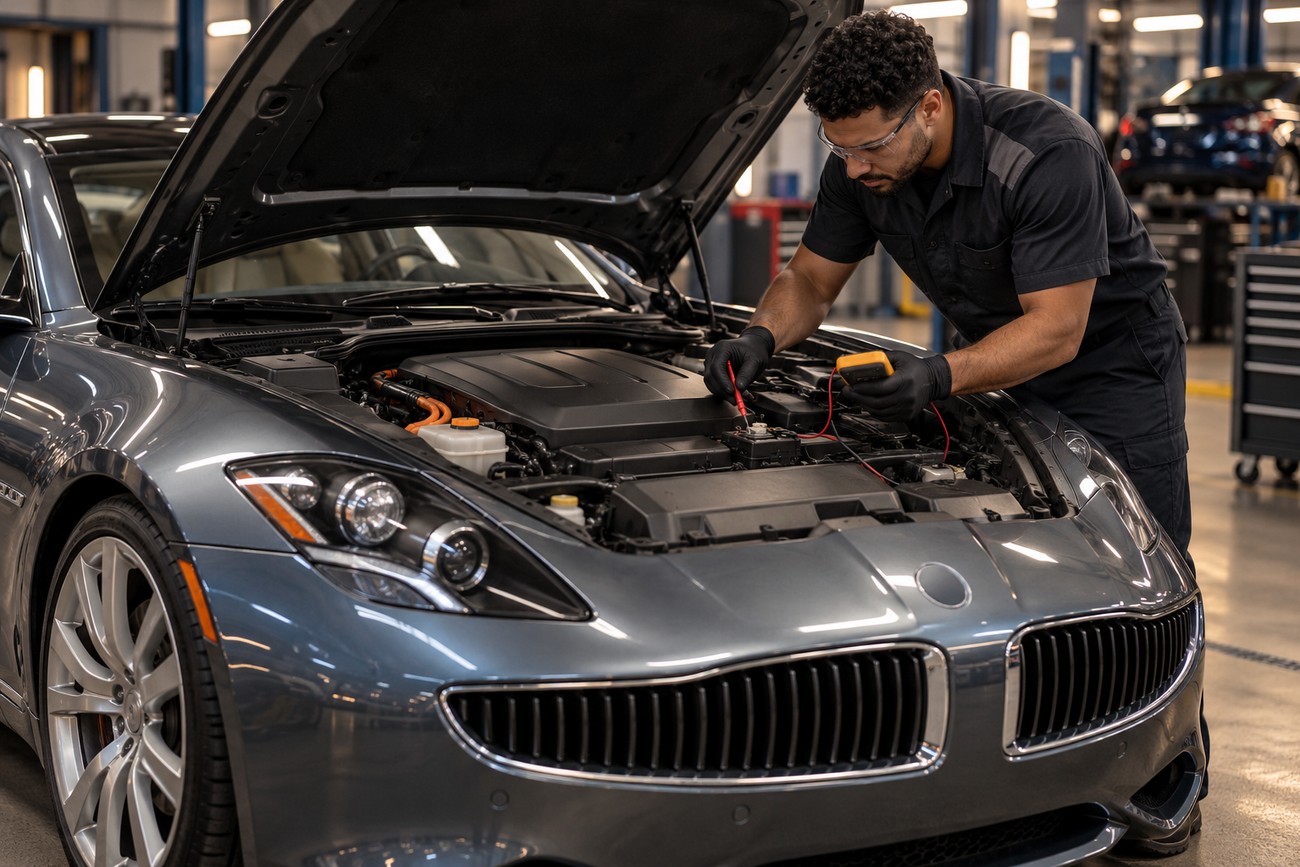
A healthy-sounding petrol engine does not prove that a Karma is ready to drive reliably. High-voltage battery condition, charging behavior, and the control electronics all affect whether the car can operate as intended. A shortened or inconsistent electric drive needs a diagnosis, not an assumption that age alone explains it.
The smaller 12V system deserves its own check. A 12V-system problem can immobilize a Karma even when its high-voltage battery is viable. That is why a car that appears to have a major hybrid fault should have its basic electrical supply assessed before anyone commits to a costly conclusion.
Check the 12V supply and recorded faults before interpreting high-voltage warnings. An unstable low-voltage supply can complicate the diagnosis, while fault records may help a specialist identify where to investigate next.
Some faults arise where otherwise functional systems communicate with each other. Control electronics, wiring, and rare modules can make an intermittent problem difficult to reproduce, especially without Karma-specific diagnostic access. Infotainment glitches may be an annoyance in isolation, but recurring electronic faults call for a closer look at the car’s wider electrical condition.
Age also affects components beyond the battery. Seals, rubber parts, and high-voltage components warrant inspection, even on a car with a clean body and modest mileage. None of these risks means every Karma will fail; they mean a general workshop inspection cannot settle the questions that matter most.
Fisker Karma pre-purchase checks: evidence and deal-breakers
Arrange a specialist assessment before committing, and ask the seller for records you can verify. A brief test drive is useful, but it cannot certify high-voltage battery health.
| Check | Evidence to request | If it cannot be verified |
|---|---|---|
| High-voltage system and electric operation | A specialist diagnostic report, charging check, and demonstration of electric driving, with any warnings documented. | You cannot judge the battery’s present condition or the cause of limited electric range; seek a diagnosis before agreeing to buy. |
| 12V system | A current battery and charging-system assessment, plus records of recent 12V faults or replacements. | An avoidable low-voltage problem could leave the car immobile or confuse the diagnosis of other warnings. |
| Storage and service history | Dated service invoices and an account of periods off the road, storage conditions, and work completed before returning it to use. | Low mileage alone offers little reassurance about deterioration or unresolved faults. |
| Local specialist access | Confirmation from a workshop that it can inspect and diagnose this specific car, including the equipment it can use. | You may own a car that local general repair shops cannot properly assess. |
| Body and electronic parts | An inspection for damage or missing items, followed by parts-availability checks for any glass, lighting, bumper, trim, or module that needs attention. | Even a small repair may involve a long search; do not assume the part is readily available. |
Ownership costs include downtime and the exit plan
The purchase price is only one part of the commitment. Allow for transport to a capable workshop, specialist diagnosis, and time waiting for a part or repair decision. If you cannot comfortably leave the car off the road, a seemingly attractive price may offer little practical value.
Because factory-era support and parts supply cannot be assumed, ask a prospective specialist how it handles parts searches and which repairs it can actually perform. A workshop willing to examine the car is useful, but its ability to finish a specific repair depends on what it finds and can source.
Minor collision damage deserves more attention than it might on a common sedan. Original glass, bumpers, lighting, and trim may be difficult to find, so a tidy-looking car with a damaged or missing piece can become a drawn-out project. Obtain a car-specific repair estimate rather than assuming cosmetic work will be straightforward.
Plan the exit as carefully as the entry. Rarity does not guarantee resale liquidity or appreciation, and a buyer may demand the same records and specialist access you should require now. If a high-voltage repair is suspected, do not rely on a universal battery-replacement price: obtain a diagnosis and an itemized local quote that accounts for parts, labor, and transport.
The buying decision: when to proceed and when to walk away

Proceed only if the car has credible records, passes an independent specialist assessment, and has a workable repair route in your region. You also need a budget and schedule that can absorb diagnostic work and delays. These conditions make the risk more visible; they do not eliminate it.
Pause or walk away if the seller will not permit meaningful high-voltage and 12V checks, cannot explain extended storage, or cannot document significant repairs. An attractive body, low mileage, and a working petrol engine cannot substitute for that evidence. A 12V-system problem alone can immobilize a Karma even when its high-voltage battery is viable.
A well-documented example with a reachable specialist may be worth considering as an enthusiast car. Treat any hope of easy resale as an assumption to test, since rarity does not guarantee liquidity or appreciation. If you need predictable everyday transport, choose a car with more dependable service and parts access.
Frequently asked questions
Battery costs depend on what needs repair or replacement. A warning or reduced electric range does not identify the faulty component. Get a diagnosis before using a repair estimate to make a buying decision.
How much does it cost to replace the battery in a Fisker Karma?
There is no reliable universal replacement price. First confirm whether the quote concerns the 12V battery, the high-voltage battery, or a repairable component within the system. Ask a qualified specialist for a written, car-specific estimate that itemizes parts, availability, labor, and any transport required.







