

Do not start or continue driving a diesel VW Touareg after gasoline has entered the tank. If the engine is running, switch it off; arrange towing to a workshop for fuel removal and system flushing rather than driving there under its own power.
The key factor is whether the engine ran and whether the contaminated mixture circulated. A Touareg that was never started may need controlled draining, filter replacement, and flushing. Once the engine runs, gasoline can reach the high-pressure pump, fuel lines, and injectors, turning a fueling mistake into wider fuel-system damage.
The initial error may look inexpensive, while the consequences can involve complex and expensive diesel hardware. Acting quickly limits the amount of contaminated fuel moved through the system and gives the workshop a better chance to assess the vehicle before secondary damage develops.
- First Decision: Did the Diesel Touareg Run?
- Why Gasoline Is Dangerous in a Modern Diesel System
- Symptoms That Suggest the Mixture Has Reached the Engine
- What a Proper Touareg Damage Check Should Include
- The Dilution Myth, Old-Diesel Advice, and Common Mistakes
- Frequently asked questions
- How should I document a suspected fueling error before the Touareg is repaired?
- Can a fuel sample confirm that gasoline was put in the diesel tank?
- How long should I monitor the Touareg after contaminated fuel has been removed?
- Who may be responsible for the repair if the fueling mistake happened at a station?
First Decision: Did the Diesel Touareg Run?
If the Touareg was refueled with gasoline but the engine was never started, leave the vehicle where it is and do not switch on the ignition unnecessarily. Arrange recovery to a suitable workshop, where the tank can be drained and the relevant fuel path flushed. The correct procedure depends on the Touareg’s engine and fuel-system design.
If the engine is running, switch it off as soon as it is safe to do so. Do not restart it to test the result, and do not drive to a repair facility. Continuing under its own power can pump the gasoline mixture through the high-pressure pump, fuel lines, and injectors.
Starting sharply increases the risk because the fuel system begins circulating the contaminated mixture under operating conditions. A short drive may therefore change the job from removing contaminated fuel to diagnosing possible damage in several high-pressure components.
The distinction is important even if the vehicle still seems to run normally. A Touareg may travel some distance before symptoms appear, while gasoline is already reducing lubrication in components that depend on diesel fuel properties.
Why Gasoline Is Dangerous in a Modern Diesel System
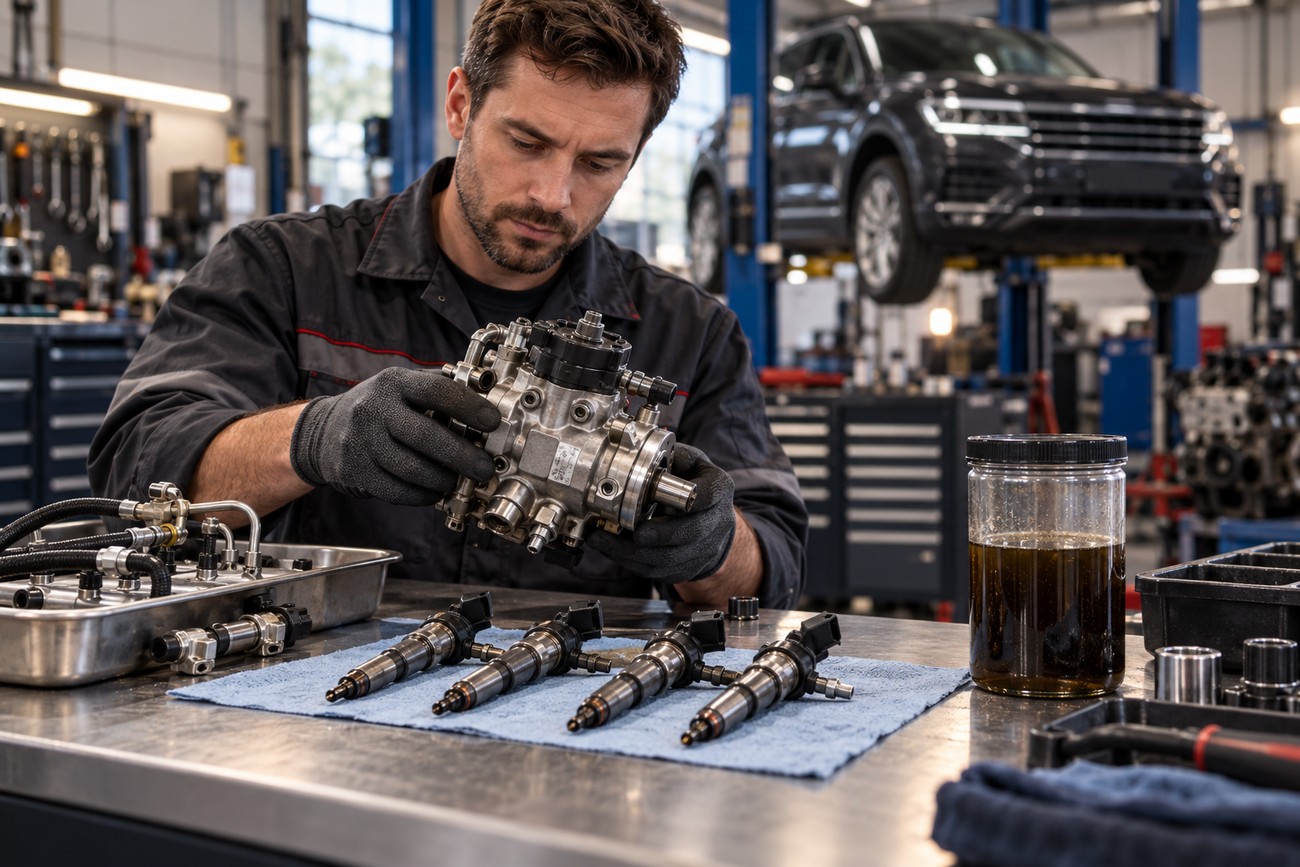
Diesel fuel provides lubrication for components in the high-pressure fuel system. Gasoline has different viscosity and lubricating characteristics, so gasoline contamination increases wear risk in the high-pressure pump and injectors. This mechanical risk exists alongside the effect on combustion.
Gasoline changes the mixture’s cetane behavior and ignition delay. In a modern diesel engine, that can produce unstable combustion, rough running, power loss, smoke, overheating, and eventual stalling. The exact symptoms depend on the engine, the amount of contamination, and how far the mixture has circulated.
Many modern Touareg diesel engines use highly precise fuel-injection hardware, although the exact arrangement varies by engine version. Modern Common Rail systems generally have less tolerance for incorrect fuel composition than older, simpler diesel designs because their pumps and injectors depend on precise fuel delivery and adequate lubrication.
Advice sometimes given for older diesel engines does not establish a safe practice for a modern Touareg. A small amount of gasoline should be treated as a contamination risk, not as a mixture that can automatically be corrected by adding diesel.
Symptoms That Suggest the Mixture Has Reached the Engine
Possible early symptoms include hard starting, an unstable idle, unusual engine noise, vibration, smoke, and reduced power. These signs can appear soon after the contaminated fuel reaches the engine, but their absence does not prove that the system is unharmed.
A common progression is that the vehicle starts and initially drives, then loses power or stalls after more of the mixture has passed through the fuel system. The engine may become increasingly noisy or uneven before stopping completely.
These symptoms can resemble poor-quality diesel or another engine fault. Known gasoline contamination changes the correct response: the vehicle should be treated as a fuel-system incident, not driven while the cause is investigated on the road.
Damage may also become apparent later, even if the Touareg starts after the incident. Continued operation can worsen developing wear in the pump or injectors, so a temporary return to normal running is not a reliable clearance test.
What a Proper Touareg Damage Check Should Include
A workshop should begin by removing the contaminated fuel from the tank and relevant parts of the fuel system. The fuel filter may require replacement because it can retain contaminated fuel and debris. Relevant fuel lines should then be flushed according to the vehicle’s service procedure.
The vehicle should be scanned for stored faults, and the technician should record whether the engine ran and for how long. If the engine was started, the inspection should consider the high-pressure pump, fuel lines, and injectors rather than stopping after the tank has been emptied.
Documenting the drained fuel and inspecting the filter and high-pressure circuit gives a more useful record than approving the vehicle after a simple refill. It helps distinguish a contained fueling error from contamination that has already circulated.
Further testing may include checking fuel pressure, examining the pump for signs of abnormal wear, and testing injector operation. The exact tests depend on the Touareg’s engine and the evidence found during draining and inspection.
Severe contamination-related damage can extend beyond the fuel system to pistons and cylinders. That outcome is not inevitable, but continued running after misfueling increases the need for a broader diagnostic assessment. The Touareg’s complex diesel hardware can make the consequences disproportionate to the original fueling mistake.
The Dilution Myth, Old-Diesel Advice, and Common Mistakes
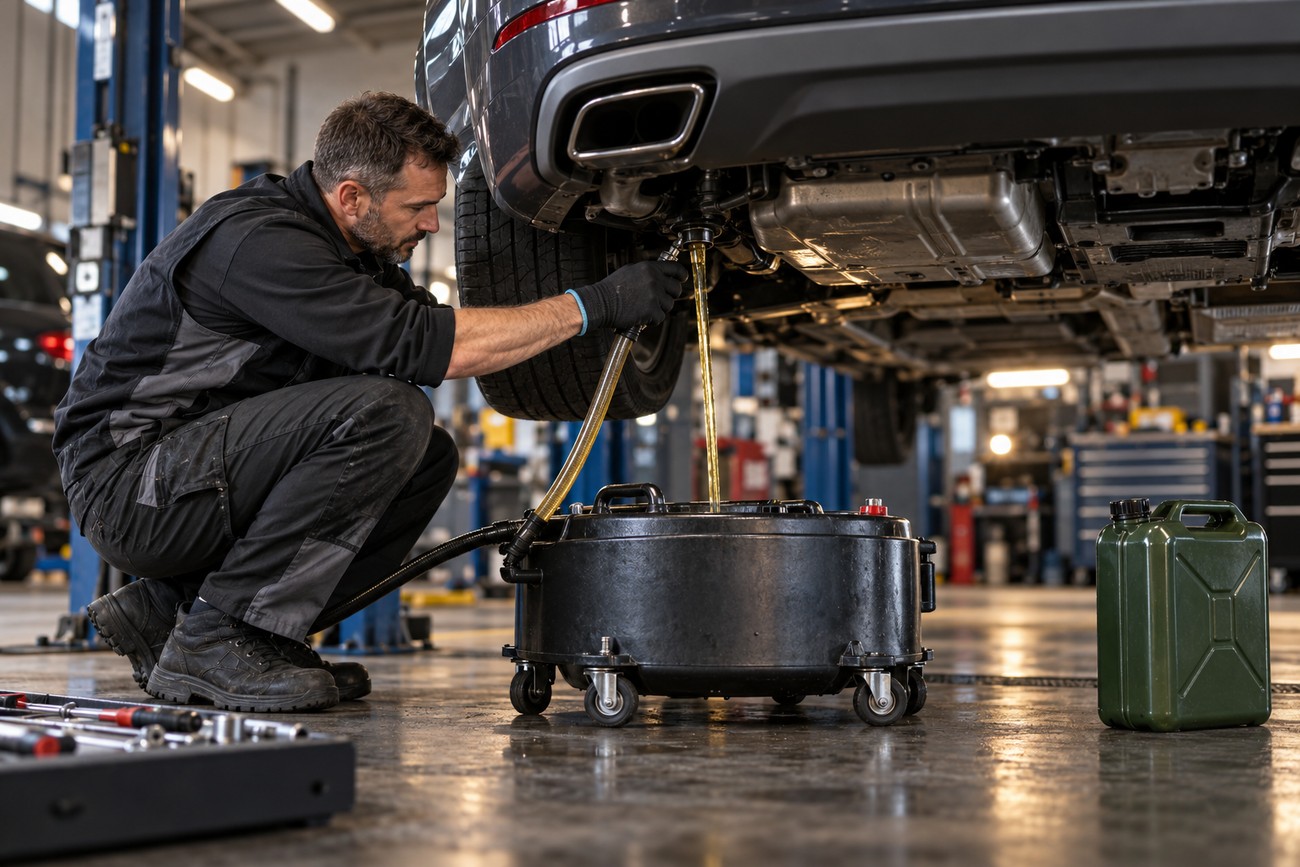
Adding diesel to dilute the gasoline and then continuing to drive is not a dependable repair for a modern diesel Touareg. The mixture still reaches components that rely on diesel’s lubricating properties, and dilution does not remove contaminated fuel from the filter or fuel path.
An often-cited figure of approximately 8–10% appears in advice concerning some older diesel engines. It is only a rough older-diesel reference and is not a safe threshold or guarantee for a modern diesel Touareg.
The most damaging decisions are usually practical ones: restarting to see whether the vehicle will run, driving to the workshop, ignoring noise or loss of power, and replacing only the fuel in the tank. Each can leave contaminated fuel in circulation or allow developing damage to progress.
If the incident occurred at a fuel station, preserve the receipt and other evidence before authorizing extensive work where possible. A single reported local Touareg case is anecdotal, not statistical evidence of typical outcomes, so the vehicle’s own inspection and documented findings matter more than comparisons with an isolated story.
Frequently asked questions
These answers describe general service logic. The final diagnosis depends on the Touareg’s engine, the quantity of gasoline, whether the engine ran, and the workshop’s inspection results.
How should I document a suspected fueling error before the Touareg is repaired?
Keep the fuel-station receipt, note the station location, pump number if available, date and time, and the vehicle’s dashboard mileage. Record when the mistake was noticed, whether the engine was started, how long it ran, and any symptoms. Photographs of the receipt, pump, dashboard, and warning messages can preserve useful context.
Ask the recovery operator and workshop to record the vehicle condition on arrival. If possible, request that the drained fuel, replaced filter, fault codes, and test results are documented before parts or fluids are discarded. These records may help in a dispute, although responsibility and compensation depend on local law and the available evidence.
Can a fuel sample confirm that gasoline was put in the diesel tank?
A retained fuel sample can help a workshop assess whether the tank contains gasoline contamination. It is more useful when identified, sealed, and documented with the vehicle and repair order than when the conclusion relies only on smell or memory.
The sample is one part of the assessment. The workshop may also compare the fuel with the vehicle’s required specification, inspect the filter, read fault codes, and test the high-pressure system if the engine ran. Sampling cannot by itself determine every component that may have been affected.
How long should I monitor the Touareg after contaminated fuel has been removed?
Follow the workshop’s instructions and pay attention to starting quality, idle stability, unusual noise, vibration, smoke, power delivery, warning lights, and any tendency to stall after the repair. Delayed symptoms matter because a vehicle can start normally while developing pump or injector problems.
Report changes promptly rather than continuing to drive until the vehicle stops. The appropriate follow-up period and testing depend on whether the contaminated mixture reached the high-pressure system and what the initial inspection found.
Who may be responsible for the repair if the fueling mistake happened at a station?
Responsibility depends on the facts and the jurisdiction. Preserve the receipt, station details, witness information, photographs, fuel samples, recovery records, and workshop findings before making a claim or accepting a settlement.
Ask the workshop to separate confirmed findings from assumptions and to describe which work was required because of the contamination. These documents may support discussions with the station or an insurer, but they do not guarantee reimbursement.







