
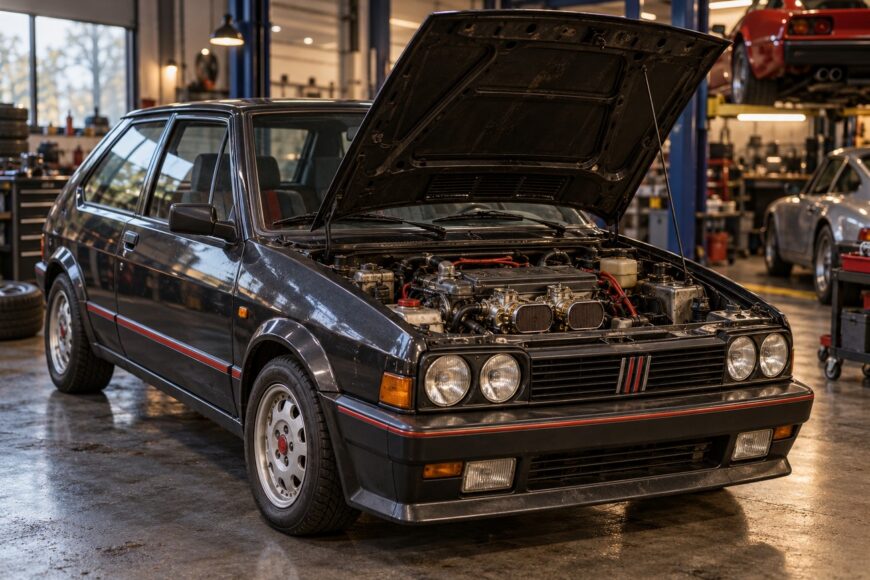
The Fiat Ritmo Abarth 130 TC looks like a compact, lightweight 1980s hot hatch, but its appeal comes with demanding hardware. Two Weber carburetors need careful setup, the body shell has had decades to corrode or accumulate repairs, and published weight and performance figures disagree. A sharp road test alone cannot settle any of those issues.
The central buying question is whether a car is a genuine, correctly configured 130 TC in sound condition, rather than a fast-looking Ritmo wearing the badge and two carburetors. Its engine and specification deserve attention, but so do identification records, structural metalwork, and evidence of competent maintenance.
- What Makes the Ritmo Abarth 130 TC Special
- Performance Figures Without the Advertising Fog
- Why the Twin Webers Define the Driving Experience
- The Inspection Checklist: Shell, Engine, and Identity
- Common Myths, Modified Cars, and Disputed Numbers
- Ownership Reality and the Right Buying Verdict
- Frequently asked questions
- What is the rarest Abarth?
- How much horsepower does a Fiat 131 Abarth have?
- What paperwork should accompany a genuine Ritmo 130 TC?
What Makes the Ritmo Abarth 130 TC Special
Introduced in 1983 as a development of the 125 TC, the Fiat Ritmo Abarth 130 TC is generally placed in production from 1983 to 1987. It kept the practical three-door hatchback format while giving buyers a more serious performance specification. Its period character comes from the combination of a large naturally aspirated engine and a compact front-wheel-drive car.
The engine is a 2.0-liter Fiat/Lampredi inline-four DOHC unit displacing 1,995 cm³. It is fed by two twin-choke Weber carburetors: four throttle channels in total, rather than one carburetor or fuel injection. That distinction matters when assessing both an advertised car and the work needed to keep it running properly.
Drive goes to the front wheels through a five-speed manual gearbox. The 130 TC also brought changes beyond its quoted output, including a revised engine specification, specific suspension, and electronic ignition. A car’s value as a 130 TC therefore rests on more than its engine note or an Abarth badge.
Performance Figures Without the Advertising Fog
The claimed output is 130 PS, approximately 96 kW, at about 5,900 rpm. Some descriptions instead say roughly 128–130 bhp. PS and bhp are different units, while published figures are sometimes rounded; those wordings do not automatically identify different engines or prove what a particular car produces now.
Weight is less settled. Some references give approximately 900–950 kg, while other advertising or specifications cite 1,070 kg. Market, equipment, and measurement method can all affect the stated figure, so a bare number is a poor basis for comparing power-to-weight ratios. A figure measured without some fluids, for example, cannot be treated as equivalent to one for a road-ready car.
Published 0–100 km/h claims sit at approximately 7.5–8.0 seconds, with top speed at approximately 190–195 km/h. These are useful indications of the model’s intended performance, not universal results from a single test procedure. Road conditions, vehicle setup, and whether a number came from a contemporary test or a seller also affect how much confidence it deserves.
For a prospective buyer, the more revealing performance question is whether the car pulls cleanly and consistently in its present state. A quoted acceleration time cannot account for tired ignition components, poorly set carburetors, or an engine whose specification has changed. Treat the headline figures as context, then examine the car.
Why the Twin Webers Define the Driving Experience
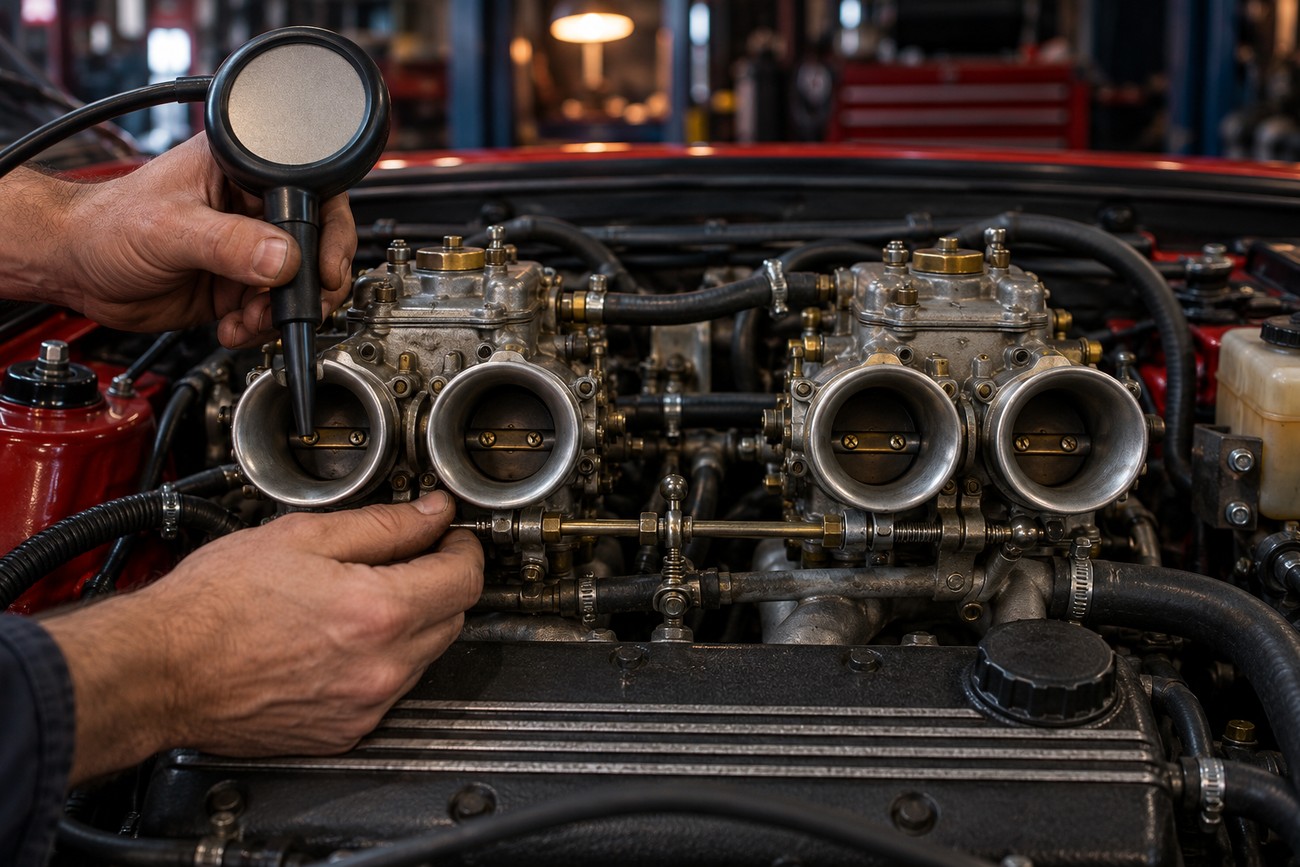
The two twin-choke Webers are central to the 130 TC’s response. With four throttle channels to keep working together, small differences in adjustment or an intake air leak can become noticeable at idle and as the throttle opens. A healthy setup should feel coherent; a dramatic sound at full throttle is no substitute for clean running through ordinary driving.
Poor synchronization can bring an uneven idle, hesitation, and difficult starting. Mixture settings, throttle linkages, and intake sealing also matter, so changing one setting without understanding the rest may disguise a fault rather than cure it. The system rewards methodical diagnosis and can punish guesswork.
A technician should check for intake leaks and synchronize the carburetors before using mixture adjustments to mask an uneven idle or blaming the ignition. Otherwise, the new settings may compensate for a fault that remains in place.
Carburetor condition is only part of the output story. Ignition, valve gear, and exhaust condition influence how much of the claimed 130 PS an individual engine can deliver. During an inspection, note whether it starts, settles, and accelerates consistently; ask what was adjusted or repaired if the seller attributes rough running to the car’s “character.”
The Inspection Checklist: Shell, Engine, and Identity
Begin with identity before acceleration. Reconcile the VIN and identification plates with the registration and ownership history, then check that the engine and visible specification match the car being offered. A 130 TC badge or twin Webers alone cannot establish factory originality, particularly when engines and equipment may have been changed over time.
Next, establish the engine’s condition rather than assuming its nameplate output survives intact. Check compression and examine the camshafts, carburetors, and engine identification as far as access and documentation allow. Ask for records of carburetor and ignition work, and have a specialist investigate persistent starting or drivability faults before accepting an explanation that they merely need a quick tune.
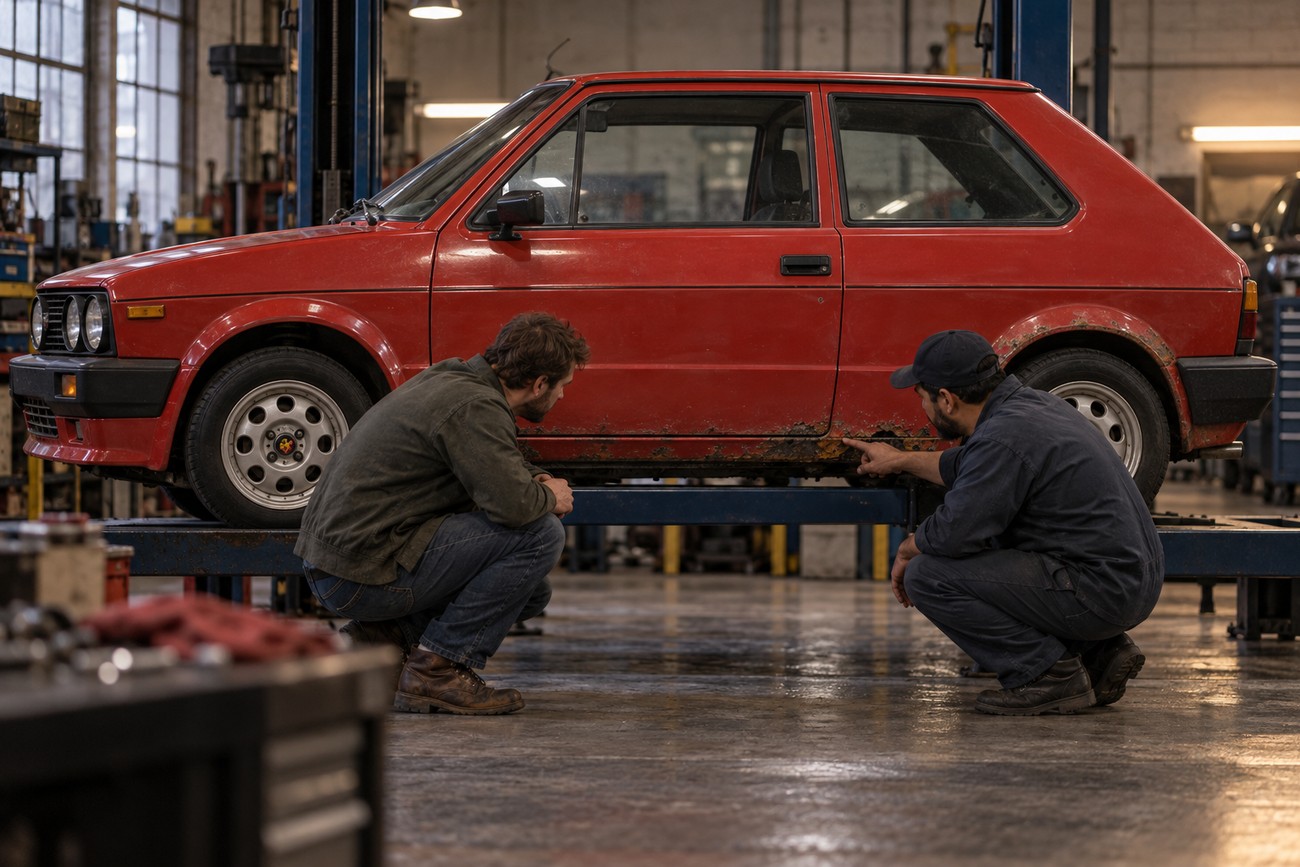
The shell deserves equal priority. Inspect the underside, sills, suspension mounts, and surrounding structure for corrosion, previous repairs, and accident traces. Fresh finishes or a tidy engine bay cannot establish what lies behind trim or underneath the car; where access is restricted, arrange a proper lift inspection rather than relying on photographs.
Look closely at repair quality as well as visible rust. A sound-looking outer panel can sit beside poorly repaired structural metal, and a strong engine does little to offset that risk. Documented bodywork is easier to judge than work concealed beneath underseal or recent paint, particularly when the extent of earlier damage is unclear.
Finally, allow for age in the parts that make the car safe and dependable. Rubber components, hoses, seals, and brake-system parts may need preventive replacement even if the engine runs well today. Price and plan the work from an inspection of the actual car, rather than treating a successful short drive as proof that these systems need no attention.
Common Myths, Modified Cars, and Disputed Numbers
“130 TC” is a model designation, not a guarantee of exactly 130 bhp at the wheels or even exactly 130 bhp at the engine. The stated factory output is 130 PS, approximately 96 kW, at about 5,900 rpm; rounded descriptions of 128–130 bhp should be read with their units in mind. None replaces a condition check.
The often-repeated low weight is equally easy to misuse. Published figures span approximately 900–950 kg and 1,070 kg, so any comparison needs the market, equipment, and measurement method. Similarly, the published 0–100 km/h range is approximately 7.5–8.0 seconds, rather than an assured 7.5-second result for every car.
Two Webers do not authenticate a factory 130 TC. Modified club and sale cars may have increased displacement, different cylinder heads, or claimed output above 200 hp; such figures describe non-standard builds, not the production car. A conversion can be enjoyable, but its specification needs to be written down and verified on its own terms.
One romantic claim also warrants restraint: the statement that this was the last model personally sanctioned by Carlo Abarth lacks independent confirmation in the available material. It should not influence a buying decision in place of evidence about the car’s identity, structure, and mechanical state.
Ownership Reality and the Right Buying Verdict
The 130 TC offers the appeal of a responsive, naturally aspirated engine in a compact manual hatchback. Enjoying that combination depends on maintenance that respects the carburetors and on diagnosis that separates fueling faults from ignition or engine wear. A car advertised as quick can still be frustrating if it starts badly and hesitates in normal traffic.
Availability matters beyond the engine bay. Rare body and interior pieces may be harder and more expensive to source than mechanical components, although costs depend on the particular part and market. Missing trim or damaged fittings deserve attention during the first viewing, before the prospect of an engine repair consumes the inspection.
High mileage, by itself, is neither proof of durability nor grounds for rejection. Listings above 260,000 km exist, but the reading cannot establish engine life or originality; records and present condition carry more weight. The same caution applies to a low reading unsupported by a credible history.
A healthy, correctly synchronized standard car gives you a clearer account of what the 130 TC is than a powerful, undocumented conversion. Buy on verified identity, structural condition, and maintenance evidence first. Let the advertised acceleration figure be the least decisive part of the verdict.
Frequently asked questions
Questions about Abarth rarity and horsepower often mix different models or specifications. For a 130 TC purchase, the useful distinction is between a claim that can be traced through records and one inferred from a badge, a photograph, or a performance figure.
What is the rarest Abarth?
There is no single universally accepted answer without defining which models and markets are included, checking production records, and deciding whether rarity means cars built or cars surviving. A 130 TC badge does not place a Ritmo in a reliable rarity ranking. For a specific car, documented identity and condition are more useful than a broad rarity claim.
How much horsepower does a Fiat 131 Abarth have?
The Fiat 131 Abarth is a different model from the Ritmo Abarth 130 TC, so the Ritmo’s claimed 130 PS does not answer that question. A meaningful 131 figure needs the exact road or rally version and its specification; quoting a single number without those details risks mixing unlike cars.
What paperwork should accompany a genuine Ritmo 130 TC?
Look for records that connect the VIN, factory identification plates, engine details, and registration history. Period maintenance records and later repair invoices can help trace changes in specification and support the stated mileage, though gaps are common in older cars. Compare the paperwork with the metalwork and mechanical parts on the car; badges and carburetors cannot close a discrepancy in its identity.







