
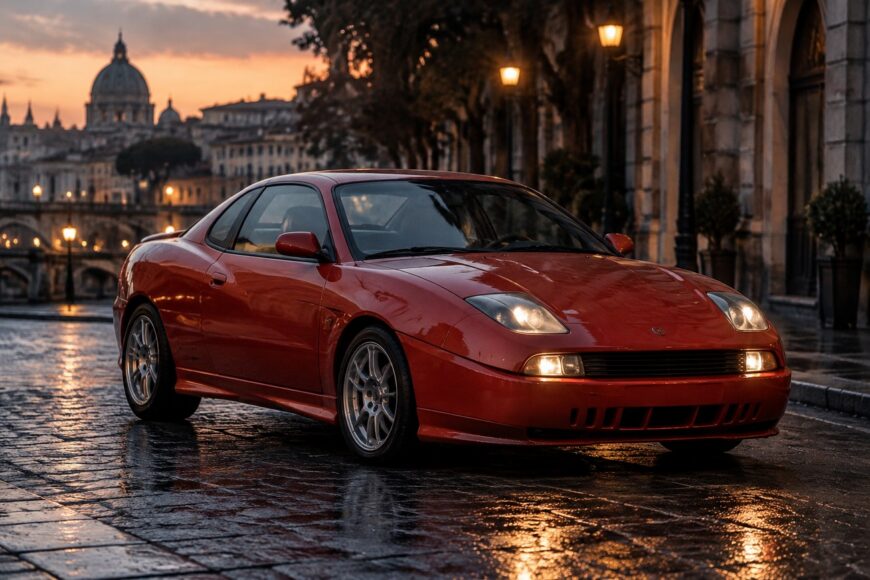
The Fiat Coupe 20V Turbo combines a distinctive late-1990s shape with the hard-edged soundtrack of a turbocharged five-cylinder. Most versions are quoted at 220 hp, enough for approximately 6.2–6.5 seconds from 0–100 km/h, while the transverse engine and front-wheel drive give the car a character more demanding than its straight-line figures suggest.
That appeal comes with an ownership dilemma. A rare cult coupe can hide a tired turbocharger, corrosion, damaged wiring, neglected timing-belt service, or expensive previous tuning. This guide separates factory specifications from disputed figures and enthusiast myths, then focuses on the checks that determine whether a particular Fiat Coupe is an enjoyable fast classic or an open-ended workshop project.
- Why the Fiat Coupe 20V Turbo Became a Cult Car
- Factory Specifications and Version Differences
- The Five-Cylinder Driving Experience
- The Expensive Weak Points Owners Discover
- How to Inspect a Fiat Coupe 20V Turbo Before Buying
- Maintenance, Running Costs and Sensible Modifications
- Ownership Reality: Fuel, Practicality and Long-Term Value
- The Myths That Lead Buyers into Trouble
- Frequently asked questions
- How much horsepower does a Fiat Coupe 2.0 20V Turbo have, and why do sources quote different figures?
- How many Fiat Coupe 20V Turbo models were produced?
- How rare is a Fiat Coupe today?
- What should a healthy five-cylinder turbo sound like at idle and under boost?
Why the Fiat Coupe 20V Turbo Became a Cult Car
The 20V Turbo was produced for approximately the 1996–2000 model years; references identify it as the Fiat Coupe, with the FA/175 body designation. Its identity rests on three elements: Marcello Gandini’s unmistakable styling, the five-cylinder engine, and performance that remained serious among front-wheel-drive coupes of its period. The shape still looks individual because it avoids the generic wedge-like treatment common to many contemporary sports cars.
The engine supplies much of the emotional appeal. A turbocharged inline five produces a distinctive rising note, with more mechanical texture than a four-cylinder and a different cadence from a V6. Exhaust choice changes that character substantially: a restrictive or poorly chosen system can make the engine harsh, while a well-matched setup allows the five-cylinder sound to become one of the car’s defining features.
Rarity strengthens the model’s enthusiast following, although it also makes ownership less predictable. Specialist communities can help locate trim, engine, and body parts that ordinary retailers no longer list. The same dependence on narrow supplier networks means a missing interior panel, rare-color body component, or unusual engine part may require overseas forums, breakers, or patient searching.
The body deserves the same attention as the powertrain. Cracked or delaminating clear coat is a known problem, and a high-quality repair in a rare color can be difficult to match. Corrosion around sills, arches, and suspension mounting areas can be more important than superficial paint defects. Outside specialist enthusiast circles, resale is less liquid than for more common Japanese or German coupes, so the car should be bought for its condition and use rather than treated as a guaranteed investment.
Factory Specifications and Version Differences
The core specification is straightforward, although catalogs do not always report it consistently. The 175 A3.000 is a 2.0-liter, 20-valve DOHC turbocharged inline five with a cast-iron block and an approximately 8.5:1 compression ratio. Most references quote 220 hp at 5,750 rpm and 310 Nm at 2,500 rpm. Some distinguish 217 hp as effective output, while others state 220 hp without qualification; this is a reporting and specification issue rather than proof of different engines.
| Specification | Fiat Coupe 20V Turbo reference |
|---|---|
| Engine | 175 A3.000, 2.0-liter inline five-cylinder, 20-valve DOHC turbocharged |
| Construction | Cast-iron block; approximately 8.5:1 compression ratio |
| Power | Most references: 220 hp at 5,750 rpm; some quote 217 hp as effective output |
| Torque | 310 Nm at 2,500 rpm |
| Drivetrain | Front-wheel drive with a transverse engine |
| Gearbox | Five- or six-speed manual, depending on year and market |
| Kerb weight | Approximately 1,310–1,395 kg |
| 0–100 km/h | Approximately 6.2–6.5 seconds |
| Top speed | Approximately 250–252 km/h |
| Dimensions | Approximately 4,250 × 1,768 × 1,355 mm |
| Ground clearance | Approximately 150–163 mm, depending on source and specification |
| Official consumption | Approximately 14.4 L/100 km urban, 7.6 L/100 km extra-urban, and 10.1 L/100 km combined |
| Fuel | AI-95 petrol |
The five- or six-speed manual gearbox depends on year and market, so a claimed specification should be checked against the car itself and its documentation. The quoted weight range of approximately 1,310–1,395 kg helps explain the strong acceleration figures, while the approximately 250–252 km/h top speed remains a useful indication of the car’s original performance rather than a promise for an aged, modified example.
Plus and Limited Edition versions should be identified by specification rather than assumed to be ordinary cars with cosmetic changes. They can differ in suspension, brakes, trim, and sometimes engine settings. A buyer comparing two apparently similar cars should verify the exact derivative before pricing replacement parts or planning a brake and suspension overhaul.
The Five-Cylinder Driving Experience

The 310 Nm peak torque at 2,500 rpm gives the Coupe strong midrange response, especially once the turbocharger is working. Throttle response feels more substantial than the output figure alone suggests because the engine combines a long, distinctive power delivery with front-wheel-drive traction. A healthy car should feel eager through the middle of the rev range without unexplained hesitation, smoke, or a sudden loss of boost.
Hard acceleration exposes the layout’s limits. Wheelspin in the lower gears and torque steer can pull the steering wheel away from the intended line, particularly on uneven roads or with worn front suspension components. The effect becomes more pronounced after power increases, so the car rewards smooth throttle use and careful setup rather than repeated launch-style driving.
The firm suspension helps the coupe feel controlled on good roads, yet it can become tiring over broken surfaces. Long journeys also reveal the cabin’s particular ergonomics, which may suit spirited short trips better than relaxed highway travel. Ground clearance appears reasonable on paper, but low overhangs, stiff suspension, and poor-road sensitivity make curbs and deep potholes genuine concerns.
Tire pressures and alignment have a material effect on turn-in, stability, and steering weight. A car that feels nervous may need inspection of bushings, dampers, and geometry before the owner blames the basic chassis. Experienced owners often use carefully chosen alignment settings rather than accepting an old factory setup without checking how the car is actually used.
The Expensive Weak Points Owners Discover
Turbocharger condition is one of the largest financial variables. Aggressive use, poor lubrication, and excessive heat can accelerate wear, followed by boost loss, smoke, or oil-related symptoms. A replacement or rebuild may require substantial labor, and the cheapest advertised turbo solution is not automatically suitable for the 175 A3.000 installation.
Timing-belt and roller service is a hard requirement. If the belt fails, the resulting cylinder-head damage can turn a neglected service item into a major engine repair. Visual belt appearance proves little; the date and mileage of the last complete belt and roller replacement should be documented. The same discipline applies to oil quality, cooling-system maintenance, and inspection of the hydraulic lifters and related components.
The tightly packaged turbocharged engine generates substantial heat under the hood. Heat can affect plastic components, nearby wiring, sensors, and other age-sensitive parts even when the temperature gauge appears normal. Cooling problems therefore deserve more attention than a short test drive can provide, particularly on modified cars with increased boost or uncertain radiator and hose history.
Age and moisture bring a second group of failures. Instrument-cluster glitches, unstable climate-control operation, unreliable sensors, and wiring faults may be intermittent, which makes them easy to dismiss during a viewing. Structural corrosion is more serious still: sills, wheel arches, and suspension mounting areas need inspection from below, especially on cars from wet regions or examples that have lacked effective rust protection.
Standard brakes can feel inadequate during repeated hard use on mountain roads or track days, even if they work acceptably in normal traffic. Modified cars also place greater stress on the clutch and driveshafts, while front-wheel-drive traction creates additional shock loads. Rare engine, trim, and body parts may be difficult and expensive to source, so a repair estimate should include availability and labor time rather than only the price of a nominal replacement component.
How to Inspect a Fiat Coupe 20V Turbo Before Buying
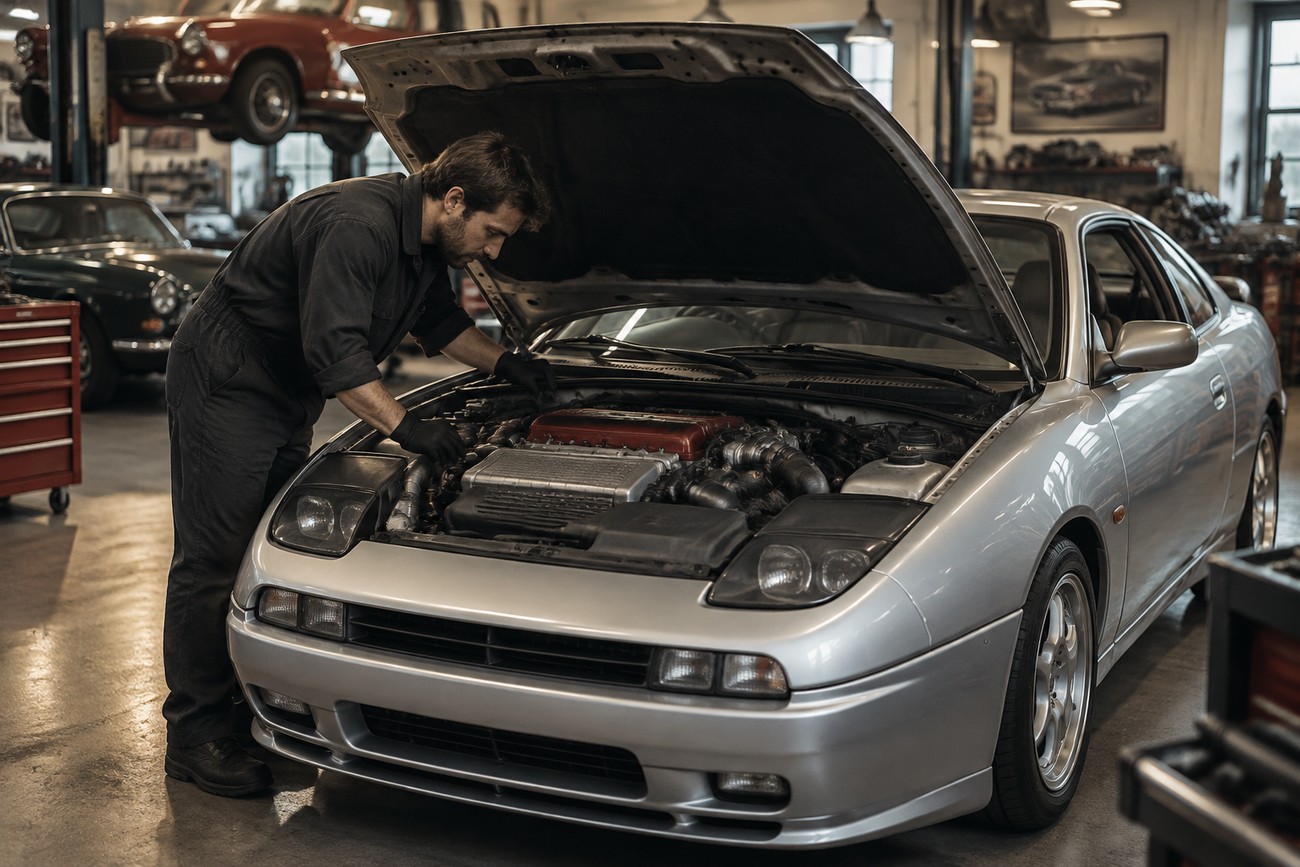
Begin with paperwork and the body. Confirm the model year, engine identity, gearbox, service history, and any Plus or Limited Edition claims. Inspect the clear coat for separation and longitudinal cracking, then examine sills, arches, floor areas, jacking points, and suspension mounts for corrosion or poor previous repairs. Rare colors and model-specific panels make accident-repair quality important because a visually tidy repair may still be difficult to match or structurally verify.
A cold start reveals more than a warm engine presented after a short drive. Listen for abnormal valvetrain noise, belt-area sounds, exhaust leaks, uneven idle, and smoke from the tailpipe. Check how the engine responds to throttle, whether boost builds consistently, and whether oil smoke appears after overrun or acceleration. A clean engine bay is useful evidence of care only when supported by mechanical tests and dated invoices.
Compression testing should be part of a serious pre-purchase inspection, with a borescope inspection where the results, symptoms, or purchase price justify it. These checks can reveal uneven cylinder condition, bore damage, deposits, or signs of an engine that has been consuming oil. Turbo assessment should include boost behavior, smoke, shaft and oil-related evidence where accessible, and a fault scan rather than relying on the seller’s description.
Verify the timing-belt and roller service by date and mileage. Inspect coolant condition, hoses, radiator function, fan operation, and evidence of previous overheating. During a road test, check clutch engagement, gearbox selection, driveshaft vibration, torque steer, brake pedal consistency, and suspension knocks. A car that needs several unrelated repairs can quickly exceed the apparent saving over a better-maintained example.
Finish with the electrical system and the ownership paperwork. Test every instrument, climate-control function, sensor-related warning, switch, and window mechanism repeatedly, because moisture-related faults can be intermittent. Ask how the car is valued for insurance: a provider that categorizes it simply as an old Fiat may offer a settlement below the cost of a properly repaired specialist coupe. An agreed or carefully documented valuation may be worth discussing where available.
Maintenance, Running Costs and Sensible Modifications
The 20V Turbo needs disciplined maintenance rather than optimistic servicing. Oil quality, correct viscosity, and replacement intervals matter because poor lubrication can contribute to hydraulic-lifter noise, deposits, and accelerated turbo wear. Cooling-system checks should accompany oil servicing, especially if the car sees traffic, hot weather, or repeated high-load driving.
Access is a cost factor that inexperienced buyers often underestimate. Timing-belt, turbocharger, and clutch work can require extensive labor because of the restricted engine bay and the number of surrounding components that must be removed. A specialist who understands the five-cylinder installation may charge more per hour yet reduce the risk of repeated disassembly, incorrect parts, or a repair that solves only the visible symptom.
Additional monitoring is a sensible reliability measure on an enthusiast-owned car. Oil-temperature and boost-pressure gauges provide context that the original instruments may not, while wideband lambda monitoring can help identify fueling problems before they become piston or turbo damage. These additions are useful when installed cleanly and interpreted correctly; decorative gauges alone do not improve the engine.
Cheap chip tuning and increased boost are the most common route from a good car to an expensive one. Before raising output, check engine condition, fueling, cooling, boost control, and piston health. The claimed ease of reaching 260–280 hp should be treated cautiously because safe output depends on the individual engine and its supporting systems, not on a software file alone.
Power increases also accelerate clutch, driveshaft, and front-drive traction problems. A sensible build usually starts with baseline testing, fresh fluids, reliable cooling, sound brakes, and correct geometry before chasing a larger dyno figure. Specialist parts are often found through overseas forums, breakers, and narrow supplier networks, so owners should plan for availability before dismantling a car for an upgrade.
Ownership Reality: Fuel, Practicality and Long-Term Value
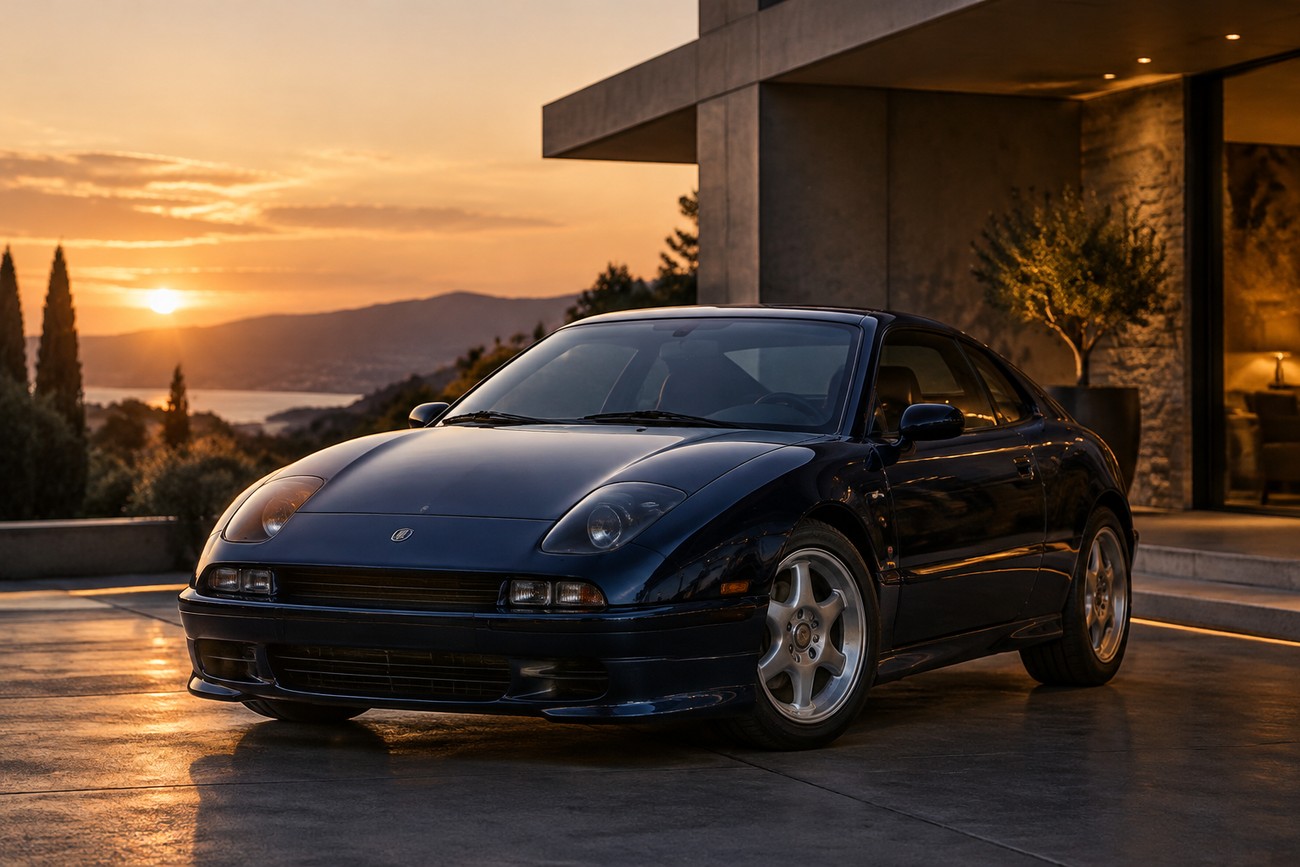
The official consumption baseline is approximately 14.4 L/100 km in urban driving, 7.6 L/100 km extra-urban, and 10.1 L/100 km combined, using AI-95 petrol. Actual use depends heavily on traffic, boost, tire condition, and driving style. A healthy car driven gently on an open road can approach the extra-urban figure more easily than a frequently boosted car in short urban trips.
At approximately 4,250 × 1,768 × 1,355 mm, the Coupe is manageable in traffic while retaining a low, wide visual stance. Reported ground clearance varies from approximately 150 to 163 mm depending on source and specification. That range should not be interpreted as permission for rough-road use: overhangs, firm suspension, and vulnerable trim make potholes, steep ramps, and curbs more consequential than the number suggests.
Passenger comfort is acceptable for the car’s purpose, although long journeys on poor roads can become tiring. Practicality is also constrained by the coupe body and the age of its interior components. The approximately 1,720 kg gross permitted weight is useful as a registration and loading reference, yet it says little about how pleasant the car will be as a daily commuter with worn dampers or tired climate-control hardware.
Long-term value depends on the local enthusiast market. Specialist parts access, knowledgeable repair support, and a documented, structurally sound car can protect desirability within that community. Mainstream buyers may see an old Fiat, making quick resale and strong pricing less certain than with more familiar Japanese or German performance coupes. This is a car to own because its character suits you, with market value treated as a secondary consideration.
The Myths That Lead Buyers into Trouble
The first myth is that the Fiat Coupe 20V Turbo is as forgiving as a naturally aspirated Japanese car and needs only basic servicing. Its cast-iron block does not remove the demands of a turbocharged five-cylinder. Oil quality, cooling, timing-belt service, and turbo condition are central to its survival, and neglect can turn an attractive purchase into a major project.
The second myth is that Fiat parts are automatically cheap. Mass-market service items may be manageable, yet a rare turbocharger, five-cylinder engine component, body panel, interior trim piece, or model-specific electrical part can be scarce and expensive. The correct question is whether the exact part is available through the owner’s local network, not whether the badge suggests low-cost maintenance.
The third myth concerns easy power. Factory-output references vary between 217 hp as effective output and 220 hp as the commonly quoted figure, but that difference does not demonstrate that every engine can safely reach 260–280 hp. A reliable result depends on compression health, fueling, cooling, boost control, turbo condition, and the ability of the clutch and driveshafts to cope.
Finally, the approximately 150–163 mm clearance range does not make the coupe suited to rough roads. Front-wheel drive should not be treated like an all-wheel-drive system during hard launches, either. A maintained, structurally sound car can be deeply rewarding, yet condition, evidence, and setup matter more than a badge, a claimed dyno number, or an optimistic description of its intended use.
Frequently asked questions
These answers cover factory output, rarity, and what to listen for during an inspection. Factory figures cannot establish the condition of an individual car. Documentation and mechanical checks matter more than claims about rarity or an impressive exhaust note.
How much horsepower does a Fiat Coupe 2.0 20V Turbo have, and why do sources quote different figures?
Most references quote 220 hp at 5,750 rpm, while some distinguish 217 hp as effective output. The difference is generally a matter of reporting or specification conventions rather than evidence of separate engines. The associated peak torque is commonly quoted as 310 Nm at 2,500 rpm.
Advertised figures for an individual car should still be treated separately from factory data. Age, boost leaks, turbo wear, fueling problems, modifications, and measurement methods can all affect the result. A healthy engine is best judged through inspection and testing rather than through a claimed output figure alone.
How many Fiat Coupe 20V Turbo models were produced?
The available evidence does not establish one universally reliable production total for the 20V Turbo, so a single global number should not be accepted without a verifiable source. General listings often combine different Fiat Coupe engines, markets, model years, and special editions, which makes simple totals unreliable.
For a buyer, production-count arguments matter less than the particular car’s identity and history. Confirm the engine, model year, specification, structural condition, and documentation. Those details determine parts compatibility and ownership risk more directly than an unsupported rarity figure.
How rare is a Fiat Coupe today?
Rarity is market-dependent. In practical terms, a Fiat Coupe 20V Turbo is rare where local supply is thin, specialist knowledge is limited, and model-specific parts require overseas sourcing or enthusiast networks.
That scarcity can support strong interest among specialists while making resale slower outside the enthusiast market. A car with clear history and sound bodywork is easier to place than a supposedly rarer example with corrosion, incomplete records, or expensive unresolved faults.
What should a healthy five-cylinder turbo sound like at idle and under boost?
At idle, the engine should have an even five-cylinder rhythm without persistent metallic valvetrain noise, belt-area rattling, exhaust leaks, or an unstable idle. Under boost, power delivery should build consistently without smoke, fault-related flutter, unexplained hesitation, or a sudden loss of pressure. Exhaust design changes the perceived tone, so sound alone cannot prove mechanical condition.
Use the listening check as an early screen, then commission compression testing, turbo assessment, cooling checks, and a fault-code scan. A warm engine can conceal cold-start behavior, and a short drive can miss oil consumption or intermittent boost problems. Sound, test results, and documented belt service are considerably more useful together than a dramatic exhaust note alone.







