
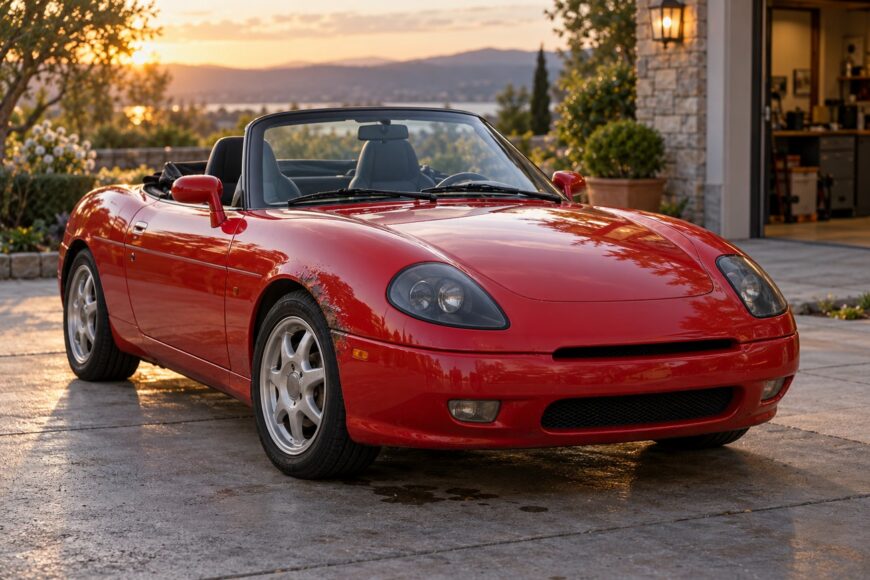
The Fiat Barchetta is light, stylish, affordable, and mechanically unusual. It is also old enough that condition matters more than reputation, paint, or the number on the odometer. Built from 1995 to 2005, this compact Italian roadster can deliver genuine open-air involvement without the cost of a modern sports car.
The central choice is between an engaging front-wheel-drive Italian roadster and the supposedly safer, simpler path of a Miata. The Barchetta has its own appeal, but the bargain only works when rust, water ingress, timing-belt history, and oil-pressure-related engine noise have been investigated properly.
- What the Fiat Barchetta Actually Is
- Why It Was Seen as an Italian Miata Rival
- The Rust and Water-Ingress Reality
- Engine Checks: Timing Belt, Oil Pressure, and Diesel-Like Noise
- The Parts and Trim That Turn a Bargain Into a Project
- A Buyer’s Inspection Order That Avoids Expensive Mistakes
- Running Costs, Fuel Claims, and the Ownership Verdict
- Frequently asked questions
- What Fiat car is similar to the Miata?
- How can you tell whether Barchetta cam-phaser noise is serious?
- What should coolant traces inside a Barchetta tell a buyer?
What the Fiat Barchetta Actually Is
The Fiat Barchetta is a two-seat, front-wheel-drive roadster with a transverse engine. That layout places the engine across the car ahead of the cabin, driving the front wheels. It gives the Barchetta a different mechanical character from rear-wheel-drive roadsters, even though its proportions and purpose invite comparison with them.
Power comes from a 1,747 cc four-cylinder, 16-valve petrol engine producing 130 hp at 6,300 rpm and 117 lb-ft at 4,300 rpm. Factory figures quote 0–62 mph in 8.9 seconds and a top speed of 124 mph. Those numbers remain useful today because the car weighs only 1,060 kg, so the engine does not have to move much mass.
Independent McPherson suspension is used at the front, with trailing arms at the rear. The arrangement is relatively straightforward, although age can make suspension mounting points and replacement components more important than the original design. A claimed luggage capacity of 165 dm³ gives the Barchetta enough room for short trips, provided you pack with restraint.
The Barchetta’s appeal comes from the combination of low weight, a rev-friendly engine, compact dimensions, and an open cabin. It was never a small rear-wheel-drive sports car in disguise. Its front-driven chassis produces its own steering and cornering response, which should be part of the buying decision rather than treated as an inconvenient technical detail.
Why It Was Seen as an Italian Miata Rival
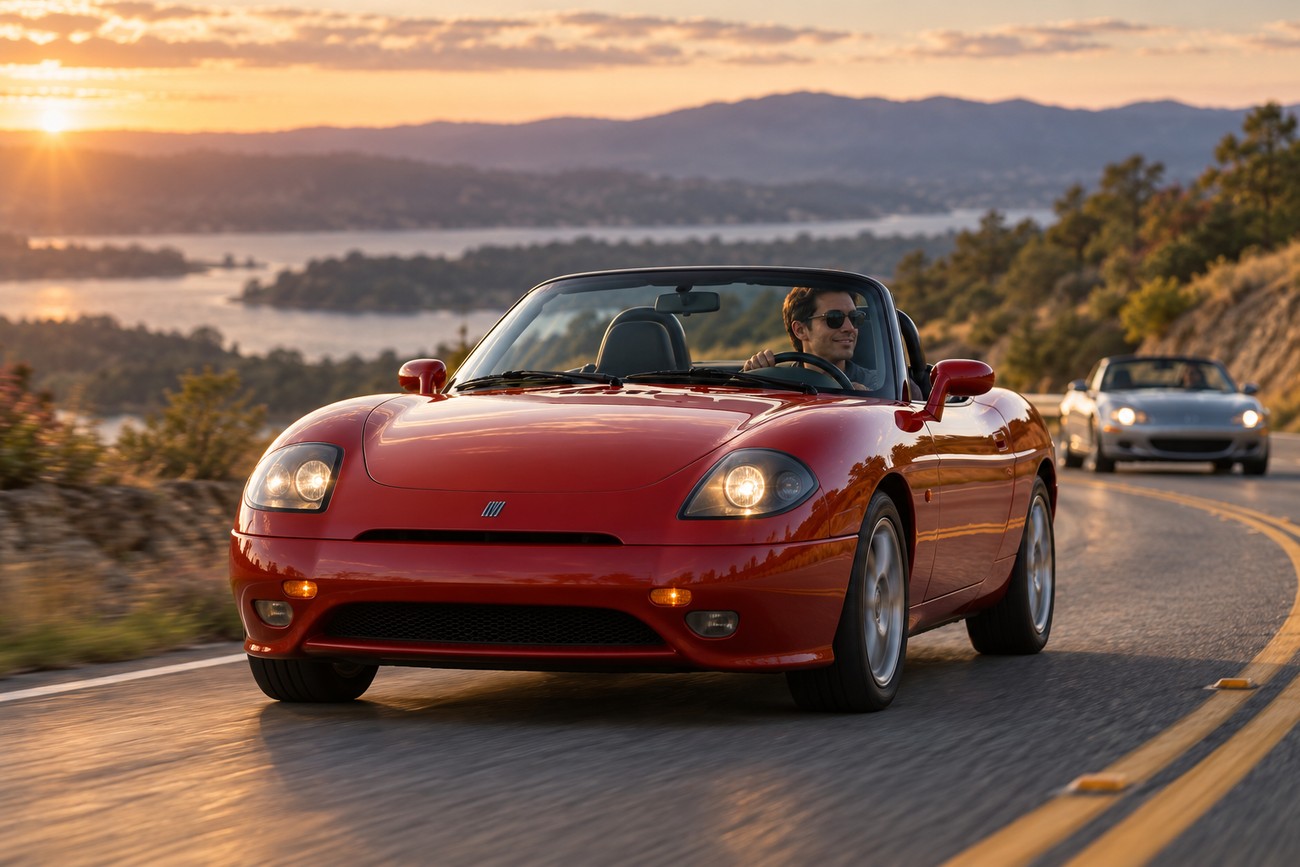
The comparison with the Miata developed from the Barchetta’s basic formula: two seats, a folding roof, modest weight, and enough performance for enjoyable road driving. At 1,060 kg, the Fiat has the physical lightness that makes a small roadster feel responsive without requiring extreme engine output.
Its 1,747 cc engine produces 130 hp, and the factory 0–62 mph time is 8.9 seconds. Those figures place the Barchetta in the same broad recreational space as other affordable lightweight roadsters. The experience depends as much on the exposed cabin, compact body, and willingness to use the engine as it does on outright acceleration.
The important distinction is the drivetrain. The Barchetta uses a transverse engine and front-wheel drive, while the conventional Miata formula is associated with a longitudinal engine and rear-wheel drive. That changes how the car behaves under power, how the front tires share their workload, and what an experienced rear-wheel-drive driver will feel through a corner.
For some buyers, that difference is precisely the attraction. The Barchetta feels like a Fiat interpretation of the small roadster rather than a copy of the Miata. Its character is tied to Italian styling and front-driven dynamics, while its ownership risks are tied to age, corrosion, and parts availability.
The Rust and Water-Ingress Reality
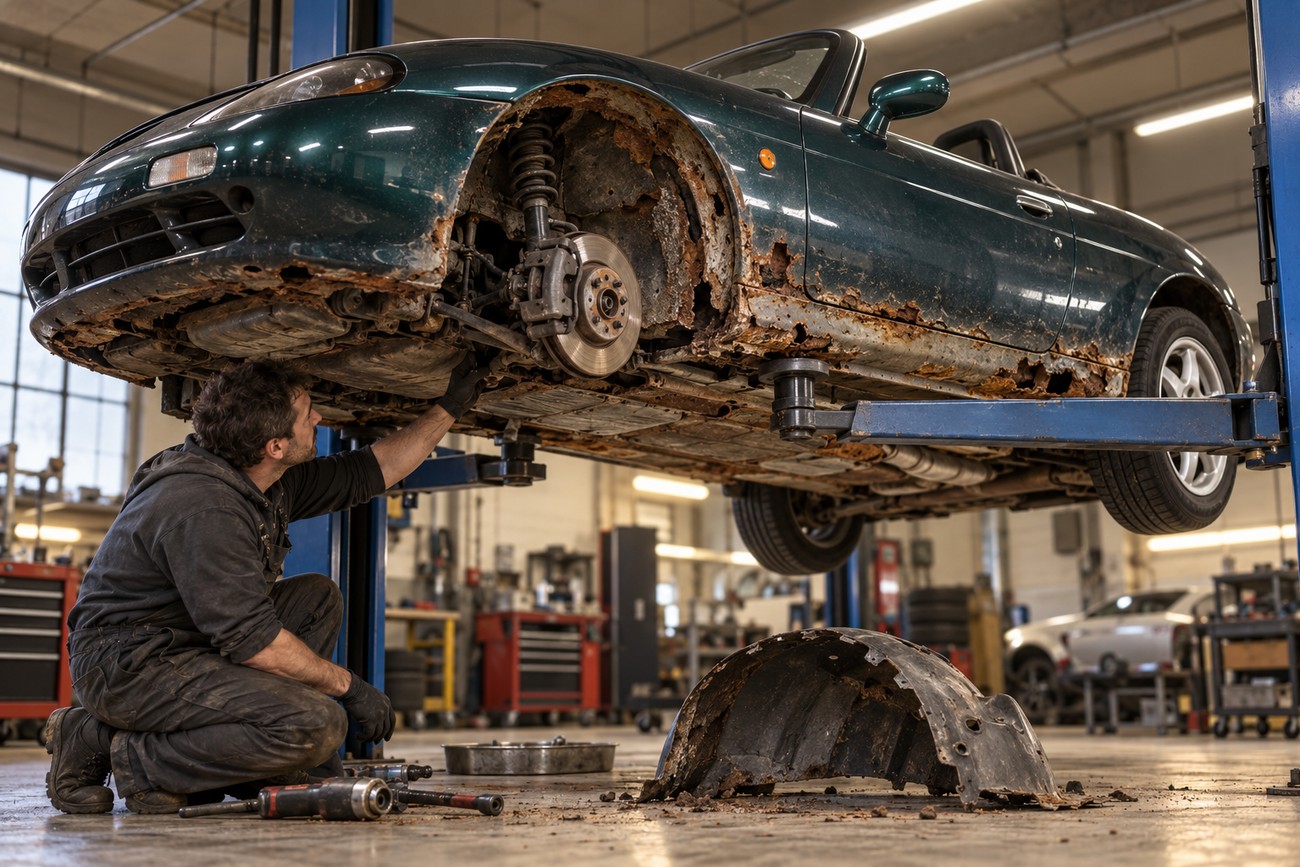
The Barchetta has a galvanized body, but galvanization does not eliminate corrosion. Damaged protection, trapped dirt, and persistent moisture can still create rust in the underside, wheel arches, sills, floors, and hidden cavities. A clean exterior therefore says little about the condition of the areas that determine whether the car is a sensible purchase.
Inspection on a lift is essential. The wheel-arch liners should be removed or examined as far behind as possible, because dirt and moisture can hide damage from a normal walk-around inspection. The floor and sills also need close attention, including seams, drain areas, and any surface that appears freshly coated to conceal older repairs.
Paint quality can mislead buyers in both directions. A polished car may have serious corrosion underneath, while an untidy car may simply need cosmetic work. Look for bubbling around the arches, uneven underseal, recent paint on isolated panels, soft metal, and repairs that lack a clear transition into sound structure.
Water can enter through the roof and window seals, especially at the corners of the glass seals. Once inside, it can damage trim and flooring while accelerating corrosion in the cabin and body. Check for damp carpets, stained materials, a persistent musty smell, and evidence that the interior has been dried or cleaned shortly before sale.
The most expensive rust is often the rust you cannot see during a quick viewing. A seller who refuses a lift inspection leaves you unable to establish the condition of the car’s most important structure. Walking away is usually cheaper than discovering perforation after purchase.
Engine Checks: Timing Belt, Oil Pressure, and Diesel-Like Noise
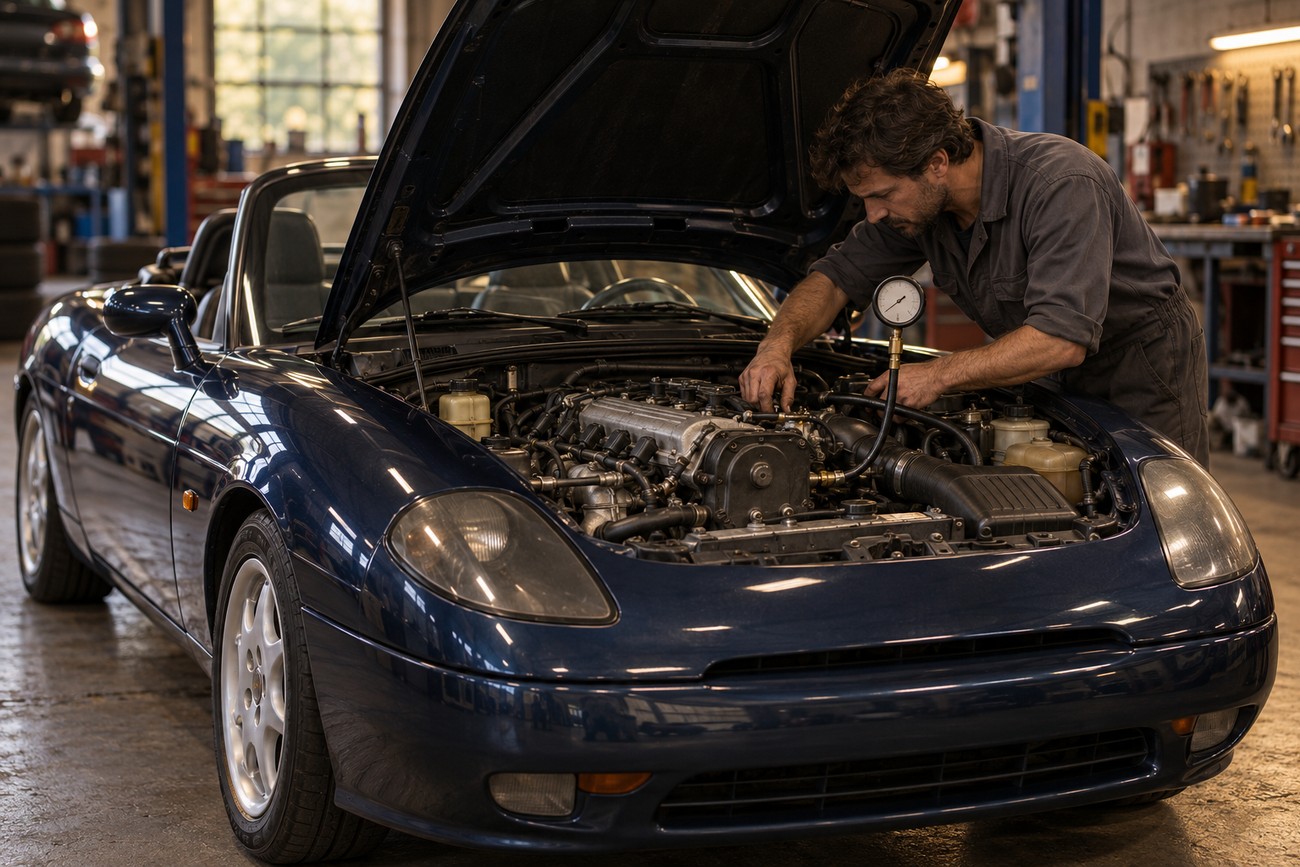
The 1.8-liter engine uses a belt-driven timing system. On a car from this period, documented replacement matters more than low mileage alone. A vehicle that has covered little distance may still have an old belt, aged tensioning components, and a service history too vague to support continued use.
A warm-engine noise resembling a diesel or tractor deserves proper diagnosis. Cam-phaser wear can produce this sound, but similar symptoms may relate to oil starvation or low oil pressure. A quiet cold start does not clear the engine, because oil temperature and pressure can change the noise as the engine reaches operating temperature.
The correct investigation includes checking oil pressure with the engine hot and assessing the oil, filter, oil passages, and oil pump. Replacing only the cam phaser can waste money if the underlying lubrication problem remains. The condition of the oil and the service history may also reveal neglect that a quiet engine would conceal.
Single-source owner reports describe cooling-tube failure, overheating, persistent leaks, and one oil-pump failure that caused total oil-pressure loss and engine stoppage. These reports should not be treated as universal defects, but they justify careful examination of the cooling system, warning-light behavior, leaks, and oil-pressure readings.
A pre-purchase inspection should include a fully warmed engine, a scan for warning signs where appropriate, and a clear explanation of any abnormal sound. “They all do that” is not a diagnosis. It is a reason to gather more evidence before committing to the car.
The Parts and Trim That Turn a Bargain Into a Project
Some Barchetta costs appear only after the purchase. Replacement strut mounts can be difficult to source, and the labor involved in reaching them can make a minor-sounding suspension fault expensive. Inspect for knocks, uneven ride height, damaged rubber, and signs that previous repairs used unsuitable substitutes.
The vinyl soft top, plastic rear window, and headlamps also show age clearly. The roof can become brittle or lose its ability to seal, while the rear window may turn cloudy enough to restrict rearward visibility. Cracked lamps and worn seals affect both appearance and weather protection, and some body, trim, roof, and lamp components are increasingly difficult to find.
The heater core sits behind the central dashboard area. A leak can place coolant inside the cabin and may be mistaken for ordinary dampness from the roof. Inspect behind the stereo and around the center-console area for coolant traces, sticky residue, unusual staining, or a sweet smell after the engine has warmed up.
Low mileage does not prevent age-related deterioration. Tires, brakes, seals, plastic components, and the soft top can all suffer through storage and infrequent use. A low-mileage car with no supporting maintenance records may require more immediate work than a higher-mileage example that has been driven and serviced consistently.
A Buyer’s Inspection Order That Avoids Expensive Mistakes
Begin with documentation. Look for evidence of timing-belt replacement, regular oil servicing, cooling-system work, and suspension repairs. Treat missing records as an unresolved maintenance cost, regardless of the odometer reading.
Next, put the car on a lift and inspect the underside, floors, sills, wheel arches, and hidden cavities. Remove or look behind the wheel-arch liners where possible. This stage should come before detailed cosmetic evaluation because structural corrosion can make other improvements financially irrelevant.
Start with hidden structural corrosion, then verify hot oil pressure, before spending time judging paint or trim. A clean exterior can conceal the failures with the largest repair bills.
After the underside, test the roof and inspect every window-seal corner for water entry. Check the cabin for dampness, stained flooring, and musty odors. Look behind the stereo and in the central dashboard area for coolant traces that could indicate a heater-core leak rather than roof water.
Run the engine until it reaches operating temperature. If a diesel-like or tractor-like sound appears, verify hot oil pressure and assess the oil, filter, passages, and pump before approving cam-phaser replacement. Inspect the cooling system for leaks and signs of overheating as well.
Finish with suspension mounts, tires, brakes, headlamps, seals, roof components, and plastic trim. A low asking price should be treated as an invitation to calculate the repair budget, not as proof of value. Paint, quiet cold starts, and low mileage cannot replace this sequence.
Running Costs, Fuel Claims, and the Ownership Verdict
The Barchetta can be affordable to buy and entertaining to drive, but parts scarcity changes the financial calculation. Corrosion repair, seals, suspension mounts, roof components, lamps, and engine diagnosis can quickly exceed the difference between a cheap example and a well-documented one.
Promotional or review descriptions cite approximately 6.5–7.5 L/100 km. One owner reports 10 L/100 km in calm driving and significantly higher consumption when driven hard. Neither figure should be treated as universal: fuel economy varies with engine condition, traffic, maintenance, and driving style.
The strongest candidate is a structurally sound car with documented timing-belt work, a dry cabin, a healthy roof, and no unexplained warm-engine noise. Cosmetic imperfections are easier to budget for than hidden corrosion or an unresolved oil-pressure problem.
The Barchetta suits a buyer who values its Italian styling, front-wheel-drive character, and open-air involvement, and who can inspect and maintain an older specialist car. Buyers seeking simple ownership, abundant replacement parts, or a roadster that behaves like a rear-wheel-drive Miata should walk away from poor examples and may be better served elsewhere.
Frequently asked questions
What Fiat car is similar to the Miata?
The Fiat Barchetta is Fiat’s closest answer to the Miata: a lightweight, two-seat roadster produced from 1995 to 2005. Its 1,747 cc engine produces 130 hp, and its 1,060 kg body gives it the accessible performance expected from a small open sports car.
The practical distinction is its transverse engine and front-wheel drive. That makes the Barchetta a different driving proposition from a conventional rear-wheel-drive roadster, with different cornering behavior and weight distribution. It should be chosen for its own character rather than as a direct mechanical substitute for a Miata.
How can you tell whether Barchetta cam-phaser noise is serious?
Reproduce the noise with the engine fully warmed, then verify oil pressure with the engine hot. A diesel-like or tractor-like sound may indicate cam-phaser wear, oil starvation, or low oil pressure, so a quiet cold start does not establish that the engine is healthy.
Before authorizing a cam-phaser replacement, inspect the oil, filter, oil passages, and oil pump. If pressure is low or lubrication is contaminated, replacing the phaser alone may leave the real fault untouched. A clear diagnosis is more valuable than accepting the noise as a normal characteristic.
What should coolant traces inside a Barchetta tell a buyer?
Coolant traces behind the stereo or around the central dashboard area can indicate a leaking heater core. The heater core is located behind the central dashboard, so coolant entering the cabin may look like ordinary dampness from a leaking roof or window seal.
Check for sticky residue, staining, a sweet smell, and dampness that returns after the engine warms up. This finding changes the repair assessment because access to the heater core can require substantial dashboard work. Roof leaks still need investigation, but coolant evidence points to a different and potentially more expensive fault.







