
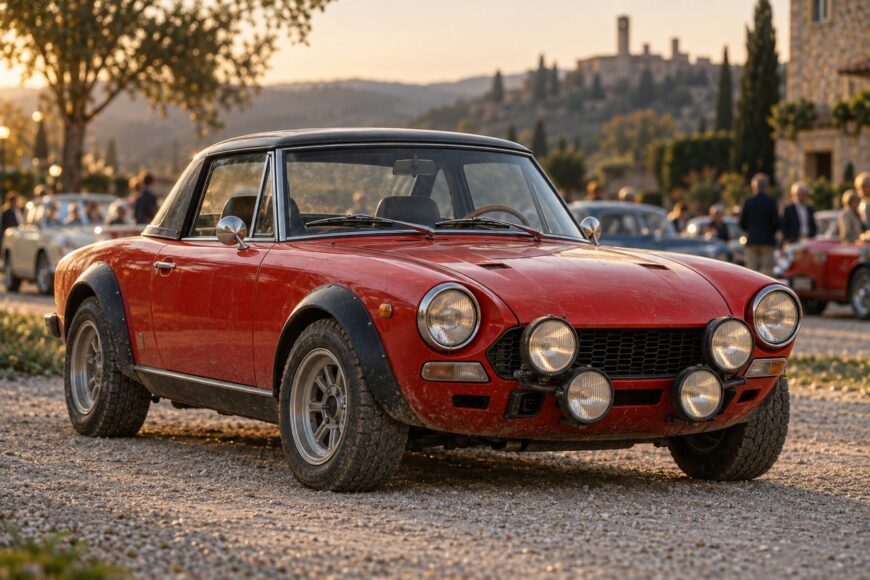
The historic Fiat 124 Abarth Rally is routinely confused with the Abarth 124 Rally introduced for competition in 2016. The names are close, but the cars belong to different generations and regulations: the 1970s car was homologated for FIA Group 4, while the later car competed in Group R-GT. Even descriptions of the historic car disagree on engine size and power, so a single headline figure is a poor way to identify one.
For the Group 4 car, the useful questions concern homologation, competition equipment, weight, and documented identity. Those details explain both its character and the difficulty of assessing a surviving example. They also prevent specifications from a later works configuration—or from the 2016 rally car—from being assigned to every 1970s 124 wearing an Abarth badge.
- What the Fiat 124 Abarth Rally Was Actually Homologated For
- The Specification Dispute: 1,756 cc or 1,995 cc?
- Engine, Chassis, and the Parts That Made It a Rally Car
- Why Lightweight Balance Matters More Than the Badge
- Historic Group 4 124 vs. 2016 R-GT Abarth 124 Rally
- Buying, Restoring, and Verifying an Authentic Homologation Car
- Frequently asked questions
- Which is better, a Fiat 124 Spider or an Abarth 124 Spider?
- What are common problems with the Abarth 124 Spider?
- How can you tell whether a 124 Abarth Rally is a genuine homologation car?
- Why do sources list different power figures for the Fiat 124 Abarth Rally?
What the Fiat 124 Abarth Rally Was Actually Homologated For
The Fiat 124 Abarth Rally was homologated for FIA Group 4 in late 1972. It belongs to the 1970s homologation era, commonly discussed as 1972–1975. Homologation gave the competition project a regulatory identity; it did not mean that every car described as a “124 Spider” shared the same rally equipment or engine preparation.
The road-going homologation version provided a basis for competition, where factory-supported development could take the specification further. That distinction matters when a catalogue quotes a restrained road-car output beside a much higher competition figure. Both may concern the 124 Abarth Rally family without describing an identical car in an identical state of preparation.
The project also involved more than a badge and exterior trim. Suspension, seating, and other competition-oriented components separated the rally base from an ordinary open 124 Spider. A buyer assessing a claimed Group 4 car should therefore establish what was built, what was subsequently modified, and which of those changes can be tied to period documentation.
“Homologated” is sometimes used loosely in advertisements as a synonym for rare or sporting. Here, it refers to a car developed for a particular FIA category in a particular period. Keeping that meaning intact prevents a road Spider, a historic competition car, and a much later rally machine from collapsing into one supposed specification.
The Specification Dispute: 1,756 cc or 1,995 cc?
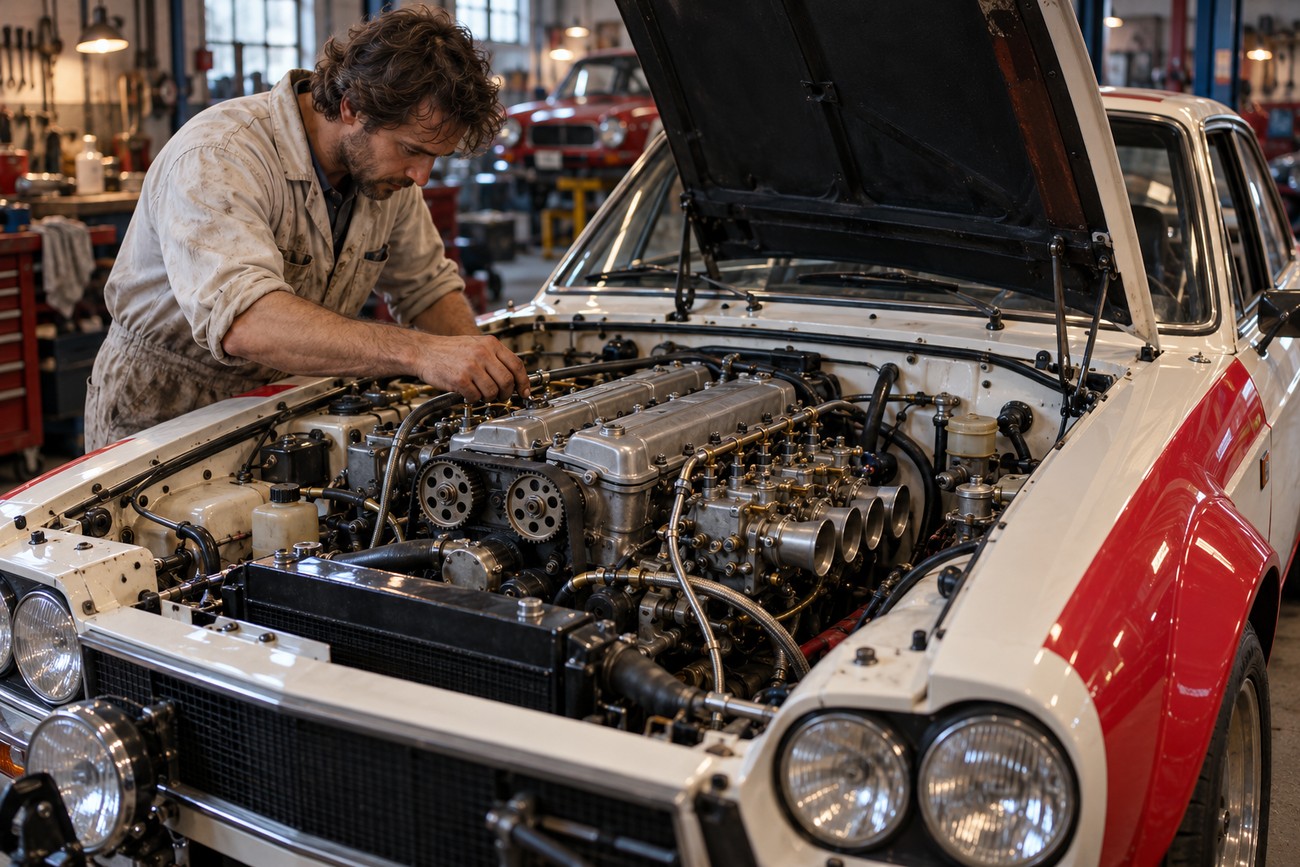
Published engine figures do not describe one clean, universally repeated Fiat 124 Abarth Rally specification. Historical references often cite 1,756 cc and 128 hp for the 1973–1975 homologation version. The official Heritage listing instead gives 1,995 cc and 215 hp at 7,000 rpm. Presenting either pair without identifying its source and intended configuration conceals the disagreement.
Heritage describes its engine as a four-cylinder DOHC unit with four valves and Kugelfischer injection. That is a specific competition description, rather than a safe shorthand for every road-going homologation car. The injection system is a useful clue when reading a specification sheet, provided the rest of the claimed configuration supports it.
Different stages of development, levels of preparation, and retrospective listings may account for part of the spread. The available figures alone do not establish that every quoted output maps neatly to a particular surviving chassis. It would be equally misleading to combine the 1,756 cc displacement from one reference with the 215 hp output from Heritage and call the result a standard factory specification.
Read a power claim alongside its displacement, induction system, date, and source. A period document for an individual car has a different evidentiary role from a later model overview, even when both are useful. Where the paperwork is incomplete, the accurate description is a documented configuration with acknowledged uncertainty, rather than an artificially precise answer.
Engine, Chassis, and the Parts That Made It a Rally Car
Period descriptions of the road-rally version mention twin Weber carburetors and a twin exhaust. Heritage’s Kugelfischer-injection specification describes a different engine configuration, so these details should not be assembled into a single universal parts list. Induction is particularly worth checking on a car offered for sale: changing it can alter both the way the car runs and the specification its owner can substantiate.
The independent rear suspension, described as using MacPherson struts, made the rally car more than a dressed-up standard Spider. Its contribution depends on the condition and setup of the complete car, rather than the suspension label alone. Worn or substituted components can leave a car looking correct while changing its behavior and its claim to period specification.
Recaro bucket seats and 185/70 VR13 Pirelli CN36 tires on 13-inch wheels are also associated with the rally specification. These are identifying details, though any individual example still needs evidence of what it carried when built or campaigned. A tire name in a historical description is not a reason to assume that a surviving car wears period-correct rubber today.
Rally-car mass is commonly given as approximately 930 kg. In a rear-wheel-drive car, that relatively low mass affects braking, direction changes, and the demands placed on its tires; it helps explain the appeal without relying on the highest published engine output. The figure should still be read as a reference for a rally configuration, not a guaranteed measured weight for every restored or road-going example.
Why Lightweight Balance Matters More Than the Badge
The historic 124 Abarth Rally is rear-wheel drive, and approximately 930 kg is central to descriptions of its competition character. Low mass gives the engine less weight to move and gives the brakes and tires less to manage. Together with the independent rear suspension and period tire specification, it makes chassis condition and preparation consequential to how the car drives.
That does not establish a universal performance advantage. Older rear-wheel-drive rally machinery can be at a disadvantage against newer designs under different rules and on different events. A historical car’s value is therefore better judged within its own competition context than through a comparison of isolated power figures or modern rally results.
For a collector, balance and period identity can matter more than maximum output. A car with a clear history and coherent period equipment communicates what the Group 4 project actually was, even if another configuration produced more power. Conversely, a larger engine fitted later may make an enjoyable car without proving that its present specification is original.
Historic Group 4 124 vs. 2016 R-GT Abarth 124 Rally
The shared 124 and Abarth names invite mistaken comparisons. The 300 hp figure belongs to the modern R-GT car and must not be applied to the 1970s Group 4 homologation car.
| Point of comparison | 1970s Fiat 124 Abarth Rally | 2016 Abarth 124 Rally |
|---|---|---|
| Era and category | FIA Group 4; homologated in late 1972 | Introduced for competition in 2016; Group R-GT |
| Engine | Historical references often cite 1,756 cc; Heritage lists a 1,995 cc four-cylinder DOHC, four-valve engine with Kugelfischer injection | 1.8-liter turbocharged direct-injection DOHC |
| Power | 128 hp in commonly cited 1973–1975 homologation references; 215 hp at 7,000 rpm in the Heritage listing | Up to 300 hp at 6,500 rpm |
| Transmission | Check the specific period car and its documentation; no single transmission specification is established by these engine figures | Six-speed sequential gearbox |
| Differential | Check the specific car’s documented competition specification | Mechanical limited-slip differential |
| Development purpose | A 1970s Group 4 homologation base and competition project | A later rally car developed for Group R-GT regulations |
Buying, Restoring, and Verifying an Authentic Homologation Car
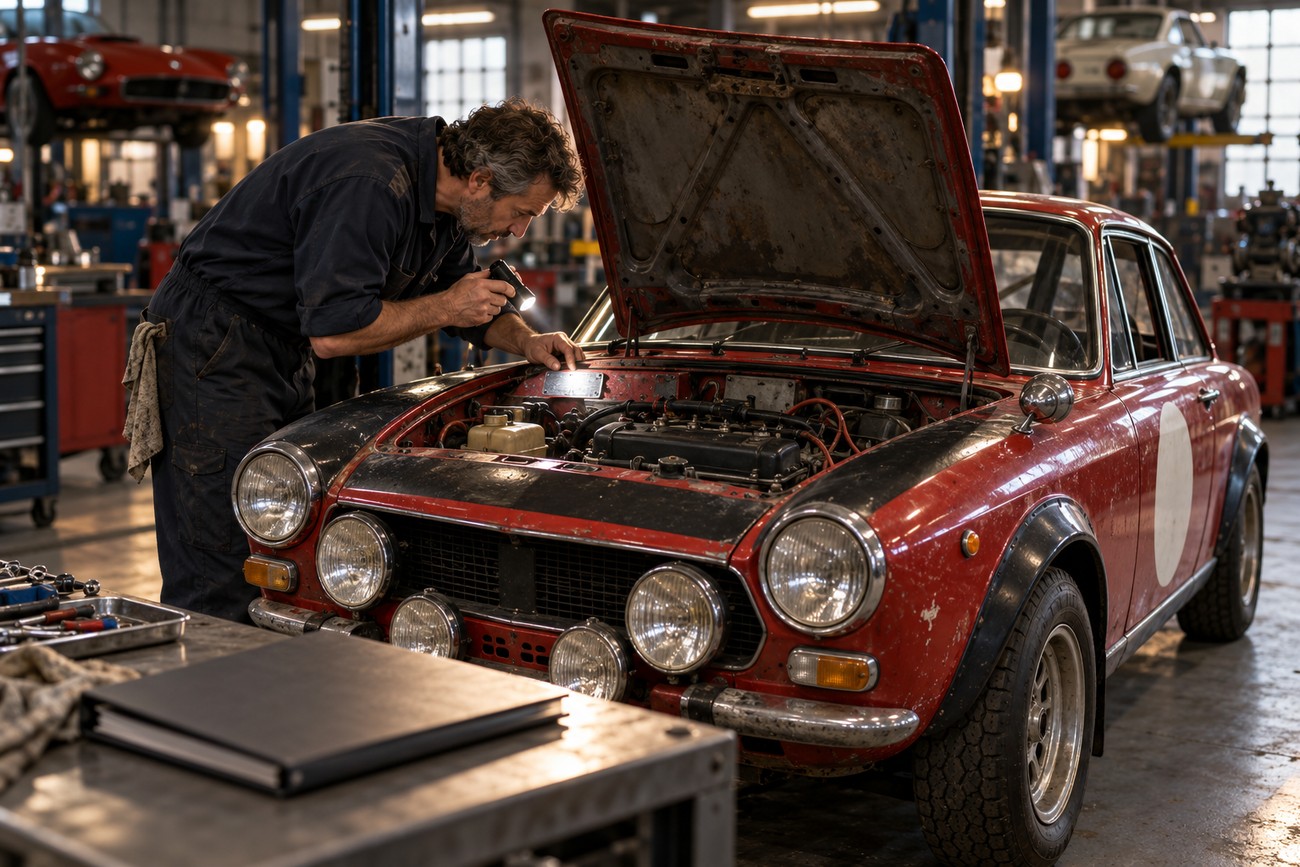
Begin with the seller’s description, then separate three possibilities: a standard road 124 Spider, a historic Fiat 124 Abarth Rally, or a modern Abarth 124. Listings can mix their names and specifications. A badge, a rally-style finish, or a copied model card cannot establish Group 4 identity on its own.
Ask for records that connect the chassis to its claimed period identity, then compare the installed engine and competition equipment with that history. The 1,756 cc/128 hp references and Heritage’s 1,995 cc/215 hp listing make this especially important: a mismatch is a question to investigate, rather than automatic proof of either authenticity or fraud.
Value the shell, period competition hardware, engine configuration, and paperwork as a chain of evidence. A convincing component on its own cannot authenticate the rest of the car.
Restoration costs can be difficult to contain when homologation-specific parts are scarce and specialist work is needed on older Fiat/Abarth competition mechanics. Substituting an easier-to-find part may get a car running, yet weaken a claim of original specification. Before agreeing on a project, identify which missing items affect safe use, which affect historical accuracy, and whether replacements can be documented.
Rarity brings status but can also narrow the market when it is time to sell. Originality, homologation equipment, and a traceable history materially affect how a specialist buyer will assess the car. A well-presented example with gaps in its identity deserves more scrutiny than its appearance alone might suggest.
Frequently asked questions
The name on a listing is only a starting point. These distinctions help identify which 124 is being discussed and which records are relevant before comparing specifications.
Which is better, a Fiat 124 Spider or an Abarth 124 Spider?
For ordinary road use, “better” depends on the condition and character you want: compare the particular Fiat 124 Spider and modern Abarth 124 Spider being offered, including their service records and specification. Neither name automatically identifies the historic FIA Group 4 homologation car. If that is the car you seek, establish its period chassis identity and equipment before judging it against a road Spider.
What are common problems with the Abarth 124 Spider?
For a modern road-going Abarth 124 Spider, start with maintenance history and the condition of the individual car rather than assuming a fault from its badge. Buyers can also be disappointed if they expect the base 1.4 MultiAir road-car character to match the dedicated 2016 Group R-GT rally car. That competition machine’s 1.8-liter engine, sequential gearbox, and up-to-300 hp specification do not describe the road Spider.
How can you tell whether a 124 Abarth Rally is a genuine homologation car?
Work from period documentation to chassis identity, then check the shell, competition equipment, and engine configuration against the claimed history. Record later modifications separately from features supported as original or period-correct. Appearance and a specification sheet can guide inspection, but provenance connecting the physical car to its claimed identity carries more weight.
Why do sources list different power figures for the Fiat 124 Abarth Rally?
They may be describing different configurations or stages of preparation. Historical references often give 1,756 cc and 128 hp for the 1973–1975 homologation version, while Heritage lists 1,995 cc and 215 hp at 7,000 rpm for its competition specification. Check displacement, induction, source type, and whether the figure describes a road, homologation, or full competition configuration before comparing outputs.







