
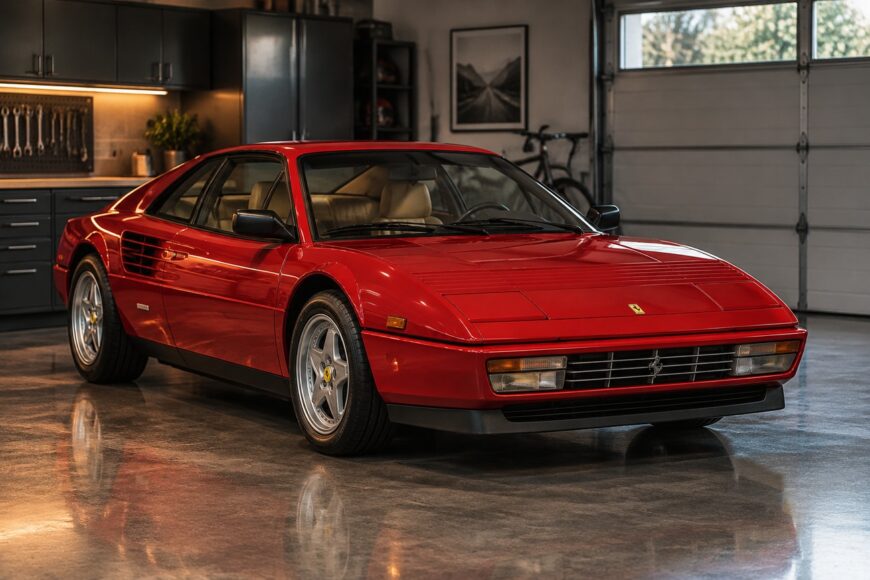
A relatively inexpensive mid-engine V8 Ferrari has an obvious appeal. Produced from 1980 to 1993, the rear-wheel-drive Mondial offers that layout in a 2+2 coupe or cabriolet, often at an asking price below those of more sought-after Ferraris from its era. It can look like a way into the marque without paying for one of its most coveted shapes.
The asking price is only the start of the calculation. An aging Mondial can need specialist work, hard-to-find parts, and repairs that a brief test drive will not reveal. The useful buying question is whether a particular car’s condition, history, and remaining repair budget make sense together.
- Why Is the Ferrari Mondial Relatively Cheap?
- Mondial 8, Quattrovalvole, 3.2, and t: What Changes?
- Does It Deliver the Ferrari Driving Experience?
- The Costs a Cheap Asking Price Leaves Out
- How to Inspect a Mondial Before Paying for One
- So Is the Mondial the Cheapest Way Into a V8 Ferrari?
- Frequently asked questions
- What fuel should a Mondial 3.2 use?
- What extra checks does a Mondial Cabriolet need?
- How can I assess a Mondial being sold too far away for an initial visit?
Why Is the Ferrari Mondial Relatively Cheap?
The Mondial’s lower used-market position reflects demand as much as engineering. Its long 2+2 body divides opinion, and buyers drawn to the compact proportions of other mid-engine Ferraris may pass it by. That gives an interested buyer more room to choose carefully, though a lower price does not mean the car is less complex to maintain.
Performance also shapes its reputation. The earliest Mondial 8 is quoted at 214 hp, modest enough that jokes about its pace have endured. Later versions changed substantially, but the early car’s image still colors the range. A buyer who likes the Mondial on its own terms may benefit from that weaker demand; one who wants immediate resale appeal should treat it as a drawback.
Examples in the supplied listings span approximately $37,500–79,888 in US-dollar listings, €59,900–72,500 in European listings, and roughly 5.5 million roubles upward in Russia. These are asking prices across different markets and conditions, not transaction values or a dependable price floor. Import, registration, and local specialist support can alter the real comparison further.
Calling it the “cheapest Ferrari” is therefore a claim about buying a used car, not owning one. A well-documented Mondial priced above a tired example may leave you spending less overall. The gap between those cars matters more than their position in a list of advertised prices.
Mondial 8, Quattrovalvole, 3.2, and t: What Changes?
Confirm the version before comparing prices or performance claims: the four names do not describe interchangeable cars.
| Version | Engine and quoted output | Buyer-facing distinction |
|---|---|---|
| Mondial 8 | 2,927 cc V8; quoted 214 hp | Early car whose modest output influences the model’s reputation. |
| Mondial Quattrovalvole | Check the individual car’s specification. | Distinct version; do not assume Mondial 8 or 3.2 figures apply. |
| Mondial 3.2 | 3,186 cc V8; quoted 270 hp | Quoted 0–100 km/h time of 7.4 seconds. |
| Mondial t | Later 3.4-liter listings quote approximately 286–300 hp. | The “t” does not mean turbocharged. |
Quoted power and performance vary by market and source. Treat the figures as a way to identify broad differences, then check the documentation and specification of the car for sale. Even a correct badge does not establish which market’s published figure belongs in an advertisement.
Version matters to the ownership calculation, too. A seller may use a later car’s stronger figures to describe the Mondial range while offering an earlier example. Match the car’s identity and paperwork first; only then compare its asking price with those of genuinely similar cars.
Does It Deliver the Ferrari Driving Experience?
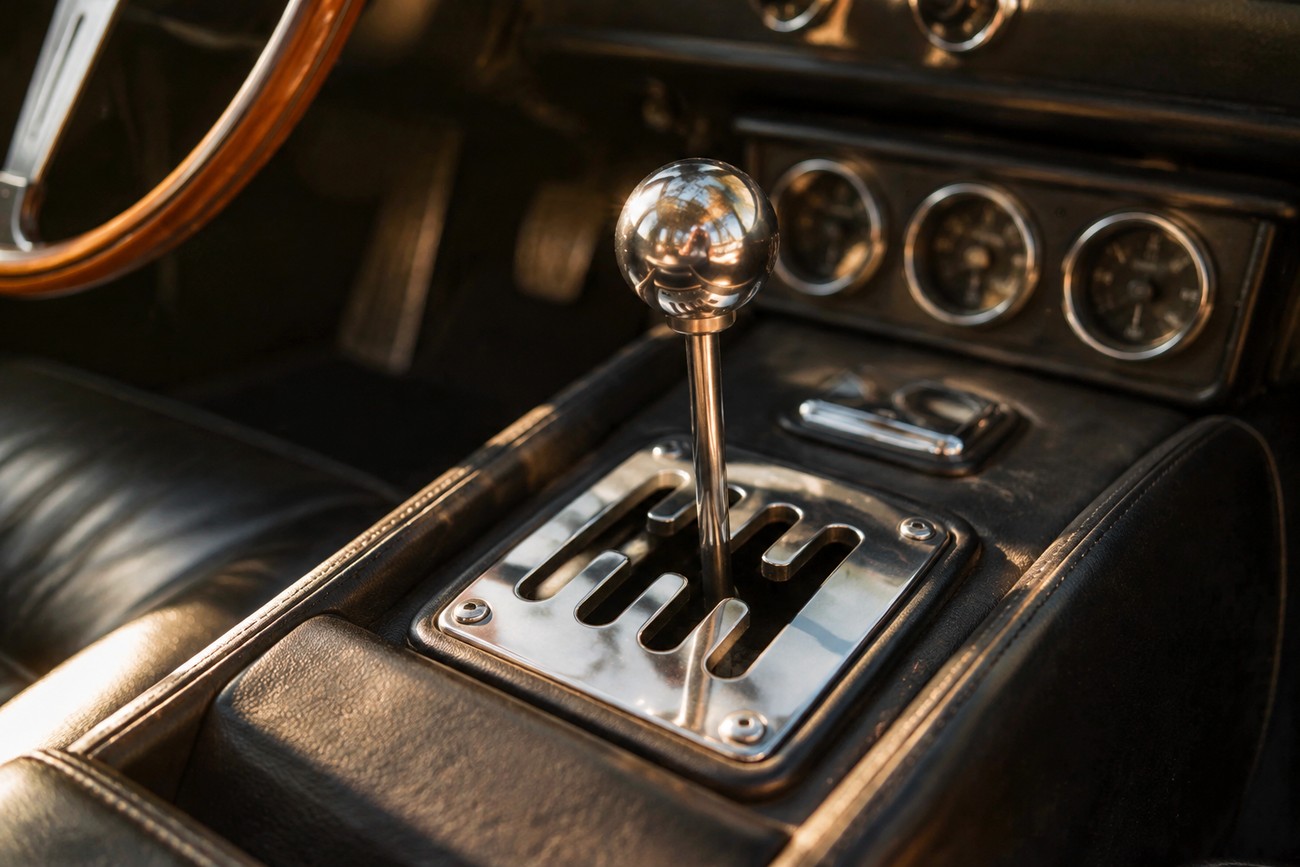
The Mondial’s appeal rests on more than a badge. You sit in a mid-engine V8 car, often with a manual gearbox, and a layout unlike an ordinary four-seat grand tourer. For a buyer who enjoys that mechanical character, the Mondial offers a recognizable classic Ferrari experience, even if it is rarely the quickest route to a given speed.
It is also unfair to judge every Mondial by the earliest car. The Mondial 8 is quoted at 214 hp, the 3.2 at 270 hp, and later 3.4-liter t listings at approximately 286–300 hp. The 3.2’s quoted 0–100 km/h time of 7.4 seconds belongs to that version; applying it across the range hides meaningful differences and ignores variations between published sources.
The 2+2 arrangement brings a practical compromise. The rear seats exist, yet their limited room makes them more useful for occasional passengers or extra belongings than routine family travel. If carrying four people regularly is central to the purchase, check that expectation with an actual seating trial before the V8 settles the decision for you.
Someone shopping chiefly for acceleration may find the early car disappointing, while someone buying for the engine, manual driving, and unusual 2+2 layout may value it differently. A proper drive in the version you intend to buy is more informative than either a dismissive joke or a single catalog number.
The Costs a Cheap Asking Price Leaves Out
Deferred maintenance is the clearest threat to a bargain. Work postponed by one owner can pass through several sales, leaving the next buyer to address faults alongside ordinary servicing. A low advertised price offers no protection from that accumulated work, and a recent service bill may cover only a narrow part of it.
Aging electrical and hydraulic systems can create troublesome faults even when the car starts, runs, and looks presentable. Body damage, deteriorated trim, and previous repairs deserve equal attention because model-specific parts can be difficult to find. Specialist labor and parts availability may decide how long the car is off the road, as well as what it costs to put right.
That downtime is an ownership cost in its own right. A Mondial waiting for a part or a qualified repair cannot serve as a car you expect to use on demand. Before treating one as a project, establish who can assess and complete the work locally; enthusiasm and a low purchase price are poor substitutes for a repair route.
Resale deserves a place in the budget calculation as well. Demand can be thinner than for more coveted Ferraris, so recovering money spent on restoration may take time or prove difficult. Buy the condition you can verify and the car you intend to enjoy, rather than relying on a quick sale to rescue an optimistic purchase.
How to Inspect a Mondial Before Paying for One
Start with identity. Confirm the car’s version, year, market specification, and documents before using advertised performance or other cars’ prices as a reference. The Mondial 8, Quattrovalvole, 3.2, and t differ enough that an inaccurate description can undermine the rest of your comparison.
Next, read the maintenance file for continuity and the work actually recorded. Invoices are more useful than a seller’s general assurance that the car has been “looked after,” especially if periods of ownership have little supporting paperwork. Ask what remains unresolved as well as what has recently been done.
A claimed completed repair should match an itemized invoice and the car’s present condition. A fresh service entry establishes that specific work, not that every older fault has been cleared.
Commission an independent inspection by someone equipped to assess a classic Ferrari. It should cover mechanical condition, electrical and hydraulic functions, bodywork, interior pieces, and signs of improvised earlier repairs. A tidy exterior cannot establish the condition of concealed work, while scarce trim and body parts can make apparently minor defects disproportionately awkward to correct.
Use the findings to compare cars based on likely work remaining, not asking price alone. An undocumented cheap example may need more attention than a dearer car with credible records and a sound inspection. If you cannot arrange a qualified inspection or a realistic plan for identified repairs, walking away is a practical decision.
So Is the Mondial the Cheapest Way Into a V8 Ferrari?
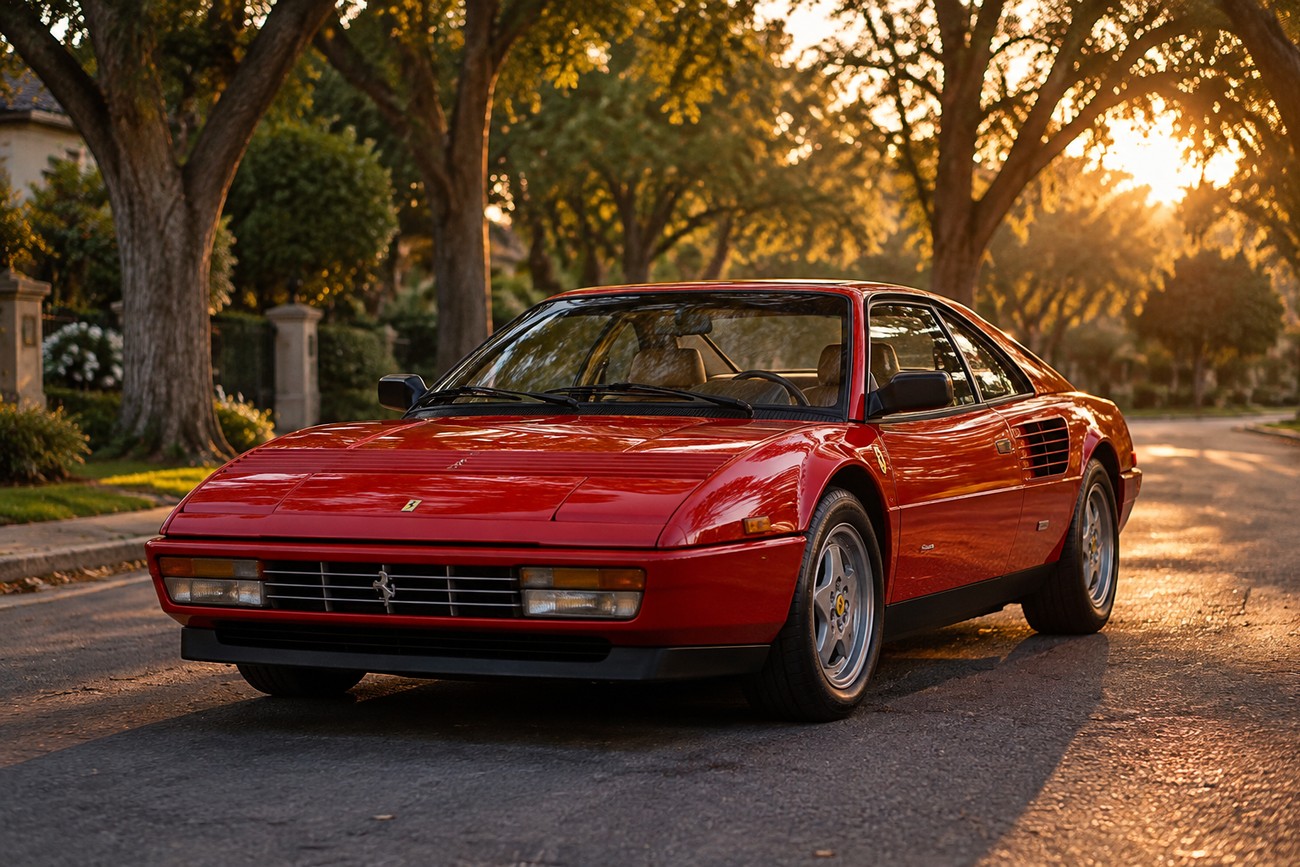
It can be a relatively accessible way to buy a used V8 Ferrari. That is a narrower claim than saying it is cheap to own. The purchase price reflects the Mondial’s particular appeal and weaker demand, while its age, specialist needs, and potential restoration work remain those of a classic Ferrari.
The strongest fit is a buyer who wants a mid-engine V8, likes the Mondial’s proportions, and can make use of its occasional rear seats without expecting a full four-seat car. That buyer also accepts that qualified upkeep may take time to arrange. The Mondial is a harder recommendation for someone seeking maximum performance, easy resale, or a low-cost project.
There is a useful distinction between paying for a better car and paying more for one. A higher asking price earns its place only when condition, documented work, and an independent inspection support it. Conversely, a cheaper car can still be sensible if its faults are understood, repairable, and allowed for before money changes hands.
Choose the version you actually want, confirm the work already done, and keep funds available after purchase for what the inspection cannot eliminate. If the deal works only when nothing else needs attention, it is too dependent on luck.
Frequently asked questions
A few details require checks against the individual car rather than a general Mondial specification. These are worth settling before a long journey to view one or before planning to use it regularly.
What fuel should a Mondial 3.2 use?
Use the fuel grade specified in the correct handbook or market-specific documentation for your car. One catalog lists AI-92 for the Mondial 3.2, but that claim is unverified; it should not be treated as a universal recommendation. If the handbook is missing, identify the car’s market specification and seek the appropriate documentation before deciding.
What extra checks does a Mondial Cabriolet need?
Operate the hood through a complete open-and-close cycle and check that it fits as intended. Inspect the cabin and areas around the hood for signs of water ingress, including dampness or staining. These checks add to, rather than replace, the mechanical, electrical, and bodywork inspection.
How can I assess a Mondial being sold too far away for an initial visit?
Request identifying details, clear photographs, and maintenance records before committing to travel. If those establish that it is the version and condition you want to pursue, arrange a local independent inspection and discuss its findings with the inspector. That sequence can expose a poor match before you incur the cost of a visit or commit to a purchase.







