

The Ferrari 612 Scaglietti offers an unusually direct route into front-engine V12 grand touring: a genuine 2+2 coupé, rear-wheel drive, long-distance capability, and a naturally aspirated engine with the sound and response buyers expect from a Ferrari. Its relatively low purchase price makes the proposition tempting.
Age changes the calculation. The engine may be strong, yet the car can become expensive through its F1 transmission, cooling system, electronics, suspension, and aging body and interior materials. The important question is therefore not whether the V12 is exciting, but whether the individual car has documented maintenance, healthy F1 hardware, sound cooling, and reliable electrics.
- What the Ferrari 612 Scaglietti Actually Offers
- Where the V12 Bargain Turns Into a Ferrari Bill
- How to Buy a 612 Without Buying Its Problems
- Bargain or Trap: The Right Owner and the Final Verdict
- Frequently Asked Questions
- How should a 612 Scaglietti be managed during long storage?
- What should be checked on a stored 612 before it returns to the road?
- How can voltage-related faults be prevented during storage?
- How often should a stored 612 be inspected?
What the Ferrari 612 Scaglietti Actually Offers
Produced approximately from 2004 to 2010, with roughly 3,000–4,000 cars built, the 612 Scaglietti was designed as a large Ferrari GT rather than a compact sports car. Its 2+2 layout provides occasional rear seating and useful luggage space, while the front-mounted, naturally aspirated 5.7-liter V12 gives the car a broad, effortless character. About 540 hp at approximately 7,250 rpm and about 588 Nm make high-speed cruising easy, while the engine still rewards drivers who use its upper rev range.
Performance remains serious by modern standards. The 612 reaches 100 km/h from rest in approximately 4.0–4.2 seconds and has an official top speed of about 315 km/h. Rear-wheel drive and an approximately 47/53 front-to-rear weight distribution give it a balanced feel, especially on a fast road where the long wheelbase and front-engine layout settle the car. It feels more like a powerful continental express than a nervous track special.
The aluminum chassis and double-wishbone suspension support accurate handling, but the car is sensitive to geometry and tire quality. Correct tires can transform its ride and steering response, while worn or mismatched rubber can make the suspension feel harsh and the front end less settled. Adaptive dampers add sophistication, though they also add age-related components that deserve inspection.
Size is part of the ownership experience. The 612 is wide and long, rear visibility is poor, and tight garages or urban parking can become tiring. Cabin refinement also falls short of newer GTs: sound insulation, climate control, seats, and infotainment have an older-school feel. The car offers genuine touring ability, but it does not deliver the isolation or electronic polish of a modern FF or GTC4.
Where the V12 Bargain Turns Into a Ferrari Bill
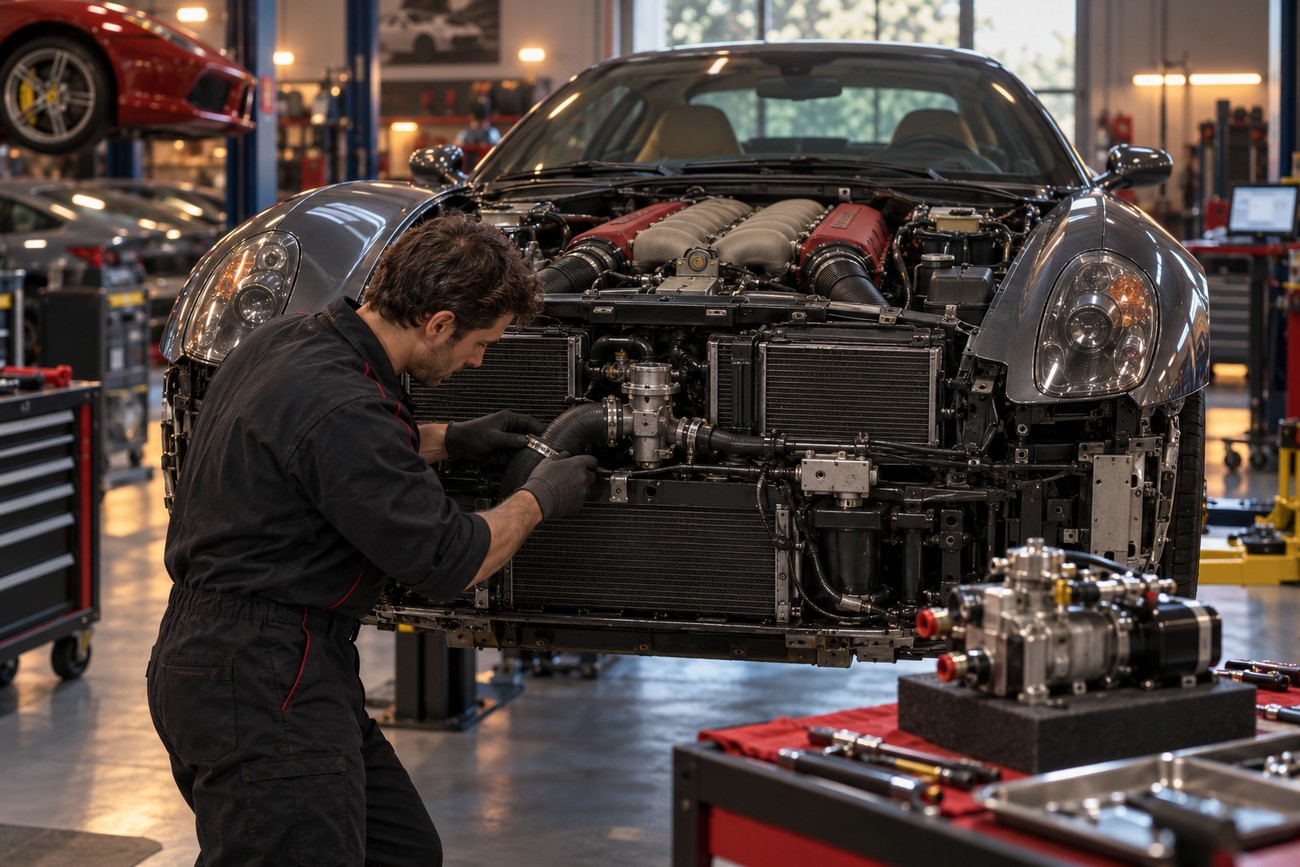
A robust engine block does not make the whole car inexpensive to maintain. The 612’s timing system uses a chain, although auxiliary belts and rollers remain service items, and age affects many systems around the engine. Radiators, hoses, clamps, and the thermostat deserve close attention because overheating a V12 can create a substantially larger problem than the original cooling fault.
Most cars use the F1A automated single-clutch manual. The rare six-speed manual has strong collector appeal, but it is unusual and priced accordingly. F1A cars can be jerky at low speed because the transmission is an old-school robotized manual rather than a modern dual-clutch system. Clutch wear, hydraulic faults, and actuator problems can produce expensive repairs, particularly when previous owners have tolerated poor engagement or ignored warning signs.
The early CAN-based electrical architecture links systems including ABS, CST, F1, climate control, seats, and infotainment. A weak battery or poor ground connection can trigger a cascade of warning lights without proving that every affected control unit has failed. The result is often diagnostic confusion, especially when a car has received an unsuitable battery, incorrect wiring repairs, or long periods of inactivity.
Technicians verify battery voltage and ground connections before condemning several electronic control units. Full-module diagnostics are then needed to separate a voltage event from a genuine component failure.
Other costs are less dramatic individually but accumulate with age. Suspension geometry, adaptive dampers, brakes, and tire condition all affect how the car drives, while aluminum panels can suffer bubbling paint or lacquer failure. Inside, sticky coatings, worn plastics, fragile buttons, and dated multimedia reduce the impression of luxury. These are not proof that a particular 612 is bad, but they are useful bargaining points and should be priced before purchase.
How to Buy a 612 Without Buying Its Problems
Begin with a Ferrari-specialist pre-purchase inspection rather than a visual check at the seller’s location. Ferrari service guidance calls for checks approximately every 10,000–20,000 km or once a year, and the paperwork should show what was actually done. A complete history from a recognized specialist is generally more valuable than an unusually low odometer reading without supporting records.
The inspection should include a cold start and a meaningful road test. The technician should assess F1 engagement, clutch condition, hydraulic pressure, actuator operation, and stored transmission faults. The engine should reach and hold the correct temperature, with the cooling system checked for aging radiators, hoses, clamps, leaks, and thermostat problems. Full-module diagnostics should cover the F1 system, ABS, stability control, body modules, climate system, seats, and other relevant electronics.
Chassis checks matter just as much. Measure suspension geometry, inspect bushes and dampers, and confirm that the tires are a suitable matching set with usable age and tread. Examine the aluminum body for bubbling paint, lacquer separation, repaired damage, corrosion around affected areas, and inconsistent panel finish. A car that drives straight but has poor geometry or unsuitable tires may need substantial corrective work before it feels like a proper 612.
Ask for evidence of correct fluids, procedures, and battery maintenance. A quality battery and verified ground connections can reduce voltage-related warning cascades, but they cannot repair a failed module or hide an F1 fault indefinitely. Cars with modifications, incomplete records, or long storage periods deserve stronger negotiation or rejection unless the purchase price leaves room for specialist-led recommissioning.
Low mileage is especially easy to overvalue on this model. An 80,000–100,000 km car with regular specialist maintenance may be a safer purchase than a 35,000 km example that spent years parked and has little supporting documentation. Storage can age seals, tires, brakes, hydraulic components, and electrical connections even when the odometer barely moves.
Bargain or Trap: The Right Owner and the Final Verdict
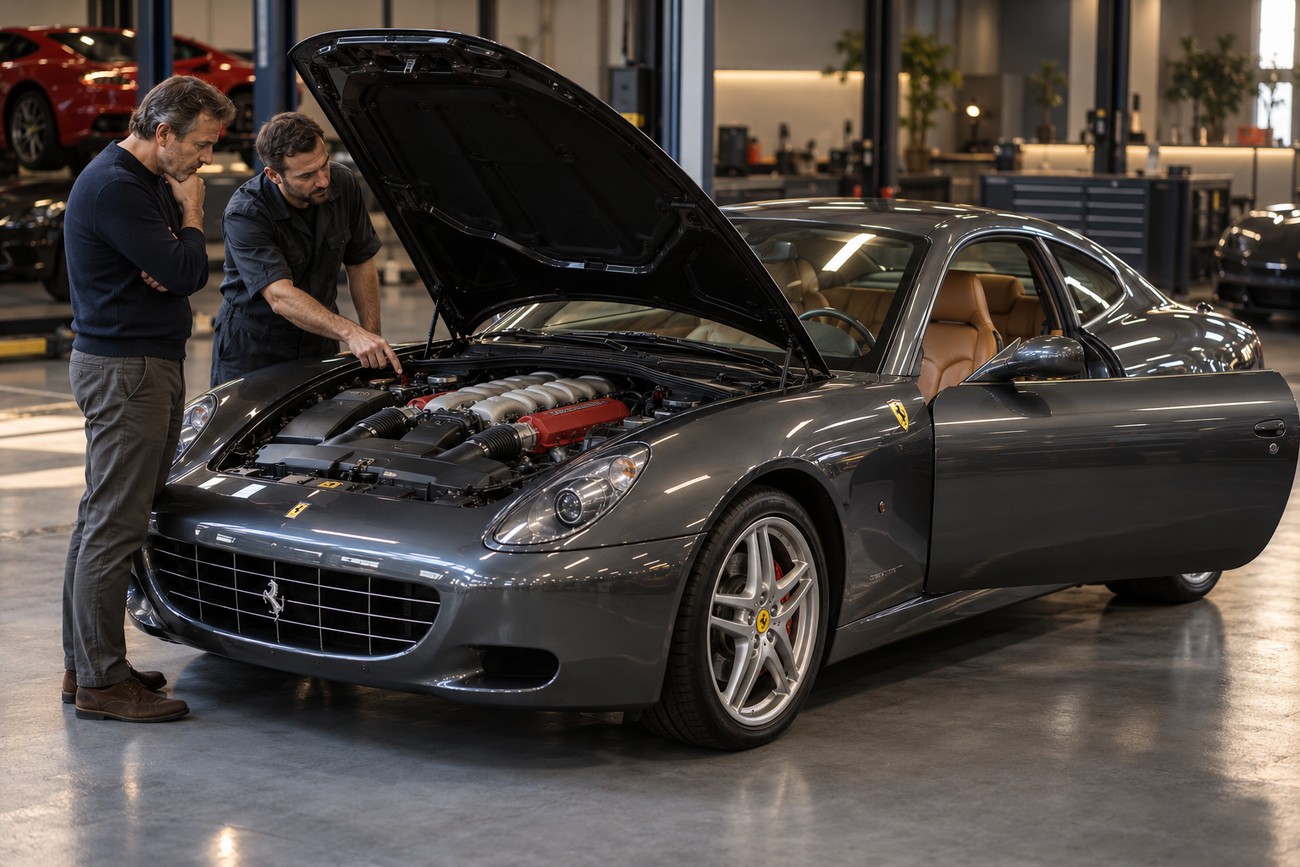
The 612 is substantially cheaper to buy than newer V12 GTs such as the FF or GTC4, but it is not cheap to maintain like an ordinary premium coupé. Its value lies in the combination of a naturally aspirated V12, long-distance pace, and usable rear seats. That combination is compelling when the car has been maintained properly and supported by a workshop that understands Ferrari systems.
The manual version has greater collector appeal, while F1 cars represent the majority and carry more transmission-related risk. F1 ownership is not automatically a mistake, but the clutch, hydraulic system, and actuator must be treated as purchase-critical items. A cheap F1 car with vague engagement and incomplete records can erase the initial saving quickly.
Regular use also matters. Long periods of inactivity can aggravate F1, brake, tire, and electrical problems, while insurance and tax for a high-powered V12 can remain substantial even when the car itself looks inexpensive. Resale may be slow, particularly for modified examples, F1 cars with poor histories, or vehicles requiring cosmetic correction.
The right 612 is a dramatic, capable V12 GT for an owner who budgets for specialist care and accepts older technology. The wrong one is a deferred-maintenance project wearing an attractive price tag. Buy the documented car with healthy systems, correct tires, and a credible inspection; treat the cheapest example as a warning rather than an opportunity.
Frequently Asked Questions
How should a 612 Scaglietti be managed during long storage?
Before storage, check fluid levels, tire pressures, brake condition, and any existing F1 warning messages. Leave the car in a dry, ventilated space, connect the battery to a properly installed, high-quality maintainer, and keep the battery and ground connections clean.
During a long lay-up, inspect the car periodically rather than repeatedly starting the engine for short periods. Check for fluid leaks, tire aging or flat spotting, brake deterioration, and new electrical warnings. Before regular driving resumes, perform a controlled road test and scan the F1 system for stored faults if engagement feels different.
What should be checked on a stored 612 before it returns to the road?
Inspect the tires for age, cracking, and flat spotting, and examine the brake discs and pads for corrosion or binding. Check fluid levels, hoses, battery condition, and visible leaks, then confirm that the engine reaches its normal operating temperature.
A Ferrari specialist should carry out a full diagnostic scan and assess F1 engagement, hydraulic operation, and clutch behavior. Any warning message or unusual shift quality should be investigated before undertaking a long journey.
How can voltage-related faults be prevented during storage?
Use a suitable battery maintainer rather than allowing the battery to discharge repeatedly. The battery terminals, ground connections, and charging system should be clean, secure, and tested, because low voltage can trigger warnings across several control modules.
A maintainer reduces the risk of voltage-related errors but cannot conceal a failed module or repair damaged wiring. Any recurring warning should therefore receive a proper full-module diagnostic check.
How often should a stored 612 be inspected?
Inspect the car periodically throughout storage, with additional checks after severe weather or a significant change in battery status. Look for leaks, tire deterioration, brake corrosion, electrical warnings, and signs of moisture or pest damage.
Before driving normally again, check the tires and brakes, verify fluid levels, test the battery, and complete a gradual road test. A specialist inspection is advisable after particularly long storage or when service records are incomplete.







