
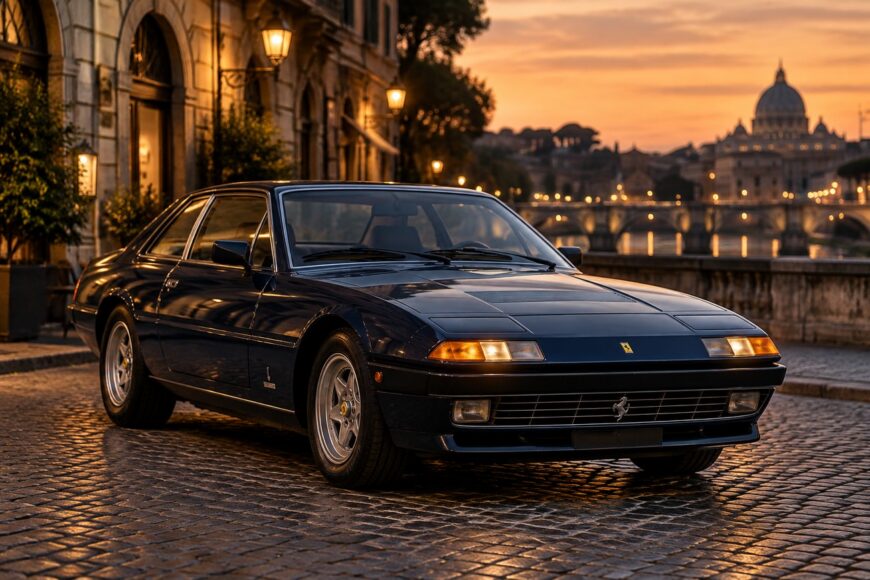
A Ferrari V12 paired with a three-speed automatic sounds like a contradiction if your idea of the marque begins with quick shifts and sharp responses. In the 400i, though, the gearbox served a front-engined 2+2 built for long journeys. Judged as a sports car, it can feel distant; judged as a grand tourer, its priorities make more sense.
That split still shapes the car’s reputation. Purists may pass over an automatic 400i, while buyers attracted by a seemingly approachable V12 Ferrari may overlook what it costs to make an old GT dependable. The distinction matters less in an argument about Ferrari identity than it does beside an actual car, with service records to read and a test drive to assess.
- Why the automatic offended Ferrari purists
- What the 400i actually feels like on the road
- The expensive problems a polished 400i can hide
- Who should buy the automatic Ferrari 400i?
- Frequently asked questions
- How much is a Ferrari 400i worth?
- What is the least liked Ferrari?
- What is considered the poor man’s Ferrari?
Why the automatic offended Ferrari purists
The Ferrari 400i was produced from 1979 to 1985 as a front-engined, rear-wheel-drive V12 2+2 grand tourer. It offered rear seats and a more relaxed driving position than Ferrari’s sharper sports cars. Its 4,823 cc V12 used Bosch K-Jetronic fuel injection. Those details describe a substantial touring car, although the badge still led some drivers to expect a more urgent response.
The optional three-speed GM Turbo-Hydramatic 400 automatic became the easiest target. With fewer ratios and no manual shift to manage, it softens the connection between a press of the accelerator and the car’s response. In traffic or on a long trip, that can suit the 400i’s purpose. On a twisting road, a driver seeking close control over engine speed may find it uninvolving.
The familiar story that fuel injection brought the automatic to this Ferrari is inaccurate. The preceding 400 also offered an automatic, and manual 400i cars existed. Transmission choice changes the car’s character, so an ad that treats every 400i as an automatic—or the automatic as a later compromise—misses an important distinction.
Nor does the GM unit make a sound car inherently poor. The objection is largely about expectations: a smooth, deliberate shift feels out of place to someone buying a Ferrari for immediacy. A buyer who wants a V12 to cover distance without constant gear changes may see the same behavior as part of the appeal.
What the 400i actually feels like on the road
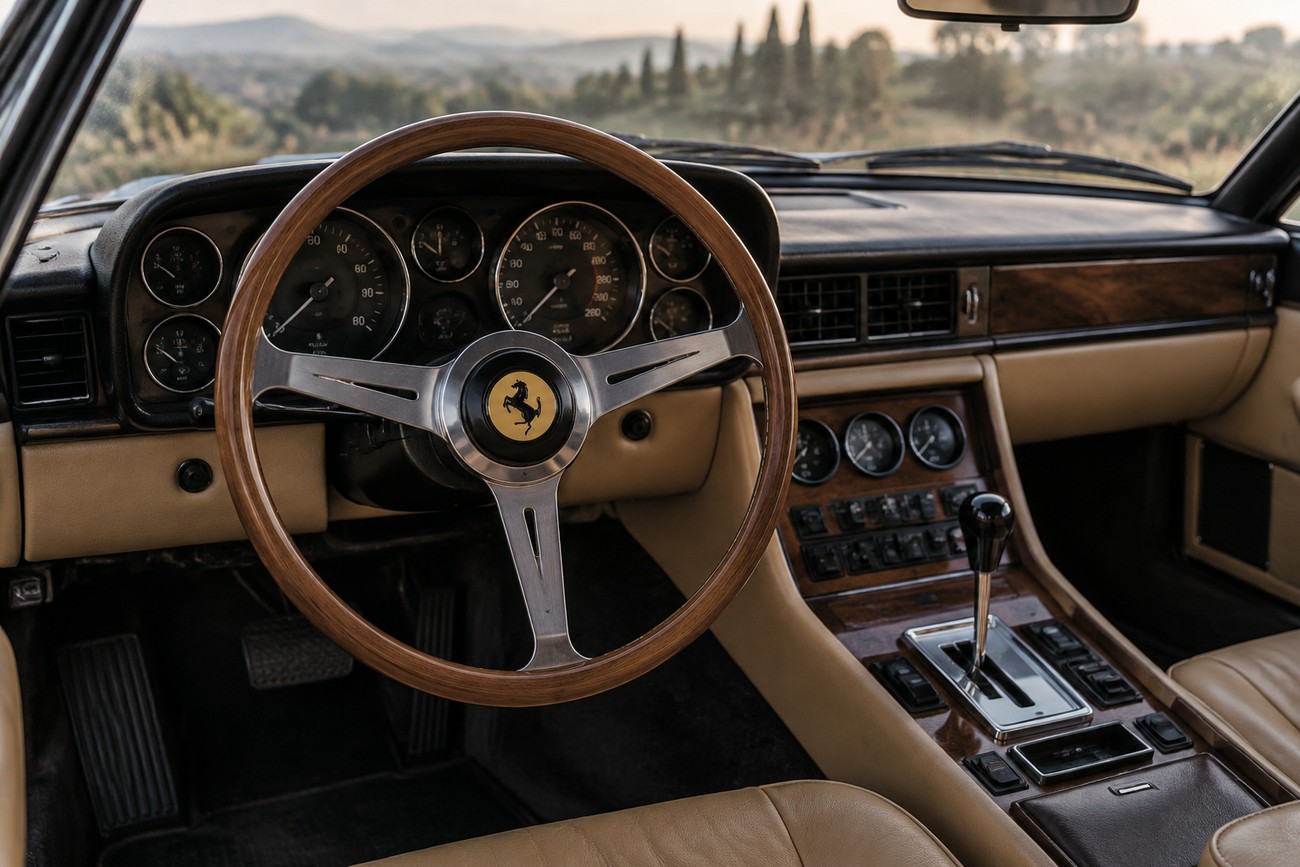
The 400i is most persuasive once it has settled into a steady pace. Its V12 gives the car the character expected of a large Ferrari GT, while the automatic favors smooth progress over rapid changes of direction and speed. Short city drives can emphasize its size and muted responses; a longer run gives its touring brief room to make sense.
Period power figures need care: about 310–315 hp SAE or approximately 306–310 hp DIN, depending on market, year, and rating method. Commonly quoted 0–100 km/h times are about 7.7–8.5 seconds, although some tests and owners report slower results. Those figures describe period expectations, not what an individual automatic car will achieve decades later.
A quoted top speed of about 235–240 km/h likewise says little about a prospective purchase without evidence of mechanical health. An engine running below its best, or an automatic that does not operate as it should, can change the experience substantially. The useful question on a test drive is whether acceleration, shifts, cooling, and braking feel consistent, rather than whether the car matches an old claim.
Independent rear suspension and disc brakes at all four wheels helped give the 400i the equipment expected of a serious GT. They do not remove its weight or turn it into a lighter Ferrari sports car. A sound example can still be rewarding for its V12, composure, and ability to travel comfortably; insisting on track-car reflexes is a way to miss what it does well.
The expensive problems a polished 400i can hide
Start with service records and an inspection by someone familiar with older Ferrari V12s before assigning much value to paint, leather, or an odometer reading. Look for evidence of work across the whole car, including jobs done after periods of storage. A tidy cabin may show careful ownership, but it cannot establish the condition of the fuel and brake systems underneath.
Engine assessment should include compression and the operation of the Bosch K-Jetronic injection, alongside cooling-system condition and signs of aging in hoses and seals. A car that starts readily may still have faults that emerge when fully warm or under load. These are inspection priorities, not a claim that every 400i suffers the same failures.
Check brake operation and condition, then pay close attention to corrosion and signs of poor body repairs, including areas hidden by an attractive finish. During the drive, the automatic should engage and shift consistently; hesitation or harsh behavior deserves diagnosis rather than an assumption that all three-speed 400i cars feel alike. An inspection should separate the model’s naturally relaxed pace from faults in this particular car.
Finally, inventory model-specific interior fittings and trim rather than treating missing pieces as minor cosmetic work. They can be difficult and costly to source. A usable car with documented maintenance may therefore justify more attention than a cheaper-looking prospect whose restoration needs remain undefined.
Who should buy the automatic Ferrari 400i?
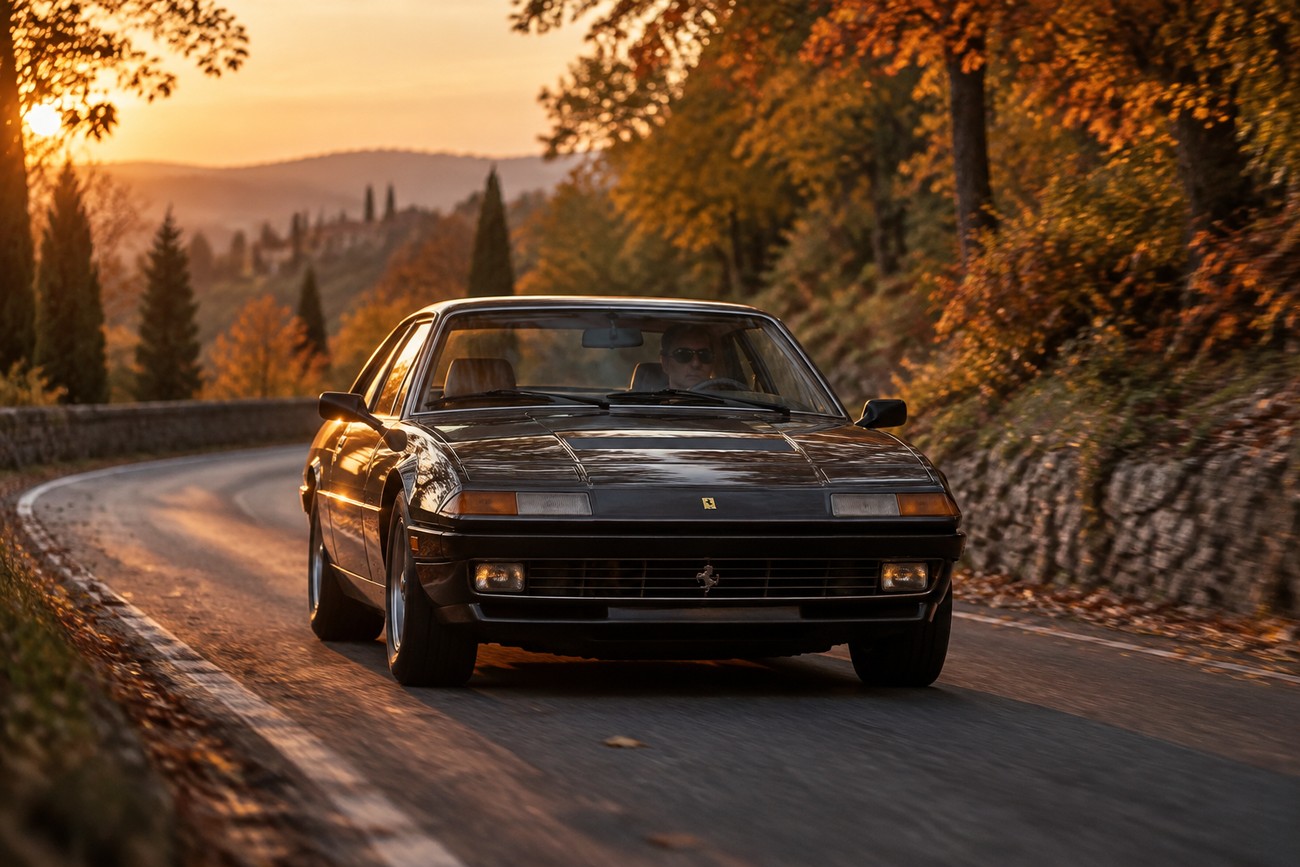
The automatic 400i suits a driver who wants a comfort-oriented V12 2+2 GT and accepts that it will deliver its pleasures at a measured pace. It makes less sense for someone who prizes quick gear changes, light responses, and the sharper experience associated with other Ferraris. A test drive should settle that preference before the badge or a tempting asking price does.
A restoration project deserves particular caution. Bringing fuel, cooling, brakes, bodywork, and a tired cabin back to a dependable standard can involve more than the first visible defect suggests. A low purchase price does not make scarce trim easier to find, and cosmetic progress alone will not make the car pleasant to use.
Collector appeal is another limit on the bargain narrative. The automatic and the 400i’s relaxed character can narrow purist demand, while rarity alone does not guarantee strong resale demand. Originality and credible service documentation give a future buyer something more useful to assess than a polished exterior or a claim of low mileage.
For the right owner, a documented, mechanically sound automatic may be a better choice than a neglected car with a more sought-after specification. Buy one if its touring character appeals to you and the inspection supports the seller’s claims. Pass if you need a sharp sports car—or if the budget only works by assuming deferred repairs will stay deferred.
Frequently asked questions
The 400i attracts labels that can obscure individual cars. Value, popularity, and the idea of an “entry-level” Ferrari each need a different kind of evidence.
How much is a Ferrari 400i worth?
A useful valuation starts with recent completed sales of comparable 400i cars, rather than asking prices alone. Compare condition, documented work, originality, and transmission, then allow for the cost and uncertainty of any unresolved faults. A current price range without those details can mislead more than it helps, especially when two glossy cars need different amounts of mechanical work.
What is the least liked Ferrari?
There is no objective, universally accepted “least liked Ferrari.” The automatic 400i appears in such debates because its gearbox and GT character divide enthusiasts, but popularity depends on the audience: a sports-car purist and a long-distance driver are judging different qualities. A reputation can explain limited demand without proving that every example is undesirable.
What is considered the poor man’s Ferrari?
“Poor man’s Ferrari” is an informal label sometimes applied to less sought-after models, including the 400i; it is not an official category or a reliable description of ownership cost. It usually refers to relative purchase appeal within the Ferrari market. Parts availability, specialist labor, and deferred maintenance still have to be assessed on the individual car.







