
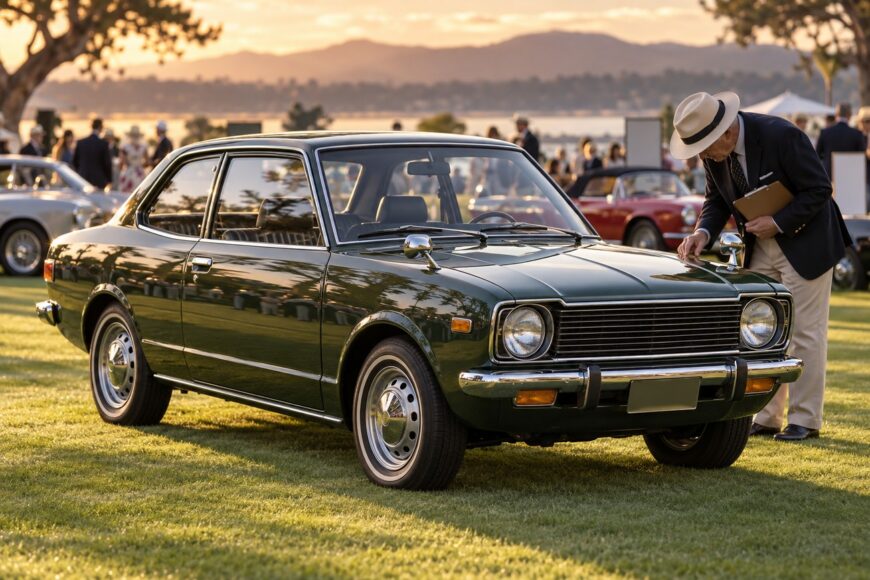
A Toyota Corolla can look immaculate and still lose concours points because its details belong to the wrong year, market, trim level, or restoration philosophy. A polished body does not correct a mismatched wheel, an incorrect badge, a modern hose clamp, or a replacement interior with the wrong texture.
Concours success depends on choosing a suitable class and proving the car’s authenticity. Historical correctness, restoration or preservation quality, detail cleanliness, and conformity with the original specification usually matter more than everyday usability or maximum shine. Rules differ between organizers, so treat each event’s regulations as the controlling reference.
- Start With the Right Concours Class
- Define Your Corolla’s Exact Factory Identity
- Build an Evidence File Before You Restore
- Restore Without Erasing the Car’s History
- Inspect the Details Judges Notice First
- Prepare the Entry and the Show-Day Presentation
- Frequently asked questions
- Which Toyota Corolla year should I stay away from for a concours project?
- How much does it cost to enter a Toyota Corolla in a car show?
Start With the Right Concours Class
Begin with the class, because the same Corolla can be a strong entry in one category and an unsuitable car in another. Stock or original classes generally emphasize factory specification and preserved originality. Restored classes allow a car to be renewed more extensively, while survivor or unrestored categories value authentic preservation and age-appropriate condition. Modified classes may accept thoughtful upgrades that would reduce originality points elsewhere.
These labels are not universal technical standards. One club may allow a period-correct replacement part, while another may require an OEM part or an exact specification for the car’s market and production period. Check the written rules, judging categories, accepted substitutions, and eligibility requirements before ordering parts or repainting anything.
A survivor Corolla should not be treated like a blank restoration shell. Faded trim, preserved factory finishes, and honest wear may support its case if they are consistent with the car’s history. Making every surface appear newly restored can remove the very evidence that makes an unrestored car valuable.
For a restored entry, presentation still matters, but the target is a credible factory specification rather than a generic “better than new” finish. Modern tires, upgraded lighting, new audio equipment, or contemporary materials may be sensible for road use and still place the car outside an original class. Enter the car where its actual condition and equipment fit the rules.
Define Your Corolla’s Exact Factory Identity
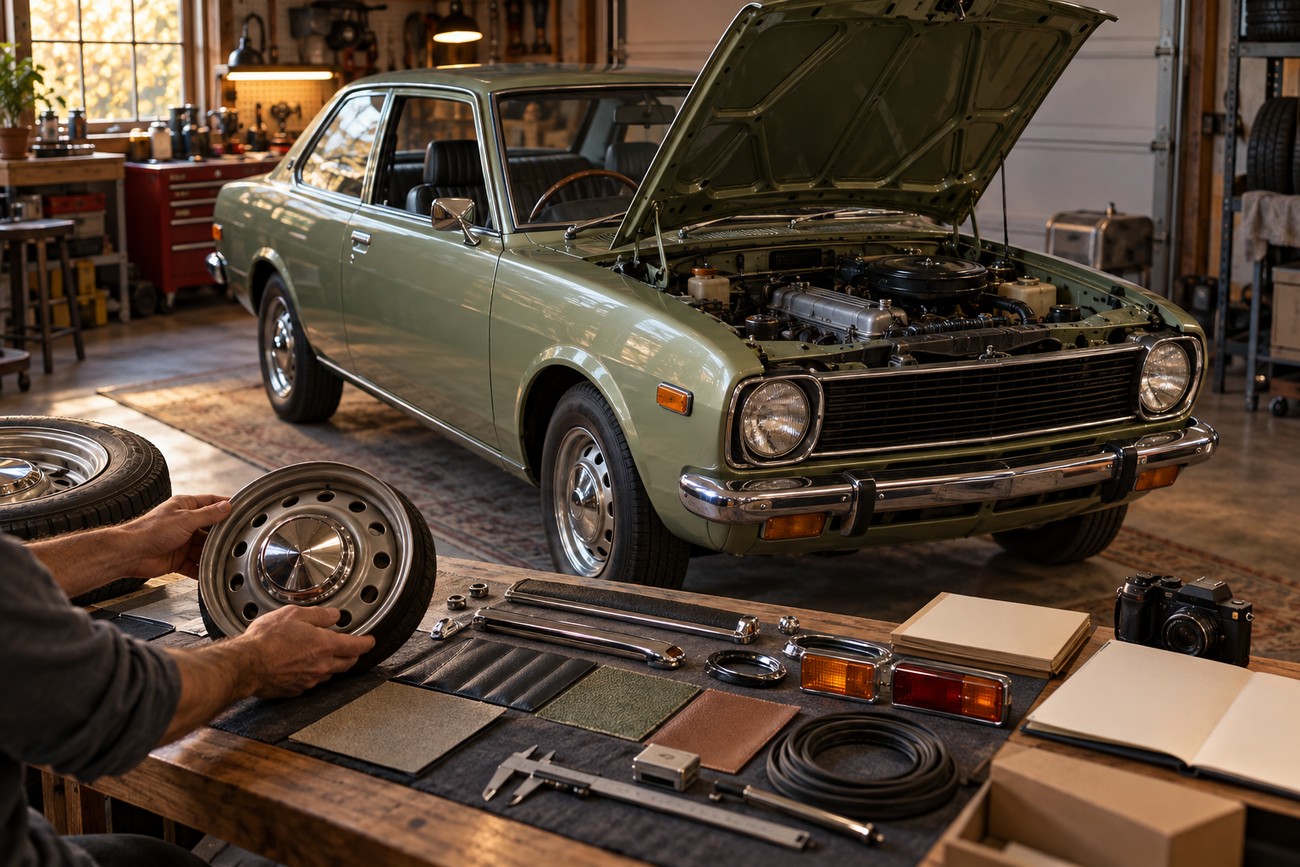
Establish the car’s identity before judging any individual part. Record the VIN, year, body style, engine, trim, market, production period, original color, interior, wheels, badges, instruments, and equipment. The correct reference point is the specific car’s factory specification, not a broad description of the Corolla model line.
A Corolla nameplate does not guarantee interchangeability. Toyota specifications and parts can differ between Japan, the United States, Europe, and other markets, and changes can also occur between body styles, trims, and production periods. A photograph of a similar Corolla may show a detail that is correct for another market or another version.
Build a specification sheet before disassembly. Note the paint and interior codes where records support them, photograph the instrument layout, measure or record wheel and trim details, and mark uncertain components instead of assuming they are correct. This prevents a common restoration failure: replacing a questionable original part with a clean part from the wrong version.
The combination must make sense as a whole. Body trim, interior materials, wheels, emblems, fasteners, instruments, labels, and paint details should agree with the same year, market, and equipment level. A single correct badge cannot make a mixed-market or mixed-year car historically accurate.
Build an Evidence File Before You Restore
Photograph the Corolla before removing anything, including hidden areas that will later be cleaned or painted. Capture wiring routes, clamp positions, factory seams, labels, glass markings, fasteners, underbody finishes, and the condition of trim. Keep the original images with notes identifying where each detail was found.
Use factory manuals, parts catalogs, period documentation, and market-specific references to compare disputed components. Retain receipts, donor-car information, seller descriptions, and records of repairs or replacements. A practical binder or digital folder is useful evidence, although it is not a universal official requirement for concours entry.
A convincing reproduction should be compared against a factory illustration, any available date code, and the preserved mounting evidence before it is accepted as original.
Marketplace descriptions deserve caution. Terms such as “factory correct” can describe a reproduction or a component from another year. Factory markings, glass labels, date codes, and original finishes can reveal more than a part’s appearance, especially when a new replacement has been made to look persuasive.
Label uncertain items as original, documented replacement, period-correct substitute, reproduction, or unknown. That classification helps you make a defensible class choice and gives you an honest answer if a judge asks about a component. It also prevents unsupported originality claims from becoming part of the car’s permanent history.
Restore Without Erasing the Car’s History
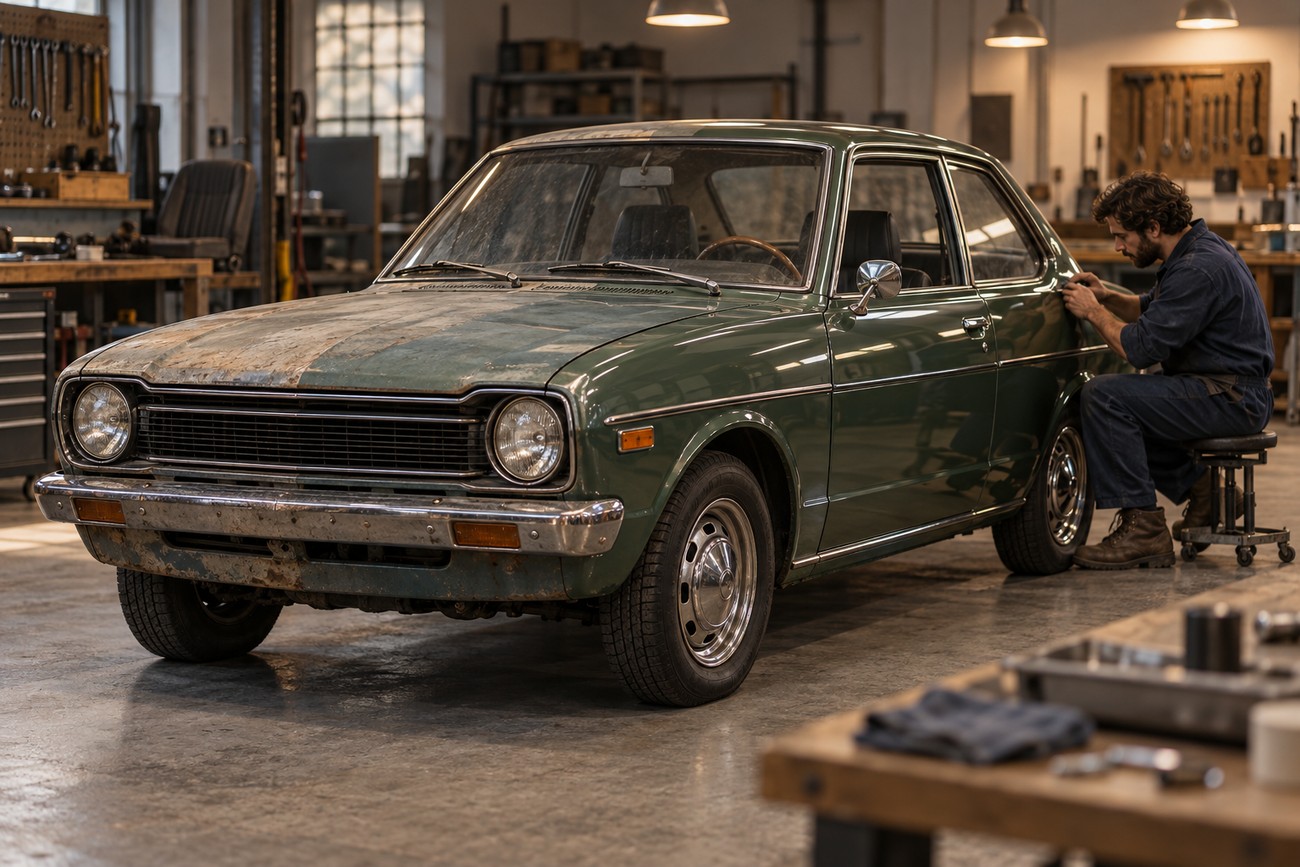
Choose between preservation, sympathetic repair, and complete restoration before work begins. Preservation keeps sound original surfaces and repairs only what is necessary. Sympathetic repair improves function and appearance while retaining visible evidence of age. Complete restoration replaces or refinishes more of the car and may suit a restored class, provided the replacement work remains historically correct.
Paint requires restraint. A fresh finish may be appropriate for a documented restoration, but excessive gloss, incorrect texture, or modern coatings can make the car look less credible. The same principle applies to trim, interior materials, underbody finishes, and engine-bay hardware: a uniformly perfect surface is not automatically an authentic one.
Safety work should be handled separately from visible originality decisions. Brakes, tires, wiring, fuel systems, and other safety-critical items may require repair or replacement, subject to the show’s rules. Keep records of those changes, and avoid presenting a modern safety component as original when it is not.
Reproduction parts can differ from originals in plastic texture, shade, markings, fit, seam shape, and hardware. A new carpet may have the wrong weave, a bright clamp may be unlike the factory type, and an attractive badge may use an incorrect font. For a mass-market Corolla, scarce OEM trim and small parts make selective preservation more defensible than replacing every imperfect item.
Modern tires, lamps, audio equipment, carpets, materials, and other upgrades can improve driving convenience while reducing originality in an original or survivor class. If you need those changes for road use, document them and confirm whether a modified or touring category is more appropriate. Class fit is often more valuable than forcing a fundamentally modified car into a stock category.
Inspect the Details Judges Notice First
Make the final inspection in a fixed sequence so enthusiasm does not focus only on the paint. Start outside with panel gaps, emblems, decals, glass markings, lamp details, trim, paint texture, and visible fasteners. Then inspect the interior for stitching, seat materials, carpet weave, plastic shade, instrument faces, switches, and date-coded belts or wiring.
In the engine bay, compare hose routing, clamps, labels, wiring, brackets, sealants, and hardware with the documented specification. Look for bolts with the wrong head style or finish, bright zinc plating where a darker factory finish is expected, and replacement parts whose texture or markings are too modern. Under the car, inspect seams, underbody coatings, factory sealants, suspension hardware, and evidence of overspray.
The trunk often exposes a restoration more clearly than the hood. Check the spare wheel, jack, fasteners, mat, labels, paint coverage, drain plugs, and any visible welds or seams. A clean trunk with the wrong mat or a new-looking fastener set can undermine an otherwise careful presentation.
Do not mix details from nearby versions simply because they fit. A correct-looking badge, glass panel, wheel, instrument, or clamp can still be wrong for the car’s market or production period. Judges may notice these details because they are difficult to fake consistently across the whole vehicle.
Use this final checklist before loading the car:
- Confirm class eligibility and the documented year, market, trim, and equipment.
- Check fasteners, hose clamps, labels, glass markings, decals, wiring, and date codes.
- Compare paint texture, plastic shade, seams, and factory sealants with your references.
- Remove road grime without stripping age-appropriate patina or over-polishing surfaces.
- Verify that recent repairs have not introduced unexplained modern equipment.
- Pack the evidence file and label any documented replacement or period-correct component.
Prepare the Entry and the Show-Day Presentation
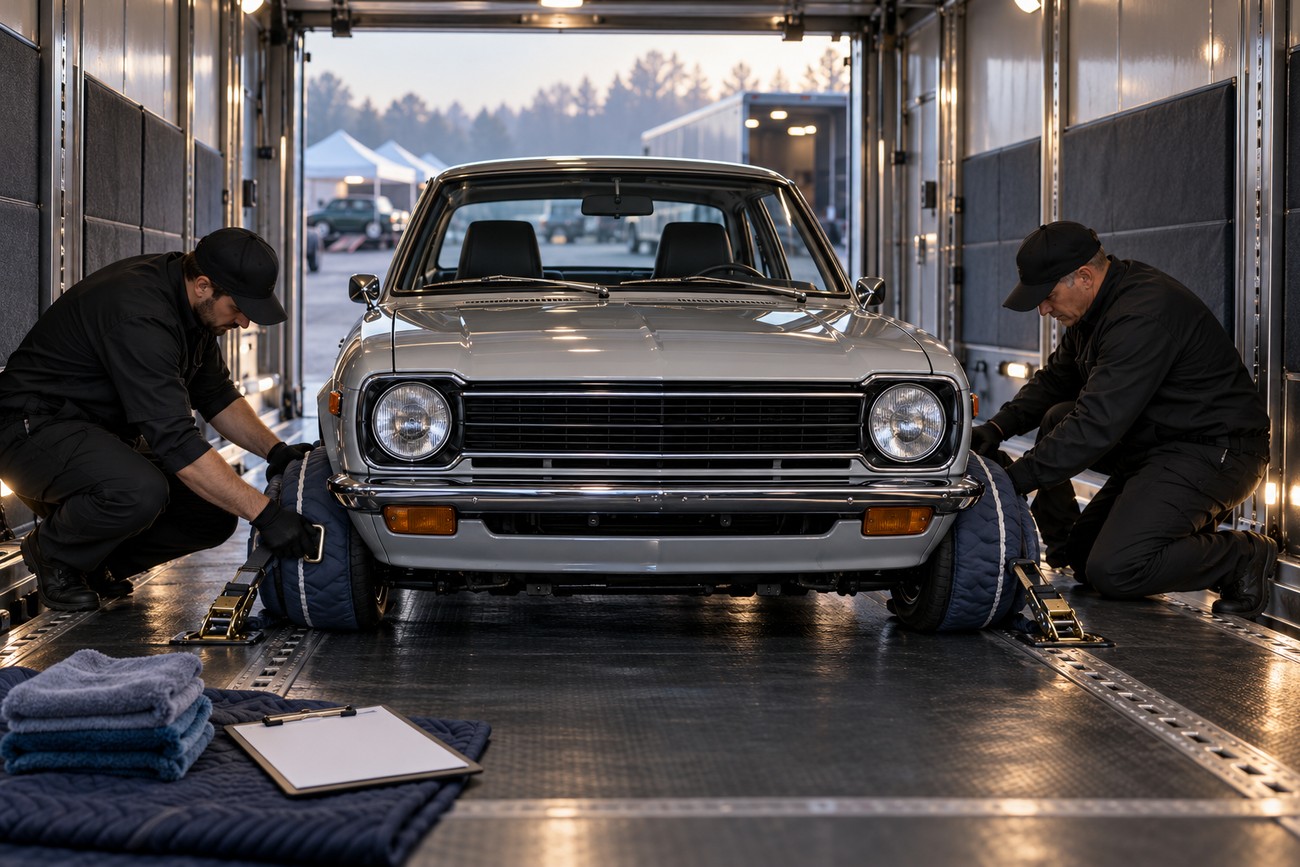
Confirm the event’s class definitions, eligibility rules, accepted substitutions, judging categories, and entry procedure before making final changes. Submit the Corolla under the category that reflects its actual equipment and restoration history. Organizer fees and procedures vary, so check the event information directly rather than relying on advice from another show.
Plan transport according to the car’s condition and the event distance. Driving may add dirt, weather exposure, and mechanical risk; enclosed transport may protect the finish but requires secure loading and careful tie-down planning. Bring cleaning supplies that match the chosen presentation standard, along with documentation, spare keys, and any required registration material.
Keep the final clean restrained. Remove dust, fingerprints, road film, and loose debris, but do not introduce a last-minute coating, replacement fastener, modern lamp, or decorative accessory that changes the specification. Last-minute upgrades often create inconsistencies that are harder to explain than an established, documented repair.
Answer questions about repaired or non-original components directly. A concise evidence file can explain market-specific details, preserved parts, and documented replacements without turning the judging conversation into an argument. Honest documentation is more credible than claiming originality for every component when the record shows otherwise.
Frequently asked questions
Which Toyota Corolla year should I stay away from for a concours project?
There is no universal Corolla year to avoid. Judge a candidate by documentation, market identity, condition, parts availability, and class suitability. A well-documented car with scarce trim may be a stronger project than a more desirable year with mixed-market parts, missing records, and extensive undocumented repairs.
Before buying, inspect whether the body, interior, wheels, badges, instruments, glass, and equipment form a consistent specification. Also confirm that the intended class accepts the car’s replacements and modifications. Parts supply and evidence quality should influence the purchase decision as much as the model year.
How much does it cost to enter a Toyota Corolla in a car show?
There is no universal concours entry price. The organizer’s entry charge is only one part of the budget, which may also include registration, transport, lodging, detailing, documentation, and restoration work. Ask the event for its current fee schedule and deadlines.
For a Corolla, documentation and correct small parts can become significant planning items even when the entry charge is modest. Set aside money for safe transport, replacement consumables, and last-minute repairs, and keep those expenses separate from the cost of restoring the car itself.







