
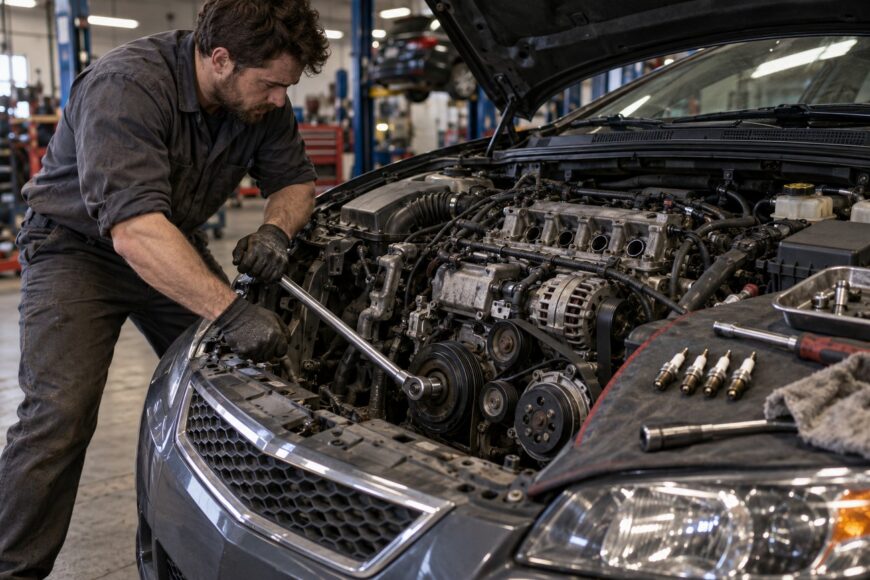
A seized Chevy Cruze can cost more to replace than the car is worth. Replacing the engine without finding the original cause can also destroy the next engine, especially if a cooling-system or oiling fault remains.
First, confirm that the engine has a true internal seizure. Then compare repair quality, warranty coverage, compatibility, and the complete installed cost. The cheapest engine listing is rarely the cheapest finished repair.
- Before Choosing Repair or Replacement, Confirm the Engine Is Actually Seized
- Why Chevy Cruze Engines Seize
- Repair or Replace: How the Damage Changes the Answer
- Chevy Cruze Engine Repair and Replacement Costs
- How to Choose a Used, Remanufactured, or New Cruze Engine
- Prevent the Replacement Engine From Seizing Again
- The Mistakes That Turn a Cruze Engine Job Into a Money Pit
- Frequently asked questions
- What documents should I request when buying a used Cruze engine?
- How can I protect a replacement-engine warranty during installation?
- What should I inspect before starting a Cruze with a replacement engine?
Before Choosing Repair or Replacement, Confirm the Engine Is Actually Seized
A no-crank condition does not prove that the engine itself is locked. A failed starter, a seized alternator, an air-conditioning compressor, or another accessory can stop the crankshaft from turning. Remove or isolate the accessory drive where appropriate, test the starter circuit, and check whether the crankshaft turns by hand with the correct tool.
If the crankshaft remains immovable, remove the spark plugs and inspect for coolant, oil, or mechanical debris. Compression testing, when the engine can be cranked safely, plus borescope inspection and related checks can help identify a damaged piston, bent rod, hydro-lock, or valve-train problem. A starter that only clicks does not by itself distinguish an accessory or starter fault from a locked engine.
Do not repeatedly hold the starter on or tow the Cruze in an attempt to force the engine to turn. That can worsen damage to the pistons, rods, bearings, and crankshaft, particularly if coolant is trapped in a cylinder. Once internal damage is suspected, the decision should follow teardown and measurements of compression, block condition, cylinder geometry, and crankshaft dimensions.
Why Chevy Cruze Engines Seize
Cooling-system failures are a common path to a seized Cruze engine. A leaking plastic thermostat housing, failing water pump, damaged hose, or low coolant level can lead to unstable temperature and severe overheating. Head-gasket damage may then allow coolant into the oil or cylinders, while the overheated head and block lose their proper geometry.
Coolant entering a cylinder creates a separate danger. Liquid cannot be compressed, so cranking the engine can bend connecting rods, break pistons, or damage the block through hydro-lock. If the block is cracked or several rods are bent, an economical repair often stops making sense.
Oil starvation creates another failure path. Low oil level, infrequent oil changes, detonation, piston or ring failure, and seized camshafts can damage bearings and the rotating assembly until the crankshaft locks. A broken piston or damaged ring may also spread metal through the oiling system, making a simple bottom-end repair unsafe.
Owners often notice warning signs before the final failure: coolant leaks, a sweet smell, unstable temperature, or light piston noise during a cold start. These symptoms do not prove that the engine is already damaged beyond repair, but continuing to drive with them can turn a manageable cooling or lubrication fault into a complete engine loss.
Repair or Replace: How the Damage Changes the Answer
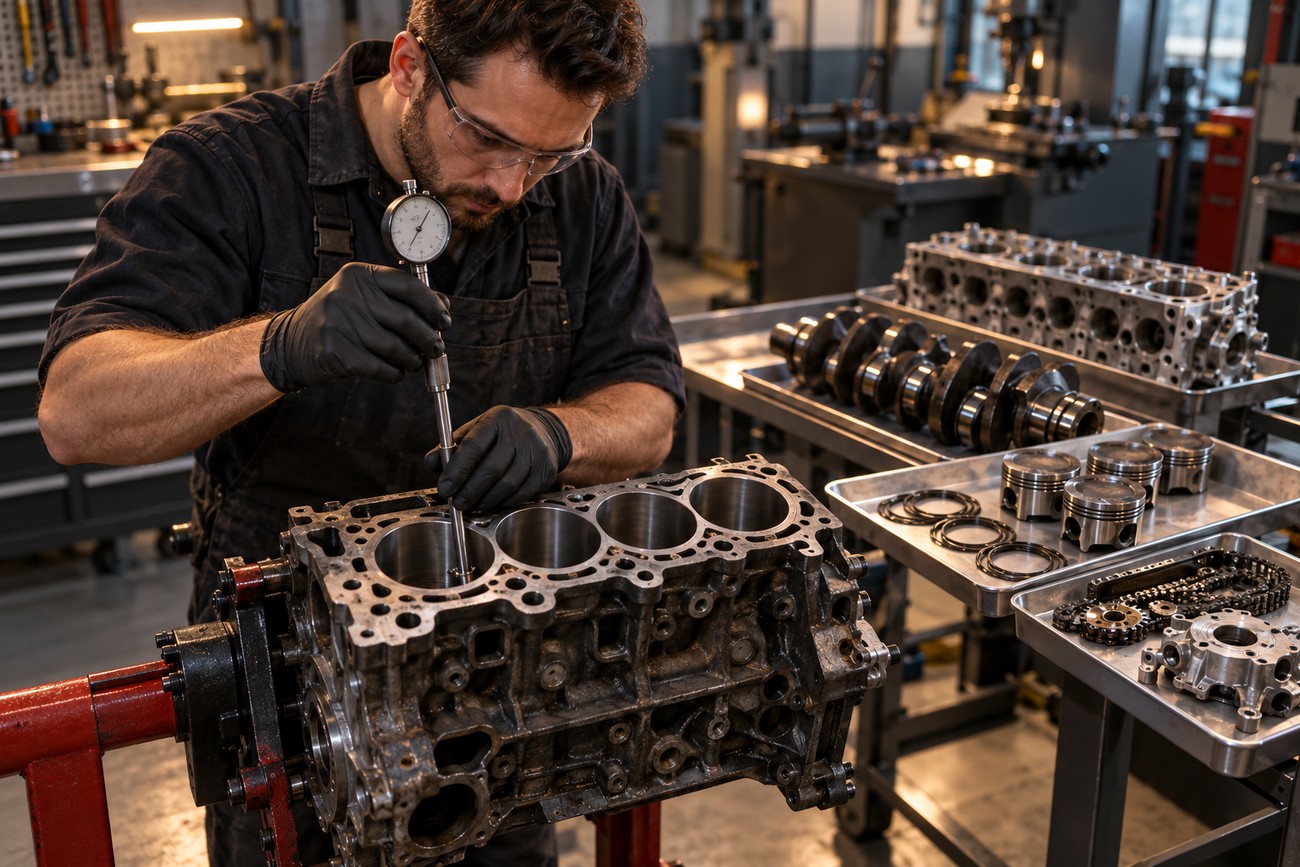
Rebuilding the original engine can make sense when the block, crankshaft, head, and major castings remain usable. It preserves known compatibility with the car and avoids some uncertainty around wiring, mounts, sensors, and emissions equipment. The decision requires a real machine-shop inspection, not an assumption that a removed engine is automatically a good rebuild candidate.
A rebuild may require machining or sleeving the block, new pistons and rings, a cylinder head, oil pump, timing chain, and tensioner. Each damaged part adds labor and creates another opportunity for a hidden defect to remain. The final cost can approach or exceed remanufactured-engine pricing while offering less predictable warranty protection.
A remanufactured engine generally offers more predictable parts and documentation than an undocumented used unit. A used low-mileage engine may already have experienced overheating, detonation, or oil-consumption problems that are invisible from the odometer. A rebuild remains attractive only when the inspection proves that the core is sound and the written estimate accounts for all required work.
Chevy Cruze Engine Repair and Replacement Costs
These figures are broad US-market guidance, not a guaranteed quote. Regional labor, shipping, accessories, fluids, and hidden damage can materially change the final bill.
| Option | Typical cost | Usually includes | Main limitations and risks |
|---|---|---|---|
| Rebuild of the original engine | May approach or exceed remanufactured-engine pricing when major components are damaged | Machine work and replacement parts selected after teardown | Cost depends on block, head, crankshaft, oil pump, timing parts, and other hidden damage; warranty may be limited |
| Used or contract engine | Approximately $1,300–$1,500 before shipping | Usually a used engine or long block from a donor vehicle | History may be incomplete; warranty is commonly 30–90 days or startup-only coverage |
| Bare new or remanufactured engine | $1,800–$3,500 for a Cruze 1.4–1.8 engine in the United States | Core engine assembly, depending on the supplier | May exclude the turbocharger, water pump, thermostat, valve cover, timing components, and other accessories |
| Remanufactured engine assembly with accessories | Approximately $4,500–$5,500 | A more complete assembly with selected accessories | Confirm exactly which accessories and warranty conditions are included |
| Complete installed replacement | Approximately $3,000–$6,000 including engine, labor, fluids, and incidental parts | Engine installation and associated shop work | Severe overheating may also require wiring, coils, sensors, catalytic converter, cooling-system, or emissions repairs |
The table explains why a low advertised engine price can be misleading. A bare engine may still need a turbocharger, water pump, thermostat, valve cover, timing components, seals, fluids, and labor. A serious rebuild can also expand after teardown, particularly if the block or cylinder head has suffered prolonged overheating.
How to Choose a Used, Remanufactured, or New Cruze Engine
Start with the exact model year, emissions configuration, and engine code. Cruze codes such as LE2, LUW, and LWE can differ in sensors, mounts, accessories, and wiring. Compatibility must be verified rather than assumed, even if the replacement physically fits the engine bay.
Compare the included parts line by line. Many remanufactured engines are long blocks without the turbocharger, water pump, thermostat, valve cover, or timing components. A physically fitting engine may still require modifications or rewiring before it operates correctly.
Remanufactured 1.4 LE2 engines for 2016–2019 may be sold with warranties of up to five years or unlimited mileage. Used-engine warranties are commonly 30–90 days or limited to startup coverage. Obtain the terms in writing before installation, including whether labor, shipping, accessories, and consequential damage are covered.
Ask how the engine was tested and whether the supplier can document its source. A “low-mileage” description does not prove that the donor vehicle avoided overheating or oil starvation. If the seller cannot identify the donor vehicle or explain the return process, the lower purchase price may simply transfer the risk to you.
Prevent the Replacement Engine From Seizing Again
Engine replacement is incomplete until the original failure path has been investigated. Pressure-test the cooling system, inspect the radiator and hoses, check for restrictions, and flush contamination from the system. A replacement engine cannot survive a thermostat, pump, radiator, or hose problem that remains unresolved.
Technicians commonly renew the plastic thermostat housing, water pump, and suspect hoses during installation. PCV-related parts also deserve attention because a faulty valve-cover or ventilation system can contribute to oil consumption and pressure problems. Use the replacement engine’s installation instructions rather than assuming every accessory from the failed engine is safe to reuse.
Oil-service guidance deserves a deliberate choice. Commonly cited official intervals are 7,500–10,000 miles, while some practitioners recommend approximately 3,000–5,000 miles for problematic Ecotec engines. The shorter interval is practical guidance, not an official factory requirement, but it may provide more margin when the vehicle has oil consumption, severe service, or an uncertain maintenance history.
A severe overheat can damage more than the engine. Wiring, coils, sensors, and the catalytic converter may also be affected. Scan for stored faults, inspect heat-damaged wiring, verify cooling-fan operation, and confirm stable temperature after installation before returning the car to normal use.
The Mistakes That Turn a Cruze Engine Job Into a Money Pit
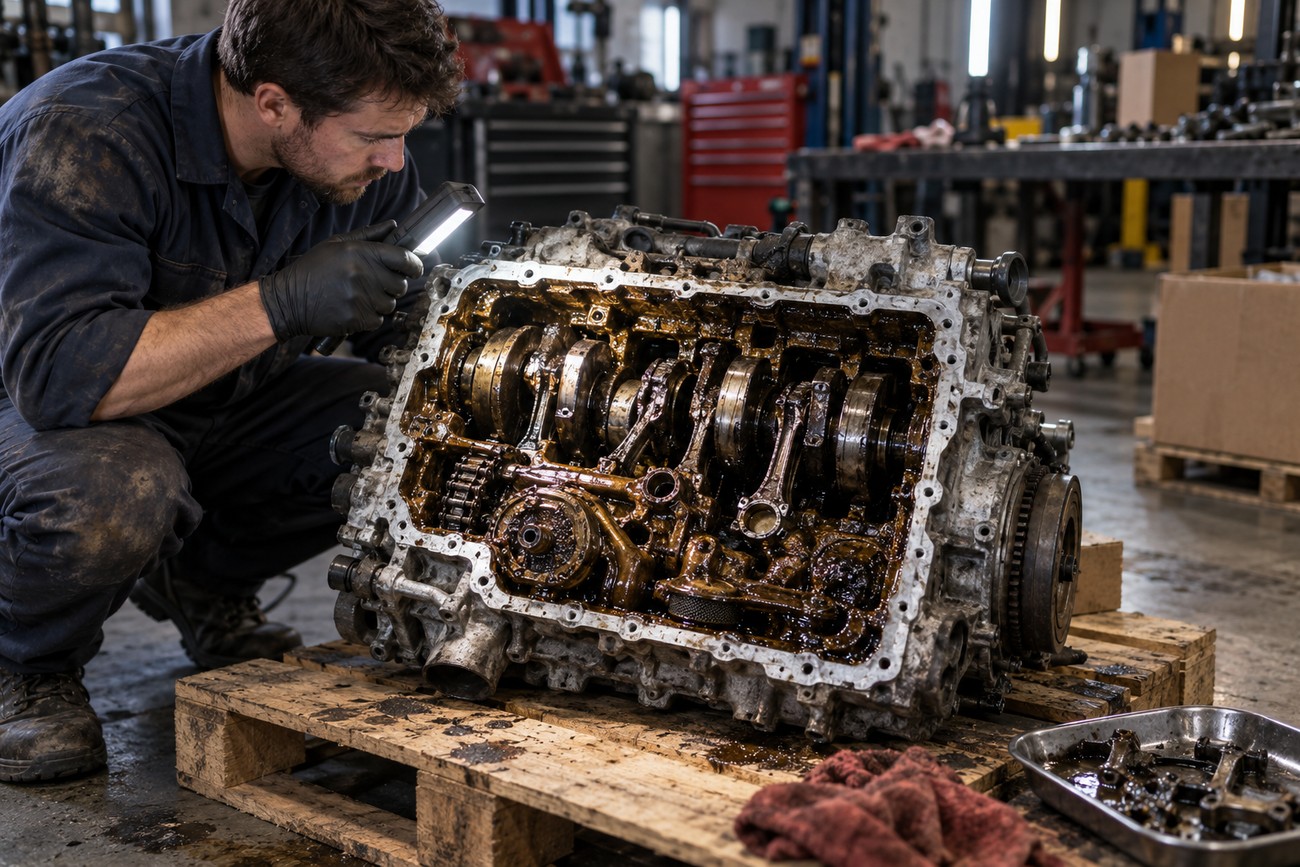
The first mistake is buying the first engine advertised with low mileage. Mileage alone does not show whether the donor engine suffered overheating, detonation, or oil starvation. Require identification of the engine code, donor vehicle, included accessories, test information, and written return terms before paying.
The second mistake is assuming that an engine already removed from the car is automatically worth rebuilding. A cracked block, distorted head, damaged oil pump, contaminated lubrication system, or multiple bent rods can make the core a poor starting point. Pay for a proper teardown and measurements before approving machine work.
Reusing questionable cooling and PCV components creates another avoidable risk. Leaving a weak thermostat housing, water pump, hose, radiator, or valve-cover system in place can recreate the conditions that caused the original seizure. The installation quote should identify these parts separately so that omissions are visible.
Finally, read the warranty before installation. Coverage may require an approved installer, specific oil and coolant procedures, documented break-in work, and retained invoices. Proceed only when the Cruze’s overall condition, the documented engine source, and the complete installed quote support owning a reliable vehicle rather than merely getting the engine to run.
Frequently asked questions
These answers cover practical purchasing and warranty details that often decide whether an engine replacement remains affordable after the work begins.
What documents should I request when buying a used Cruze engine?
Request the donor vehicle identification, engine code, model year, mileage evidence, and a written description of what is included. Ask for compression or leak-down results where available, along with any oil-pressure information and a statement of whether the engine was tested before removal.
Insist on written return terms that state the coverage period, startup requirements, shipping responsibility, and whether labor is excluded. A vague “runs good” description provides little protection if the engine has hidden overheating or oil-consumption damage.
How can I protect a replacement-engine warranty during installation?
Before installation, confirm whether the warranty requires an approved shop and whether it covers the long block only or also accessories such as the turbocharger, water pump, thermostat, and sensors. Follow the supplier’s required oil, coolant, filter, flushing, and break-in procedures exactly.
Keep the estimate, invoices, fluid specifications, part numbers, installation photographs, diagnostic scans, and final test results. Written records help establish compliance if a claim is later disputed, especially when the warranty excludes damage caused by reused accessories or poor maintenance.
What should I inspect before starting a Cruze with a replacement engine?
Pressure-test the cooling system, verify the oil level and pressure, inspect hoses and wiring, and confirm that the thermostat, water pump, radiator, and PCV-related components are functioning properly. Check that the replacement engine has the correct code, sensors, mounts, and accessories for the vehicle.
After startup, scan for fault codes, monitor coolant temperature, check for leaks and abnormal noises, and document the initial test results. Do not return the car to normal driving until the cooling system remains stable and the installation requirements have been completed.







