
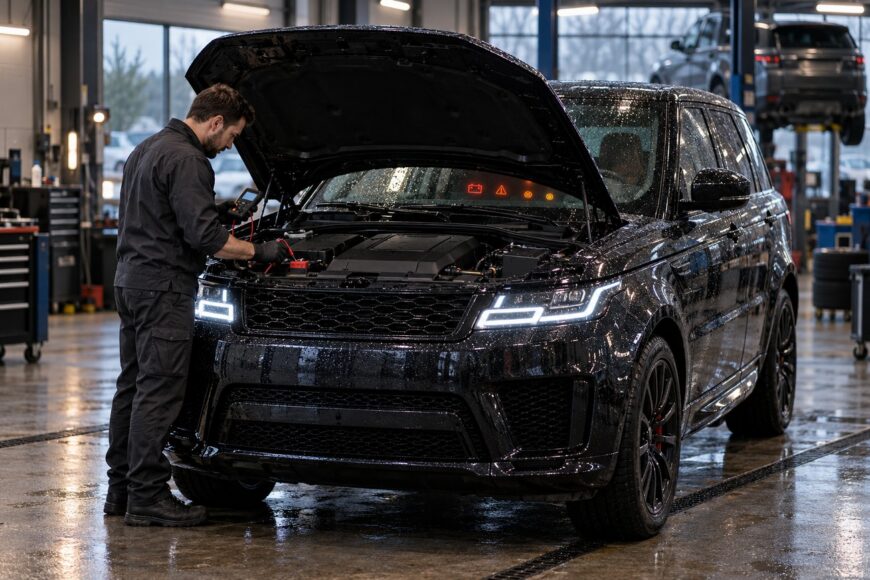
A Range Rover Sport can display several unrelated warnings, lose its rear-view camera image, or behave as though its 12V battery has gone flat. The visible symptom invites a simple repair: replace the battery, camera, or module named in a warning. Yet the useful question is whether that part has failed or whether a shared power, ground, network, or moisture problem is making it appear faulty.
That distinction matters for safety as well as cost. A missing camera image may be an isolated equipment fault, while a failure to charge the 12V system can progress to loss of propulsion and exterior lighting in certain recalled mild hybrids. Start with the circumstances and pattern of the symptoms, then have the vehicle tested against the fault they suggest. There is no single electrical fix that applies to every model year or powertrain.
- What electrical gremlins look like—and when to stop driving
- The 12V battery is not always the cause
- Water ingress: trace the path, not just the wet component
- MHEV and PHEV recalls change the safety decision
- A diagnostic order that avoids replacing good parts
- Range Rover Sport electrical symptoms and first checks
- Frequently asked questions
- What should I record when an intermittent electrical fault appears?
- How can I confirm that a recall repair was actually completed?
- What is the most common problem with the Range Rover Sport?
What electrical gremlins look like—and when to stop driving
Electrical trouble may begin with an occasional starting problem, a warning that disappears after a restart, or a feature that stops working after rain. At other times, several warnings arrive together, apparently implicating unrelated systems. A cluster of warnings can result from a shared power, ground, network, or moisture-related fault; it does not by itself prove that several control modules have failed.
Notice which functions change at the same time. Repeated low-battery messages, dimming or failing exterior lights, and a growing set of warnings call for more urgency than one consistently blank rear-view camera image. The camera still needs attention because it affects the driver’s view when reversing, but its failure can occur without a vehicle-wide power fault.
A recall affecting certain 2019–2024 Range Rover Sport MHEVs concerns DC-DC converter failure that may stop 12V charging and lead to loss of propulsion and exterior lighting. If propulsion or exterior lighting fails, stop in a safe place as soon as conditions allow and arrange assistance. Do not continue a journey simply because the engine still starts or the warnings briefly disappear.
For less urgent intermittent symptoms, record what happened before cycling the ignition or clearing a message. A fault that follows heavy rain suggests a different inspection path from one that appears under high electrical demand, although neither pattern proves a cause. Treat the pattern as evidence for the workshop, rather than a reason to order a part in advance.
The 12V battery is not always the cause
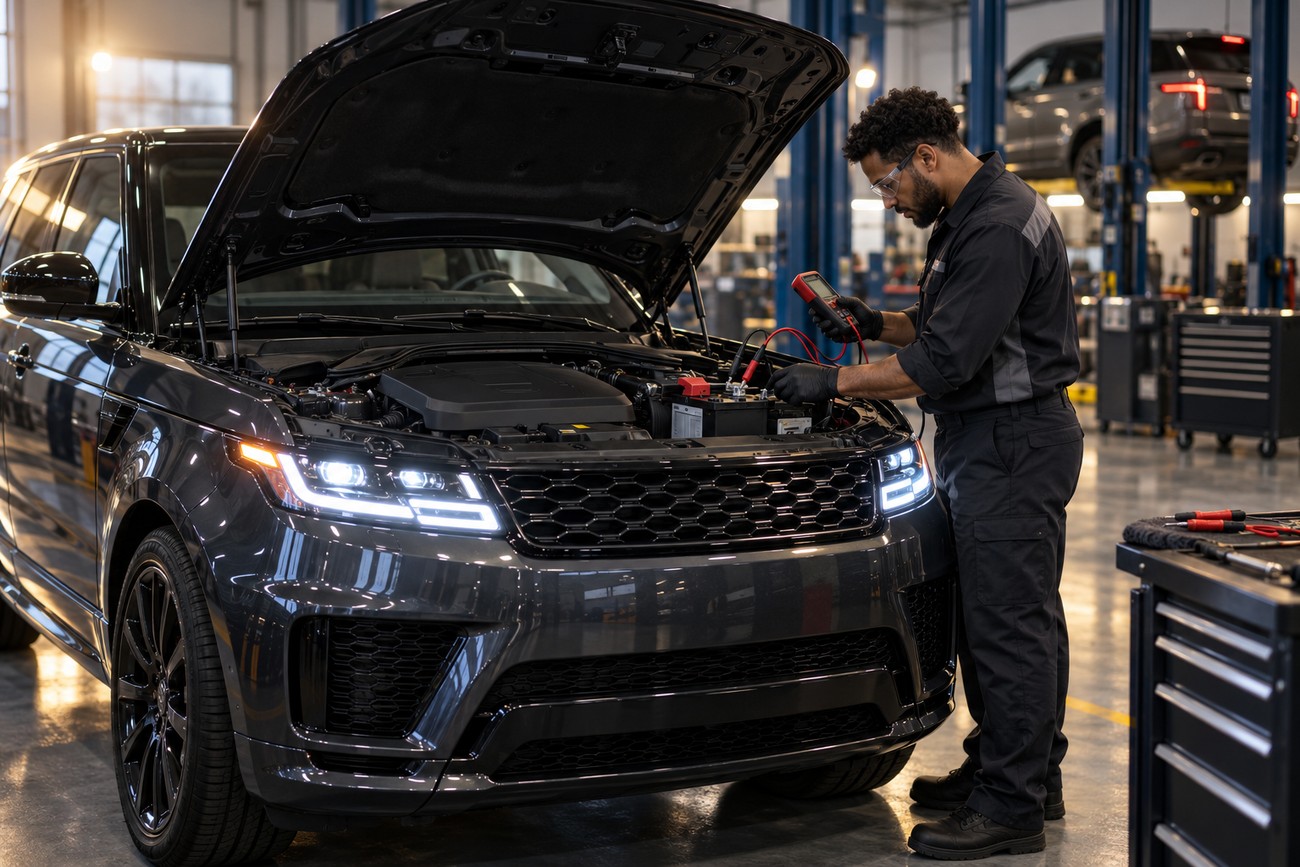
The 12V battery supplies power, while the vehicle’s charging system must replenish it and support electrical loads in operation. A battery can be genuinely worn or damaged, and testing it is sensible. Its condition alone, however, cannot show whether the 12V system continues to charge properly when lights, climate controls, and other loads are operating.
A recall affecting certain 2019–2024 Range Rover Sport MHEVs concerns a DC-DC converter failure that can stop charging the 12V system. The official fault description cites an internal boost-converter control-chip defect and/or overload under high electrical demand. Those details make a charging-system check especially important on a potentially affected vehicle; they do not establish that every Sport or every MHEV has this defect.
Replacing a faulty 12V battery can address the battery fault. It does not repair a failed DC-DC converter, parasitic draw, poor ground, or moisture damage. A fresh battery may temporarily mask a charging failure because it begins with a usable reserve, only for the warnings or starting difficulty to return once that reserve is depleted.
A workshop should test battery condition separately from 12V charging behavior under load, using procedures appropriate to the vehicle. If the battery repeatedly discharges while parked, it should also investigate excessive current draw rather than assuming the battery cannot hold a charge. Grounds and connections matter too: resistance or corrosion can disrupt power delivery even when a battery passes a bench test.
Water ingress: trace the path, not just the wet component
Moisture can make an electrical fault seem random. Water at a connector, wiring junction, or fuse and relay area may create an unstable connection that changes as the vehicle dries or moves. Corrosion can leave the fault behind after the visible water has gone, so a dry inspection on a sunny day may not reproduce a complaint reported after washing.
Owners have reported pooled water near battery terminals and suspected moisture around the nearby fuse and relay area. These accounts are useful diagnostic leads, not proof of a design defect across all Range Rover Sports or evidence that every wet vehicle has the same entry point. If symptoms follow rain, ask the workshop to inspect the affected vehicle for moisture and corrosion rather than treating a forum description as its diagnosis.
Drying a visible puddle is only the beginning of a lasting repair. The workshop needs to establish where water entered, how it traveled to the affected component, and whether connectors or wiring were damaged along the way. Otherwise, a cleaned connection may work during collection and fail again after the next downpour.
Camera trouble has a more specific recall context. A recall affecting certain 2018–2022 Range Rover Sports concerns water ingress into the rear-view camera, which may cause a missing or distorted image. That symptom can be separate from a broader 12V supply fault: a blank camera image alone does not establish that water has reached the battery area, just as a dry battery area does not rule out a camera fault. Confirm recall applicability by VIN before treating the campaign as the explanation for an individual vehicle.
MHEV and PHEV recalls change the safety decision
The electrical recalls involve different systems and different hazards. On certain 2019–2024 Range Rover Sport MHEVs, DC-DC converter failure may stop 12V charging and lead to loss of propulsion and exterior lighting. Replacing a 12V battery does not repair that converter fault, and a driver experiencing loss of propulsion or lighting should stop safely and seek assistance.
A separate recall affecting certain 2023 Range Rover Sport PHEVs identified insufficient torque at a high-voltage battery connection. The connection may arc and overheat, potentially damaging the battery housing and causing a fire. This is a high-voltage connection issue, not a diagnosis of a weak 12V battery; inspection and repair belong with technicians qualified to work on the high-voltage system.
Pending repair, affected PHEVs were advised to park away from structures and charge outdoors where possible. Follow that interim advice where the relevant recall instructions apply to your vehicle, and obtain current instructions from the servicing dealer. A buyer should not assume that advice applies to every PHEV, or that the absence of a dashboard warning resolves an open safety recall.
Check the individual VIN for open recalls and confirm completion of applicable campaigns. Model year identifies a potentially affected group, but cannot establish eligibility or repair status for a particular Sport. If a vehicle is advertised as having had recall work, request the campaign record or repair documentation; a seller’s statement that it has a “new battery” does not answer whether either recall was completed.
A diagnostic order that avoids replacing good parts
Begin with a record of when the problem occurs: during starting, while driving, after parking, under electrical load, or following rain or washing. Tell the workshop which features failed together and whether the fault cleared after a restart. This helps it choose a test that might reproduce the event instead of relying on a fault-free inspection between incidents.
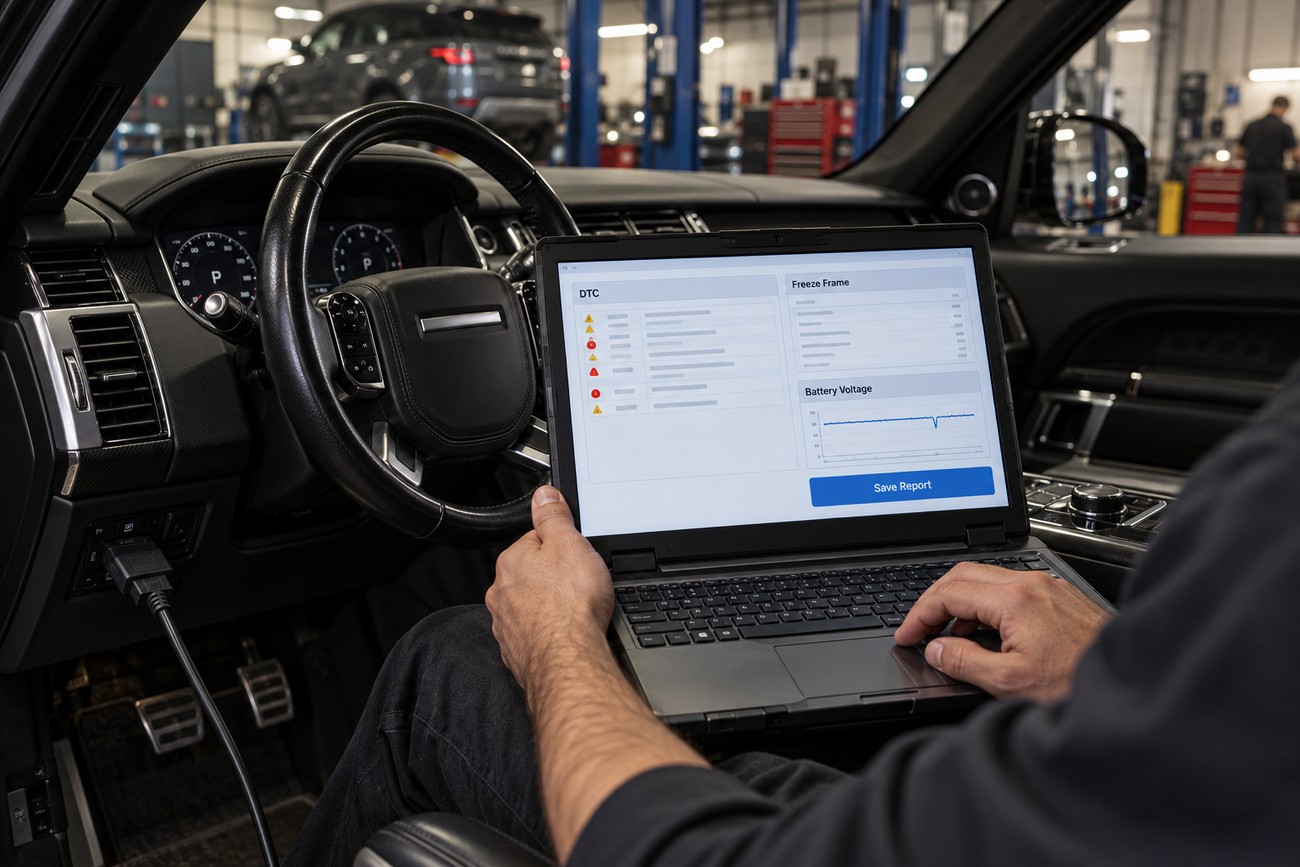
Before codes are erased, the workshop should capture diagnostic trouble codes, freeze-frame information where available, and relevant voltage readings. A generic OBD reader may report limited powertrain information while missing manufacturer-specific modules or network faults. For a cluster of warnings, access to those systems can help distinguish a shared supply or communication problem from separate component failures.
Next, test battery condition and 12V charging under load as separate questions. If the battery is discharged after parking, investigate current draw; if warnings occur in operation, examine charging behavior and voltage stability. Grounds, relevant connectors, and signs of moisture or corrosion should be checked before condemning an expensive control module.
Intermittent faults may require the workshop to compare its readings with the owner’s account of the conditions in which the failure occurs. A clean scan after a restart does not invalidate a recorded warning or an earlier voltage problem. High-voltage battery connections are outside the scope of owner checks: if a PHEV has a relevant open recall or suspected high-voltage fault, use the prescribed service route rather than attempting an inspection yourself.
Range Rover Sport electrical symptoms and first checks
Use these symptoms to set the first professional check and the urgency, not to diagnose a part from the driver’s seat.
| Symptom | Plausible cause | First professional check | Urgency |
|---|---|---|---|
| Cascading, apparently unrelated warnings | Shared power, ground, network, or moisture-related fault | Save codes and event data across relevant modules; check 12V behavior | Prompt assessment, especially if driving functions change |
| Repeated 12V battery discharge | Weak battery, failed charging, or parasitic draw | Test battery condition, charging under load, and parked current draw | Arrange diagnosis before relying on the vehicle |
| Faults after rain or washing | Possible moisture at wiring, connectors, or fuse and relay areas | Inspect for an entry path, corrosion, and affected connections | Prompt assessment; sooner if power or lighting is affected |
| Missing or distorted rear-view camera image | Possible camera water ingress or another camera-system fault | Inspect the camera system and check the VIN for the applicable recall | Repair promptly; use extra care when reversing |
| Loss of propulsion or exterior lighting | Possible 12V charging failure, including the recalled MHEV fault where applicable | After recovery, check VIN, charging behavior, and stored faults | Stop safely and arrange assistance |
| Affected 2023 PHEV with an open high-voltage recall | Insufficient torque at a high-voltage battery connection | Confirm VIN status and arrange the prescribed recall repair | Follow applicable interim parking and charging advice pending repair |
Frequently asked questions
Electrical complaints are easier to resolve when a workshop can compare the vehicle’s records with what the driver observed. Recall status also needs vehicle-specific evidence. These answers focus on what to collect and verify before drawing a conclusion about an individual Range Rover Sport.
What should I record when an intermittent electrical fault appears?
Record the date and time, whether the vehicle was starting, parked, or moving, the weather, and any recent rain or washing. Note the exact warning messages, which features stopped working, whether lights or propulsion were affected, and what happened after a restart. Photos or a short video can help if a passenger can capture them safely or the vehicle is stationary; never operate a phone to document a fault while driving.
Pass that record to the workshop with any prior battery or electrical repair invoices. A repeatable set of conditions is more useful than a general description such as “electronics playing up,” particularly when the vehicle behaves normally by the time it reaches the service bay.
How can I confirm that a recall repair was actually completed?
Check the VIN for open recalls through the relevant official recall service or a servicing dealer, then ask for the vehicle’s campaign history. A result showing no open recall is useful, but it is different from a repair record identifying the campaign and the work completed. For a used vehicle, ask the seller or servicing dealer for that documentation rather than relying on a verbal assurance.
If a campaign appears open, ask the dealer what action and interim instructions apply to that VIN. If records are unclear, have the dealer confirm completion before treating the issue as resolved; the model year alone cannot provide that confirmation.
What is the most common problem with the Range Rover Sport?
The available evidence does not establish one most common Range Rover Sport problem across model years and powertrains. An MHEV charging recall, a PHEV high-voltage connection recall, and reports of water near batteries describe different issues; none supplies a reliable ranking for every vehicle. Owner reports can point an inspection in a useful direction, but they are not population-wide fault statistics.
For a purchase, investigate the particular vehicle instead. Check its VIN and campaign records, review electrical repair history, test every fitted feature, and arrange a diagnostic inspection if warnings, repeated discharge, or signs of moisture are present. That evidence is more useful than a universal reliability claim.







