
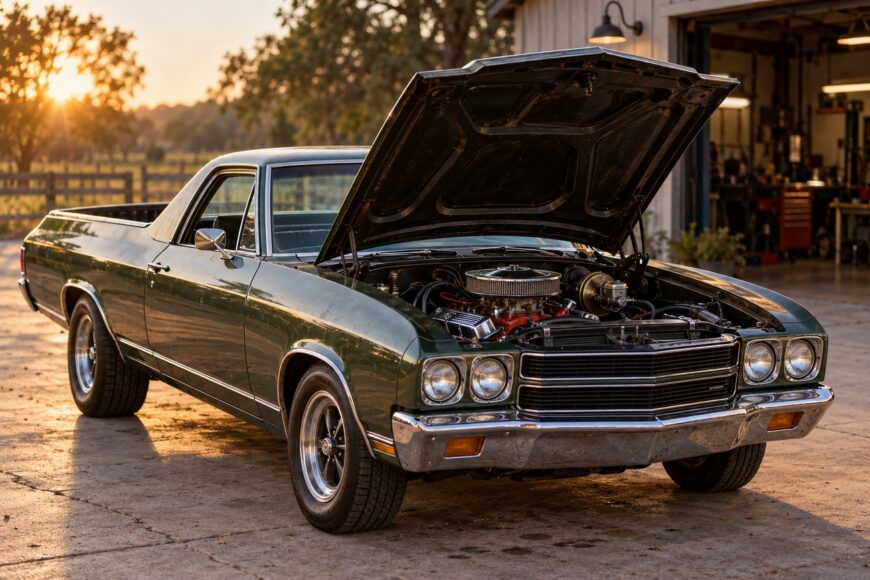
The El Camino SS 454 put a Chevrolet big-block into a car-based utility body. Its appeal is easy to understand: Chevelle muscle-car hardware, an open bed, and the sound and torque of a 454. Living with one is less romantic. Fuel use is heavy, traffic can expose cooling problems, and rust can hide beneath an otherwise convincing restoration.
For a buyer, the first issue is identity. An El Camino with SS badges, a cowl-induction hood, and a 454 may be a documented factory SS 454, a later conversion, or an ordinary El Camino fitted with big-block parts. That distinction affects what you should pay and how carefully you should preserve what remains original.
- What the El Camino SS 454 Actually Was
- LS5, LS6, and the Numbers Behind the Reputation
- Factory Specifications: SS 454 at a Glance
- How to Tell a Factory SS 454 from a Clone
- Driving Reality: Power, Balance, Brakes, and Cargo
- Ownership Problems That Matter More Than the Badge
- A Sensible Buying and Setup Strategy
- Frequently asked questions
- What should an insurer know before covering an El Camino SS 454 as a classic car?
- What was the top speed of a 1970 El Camino SS 454?
- How much heavier is a 454 than a 350?
- Which Chevrolet trucks used a 454 big-block?
What the El Camino SS 454 Actually Was
The El Camino SS 454 was officially offered for the 1970–1972 model years. It used the Chevelle-based GM A-body, which explains why its drivetrain and much of its driving character feel closer to a muscle car than to a conventional pickup. The bed made it useful for modest cargo, but it did not turn the vehicle into a full-size work truck.
That body shape matters beyond appearance. With less weight over the rear wheels than a comparable Chevelle coupe, an empty El Camino can struggle to use its engine’s torque on a poor surface. The open cargo body also changes how noise and vibration reach the cabin, particularly on a long highway drive.
Load capacity deserves the same restraint as traction. Heavy materials carried regularly can sag springs, distort the cargo platform, and add stress to an aging frame. A sound example can do occasional utility duty, provided the load suits the vehicle’s condition and rated capacity.
LS5, LS6, and the Numbers Behind the Reputation
The 1970 factory SS 454 used an LS5 engine displacing 454 cubic inches (7.4 liters), rated at 360 gross hp. GM rated the LS6 454 at 450 gross hp, and factory LS6 El Caminos are exceptionally rare. An LS6 badge or an engine built to LS6-style specifications is therefore a reason to request stronger documentation, not a reason to accept a higher asking price on sight.
Horsepower figures need their measuring context. After 1972, net-hp ratings replaced gross-hp figures in documentation, so lower published numbers do not indicate a corresponding mechanical loss of power. Comparing ratings from different model years without accounting for that change gives a misleading picture.
On the road, the useful question is how the whole car handles the engine. Rear traction, axle ratio, cooling condition, and ignition and carburetor setup can affect the experience more than a headline horsepower claim. Extra output is of little benefit if the tires spin easily or the temperature climbs in traffic.
Running costs reflect that compromise. Owner reports commonly put city fuel economy at approximately 6–9 mpg (approximately 26–39 L/100 km) under active driving; use and engine configuration can change the result. Budget for the way you intend to drive, rather than treating an optimistic mileage claim as a specification.
Factory Specifications: SS 454 at a Glance
These factory-era specifications describe typical configurations; individual cars need to be checked against their documentation and installed components.
| Item | Factory-era specification | What to check on a car today |
|---|---|---|
| Engine | LS5 454 cubic inches (7.4 liters), rated at 360 gross hp for 1970; LS6 rated at 450 gross hp according to GM and exceptionally rare in El Camino applications | Confirm the claimed engine through paperwork and component codes. |
| Transmission | Typically TH400 automatic or Muncie four-speed manual | Check the installed unit and its codes against the claimed build. |
| Rear axle | Typically a 12-bolt; common ratios 3.31–3.55, with 3.73 and higher ratios available | Verify the axle and ratio rather than relying on how the car feels during a drive. |
| Brakes | Factory-style single-piston front disc brakes and rear drum brakes | Disc conversions and other upgrades are owner modifications unless documented otherwise. |
| Suspension | Chevelle-based A-body geometry, with behavior affected by the El Camino’s weight distribution | Springs and shocks may have been changed to improve empty-bed handling. |
| Weight | Approximately 3,700–3,900 lb (approximately 1,680–1,770 kg), depending on equipment | Options, repairs, and modifications affect an individual car’s weight. |
How to Tell a Factory SS 454 from a Clone
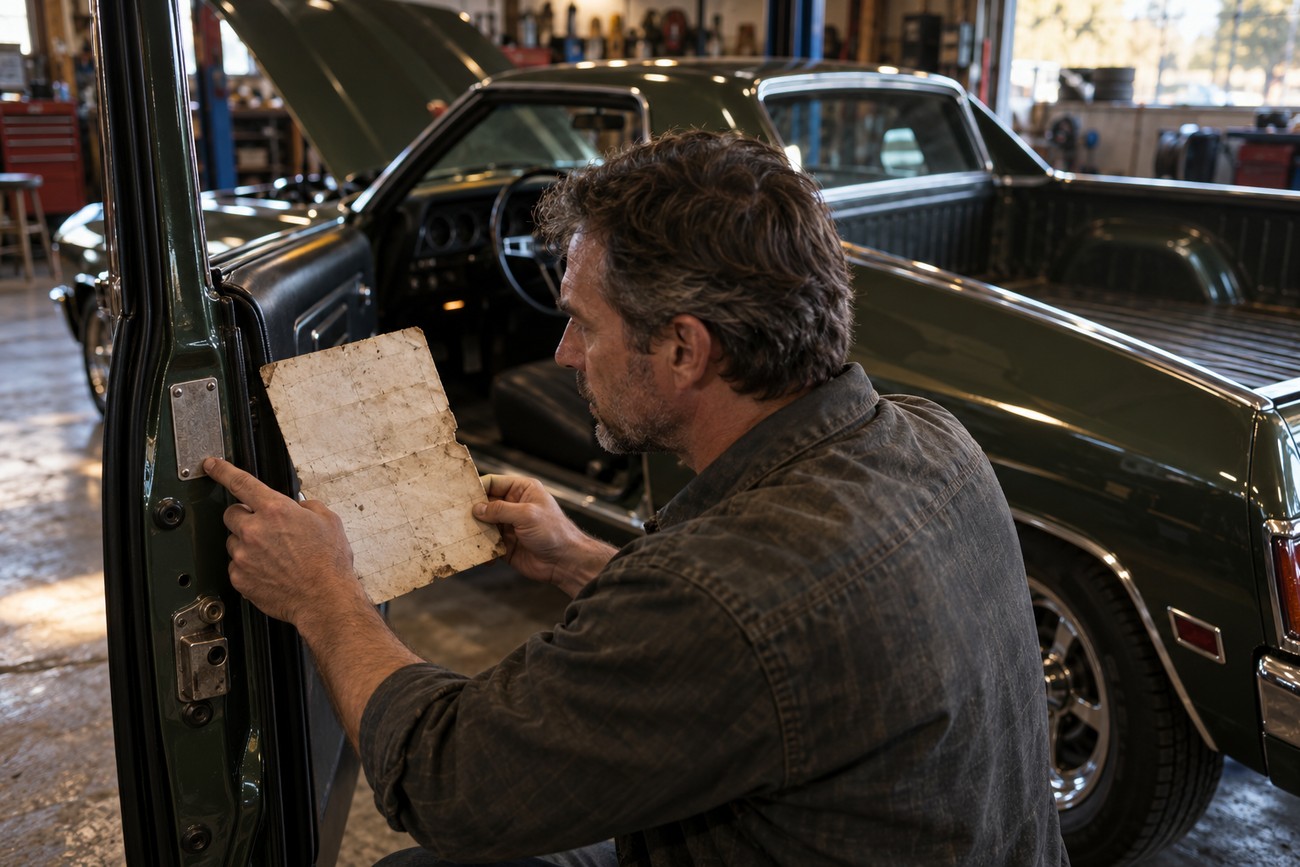
SS badges, a cowl-induction hood, and a 454 alone prove nothing about factory SS 454 status. All can be added later, and a factory big-block El Camino is not automatically a factory SS 454. Treat an attractive conversion as a legitimate car to enjoy, while pricing it according to what can be established.
Start by recording the VIN and comparing it with the vehicle’s paperwork. Seek the build sheet and check that its vehicle details and listed equipment align with the car in front of you. The VIN is an essential identity check, but it should not be treated as a stand-alone certificate for every claimed SS or engine option.
Next, inspect engine-block and cylinder-head codes, then compare the axle and transmission codes with the documented configuration. A compatible set of components strengthens a claim; a replacement engine may be perfectly usable while weakening a claim of original drivetrain identity. Ask the seller to explain discrepancies before agreeing on a value.
Apply particular skepticism to an LS6 advertisement. Factory LS6 El Caminos are extremely rare, and many advertised LS6 cars are clones or later conversions. A seller who cannot supply evidence beyond engine parts and exterior details has demonstrated what is fitted now, not what the vehicle left the factory with.
Driving Reality: Power, Balance, Brakes, and Cargo
Big-block torque can overwhelm the rear tires when the bed is empty, especially on an uneven or slippery road. The different weight distribution generally makes an El Camino SS 454 less composed than a Chevelle coupe with the same engine. Smooth throttle use and sound tires matter more to a street driver than chasing another power increase.
Factory-style single-piston front discs and rear drums can serve a stock street car when properly maintained. Repeated acceleration runs or track days ask more of them, and stopping performance can deteriorate as heat builds. Brake condition should be assessed before engine modifications, with any upgrade chosen as a matched system.
The open cargo body brings a comfort cost. Cabin noise, vibration, and rattles can become tiring at highway speeds, even in a car that feels entertaining on a short drive. A thorough test drive should include rough pavement and steady cruising, rather than only a brief burst of acceleration.
The bed is useful, yet heavy hauling is a poor way to justify ownership of an SS 454. Repeated substantial loads can sag the suspension, deform the platform, and fatigue the frame. Check the specific car’s condition and load rating before carrying cargo, particularly if previous repairs or corrosion have affected its structure.
Ownership Problems That Matter More Than the Badge
Overheating is commonly reported in hot weather and traffic, particularly on cars with a small radiator or an incorrect cooling-system setup. A temperature problem may involve airflow, coolant circulation, or engine tune, so replacing the radiator without diagnosis can leave the fault untouched. Ask to see the car idle and drive in the conditions that trouble it.
Fuel consumption is a continuing expense, while corrosion can become a restoration expense all at once. Inspect lower fenders, the cargo-bed floor, and the frame around the rear suspension. Fresh paint can make those areas look reassuring from above while concealing serious work underneath.
Bodywork estimates should account for fit, not merely the price of panels. Reproduction panels and moldings often need adjustment rather than installing as true bolt-on replacements. Original SS trim, upholstery, badges, and cowl-induction components can also be difficult and expensive to source, making an incomplete car costlier than its purchase price suggests.
A big-block that runs poorly needs someone who understands its ignition and carburetor setup. General repair shops can miss problems that a careful tune would identify, leading owners to buy parts unnecessarily. Before commissioning restoration work, get a written scope that separates diagnosis, required structural repair, and optional cosmetic work.
A Sensible Buying and Setup Strategy
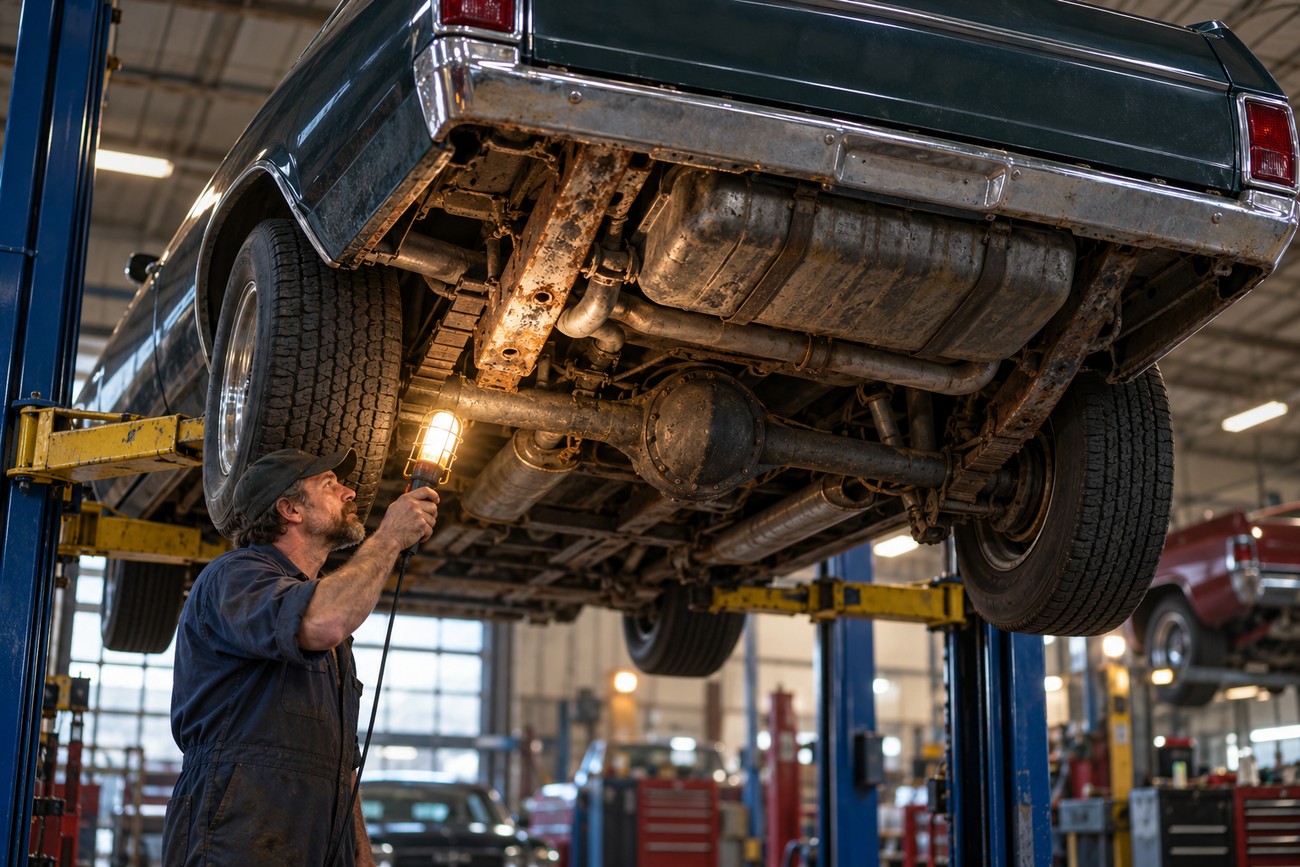
Inspect the underside and frame before assigning value to fresh paint. Look for through-rust, poorly aligned repairs, and questionable welds around structural areas, including the rear suspension. If access is limited, arrange a lift inspection before purchase rather than discovering the damage during disassembly.
Verify the claimed drivetrain separately from the body inspection. Record component codes, compare them with the available build documentation, and decide whether you want a documented factory car or a well-executed driver. Either can be rewarding, but the evidence and purchase price should tell the same story.
Before fitting a larger radiator, check that the shroud directs air through the existing core, the fan clutch works, and the water-pump pulley, thermostat, ignition timing, and fuel mixture suit the engine. A bigger core cannot correct poor airflow or a tune that creates excess heat.
Once the car runs reliably, match its chassis to its actual output. Revised springs and shocks can calm an empty bed; suitable tires and sound brakes address the consequences of traction and speed. Many driver-quality cars use modern ignition, electric fans, and improved brakes, with those changes disclosed rather than presented as factory equipment.
Be cautious with a heavily modified 500-plus-hp big-block. The stock body and frame are not intended for constant use at that level, particularly after decades of corrosion, loading, and repair. For a street car, a straight structure, dependable cooling, and predictable stopping usually deliver more enjoyment than a larger dyno figure.
Frequently asked questions
Insurance, speed, and engine-weight claims all depend on the individual car and how it is used. These are the details worth settling before relying on a listing or arranging regular driving.
What should an insurer know before covering an El Camino SS 454 as a classic car?
Tell the insurer how the car is stored, how far you expect to drive it, and whether it will serve as regular transportation. Classic-car policies may require limited mileage and secure garage storage, while regular use may call for different coverage. Ask how an agreed value is established and whether modifications affect the policy before assuming a classic policy will cost less.
What was the top speed of a 1970 El Camino SS 454?
There is no single trustworthy top-speed figure for every 1970 El Camino SS 454. LS5 and LS6 engines, axle ratios, transmissions, tires, condition, and later modifications all affect the result. A speed quoted for one tested or modified car should not be presented as a factory guarantee for another; tire condition and braking capability matter far more on a car you intend to drive.
How much heavier is a 454 than a 350?
No universal weight difference applies to every 454 and 350 installation. Cylinder heads, intake and exhaust parts, accessories, and other installed components change the comparison. In an El Camino, the practical concern is how the front-end load works with the car’s already limited empty-bed rear traction, so assess ride height, suspension condition, and handling rather than relying on an engine-weight estimate alone.
Which Chevrolet trucks used a 454 big-block?
Chevrolet used the 454 in conventional truck applications, including certain C/K pickups, with availability depending on model year and configuration. That broader truck history does not make the El Camino a conventional pickup: it remained a Chevelle-based GM A-body. For either type of vehicle, confirm the original engine through model-specific documentation rather than assuming every truck now fitted with a 454 received one at the factory.







