
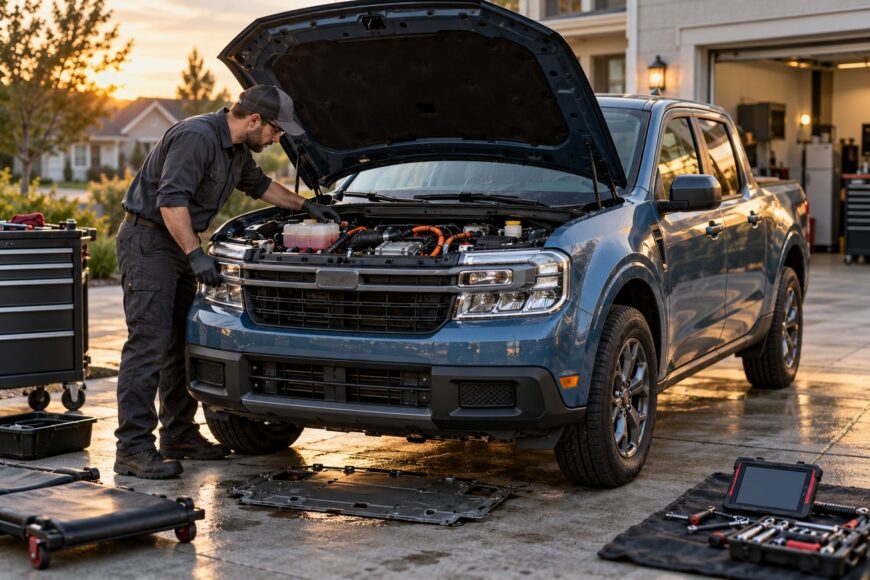
The Ford Maverick Hybrid can meet its advertised towing capability while facing very different thermal demands in hot weather, on grades, in strong headwinds, or with a full load. A truck rated for a particular trailer weight may therefore operate with far less cooling margin under severe conditions.
The engine, transmission, and high-voltage battery also create separate diagnostic variables. Ford describes separate cooling circuits for the internal-combustion engine and high-voltage battery, so an overheating warning, coolant odor, or post-shutdown noise requires diagnosis rather than guesswork.
- Why the Maverick Hybrid Has More Than One Cooling Problem
- Maverick Hybrid Towing Limits and Cooling Hardware
- What to Do When the Maverick Reports Overheating
- The Overlooked Causes: Leaks, Air, Pumps, and Flow Control
- Clicks After Shutdown, Reduced Power, and Other Misread Signals
- A Smarter Cooling and Towing Decision Process
- Frequently asked questions
- What should I ask a dealer to verify after a repeated Maverick Hybrid overheat warning?
- How can I verify that a used Maverick Hybrid really has the 4K Tow Package?
- What are the common problems with Maverick hybrids?
- What is the life expectancy of a Ford Maverick hybrid?
- What are the rumors about the 2027 Ford Maverick?
Why the Maverick Hybrid Has More Than One Cooling Problem
Ford describes separate cooling circuits for the Maverick Hybrid’s internal-combustion engine and high-voltage battery. That distinction matters because coolant visible in one reservoir does not prove that every thermal circuit is full, circulating, and operating at the correct temperature.
The 2026 Hybrid uses liquid cooling for its high-voltage battery. The battery is located beneath the passenger side of the cabin, which adds a separate group of components and access points to the diagnostic picture.
Engine, transmission, and battery temperatures represent different thermal loads. A high engine coolant temperature does not automatically identify a battery-cooling fault, and a battery-related warning does not establish that the main radiator has failed.
Diagnosis should therefore identify which system reported excessive temperature and which circuit controls that heat. A single scan value or a visual inspection of one expansion tank cannot represent the entire hybrid cooling system.
Maverick Hybrid Towing Limits and Cooling Hardware
The standard Hybrid is rated for up to 2,000 lb without the 4K Tow Package. Up to 4,000 lb applies only with the 4K Tow Package and remains subject to vehicle mass, cargo, passengers, configuration, and GCWR limits.
| Configuration | Towing limit | Cooling and towing hardware | Important conditions |
|---|---|---|---|
| Hybrid without 4K Tow Package | Up to 2,000 lb | Standard factory configuration | Do not apply the 4,000-lb rating to this vehicle |
| Hybrid with 4K Tow Package | Up to 4,000 lb | Additional transmission-fluid cooler, upgraded fan, and Tow/Haul mode | Limit remains subject to vehicle mass, cargo, passengers, configuration, and GCWR |
The 4K package adds factory cooling hardware, rather than merely an exterior hitch or towing accessory. For the Hybrid, that hardware includes an additional transmission-fluid cooler, an upgraded fan, and Tow/Haul mode.
Ford bases towing figures on SAE J2807. The permitted weight can change with the truck’s own mass, passengers, cargo, equipment, and the applicable gross combination weight rating, so the headline figure is not a universal operating target.
What to Do When the Maverick Reports Overheating
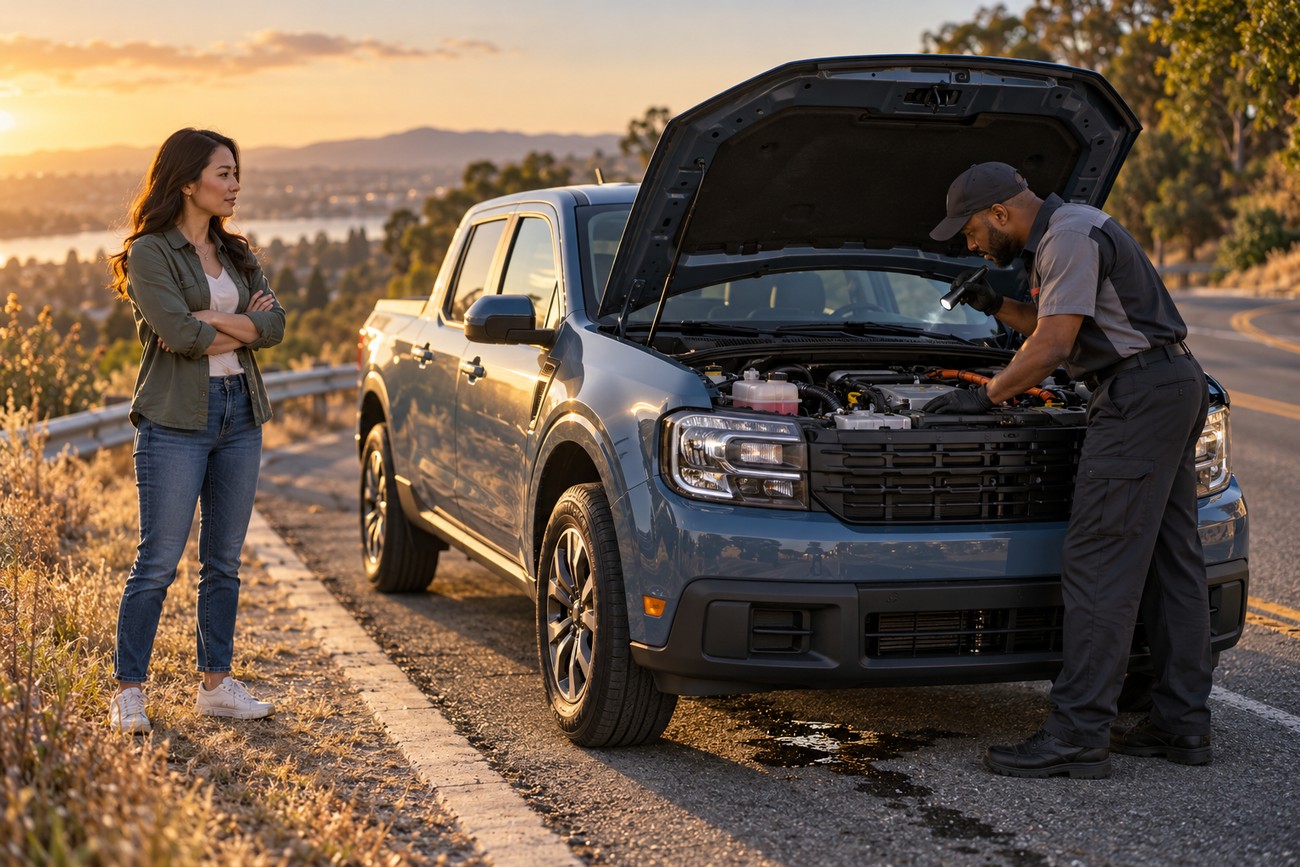
An Engine Coolant Over-Temperature warning should immediately reduce the demanded load. Stop when safe, especially if the warning persists, the temperature indication rises, power is reduced, or coolant is visible under the vehicle.
Ford provides a Fail-Safe Cooling procedure for overheating conditions. Follow the procedure in the vehicle’s manual, check coolant level and condition as directed, and allow the vehicle to cool before attempting further diagnosis.
The procedure is not permission to finish a towing trip under heavy load. Continuing to climb, tow, or accelerate while the warning is active can increase thermal stress and turn a contained cooling fault into broader damage.
Check for coolant loss, an unusual odor, and obvious hose or reservoir problems only when it is safe to do so. A visible level in one reservoir does not prove that every Hybrid cooling circuit is functioning, so repeated warnings require circuit-specific inspection.
The Overlooked Causes: Leaks, Air, Pumps, and Flow Control
A failed main radiator is only one possible cause of overheating. Other fault areas include hoses, clamps, coolant pumps, valves, radiator shutters, battery heat exchangers, and controls that regulate coolant flow between components.
Coolant odor or a damp area after repair deserves prompt attention. Owners have reported leaks and loose hose clamps after cooling-system work, and incomplete air removal can leave an air pocket that reduces effective circulation even when the reservoir appears correctly filled.
One owner attributed an overheat to an improperly secured lower radiator-hose clamp. That is a single-owner report, not confirmation of a model-wide defect, but it illustrates why post-repair hardware and bleeding procedures deserve direct inspection.
A scan that shows no obvious fault, or the absence of a visible puddle, does not identify the failed component. A technician may need to verify pump operation, shutter movement, valve response, heat-exchange performance, hose security, and actual coolant flow in the affected circuit.
Clicks After Shutdown, Reduced Power, and Other Misread Signals
Some owners hear clicking, relay activity, or pump operation after switching off the truck and associate it with hybrid-battery coolant circulation. Continued thermal management can explain such activity, so an isolated noise is not automatically proof of a battery fault.
Owner reports remain divided about which sounds are normal. The useful distinction is whether the noise occurs alongside coolant loss, an odor, a temperature warning, a fault code, or a change in vehicle operation.
Reduced-power operation is more significant than an isolated shutdown click. Owners have described limited power after cooling-system or exhaust-related problems, and that condition should be diagnosed before the truck is returned to towing or sustained high-load use.
Record when the noise occurs, whether pumps continue running, and whether any warning appears. That information helps separate expected thermal management from a developing cooling, control, or battery-system problem.
A Smarter Cooling and Towing Decision Process
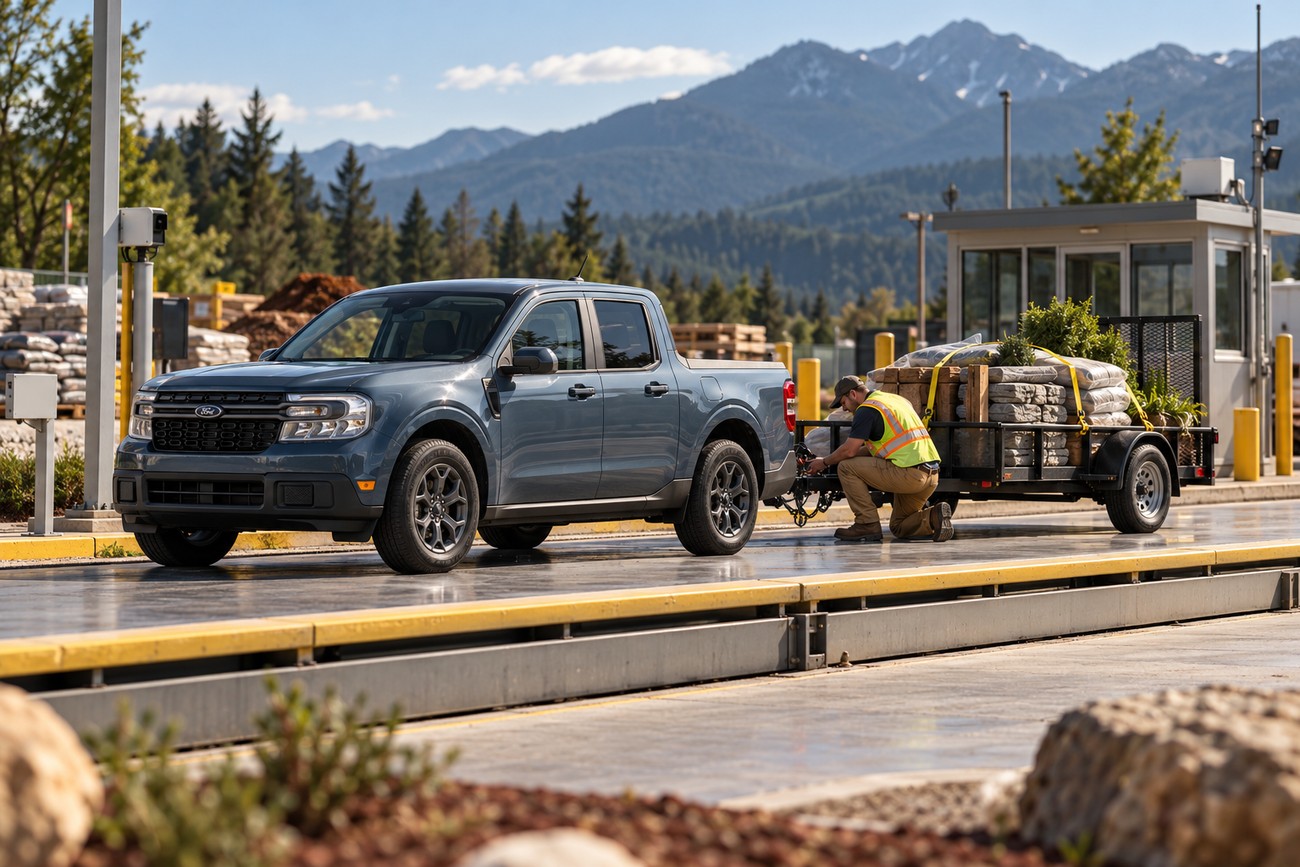
Confirm the truck’s actual factory configuration before using a towing rating. Up to 2,000 lb applies without the 4K Tow Package; up to 4,000 lb applies only with that package and its associated hardware.
Allow for payload and conditions instead of relying on the peak number. Hot weather, steep grades, a full passenger and cargo load, and strong headwinds can create substantially different thermal demands even when the trailer remains within the published rating.
When a warning returns, ask which thermal circuit is involved and request checks of coolant flow, pumps, radiator shutters, valves, battery heat exchangers, hoses, clamps, and air removal. A code reset alone does not establish that the underlying fault has been corrected.
The 2026 specification lists different coolant capacities for the gasoline and electric portions of the system, with the exact capacity depending on the Hybrid version and 4K equipment. Use the specific model-year owner’s manual for coolant specification, mixing decisions, and service information rather than estimating from another Maverick version.
Frequently asked questions
The questions below address repeated overheating warnings, towing-package verification, common hybrid complaints, service life, and future-model rumors.
In each case, the vehicle’s specific configuration and documented symptoms matter more than assumptions based on a single warning or owner report.
Use the model-year owner’s manual and factory records when confirming limits, equipment, or maintenance requirements.
What should I ask a dealer to verify after a repeated Maverick Hybrid overheat warning?
Ask the dealer to identify the affected circuit and document the coolant-level, condition, and leakage checks. The inspection should address pump operation, coolant flow, radiator shutters, valves, battery heat exchangers, hoses, clamps, and proper air removal.
Request the diagnostic findings in the repair record, rather than accepting only a cleared code. If the warning followed cooling-system work, ask specifically whether connections were correctly secured and whether the circuit was properly filled and bled.
How can I verify that a used Maverick Hybrid really has the 4K Tow Package?
Confirm the truck’s factory configuration through its original equipment records, window sticker, build information, or a Ford dealer’s vehicle records. A hitch, wiring, or an advertisement claiming 4,000 lb capacity does not prove that the truck has the 4K package.
Also verify the associated factory hardware, including the additional transmission-fluid cooler, upgraded fan, and Tow/Haul mode. The 4,000-lb rating remains subject to vehicle mass, cargo, passengers, configuration, and GCWR limits.
What are the common problems with Maverick hybrids?
Cooling-related complaints include over-temperature warnings, coolant odors, leaks after repairs, loose hose clamps, reduced-power operation, and uncertainty about post-shutdown pump or relay noises. These reports do not establish that every truck has the same defect.
Potential causes span several systems, including hoses, pumps, radiator shutters, valves, battery heat exchangers, and flow controls. Repeated symptoms need a vehicle-specific diagnosis rather than a general assumption about the main radiator or hybrid battery.
What is the life expectancy of a Ford Maverick hybrid?
A precise service life cannot be established from the available information. It depends on maintenance, operating load, climate, towing use, repair quality, and the condition of both the gasoline and high-voltage systems.
Regularly addressing warnings, leaks, abnormal temperatures, and reduced-power events gives the vehicle a better chance of reliable service. Follow the exact maintenance and coolant guidance for the specific Hybrid model year.
What are the rumors about the 2027 Ford Maverick?
Rumors about a future model year should not be treated as confirmed equipment, cooling changes, towing ratings, or battery specifications. Verify any claim against Ford’s published specifications and owner documentation for the vehicle being considered.
For a purchase or towing decision, the current truck’s factory configuration and documented limits matter more than unconfirmed future-product reports.







