
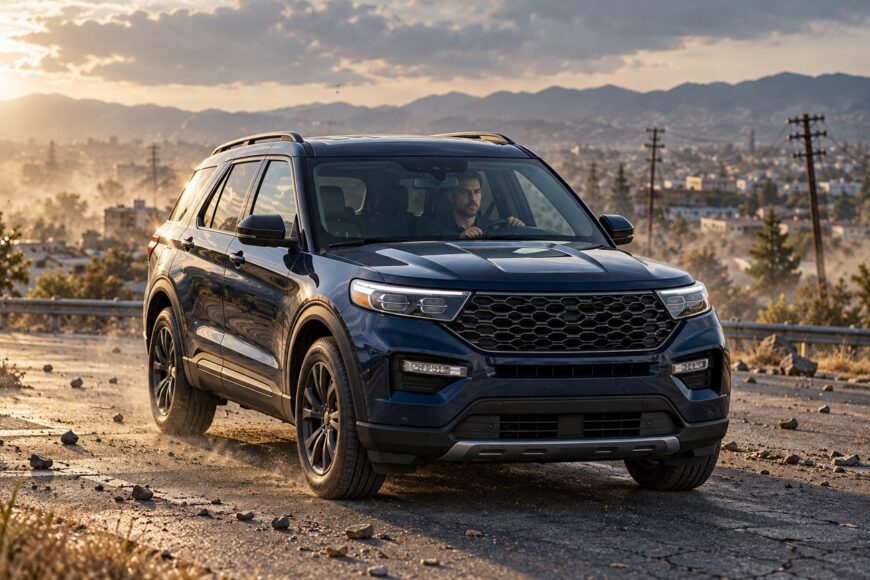
The first seconds of an earthquake behind the wheel are confusing: the Ford Explorer is shaking, traffic is unpredictable, and you must decide whether to keep moving, pull over, or get out. The safest choice depends on the space around the vehicle, especially the risk from buildings, bridges, power lines, falling debris, and damaged pavement.
If it can be done safely, reduce speed and smoothly pull toward an open area. Remain in the vehicle until the shaking ends, preferably stopped away from falling hazards. The Explorer’s size, ground clearance, or crash-test rating cannot make a dangerous stopping location safe. Move again only after the shaking has stopped and you have assessed the route.
- What to Do When an Earthquake Starts While You Are Driving
- Where to Stop a Ford Explorer During an Earthquake
- What to Do After the Shaking Stops
- What the Ford Explorer Can—and Cannot—Protect You From
- Common Mistakes and Earthquake Myths Behind the Wheel
- A Simple Decision Framework Before You Drive
- Frequently asked questions
- Why does my Ford Explorer shake while I’m driving if there is no earthquake?
- What should I do if an earthquake starts while my Ford Explorer is already stopped in traffic?
- How can I check whether the road is safe before driving away after an earthquake?
What to Do When an Earthquake Starts While You Are Driving
Ease off the accelerator, keep both hands on the wheel, and reduce speed without abrupt braking. If there is a clear path to a safer open area, smoothly pull over and stop. Do not make a sudden or risky maneuver merely to reach a shoulder, especially if surrounding vehicles are losing control.
Remain in the vehicle until the shaking ends, preferably stopped in an open area away from falling hazards. Russian EMERCOM guidance gives this general priority for drivers. If the vehicle is already in a location where moving would create a greater immediate risk, stop where it is, keep your seat belt fastened, and wait for the strongest movement to pass.
Driving through severe shaking can cause lane drift, collisions, and contact with curbs or damaged surfaces. Jumping out during the first seconds exposes you to moving traffic, broken glass, falling objects, and unstable ground. The main aim is to avoid falling structures and infrastructure rather than to find a perfect parking space.
Once the movement stops, keep the engine and vehicle position under control while you assess the surroundings. Further shaking may occur, and the road may already be blocked. A decision that looks like ordinary parking should be treated as an emergency stop with a later escape route.
Where to Stop a Ford Explorer During an Earthquake
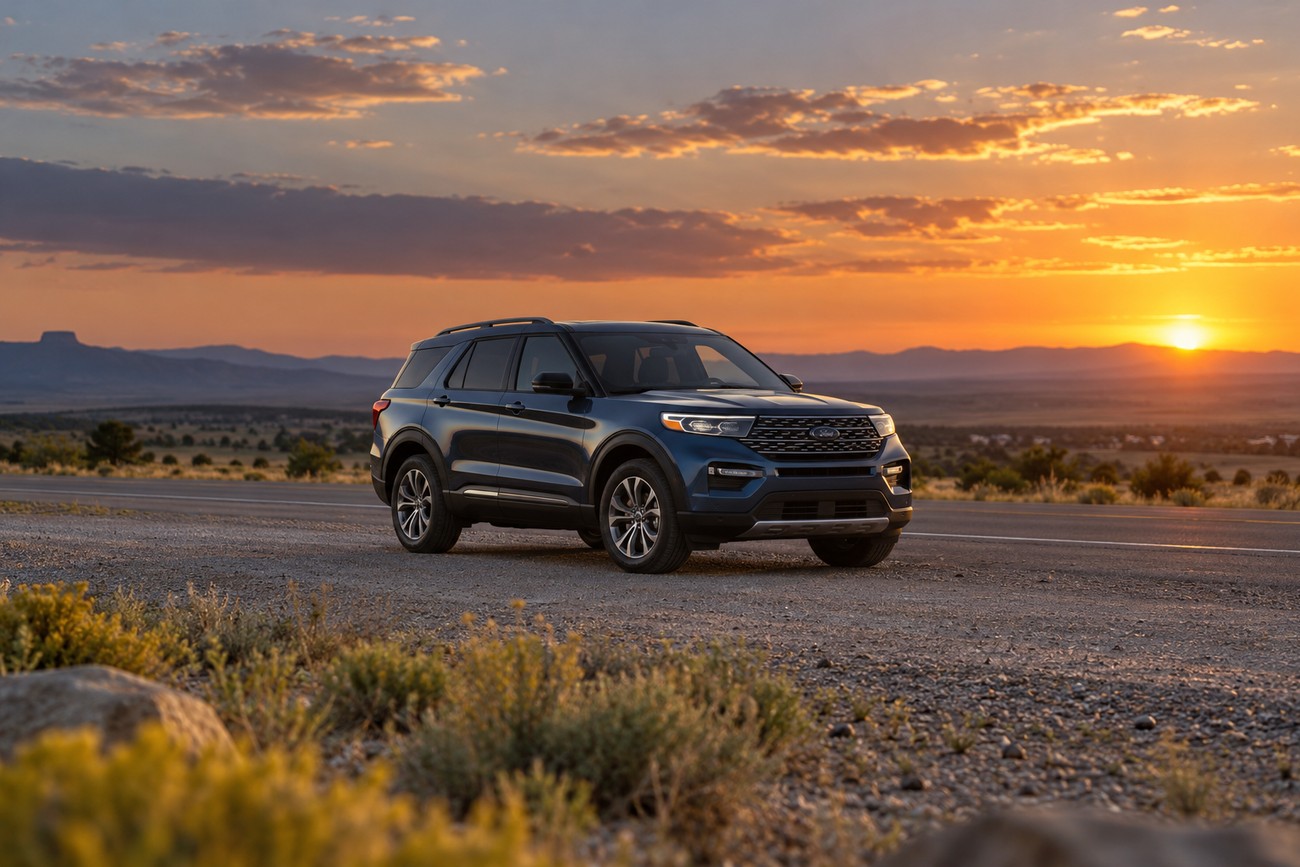
An open area is away from buildings, elevated infrastructure, utility lines, and other falling hazards. A wide lane or broad shoulder does not automatically meet that definition. Look beyond the immediate pavement and consider what could fall, collapse, swing, or block the vehicle.
Do not stop on, under, or immediately beside bridges, overpasses, elevated roads, or tunnels. Keep away from building façades, retaining walls, utility poles, and power lines. A shoulder beside a tall structure may be more dangerous than a narrower stopping point farther from it.
Dense urban streets create a difficult choice because visibility and orientation may deteriorate during strong movement. The Explorer’s larger body and limited side or rear visibility can make rapid maneuvering and clearance judgment harder in congested areas. Abrupt lateral movement may bring the vehicle into a wall, curb, cyclist, or neighboring car.
Choose the safest reachable position rather than crossing several lanes in search of an ideal one. Leave room for a later exit if conditions deteriorate, and avoid stopping where the vehicle blocks an intersection. The safest place is defined by falling hazards and escape options, not by the apparent convenience of the shoulder.
What to Do After the Shaking Stops
Stopping is not the same as being cleared to continue. Pause and inspect the road ahead, surrounding traffic, fallen objects, utility lines, pavement cracks, flooding, and blocked routes. Check whether traffic signals are working and whether vehicles or debris have removed your intended exit.
Keep a clear escape route from the stopping position. Avoid sudden U-turns, improvised shortcuts, and decisions driven by a crowd of vehicles moving in the same direction. Other drivers may be reacting to hazards you cannot yet see, while a familiar road may have been damaged during the shaking.
Preserve access for emergency responders when choosing where to remain stopped. A driver focused only on finding a shoulder can unintentionally block an intersection or eliminate the only usable route away from falling hazards.
Do not block intersections or create a new traffic obstruction when a safer position is available. If the route is visibly damaged, wait for better information or follow local emergency instructions. The next action depends on local conditions and further shaking, not on the Explorer’s off-road image.
High ground clearance does not protect the vehicle from falling debris, damaged pavement, broken utility infrastructure, or a collapsed structure. If you must move, do so slowly enough to reassess after each obstruction and keep space from damaged edges, walls, and overhead hazards.
What the Ford Explorer Can—and Cannot—Protect You From
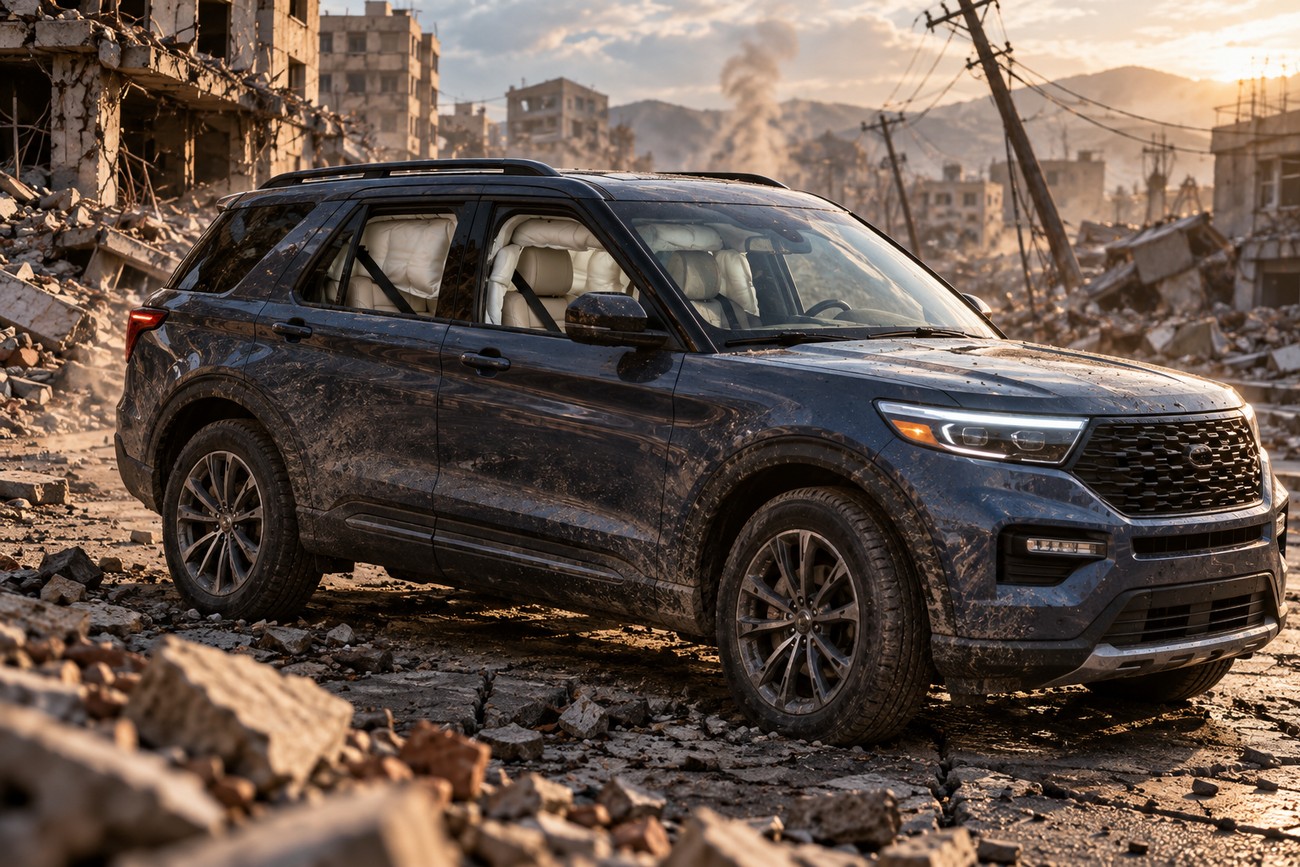
The Ford Explorer has occupant-protection features that can help in tested collisions. A newer Euro NCAP assessment reported 5 stars, with 89% adult occupant protection, 86% child occupant protection, 80% vulnerable road-user protection, and 72% safety-assist.
Those results describe specific crash tests and assistance systems. Another review noted reservations about protection in particular crash-test scenarios and areas of the interior that could contact the knees and thighs. Such findings are relevant to collision safety, while an earthquake introduces hazards outside the test conditions.
A 5-star crash rating does not guarantee protection from earthquake shaking, falling debris, damaged infrastructure, or an unsafe stopping location. The vehicle can provide a protective cabin in some impacts, yet it cannot stop a bridge from collapsing or prevent a power line from falling onto the road.
Vehicle height, weight, and electronic assistance also have limited value in deciding where to stop. High ground clearance does not protect against falling objects, collapsed structures, broken pavement, or damaged infrastructure. Driver-assistance systems may help with vehicle control, but they cannot choose the safest place to stop during an earthquake.
Common Mistakes and Earthquake Myths Behind the Wheel
One common error is continuing to drive through severe shaking because the road ahead appears open. Loss of orientation, reduced control, and falling objects can make forward travel more dangerous within seconds. Slow down and stop when a safe opportunity exists, or remain where you are if a forced maneuver would be worse.
Another mistake is stopping beneath an overpass, beside a bridge support, under a power line, or close to an overhanging façade. These locations may feel sheltered because they are familiar stopping points, yet they place the vehicle near structures and objects that can fall. Tunnels and narrow streets create similar problems by limiting visibility and escape options.
The recommended default is to remain in the vehicle until shaking ends, provided the vehicle is not exposed to an immediate separate danger such as fire. Running into the roadway during the first seconds can expose you to traffic and debris. Exiting may become necessary later, but it should follow an assessment of the vehicle and surroundings.
High ground clearance and a 5-star crash rating do not make every stopping location or damaged road safe. An SUV may cross some uneven surfaces more easily than a low car, yet its size can make tight emergency maneuvers harder. Treat the Explorer as a vehicle that needs a sensible stopping place, not as protection from every earthquake hazard.
A Simple Decision Framework Before You Drive
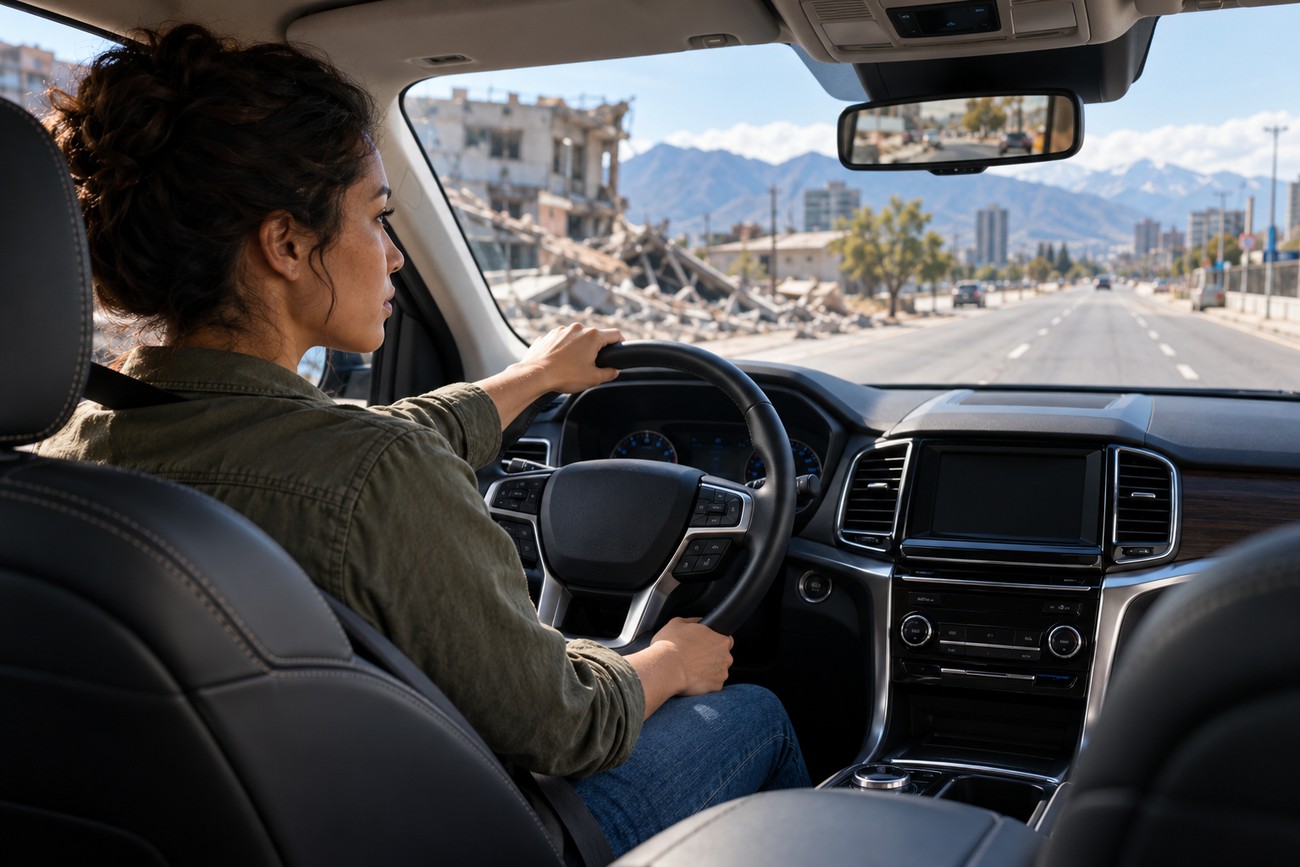
Use three decisions under pressure. First, can you slow down and move away from falling hazards while maintaining control? Second, is the current position safer than a forced maneuver across traffic or beside a structure? Third, after the shaking ends, where is the clearest route away from debris, damaged pavement, and blocked access?
- Reduce speed and keep the Explorer stable.
- Smoothly pull over only when the path is clear and the new position is safer.
- Remain belted inside until the shaking ends.
- Assess hazards, traffic, and the escape route before moving again.
Think in terms of an emergency stop and a later escape route, rather than ordinary parking. Avoid blocking intersections or access needed by responders. A stopping position that leaves one clear direction of travel may be more useful than a formally legal shoulder with hazards on both sides.
Before driving, know the local emergency guidance for earthquakes and keep your phone accessible without creating a distraction. Driver-assistance displays can provide information, yet they cannot evaluate falling structures or select a safe stopping point. Human judgment about location remains central.
Frequently asked questions
These questions cover vehicle vibrations that may not be seismic, situations where the Explorer is already stopped, and how to assess the road afterward.
In each case, prioritize vehicle control, distance from falling hazards, and a clear route away from danger.
If conditions remain uncertain, stay stopped and follow local emergency guidance.
Why does my Ford Explorer shake while I’m driving if there is no earthquake?
Shaking linked mainly to road speed may indicate a tire, wheel-balance, or suspension problem. Shaking during acceleration can point toward the drivetrain, while movement during braking can involve the brakes or suspension. A vibration that changes when you steer may also require prompt inspection.
Reduce speed and stop safely before continuing. Do not assume every vibration is seismic movement, especially if nearby objects and other vehicles remain still. If the shaking is strong, new, or accompanied by noise, pulling, warning lights, or a change in steering, arrange an inspection rather than driving on.
What should I do if an earthquake starts while my Ford Explorer is already stopped in traffic?
Stay belted, keep the vehicle stationary, and avoid impulsive lane changes or attempts to pass through a crowded intersection. If traffic is boxed in, remaining in the vehicle until shaking ends is generally safer than opening the door into moving cars or debris. Use hazard lights if they improve your visibility to surrounding drivers, but treat them as a secondary measure.
After the movement stops, wait for a safer opening and inspect the intended route. Do not follow the nearest group automatically, and do not enter an underpass or narrow side street simply because traffic begins moving. Leave space for emergency access whenever the traffic pattern allows it.
How can I check whether the road is safe before driving away after an earthquake?
Check the pavement first for cracks, offsets, holes, flooding, or a collapsed edge. Then scan above and beside the route for wires, poles, façades, retaining walls, fallen objects, and unstable structures. Confirm that traffic signals, intersections, and visible exits are usable.
Inspect the space immediately around the Explorer before turning or reversing, including areas hidden by the vehicle’s larger body. Move only when the route is open and you can maintain a clear escape option. If debris, water, wires, or blocked traffic make the route uncertain, remain stopped and seek local emergency guidance.







