
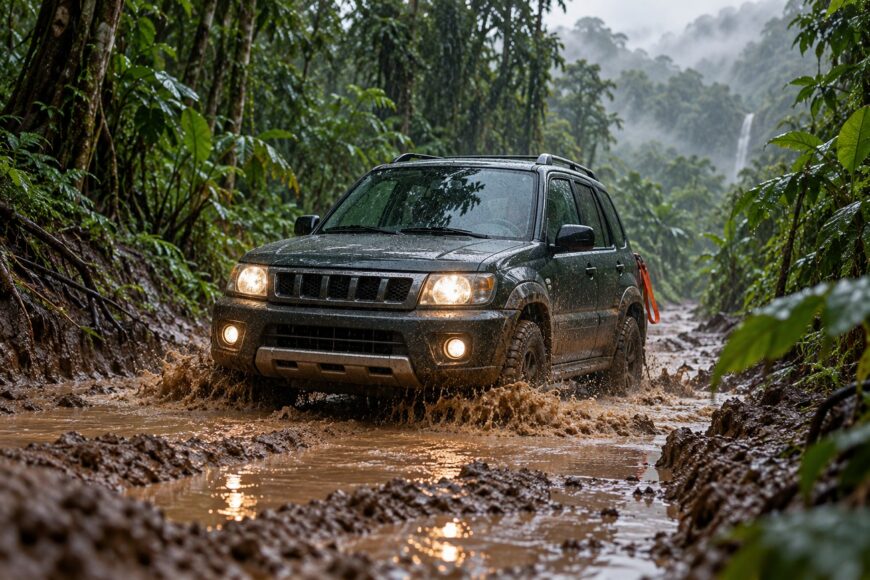
A dry road can look manageable in the morning and turn to slick clay after an afternoon of rain. Road tyres lose their grip, truck ruts hold water, and a short stretch can become difficult to cross or reverse out of. The useful question is whether this particular Suzuki Vitara, with its tyres, load, and driver, can travel this route safely in the current season.
Driving through the Amazon region means following roads and using bridges or suitable crossings; it does not mean driving across the Amazon River. Conditions vary widely with rainfall, maintenance, and local traffic. A route plan should leave room to wait, change course, or turn back when the road no longer matches the vehicle.
- Can a Suzuki Vitara handle Amazon roads?
- Rain, clay, and ruts change the journey
- What to check on the Vitara before departure
- Amazon road conditions: drive, wait, or turn back
- Mud, ruts, and water: when to turn back
- Recovery and repairs are harder than the obstacle
- The damage that may appear after the road
- Frequently asked questions
- How long can a Suzuki Vitara engine last under demanding tropical use?
- What should I do if the engine stalls while the vehicle is in water?
- How can I check whether local petrol is suitable for my Vitara?
Can a Suzuki Vitara handle Amazon roads?
A Vitara may be a reasonable choice for maintained roads and modest unpaved sections when conditions are favorable. A remote track damaged by rain is a different proposition, especially if it includes deep ruts or uncertain crossings. Recent information about the specific road matters more than a broad claim that a vehicle can “do the Amazon.”
The badge does not establish capability. Vitara and Grand Vitara specifications vary by generation and market, so check the actual vehicle’s drivetrain, tyres, ground clearance, and owner’s manual rather than treating the names as interchangeable. A two-wheel-drive example on road tyres faces different limits from an all-wheel-drive example on tyres suited to loose ground.
AWD can help on slippery ground, but a compact SUV’s traction does not remove its ground-clearance, underbody, and water-crossing limits. A wheel can still spin freely when the vehicle rests on its underside. Extra luggage reduces available clearance and can make the same obstacle harder to negotiate.
Judge the trip by its least forgiving section, not by the easy distance leading to it. Before committing to a remote leg, seek current local road information and identify a practical alternative or turnaround point. Passability can change after a single spell of rain.
Rain, clay, and ruts change the journey
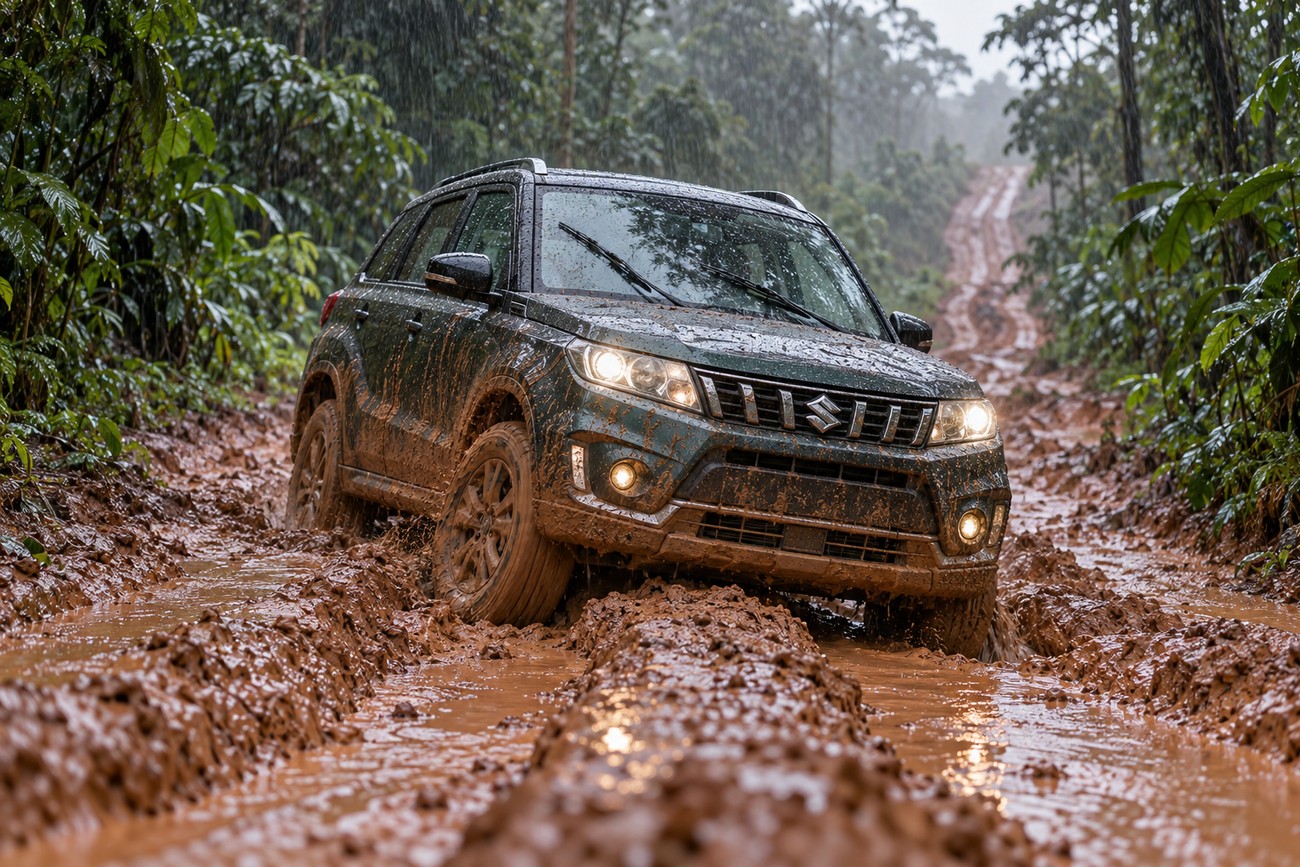
On wet clay, road-tyre tread can fill until the tyres slide rather than bite. A slope or corner that felt routine when dry may then offer little steering or braking grip. AWD may help the car move forward, but it cannot restore grip that the tyres do not have.
Deep ruts create a separate problem: a compact SUV can end up resting on its underside while its wheels lose useful contact with the ground. Following the visible wheel tracks without checking their depth can also expose low plastic trim and underbody components to damage. The firmest-looking line from the driver’s seat is not always the one the vehicle can clear.
Corrugations and repeated rough-road impacts increase wear on suspension and brakes. Slow down enough to control the car over bumps and avoid treating a long rough section as a test of how quickly it can be crossed. New rattles, a change in braking feel, or signs of overheating deserve attention before the next remote leg.
Road conditions in the Amazon region vary with season, rainfall, and maintenance; one report cannot describe every road. Ask for recent information tied to the section and direction you intend to travel, including any bridge or washout. A route described as drivable last week may offer little guidance after fresh rain.
What to check on the Vitara before departure
Start with the exact vehicle and its owner’s manual. Confirm whether it is two-wheel drive or AWD, its permitted load, maintenance requirements, and any stated water-crossing guidance. Do not assume an approved wading depth or infer one from ground clearance; if the manual provides no clear limit, treat uncertain water as a serious risk.
Fit tyres appropriate to the roads you expect, and check their condition, pressure, and clearance on the vehicle. Make sure the spare is usable and that you have the tools to fit it; a puncture kit alone may not solve a damaged tyre on a remote track. A compressor can be useful, but pressure changes should suit the tyre, load, surface, and return to harder roads rather than follow a universal number.
Inspect exposed components underneath, including any loose trim or protection that could catch in a rut. Check cooling-system condition, belts, seals, electrical connections, brakes, and signs of fluid leaks. Heat, humidity, water, and mud make existing weaknesses more consequential when repair help is far away.
Identify a recovery point that is suitable for the vehicle, and establish how it may be used before packing recovery equipment. A strap without a safe attachment point and someone who knows how to use it is of limited value. Protective accessories may help on a particular route, but they should follow an inspection of the vehicle and its likely obstacles, not replace it.
Finally, load the car for the route rather than for every possible scenario. Heavy luggage lowers available clearance and can worsen handling on ruts and uneven bridges. Keep essential water, tools, communications, and recovery items accessible without piling unnecessary weight onto the vehicle.
Amazon road conditions: drive, wait, or turn back
This table supports a roadside decision; it cannot verify the ground, crossing, or bridge at your vehicle. Treat an unresolved safety check as a reason to stop.
| Observable condition | Verify on site | Conservative decision |
|---|---|---|
| Recent rain on clay | Check whether tyres can grip, the road slopes toward a hazard, and conditions are still worsening. | Drive only if grip and a safe retreat are clear; otherwise wait for improvement or turn back. |
| Deep ruts | Check rut depth against the loaded vehicle’s underside clearance and look for a firm alternative line. | Turn back if the car may rest on its underside or no safe line is apparent. |
| Standing or moving water | Establish the depth, current, bottom, exit, and the specific vehicle’s manual guidance without entering blindly. | Turn back if any critical detail is uncertain; do not infer a safe depth from clearance. |
| Damaged bridge | Establish its condition and load capacity through reliable local information. | Do not cross if either cannot be established; use another route or wait. |
| Uncertain recovery route | Confirm communications, a safe way to retreat, and realistic help if the car becomes stuck. | Wait or turn back if a minor failure could leave occupants stranded without support. |
Mud, ruts, and water: when to turn back
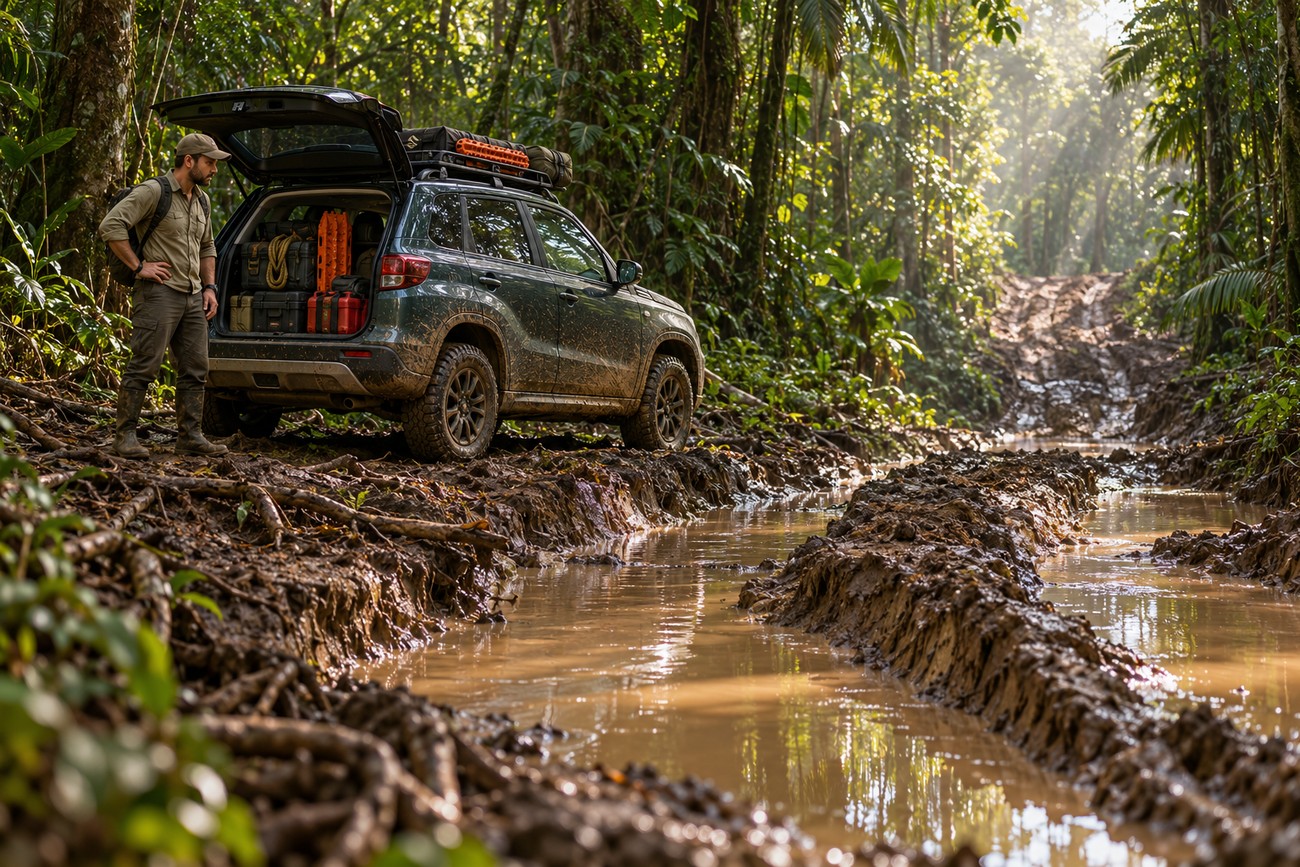
Assess an obstacle from a safe place before the wheels enter it. Look for firm ground, ruts the loaded vehicle can clear, and a route out if the surface gives way. If stopping to inspect safely is impossible, that uncertainty is itself a reason to reconsider the line.
Truck tracks can sometimes indicate ground that has carried traffic, but their ruts may be too deep for a smaller vehicle. Wet clay can clog road tyres, while a high ridge between tracks can leave a Vitara resting on its underside. Choose a line based on what the vehicle can clear and where it can regain firm ground, rather than copying a larger vehicle’s path.
A water crossing can have a manageable entry and an exit too soft or steep for a compact SUV to climb. Check the far bank and your ability to retreat before committing to the water.
Water adds questions that AWD cannot answer: current, bottom firmness, hidden damage to the crossing, and the vehicle’s water-related limits. Consult the owner’s manual for the specific Vitara; do not assume an approved wading depth or derive one from ground clearance. If you cannot establish the conditions safely, turn back rather than testing them with the car.
A controlled retreat should remain possible until you have enough information to proceed. Repeated attempts in the same mud can deepen the ruts and make recovery harder. Waiting for the surface to improve may preserve both the vehicle and the next day’s route.
Recovery and repairs are harder than the obstacle
A small mechanical problem changes character when parts, towing, and mobile service are unavailable. Before a remote leg, work out where help could come from, how you would contact it, and how long you could safely wait. Tell someone your intended route and agree on a check-in plan that does not depend entirely on mobile coverage.
Carry drinking water, basic tools, and recovery equipment suited to the vehicle and route. Confirm that recovery points are usable, and understand the equipment before it is needed. An improvised pull from an unsuitable attachment can injure people or damage the car; carrying a strap does not make solo recovery assured.
Allow time in the itinerary for rain to pass and roads to improve. A tight schedule encourages a driver to enter an uncertain crossing or rut because turning around feels costly. On a remote route, the safer plan may be the one that leaves enough supplies and daylight to wait.
The damage that may appear after the road
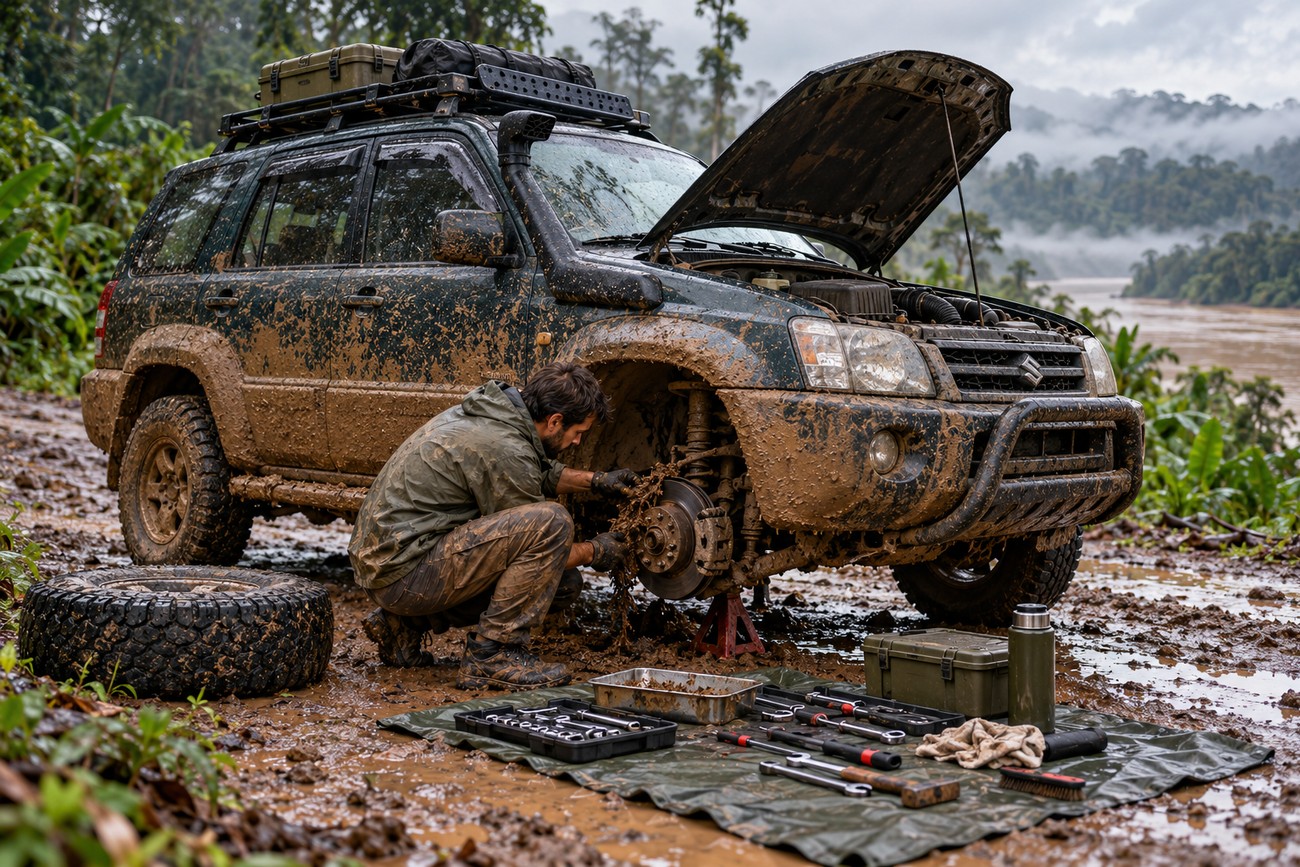
A car that drives out of mud or water may still need attention. Check that the brakes work normally, inspect for material trapped around them, and investigate unusual noise from wheel bearings. Significant water exposure also warrants checking relevant fluids for contamination according to the vehicle’s service guidance.
Inspect the air filter and its housing if water may have reached the intake area; water ingestion can damage an engine. Mud and moisture can also affect filters, electrical connectors, and seals without causing an immediate warning light. After a substantial crossing, a qualified inspection may be prudent even if the car appears to run normally.
Look underneath for loose protection, damaged trim, leaks, and marks from ground contact. Corrugations and repeated impacts can increase wear on suspension and brakes, so new rattles or changes in steering and braking deserve investigation. These checks matter most when another long, unsupported section lies ahead.
Heat and humidity can accelerate deterioration of rubber components and wiring, including parts that looked sound before departure. Inspect boots, hoses, belts, and visible connections during the trip rather than relying only on the odometer. An ordinary wet drive does not mean damage is inevitable; exposure and symptoms determine how closely the car needs to be examined.
Frequently asked questions
Engine life, a stall in water, and fuel suitability each call for a vehicle-specific answer. The checks below help you decide what to verify before departure and what to do if the trip is interrupted.
How long can a Suzuki Vitara engine last under demanding tropical use?
There is no defensible mileage figure that applies across Vitara engines, generations, and maintenance histories. Before a long trip, look for records of oil and filter changes, cooling-system service, and repairs to leaks or overheating problems. Investigate persistent warning lights, coolant loss, unusual noises, or contaminated fluids before heading somewhere service may be limited.
What should I do if the engine stalls while the vehicle is in water?
Prioritize occupant safety and move to safe ground if you can do so without entering dangerous water. Do not repeatedly restart the engine: water may have entered the intake, and restarting can cause further damage. Arrange safe recovery and have the intake, engine, electrical components, and affected fluids inspected before driving on.
How can I check whether local petrol is suitable for my Vitara?
Check the fuel grade and other requirements in the manual for your specific engine, then confirm what is sold in the countries and areas on your route. Ask locally about dependable fuel availability before entering a long section with few stations. Reports of variable fuel quality warrant planning, but they do not establish that all petrol in the region is contaminated.







