
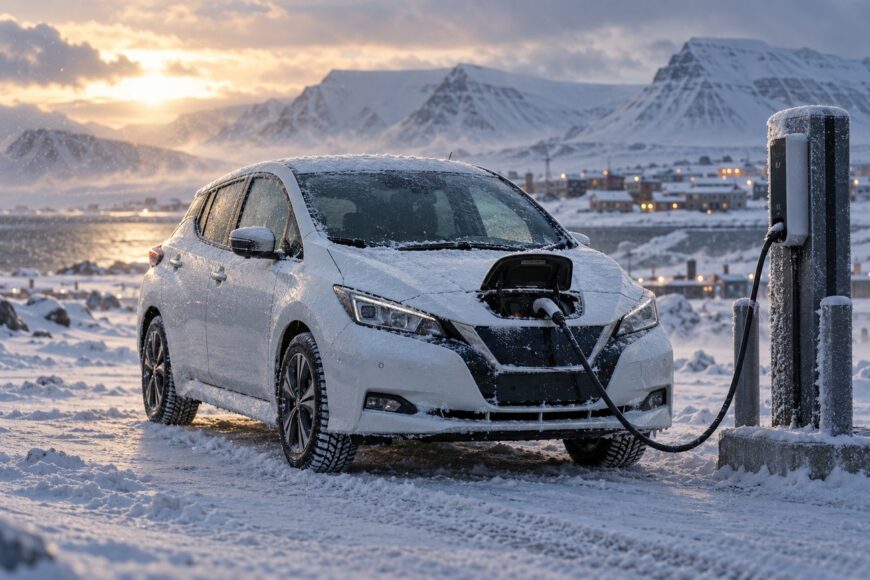
A Nissan Leaf can make short trips around Longyearbyen straightforward, yet the same car can become difficult to rely on when cold, wind, poor visibility, or an unavailable charger erodes the return reserve. In Svalbard, the practical question is less about the Leaf’s official range than whether this specific car, in this weather, can return to a confirmed charging point.
Battery size, battery health, equipment, charging connectors, and the planned route all matter. A Leaf that works well for predictable local driving may be a poor choice for a weather-dependent outing away from Longyearbyen. Conditions must be checked locally before departure.
- What driving a Leaf in Svalbard actually involves
- Winter range: why the dashboard estimate can mislead
- What a cold Leaf battery changes on the road
- Charging: verify the connector, not just the map pin
- A departure check for snow, wind, and the return trip
- When a Leaf makes sense—and when it does not
- Frequently asked questions
- What year of Nissan Leaf should I avoid for Svalbard?
- What should I do if my planned charger is unavailable?
- How does a Nissan Leaf drive in snow?
What driving a Leaf in Svalbard actually involves
Driving and charging are centered on Longyearbyen. Charging infrastructure away from it is limited, so a trip should be planned around a confirmed return charging option rather than treated as an ordinary intercity journey. A route that looks short on a map may leave little flexibility if a charger is occupied, inaccessible, or operating below its expected power.
Cold weather reduces the margin further. Lithium-ion batteries can provide less usable energy and power at low temperatures, while cabin heating adds a substantial electrical load. Wind across open terrain and snow-covered surfaces can raise consumption beyond what a temperature-only estimate suggests.
Polar-night conditions also change the driving task. Darkness, blowing snow, glare, and rapidly changing road conditions can make a cautious return slower than planned. That matters in an EV because a slower or delayed journey may require more heating time and leave less energy for reaching the charging point.
For that reason, local driving should be assessed as a series of controlled trips from a known base. Confirm the charger before leaving, keep a substantial return reserve, and treat worsening weather as a reason to cancel or shorten the outing. Do not assume that charging is available across the archipelago simply because a map shows a destination.
Winter range: why the dashboard estimate can mislead
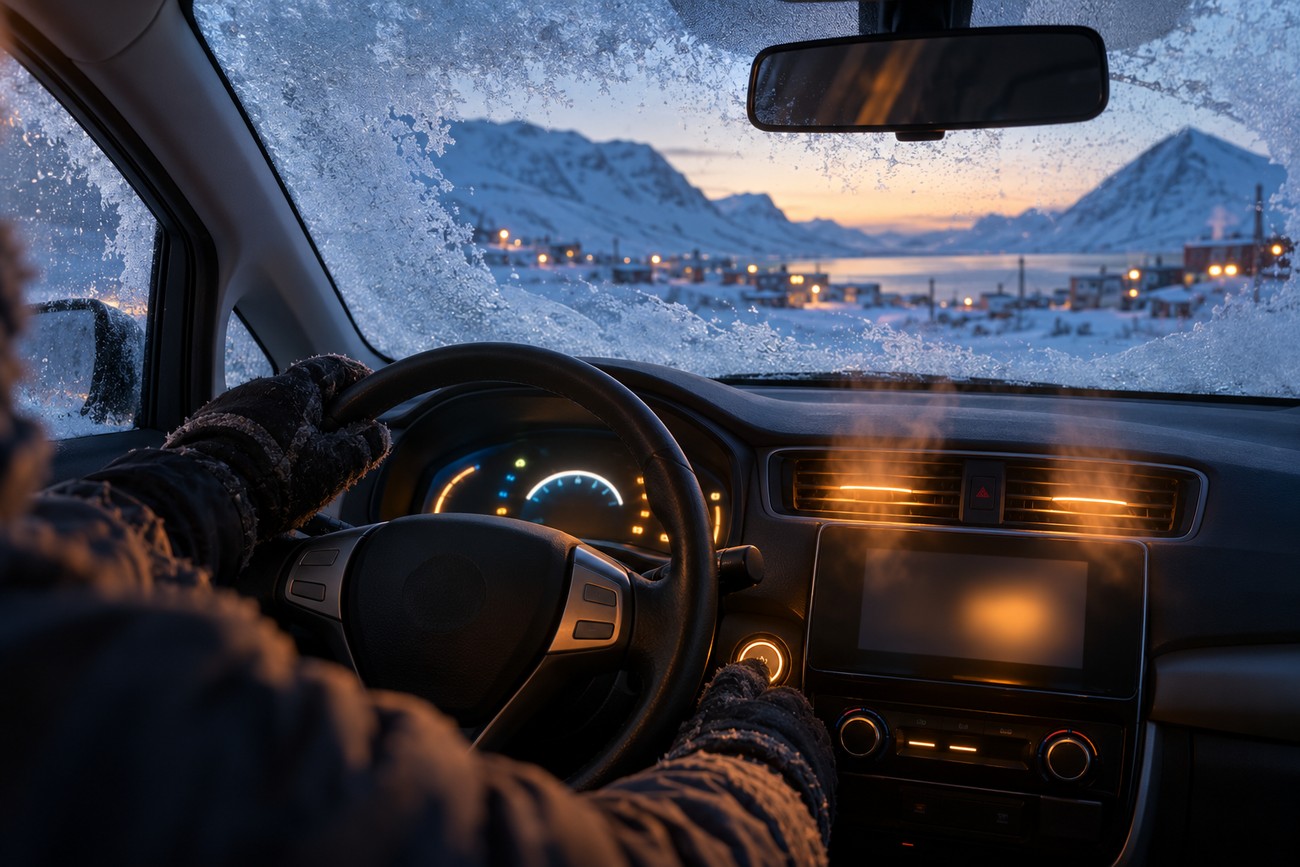
Real-world EV range in freezing conditions can fall by tens of percent, but there is no universal winter-loss figure or guaranteed kilometer range for a Leaf in Svalbard. Cold battery chemistry reduces available energy, and the car also uses energy to warm the cabin, windows, and sometimes battery systems. Wind and snow can increase rolling and aerodynamic resistance at the same time.
Repeated short trips are especially inefficient in these conditions. Each cold start may require energy for initial heating, and the battery may remain cold for much of the journey. Several separate errands can therefore use more energy than one longer trip with the car already warm, even if the total distance is similar.
The dashboard estimate is based on recent energy use and cannot know the exact wind, snow, temperature, or charging delay ahead. A rated range is even less useful for planning a return in an Arctic environment. Judge the trip by observed consumption in comparable conditions, then leave a substantial reserve for the return leg and an unexpected wait.
Battery percentage can also create false confidence. A high percentage does not guarantee the same usable distance after the car has stood outside, and a low percentage may fall quickly once heating begins. Preheat the cabin while plugged in where the vehicle and charging setup permit it, and avoid starting a long trip with the battery only just above the expected requirement.
What a cold Leaf battery changes on the road
A cold lithium-ion battery can temporarily provide less usable energy and power. The Leaf may feel less responsive under acceleration, particularly during the first part of a journey, although gentle driving usually remains possible. These limits can be normal battery-management behavior rather than evidence of a fault.
Regenerative braking may also be restricted until the battery warms. The car can then feel different on lift-off, with less deceleration than you expect from a warmer battery. Allow more stopping distance and use the brake pedal progressively, especially on snow or ice where available grip is already limited.
The Nissan Leaf lacks active liquid battery thermal management. Battery-heating capability varies by version and equipment, so the specification and condition of the particular vehicle need checking. Cabin preheating does not necessarily warm the battery, even though it can make the first minutes of driving more comfortable and reduce the demand for heat while moving.
Preconditioning is therefore useful, but it should not be treated as a guaranteed battery warm-up procedure. If the car has been cold-soaked for a long time, expect higher consumption and restricted regeneration at first. A steady, moderate drive may allow the battery to warm gradually; plan the route as though full power and full regeneration will not be available immediately.
Charging: verify the connector, not just the map pin
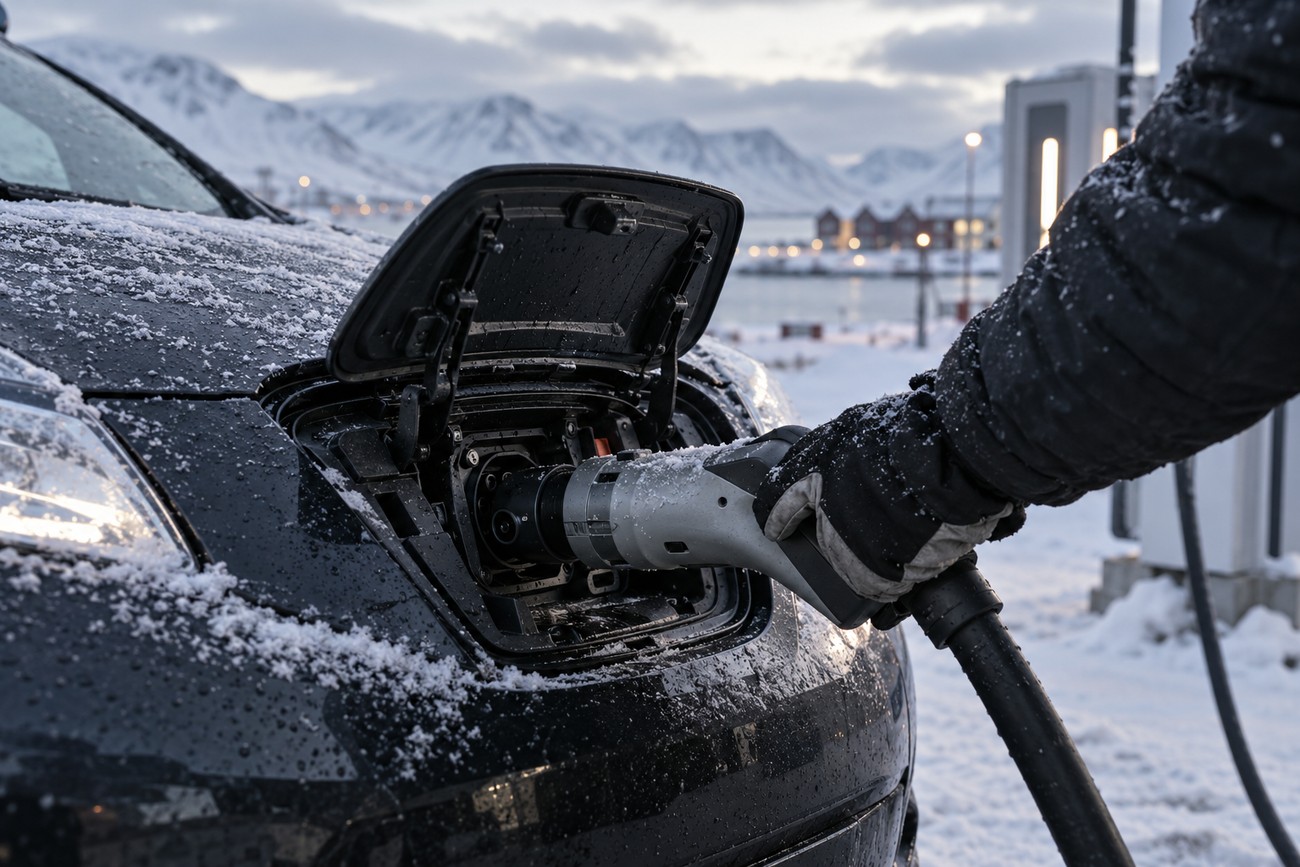
Charging plans need to distinguish dependable AC charging from an assumed quick DC rescue. The Leaf uses CHAdeMO for DC charging, while the usable AC setup must be checked on the individual car. Before departure, verify the station’s connector, access rules, operating status, and whether it is suitable for the car you are actually driving.
CHAdeMO availability is weaker than CCS availability across much of Northern Europe, and a local map entry does not prove that a connector is accessible or working in current conditions. Charging options away from Longyearbyen are limited, which makes an unverified stop a serious planning risk rather than a minor inconvenience.
A listed fast charger can still fail the trip plan if the car reaches it with a cold battery, the available connector is different, or access conditions prevent a full session. The useful check is whether that specific car can charge there, at that time, with enough time to complete the return plan.
A cold battery can limit DC charging power until it warms, even when the charger itself is operating correctly. The first part of a session may therefore be much slower than expected, and a short stop may not add the energy you planned. Leave enough reserve to avoid spending the return margin searching for another charger, and confirm a fallback before setting out.
A departure check for snow, wind, and the return trip
A safe departure routine starts with the charger, not the destination. Confirm that the intended point is available, compatible, and reachable on the outbound and return legs. Then compare the forecast with the reserve you have chosen; strong wind can materially change energy use beyond what temperature alone suggests.
Use suitable winter tires and check tire pressure when the tires are cold, according to the vehicle manufacturer’s guidance. Incorrect pressure can affect both grip and efficiency, while worn or unsuitable tires reduce control on packed snow and ice. Instant electric torque does not overcome a lack of traction: tire grip sets the practical limit.
Prepare visibility before moving. Clear windows, mirrors, lights, and sensors as far as the car’s design requires, and make sure snow or frost will not obscure the view after departure. Keep heating needs in the energy plan, because a comfortable cabin and clear glass are safety requirements rather than optional extras.
Before leaving, ask whether the trip still works if the return takes longer, the charger is delayed, or the weather worsens. If the answer depends on the dashboard estimate reaching its final kilometre, postpone the journey. This routine supports local road and weather advice; it does not replace it.
When a Leaf makes sense—and when it does not
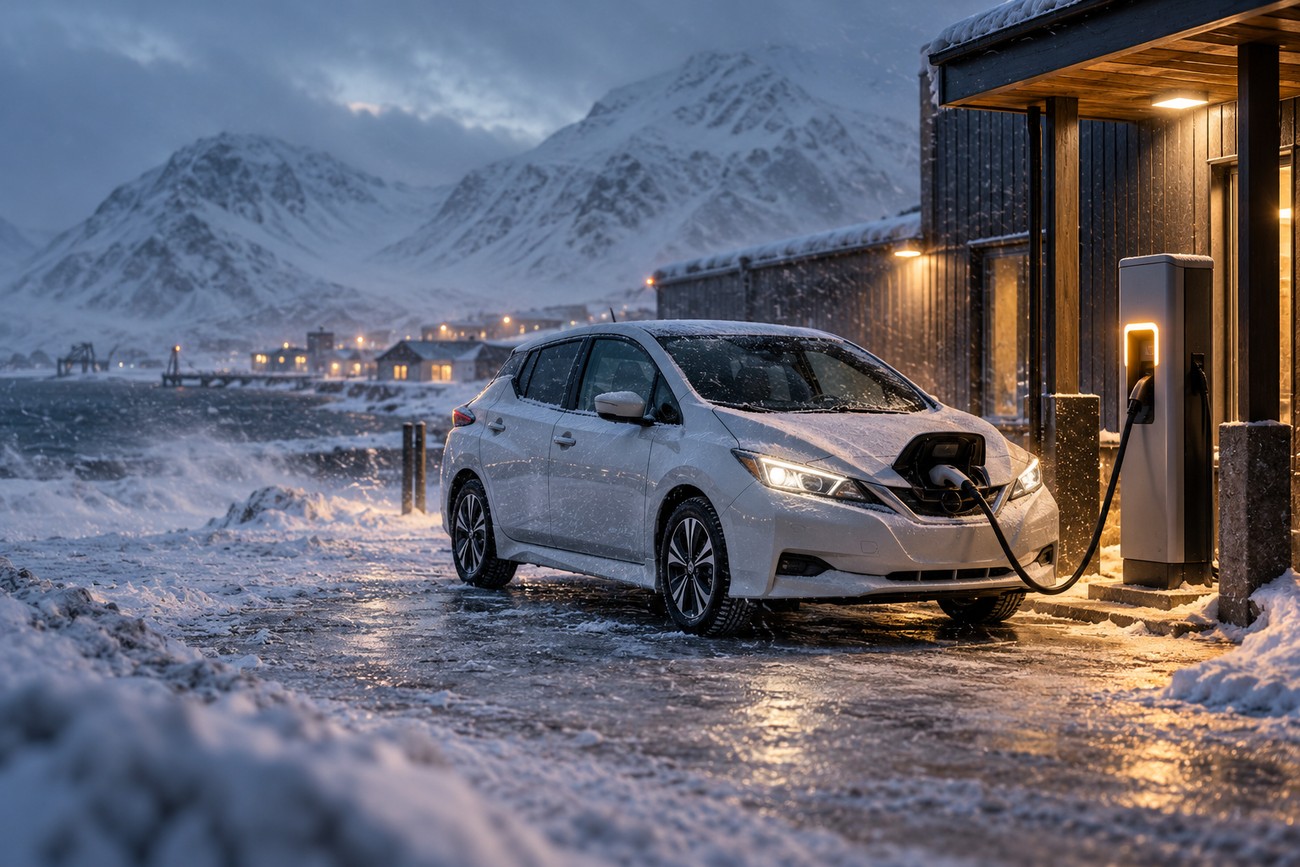
A Leaf can suit predictable local use when it has a healthy battery, suitable equipment, and a reliable charging base in Longyearbyen. Short, repeatable journeys allow you to learn the car’s consumption in the conditions you actually face. A confirmed charging point also removes much of the uncertainty that makes longer Arctic trips difficult.
Longer or weather-dependent outings expose the Leaf’s limitations more clearly. Its lack of active liquid battery thermal management matters in sustained cold, and CHAdeMO dependence can restrict charging choices. Cold, wind, snow, and heating can combine to reduce the usable winter margin without producing a fault warning.
The individual vehicle deserves closer attention than a blanket model-year recommendation. Battery size, battery health, battery-heating equipment, AC inlet, tires, and service condition vary between Leafs. A documented battery assessment and a practical charging test are more useful than relying on an advertised range or an owner’s result in different weather.
A conventional vehicle may offer more flexibility when charging points are uncertain and the route depends on changing conditions. That does not make it universally superior: a Leaf with dependable local charging can be quiet, predictable, and well suited to routine trips. The sensible choice follows the operating pattern, the verified infrastructure, and the consequences of being unable to return.
Frequently asked questions
What year of Nissan Leaf should I avoid for Svalbard?
Do not use a blanket model-year blacklist. Screen the individual car by comparing battery size, documented battery health, equipment, charging inlets, tire condition, and service history. Confirm whether its DC connector is CHAdeMO and establish what AC charging it can use before relying on a local charger.
A car with a larger or healthier battery may provide more useful margin, but cold-weather performance still depends on wind, snow, heating, and battery temperature. A practical charging test and a review of the vehicle’s battery-heating capability are more meaningful than the registration year alone.
What should I do if my planned charger is unavailable?
Protect the return reserve first. Do not spend most of it driving around in search of a charger. Check a previously verified alternative with a compatible connector and confirmed access; if no dependable option remains, seek local assistance and avoid an uncertain onward drive.
In Svalbard, limited infrastructure makes improvisation riskier than in a densely connected road network. A charger shown on a map may have different access conditions, be occupied, or provide insufficient power for the planned turnaround.
How does a Nissan Leaf drive in snow?
A Leaf can be controlled in snow, but use gentle steering, throttle, and braking inputs. Allow longer stopping distances and avoid assuming that regenerative braking will always provide the same lift-off deceleration, because a cold battery may restrict it.
Winter tires, correct pressure, and available grip determine how confidently the car can accelerate, turn, and stop. Electric drive makes power delivery smooth, but it cannot compensate for ice, packed snow, poor visibility, or a speed that is too high for the surface.







