
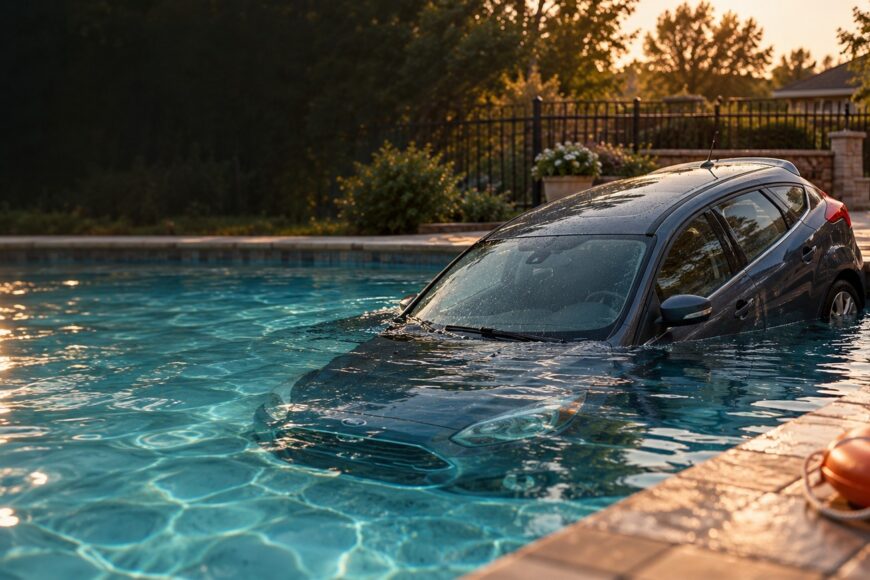
A Ford Focus is not a watercraft. Its weather sealing is designed for rain and splashes, while pool immersion creates an immediate life-safety emergency and can cause mechanical, electrical, and contamination damage that continues developing after recovery.
A vehicle may look intact from the outside or even start afterward while hidden moisture remains under the flooring, inside connectors, and around control modules. Driving into a swimming pool should never be treated as entertainment or a test: the occupants may lose their escape route within seconds, and the vehicle can become unsafe long after the water has been removed.
- What Happens When a Ford Focus Enters a Swimming Pool
- Emergency Escape Priorities in a Sinking Car
- Why Pool Water Can Damage a Focus Beyond the Visible Wetness
- What Not to Do After the Focus Is Removed
- The Hidden Failures That Appear Days or Months Later
- Repair, Insurance, or Write-Off: Making the Practical Decision
- Frequently asked questions
- What year of Ford Focus should you stay away from after water damage?
- How long can you drive a Ford Focus after it has been fully dried?
- What year to stay away from Ford Focus?
- What are some hidden features in a Ford Focus?
- What is a common problem with a Ford Focus?
What Happens When a Ford Focus Enters a Swimming Pool
A Ford Focus is not designed or sealed as a watercraft. Door seals, window seals, wiring protection, and drainage paths help manage normal rain and road splash, but they cannot keep out water during prolonged immersion. Pool water can enter through doors, vents, body openings, and other areas that are safe during ordinary driving conditions.
The cabin can flood quickly, reducing visibility and making movement difficult. Water pressure and body deformation can make doors and windows difficult to use, and doors may become substantially harder to open before pressure equalizes. Power windows may stop responding as electrical systems become wet, leaving occupants with fewer escape options.
Deeper immersion increases the chance of water reaching the air intake, under-hood electronics, wiring, sensors, and control modules. If water reaches the intake, a later start attempt can cause engine hydrolock. The engine may also suffer damage through contaminated fluids, while electrical faults can spread across systems that appeared unrelated to the original water entry.
External appearance provides little reassurance after submersion. A Focus can have serious internal water damage while its body panels, glass, and paint still look normal. The depth, duration, water movement, and location of the electrical modules all affect the result, so a visual check cannot establish that the vehicle is safe.
Emergency Escape Priorities in a Sinking Car
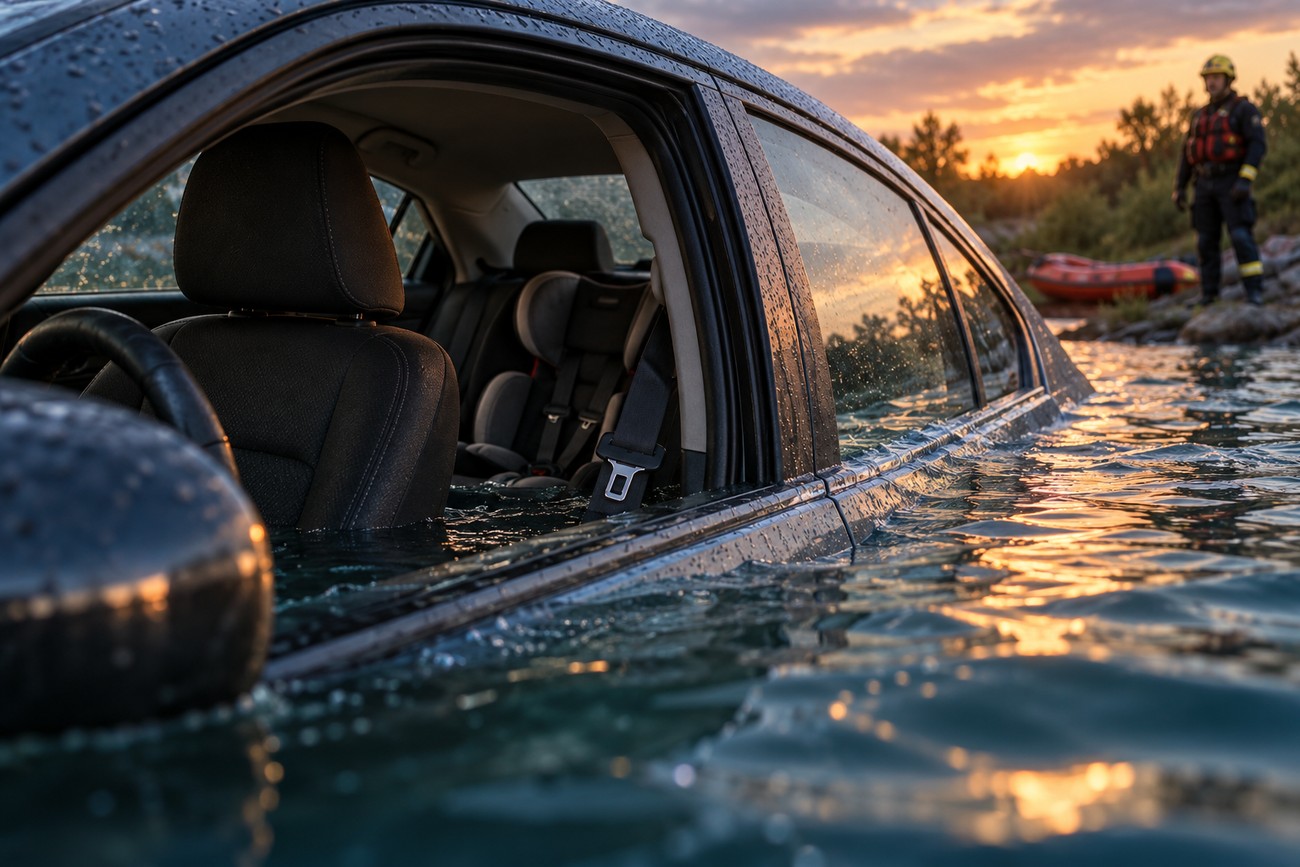
Occupant survival takes priority over the vehicle. Safe escape is usually most feasible in the first seconds after water entry, before the cabin fills and before water pressure makes the doors difficult to operate. Any deliberate test of this situation is dangerous because conditions change quickly and escape may become impossible.
Release the seat belt as soon as practical, and help children or other occupants in a clear order. Seat belts and child restraints can become obstacles if occupants cannot release them quickly. A child restraint may also limit movement even when the child is physically capable of leaving, so adult assistance and a prearranged family escape plan matter.
If a powered window still opens, it may provide the most direct exit. If the windows will not open, practical emergency guidance commonly prioritizes breaking a side window as an escape route. A purpose-made vehicle escape tool can be easier to use than an improvised object; a laminated side window may resist some tools, so emergency planning should account for the specific vehicle.
Doors may become substantially harder to open before pressure equalizes. Avoid spending valuable time trying every electrical control or attempting to recover personal items. Once outside, move away from the vehicle and toward a safe edge or clear area, then call emergency services when possible.
Why Pool Water Can Damage a Focus Beyond the Visible Wetness
Rain exposure is brief and usually drains away through systems designed for normal weather. Full immersion places water against the carpet, seat foam, felt, sound insulation, wiring harnesses, connectors, and body cavities. Water can remain in these materials after visible surfaces appear dry, especially under the flooring and around modules located beneath seats or trim.
Chlorinated pool water can accelerate corrosion and degradation of metal, wiring, upholstery, and interior materials. Pool chemicals may also affect adhesives, coatings, foam, and fabric. The damage can continue after extraction because residue remains in seams, connectors, and hidden cavities where ordinary wiping cannot remove it.
Water trapped in foam and sound insulation can keep adjacent metal and wiring damp after the cabin feels dry, so a clean carpet surface is not evidence that the floor structure has dried.
Partial or complete immersion can produce short circuits, sensor failures, connector corrosion, and module faults. Safety-system components, including airbags, sensors, and pyrotechnic devices, require particular caution because their condition may not be clear from a dashboard check. A vehicle that starts can still contain damaged systems that have not yet reported a fault.
If water reaches the air intake, a later start attempt can cause engine hydrolock. Water in the engine, transmission, braking system, or other fluid circuits can also contaminate lubricants and reduce protection for internal parts. The correct response depends on the immersion conditions and requires inspection rather than assumptions based on how clean the vehicle looks.
What Not to Do After the Focus Is Removed
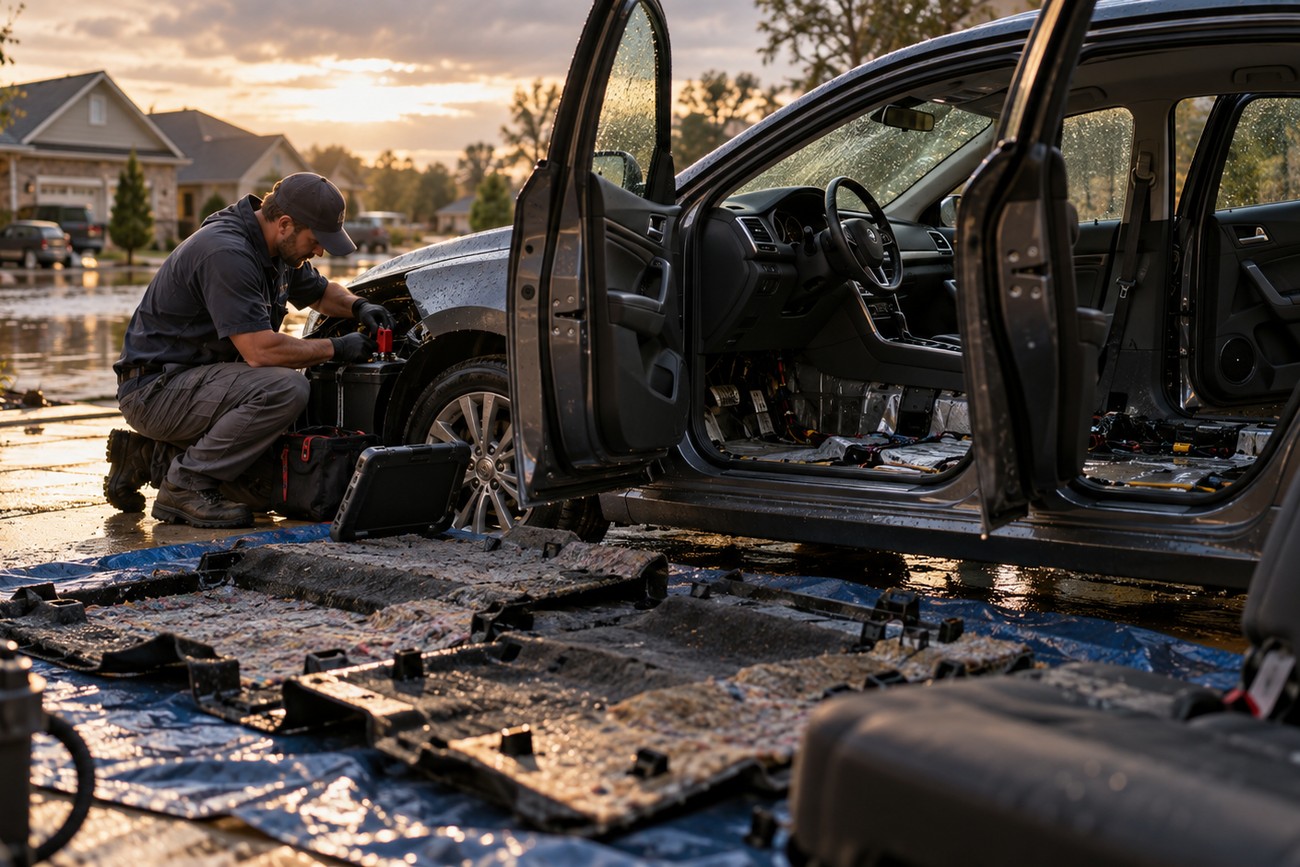
Do not immediately try to start the engine. That attempt can worsen electronic damage, circulate contaminated fluids, and cause hydrolock if water entered the intake. Disconnecting power may also require vehicle-specific knowledge, so recovery personnel should secure the vehicle and arrange a qualified inspection rather than repeatedly testing electrical functions.
External drying alone does not remove water from insulation, wiring, connectors, modules, air ducts, and body cavities. Carpets, seats, floor coverings, and sound-deadening layers may need to be removed so technicians can inspect the metal floor and hidden moisture areas. Air ducts and ventilation components also require attention because they can retain moisture and spread odor.
Restoring power or attempting a start should wait until the intake, fluids, connectors, modules, and hidden moisture areas have been inspected; early testing can turn a recoverable issue into wider electrical or engine damage.
Post-immersion recovery generally requires full drying, interior disassembly, fluid checks or replacement, and electrical diagnostics. Technicians may need to inspect harnesses, connectors, fuses, control modules, locks, window regulators, restraint systems, and corrosion inside cavities. A cosmetic cleanup, fresh carpet, or strong air movement does not qualify as a repair.
Document the water level, the time spent immersed, the type of water, and any symptoms before recovery begins. These details help determine which systems need priority inspection. Even if the Focus operates immediately after removal, delayed failures remain possible because corrosion and moisture-related faults can develop after the vehicle appears functional.
The Hidden Failures That Appear Days or Months Later
Corrosion inside wiring harnesses, connectors, and body cavities can appear after the vehicle seems dry. Common post-immersion complaints include warning lights, no-start conditions, faulty locks, and inoperative window regulators. A system may work during the first inspection and fail later as residue and moisture affect electrical contacts.
Intermittent faults are especially difficult to diagnose because they may disappear before the vehicle reaches a workshop. A connection can behave normally when dry and fail during humid weather or after vibration. Replacing one visible connector may not resolve the problem if moisture has also reached a harness, splice, module, or ground point.
Mold and moisture odors can return after cleaning, especially during later humid weather. Carpet, foam, felt, and sound insulation can hold water below the surface, allowing odor to persist even after upholstery has been shampooed. Replacing visible trim without addressing the underlying damp material can conceal the problem temporarily.
Airbags, sensors, and pyrotechnic safety components may have non-obvious water damage. Their failure may not be immediately visible, and a normal-looking interior does not confirm that the restraint system remains reliable. A complete diagnostic review should therefore cover safety systems as well as the engine and body electronics.
Repair, Insurance, or Write-Off: Making the Practical Decision

The practical decision depends on immersion depth, whether water reached the intake and modules, the level of contamination, corrosion risk, parts availability, and the quality of the diagnostic evidence. A shallow event affecting limited areas may be assessed differently from complete or deeper immersion. The more complete and deeper the immersion, the greater the likelihood of extensive damage beyond the cabin.
Repair costs can exceed expectations because hidden electrical, interior, safety-system, and corrosion damage emerges progressively. A written inspection should identify which modules and harnesses were checked, which fluids were tested or replaced, how the interior was dried, and whether corrosion was found in cavities or connectors.
Insurance decisions depend on the policy, local rules, inspection findings, and the estimated scope of repair. Ask for the water damage and recovery history in writing, and keep photographs and invoices. An independent inspection can help when the proposed repair is extensive or when the vehicle’s long-term reliability is uncertain.
A cosmetic repair or fresh upholstery does not erase the vehicle’s immersion history. A vehicle with water damage should not be resold without clear disclosure of the immersion and repairs. Buyers should treat new interior materials, recently replaced connectors, persistent odors, or unexplained electrical warnings as reasons for further inspection.
Frequently asked questions
The questions below separate ordinary Ford Focus ownership concerns from damage caused by pool immersion. A vehicle’s documented history and present condition matter more than a simple model-year label.
What year of Ford Focus should you stay away from after water damage?
There is no single safe Ford Focus model year after immersion. The decisive factors are the documented water history, immersion depth, diagnostic evidence, corrosion, restraint-system checks, and the results of an independent inspection.
Be cautious if the seller cannot explain the recovery and repair process, provides no records, or presents only a clean interior and a working engine. A vehicle that starts and drives can still have delayed electrical, safety-system, mold, and corrosion problems.
How long can you drive a Ford Focus after it has been fully dried?
Elapsed drying time is not a safety certificate. Before normal use, the vehicle needs documented electrical diagnostics, restraint-system checks, fluid inspection or replacement where required, and examination for corrosion and hidden moisture.
Even a vehicle that has been professionally dried may develop intermittent faults if connectors, harnesses, modules, or body cavities were affected. Continued warning lights, odor, lock faults, window problems, or starting issues should be treated as evidence requiring further inspection.
What year to stay away from Ford Focus?
For an ordinary purchase, no single model year automatically makes every Ford Focus a poor choice. Condition, maintenance records, accident or flood history, diagnostic results, and the quality of the specific vehicle are more useful indicators than the year alone.
After pool immersion, the same principle applies with greater caution. A documented inspection and transparent water-damage history should guide the decision, while an unexplained history or cosmetic-only repair is a reason to walk away.
What are some hidden features in a Ford Focus?
Ford Focus equipment varies by model year and trim, so features should be confirmed through the owner’s manual and the vehicle’s controls. Depending on the version, drivers may find configurable display settings, steering-wheel controls, driver-assistance menus, and practical storage or seat-folding functions.
These features are separate from water-damage assessment. After immersion, test vehicle functions only after inspection, because hidden moisture can affect switches, modules, locks, windows, and warning systems.
What is a common problem with a Ford Focus?
Common problems vary by model year, engine, transmission, maintenance history, and market. For a Focus exposed to pool water, the main concern is the condition created by immersion: connector corrosion, sensor and module faults, warning lights, no-start conditions, faulty locks, inoperative windows, and returning moisture odor.
A diagnostic scan alone may not reveal every water-related defect. Inspection should also cover wiring, hidden moisture, safety systems, fluids, body cavities, and evidence of corrosion before the vehicle is considered suitable for regular driving.







