
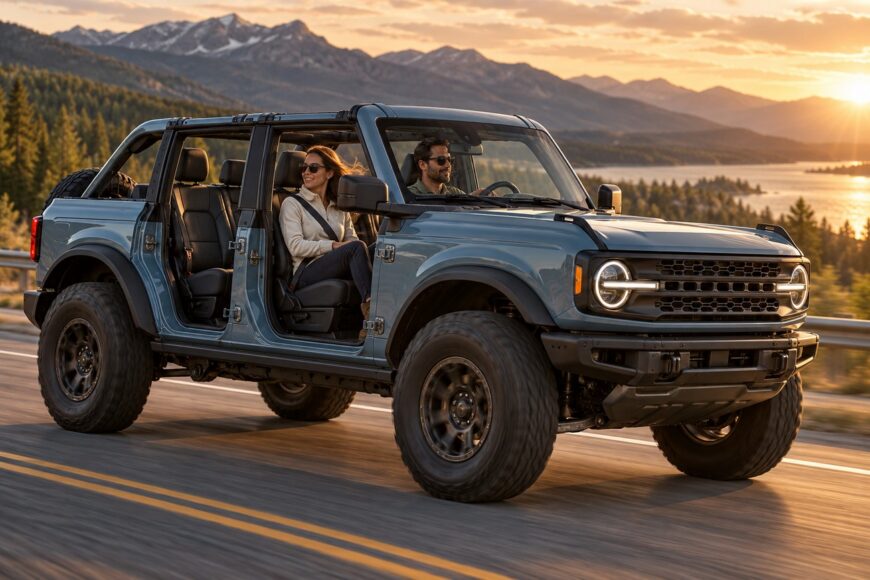
Driving a Ford Bronco with the doors removed gives you a direct sense of the air and surroundings. On a quiet recreational drive, that openness can be the point. On the highway, it also brings substantially more noise, wind, weather exposure, and responsibility for anything loose in the cabin.
The current Ford Bronco has removable doors and a removable roof, but that design feature does not promise convertible-like highway comfort. Passengers may feel exposed, and small objects that stay put with the doors fitted deserve another check. The practical decision is whether the open-air experience is worth those tradeoffs for the trip you are taking.
- What Changes When You Remove the Bronco’s Doors
- The Highway Reality: Noise, Wind, and Weather
- Safety Checks Before Driving Without Doors
- Passengers, Storage, and Everyday Practicality
- Ford Bronco With Doors vs. Without Doors on the Highway
- Common Myths About Doorless Bronco Highway Driving
- Frequently asked questions
- Why are people getting rid of Ford Broncos?
- What is the safe parking sequence before checking a doorless Bronco?
What Changes When You Remove the Bronco’s Doors
Removing the doors changes more than the view from the seats. It opens the cabin directly to passing air, road spray, and debris. The Bronco is designed to allow this configuration, but preparing it for a highway journey calls for more thought than completing the removal procedure.
The Bronco’s mirrors are mounted to the body rather than the doors, so they remain in place when the doors are removed. That is a useful distinction from vehicles whose mirrors come away with the doors. Before setting off, adjust the mirrors for the driver’s seating position and confirm that the view remains clear.
Some official or dealer descriptions refer to removing “all five doors” and storing them in the vehicle. Promotional wording about removal and storage is a poor substitute for the instructions for your specific vehicle. More importantly, the number of panels removed says little about whether passengers, hardware, and cabin contents are ready for highway travel.
Door removal is therefore a configuration choice, not a final pre-drive check. A securely prepared Bronco can still feel much less settled and sheltered than it does with its doors fitted. Decide where you will drive, who will ride along, and what you need to carry before choosing the open setup.
The Highway Reality: Noise, Wind, and Weather
At highway speeds, the open sides expose occupants to a sustained rush of air and road noise. Conversation becomes harder, and the sound can grow tiring over a longer trip. The effect is more pronounced than the pleasant airflow you may notice at lower speeds.
Side winds and turbulence around other traffic also become easier to feel. Gusts can buffet clothing and items inside the cabin, increasing the driver’s need to monitor what is moving. The Bronco’s off-road-oriented design supports rough-terrain use, but it does not make a doorless highway drive quieter or more comfortable.
Weather forecasts matter more without doors. Rain and water spray can reach occupants and belongings, while cold air, dust, and small debris enter more easily. Even a dry departure does not guarantee a dry cabin if the route crosses a shower or a wet stretch of road.
These conditions can change the character of an otherwise straightforward journey. A short drive in mild weather may be enjoyable; a long, wet highway leg may demand more tolerance than expected. Keeping the doors on for the highway portion remains a reasonable choice, even if you plan to remove them later.
Safety Checks Before Driving Without Doors
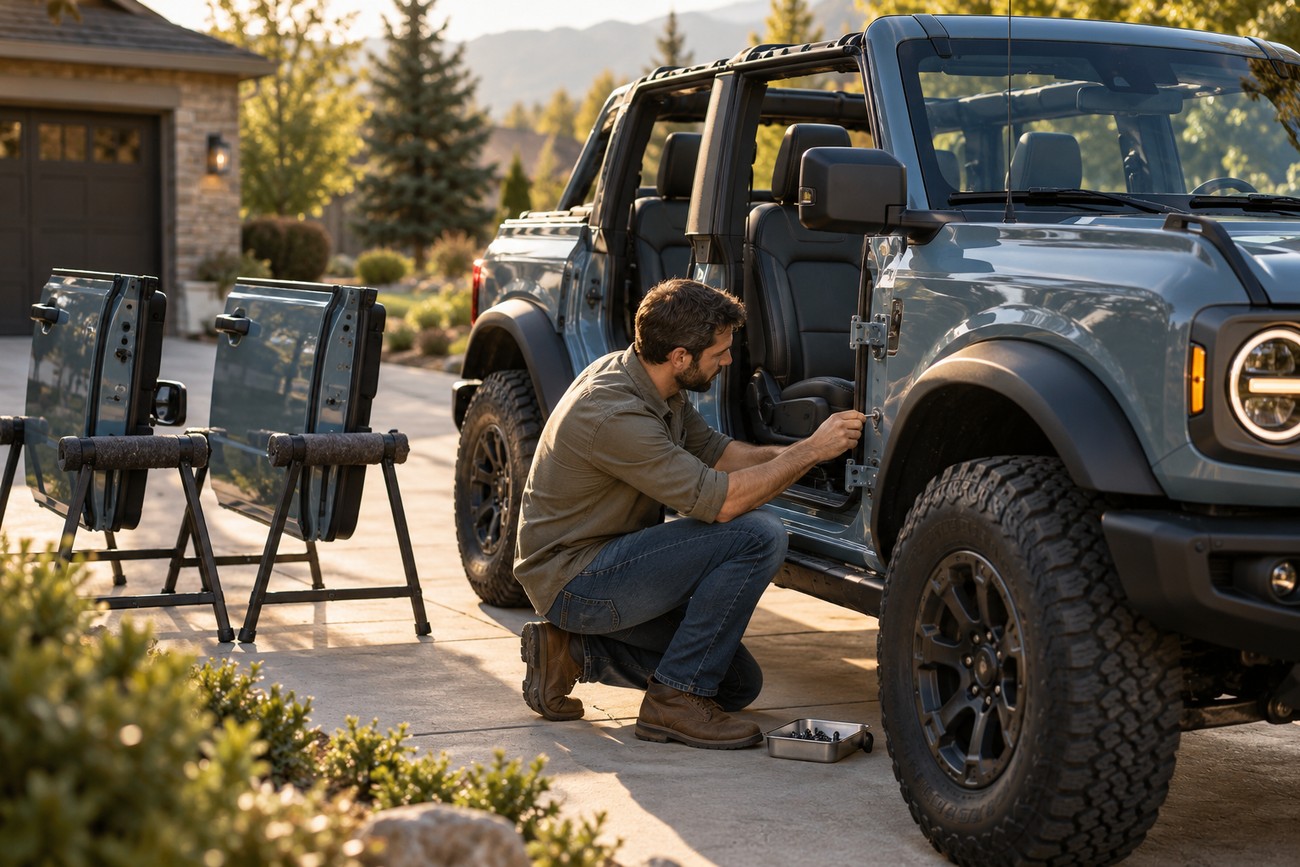
Begin any inspection or door-hardware work with the Bronco stationary and secured against movement. Stop the vehicle, select P or neutral, and apply the parking brake before touching the doors or checking the cabin. Follow the vehicle’s instructions for removal and refitting rather than assuming a panel is secure because it appears to be in place.
Check the relevant fasteners and make sure nothing left from the removal process can shift or rattle. A small item that moves around town can become more distracting at highway speed. If you find hardware you cannot confidently secure, resolve that before driving.
A deliberate walk-around after door removal helps separate the mechanical job from the driving decision. Check the attachment points first, then look through the cabin from each open side for anything that could move into a footwell or out of the vehicle.
Secure floor mats, bottles, phones, and other loose belongings. Pay particular attention to objects near the open sides and to anything that might interfere with the pedals. Recheck bags and personal items after passengers get in, since they may place things beside their seats.
Confirm that every occupant is seated and belted correctly, and use the appropriate child restraint where needed. Removing the doors reduces side protection and can make passengers feel vulnerable; it does not lessen the driver’s responsibility for them. If a passenger is uneasy or cannot be accommodated safely, leave the doors fitted for that trip.
Passengers, Storage, and Everyday Practicality
Passengers experience the open sides differently. Children and taller occupants, in particular, may feel more exposed without the doors, even when they are properly restrained. Ask how they feel before committing to a long highway stretch, and take discomfort seriously rather than treating it as something they will simply get used to.
The doors also need a safe place when they are off the vehicle. Plan where they will go before removing them, and handle and store them carefully to avoid scratches or damage. If you intend to carry removed panels in the vehicle, follow the instructions for your configuration and make sure they are secured as directed.
Daily use adds smaller burdens. Belts, fasteners, and belongings deserve regular attention, while an open cabin leaves items less protected when you park. A quick stop can become less simple if you must take valuables with you and watch for changes in the weather.
For many owners, doorless driving makes more sense as a seasonal or weekend choice than as a constant highway setup. That does not diminish its appeal. It means choosing days and routes that suit it, while keeping the doors available for routine travel.
Ford Bronco With Doors vs. Without Doors on the Highway
Use this comparison to match the configuration to the journey. Both offer the Bronco’s body-mounted mirrors, but the cabin conditions and preparation demands differ.
| Consideration | Doors on | Doors off |
|---|---|---|
| Noise and wind | Better shielding from highway airflow and road noise | Substantially more noise, wind, and turbulence |
| Weather exposure | Better protection from rain, spray, dust, and cold air | More weather and small debris can enter the cabin |
| Side protection | Doors remain in place alongside occupants | Reduced side protection and a more exposed feeling |
| Loose objects | Cabin is more contained | Items need deliberate securing so they cannot move or leave the vehicle |
| Mirrors | Body-mounted mirrors remain available | Body-mounted mirrors remain available; check adjustment before driving |
| Storage | No separate door storage needed | Removed doors need careful handling and secure storage |
For a long commute or a trip with uncertain weather, doors-on travel generally offers better comfort and containment. It also reduces the number of belongings you need to assess for exposure to wind and rain. Passengers who prefer a more enclosed cabin are likely to find it easier to settle in.
Doors-off travel serves a different purpose: enjoying an open-air drive when conditions and occupants suit it. The mirrors remaining in place are a practical advantage, though they do not restore the shelter provided by the doors. Check visibility as you would before any drive.
The comparison is a planning tool, not a universal verdict. A pleasant recreational route and a long highway journey can call for different choices on the same day. If you are uncertain about the weather, storage, or passenger comfort, keeping the doors fitted avoids making those concerns part of the drive.
Common Myths About Doorless Bronco Highway Driving
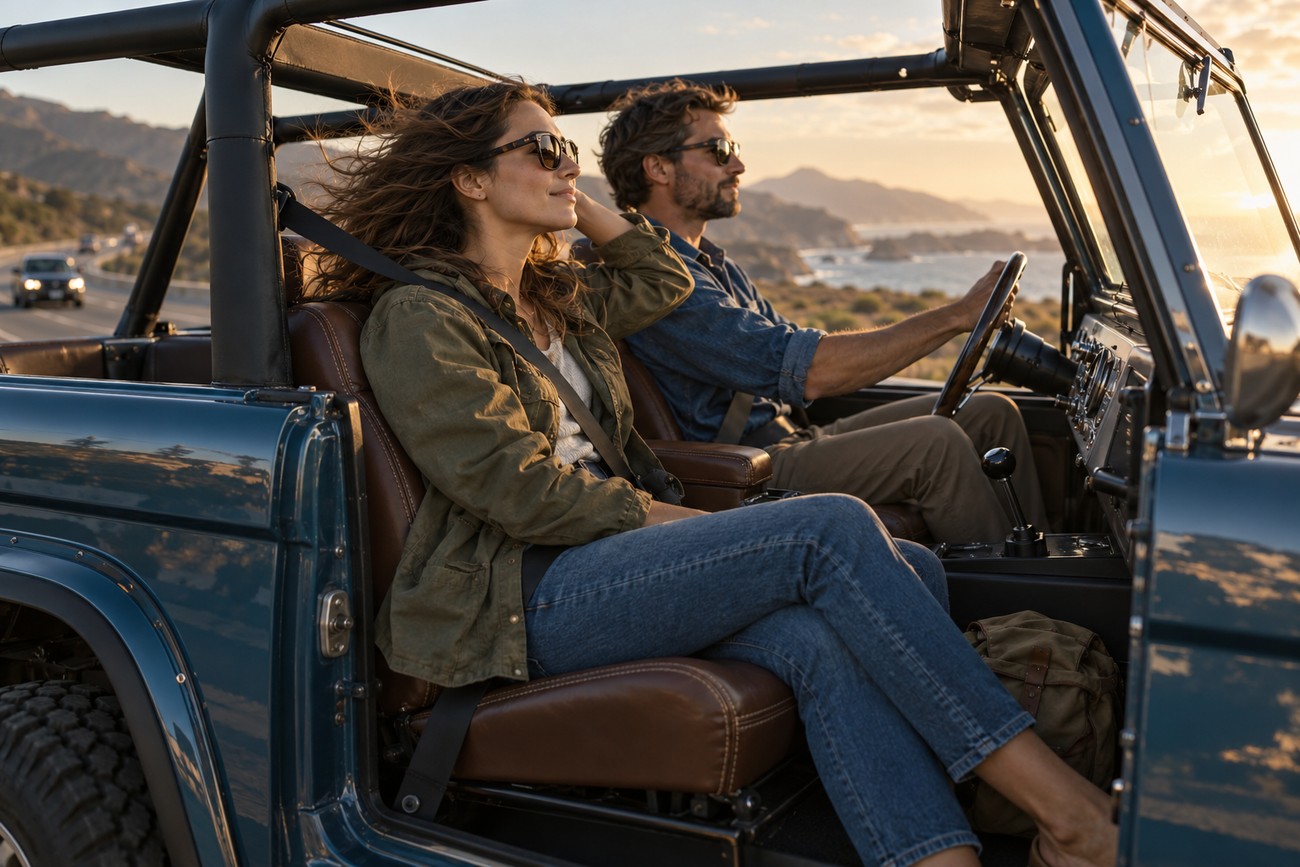
Removable doors can make a highway trip possible in an open configuration; they do not make it feel the same as a trip with the doors fitted. Noise, wind, and weather exposure increase substantially. Judging the setup by a brief, slow drive can leave you unprepared for sustained highway conditions.
An open-sided Bronco should not be assumed to behave like a conventional convertible with its side doors in place. Air and spray can enter beside the occupants, and small cabin items have a more direct path out. The experience has its own appeal, along with a stronger sense of exposure.
Another mistaken assumption is that completing door removal completes all the preparation. Fasteners, floor mats, belongings, seat belts, and child restraints still require attention. The body-mounted mirrors help preserve a useful view, but they do not address those separate checks.
Marketing descriptions of easy removal explain a feature, not an ideal pattern of use. The best time to drive doorless is when the route, weather, passengers, and storage plan support it. There is nothing inconsistent about enjoying that option occasionally and preferring doors-on travel for most highway miles.
Frequently asked questions
Doorless highway driving raises questions about both ownership and preparation. The decision to buy or keep a Bronco is broader than this one configuration. Before making plans, separate the open-air experience from local requirements and the checks needed before departure.
Why are people getting rid of Ford Broncos?
There is no single reason that explains why an owner sells a Ford Bronco. Complaints about doorless highway noise, exposure, or door storage describe one use of the vehicle and should not be treated as a general explanation for ownership decisions. If you are considering a Bronco, assess how it meets your usual driving needs with the doors fitted, then consider open-air driving as an occasional option.
What is the safe parking sequence before checking a doorless Bronco?
Stop the vehicle, select P or neutral, and apply the parking brake before inspecting the doors, their hardware, or loose items. Once the Bronco is secured against movement, follow its instructions for any removal or refitting work and complete your cabin and passenger checks before setting off. Rules for driving without doors can vary by jurisdiction, so verify the local requirements for your route separately.







