
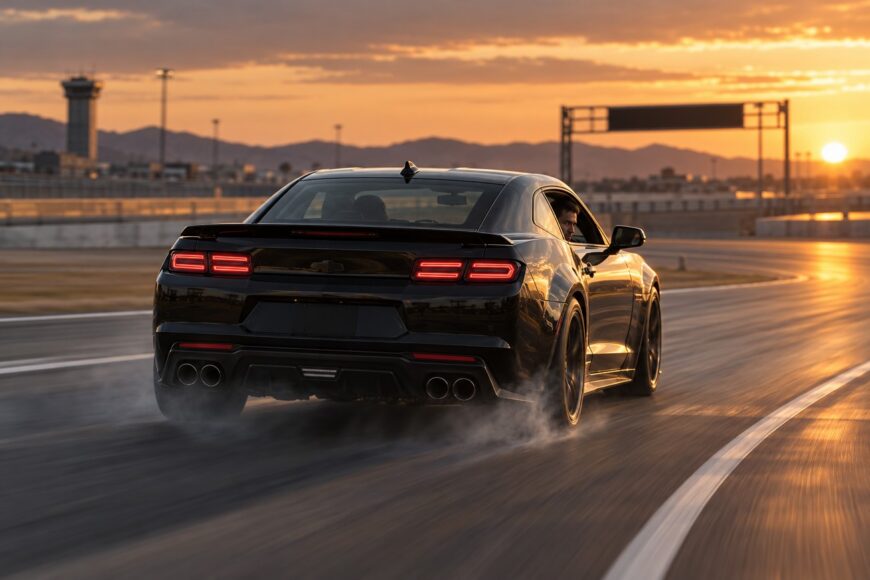
A Chevy Camaro may be capable of reaching 40 mph in reverse under particular mechanical and electronic conditions, but that figure is not an officially approved operating limit. Forty mph is approximately 64 km/h, a high speed for any vehicle traveling backward, with little time to interpret hazards or correct a steering error.
The confusion comes from mixing three separate issues: what a reverse gear ratio appears to allow, what the transmission control system will accept, and what General Motors approves. GM warns that selecting R while moving forward can damage the transmission, and that damage may not be covered by warranty. The practical concerns are control, visibility, tire grip, and drivetrain shock rather than a headline speed figure.
- Can a Chevy Camaro Really Reverse at 40 MPH?
- What the Reverse Gear and Transmission Can Actually Do
- What Happens If You Select R While Moving Forward?
- Why 40 MPH in Reverse Is a Control Problem
- The Myths Behind High-Speed Camaro Reverse Claims
- How to Assess a Specific Camaro Without Creating a Hazard
- Frequently asked questions
- What is the maximum speed you can go in reverse?
- How fast should you be going when driving in reverse?
- What happens if you put a manual Camaro in reverse at high speed?
Can a Chevy Camaro Really Reverse at 40 MPH?
A vehicle’s theoretical ability to reach a speed does not make that speed suitable for normal use. Reverse gear is generally intended for low-speed maneuvering and traction, while sustained high-speed travel places different demands on the transmission, differential, axles, tires, and cooling system.
Forty mph is approximately 64 km/h. At that speed, the available reaction time and stopping margin are severely reduced, while the driver must steer using a restricted rearward view. A brief loss of grip or an incorrect steering input can change the vehicle’s path before the driver has enough time to respond.
Official materials do not establish 40 mph as an approved reverse-speed limit. The 2018 Camaro manual describes R as a gear for moving backward or maneuvering backward, but it does not state a permitted reverse-speed figure. That wording supports low-speed use; it does not create a high-speed operating authorization.
Internet claims based on gearing or a short demonstration should therefore be treated cautiously. A momentary result under controlled conditions cannot establish a safe limit, a repeatable factory capability, or a suitable road-driving practice.
What the Reverse Gear and Transmission Can Actually Do
Common mechanical Camaro reverse ratios are about 2.90:1, while some Camaro versions use a reverse ratio around 3.93:1. These figures describe the relationship between engine and output speed. A reverse gear ratio is not a maximum-speed specification.
Actual vehicle speed also depends on engine rpm, the final-drive ratio, tire size, available grip, load, and any electronic limits. A higher numerical reverse ratio can increase wheel torque, but it can also bring the engine to high rpm sooner. It does not provide a reverse equivalent of all forward gears.
An automatic transmission may electronically block R at forward speed. This protective logic is intended to reject an incorrect gear request, not to approve high-speed reverse driving. If the system refuses the command, repeatedly trying to defeat that protection can create a separate risk of damage.
A manual Camaro presents a sharper mechanical hazard. Selecting R while the car is still moving forward can cause gear impact, possible driven-wheel lock, clutch damage, and loss of control. The exact result depends on the transmission and the speed difference between its rotating components, but none of those outcomes is a useful test of the car’s reverse capability.
What Happens If You Select R While Moving Forward?
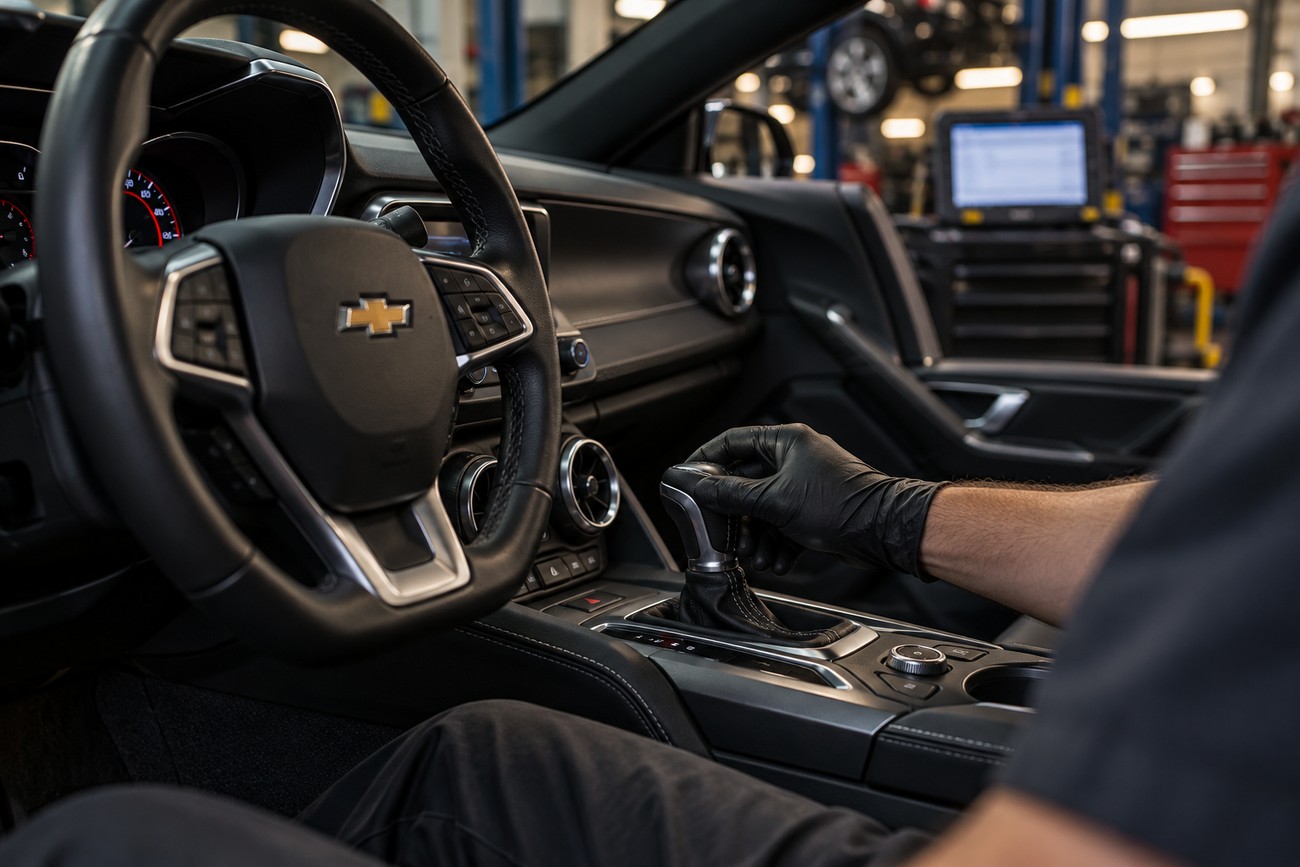
GM warns that selecting R while moving forward can damage the transmission. Damage caused by that action may not be covered by warranty, so a selector position that appears to work briefly can become an expensive drivetrain problem rather than a harmless experiment.
With an automatic, the control module may refuse the request, delay engagement, or limit the result. Owners can interpret that behavior as a fault, although an electronic refusal may be normal protective behavior. It still does not make continued high-speed experimentation safe.
With a manual transmission, grinding, harsh engagement, or a jolt can occur if the vehicle is still rolling forward. Those signs indicate an unfavorable speed mismatch and mechanical shock. They are warning signs, not evidence that the transmission has passed a durability test.
Technicians first separate selector-command protection from actual gear engagement. A blocked R request does not prove that nothing happened; inspection may still need to consider clutch shock, gear-tooth damage, differential loading, and driveline impact.
The danger can extend beyond the gears themselves. A sudden engagement may disturb the driven wheels, overload the clutch or differential, and leave the driver with less control at the exact moment the vehicle’s direction or torque changes.
Why 40 MPH in Reverse Is a Control Problem
Rearward driving removes much of the visual information used for forward driving. Camaro rear visibility can be affected by wide pillars and limited sight lines, while a rear camera covers only part of the surrounding area. It does not replace direct observation and may conceal low or moving hazards outside its field of view.
At 40 mph, a small steering correction can produce a large change in the vehicle’s path. Reverse-direction steering can feel unfamiliar, and the rear of the car may begin to swing before the driver understands the developing angle. Wet pavement or uneven grip at the rear wheels makes a rapid slide more likely.
Traction control and stability systems may reduce wheelspin or intervene in torque delivery, but they cannot guarantee the intended path. Their response can also be unfamiliar during an unusual maneuver. Electronic assistance is not a substitute for adequate visibility, stopping room, and controllable speed.
High-speed reverse operation can load the differential, axles, CV joints, reverse gears, tires, and transmission cooling system. Even if no immediate failure occurs, heat, shock loads, and tire slip can leave damage that appears later rather than during the maneuver.
The Myths Behind High-Speed Camaro Reverse Claims
An automatic transmission accepting a command does not establish a safe operating limit. The system may permit a request under one condition, block it under another, or modify the result through software. That behavior describes control logic, not a manufacturer-approved reverse mode.
Likewise, a 2.90:1 or 3.93:1 reverse ratio does not prove a maximum speed. The ratio must be considered with the final drive, tire circumference, engine speed, load, and electronic restrictions. Treating one number as a speed limit gives a false sense of precision.
There is no reliable series of owner reports confirming stable Camaro reverse driving at 40 mph. Isolated claims are difficult to compare because Camaro generations, transmissions, surfaces, tires, and control systems differ. A brief technical possibility should not be presented as a repeatable vehicle characteristic.
Reaching 40 mph, if it occurs, does not turn the maneuver into a legitimate stunt or normal driving mode. Technical attainability is not manufacturer approval, a safety standard, or evidence that the car can tolerate repeated use without drivetrain or tire damage.
How to Assess a Specific Camaro Without Creating a Hazard
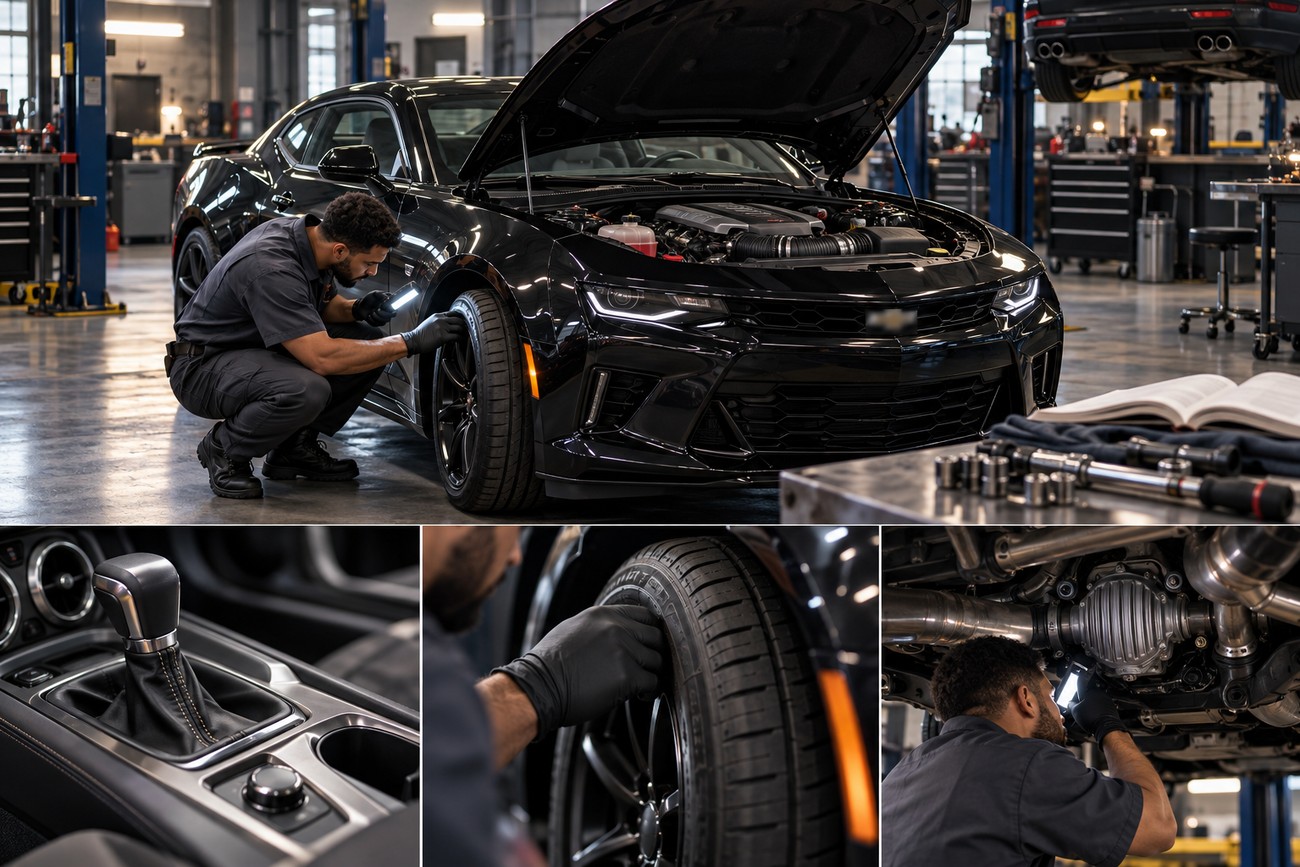
Begin with the exact model year, transmission, engine and final-drive configuration, tire specification, and relevant owner’s manual. Reverse behavior varies substantially by Camaro generation, transmission, final drive, tires, and control logic. Conclusions from one Camaro version cannot be transferred to every model year.
The correct manual should be checked for the description of R, warnings about selecting it while moving, and any model-specific operating instructions. Service information is more useful than a generic gear-ratio table when the concern involves electronic limits, diagnostic faults, or possible drivetrain damage.
Any inspection should take place in a closed, controlled area and should focus on the vehicle’s condition rather than trying to establish a stunt speed. Qualified personnel should assess the drivetrain, clutch or automatic transmission, tires, brakes, warning systems, and fluid condition without exposing road users or bystanders to an unnecessary hazard.
Public-road testing is unjustified. A camera, an empty-looking stretch of pavement, or an electronic safeguard cannot account for a person, vehicle, uneven surface, or sudden loss of grip outside the driver’s view. The safest practical rule is to use reverse only for the maneuver required and at the minimum speed that remains fully controllable.
Frequently asked questions
Camaro reverse performance depends on the specific vehicle and should be judged from its documentation and condition, not from a single gearing claim or an online demonstration.
What is the maximum speed you can go in reverse?
There is no single universal manufacturer-approved reverse-speed number for every Camaro. Generations use different transmissions, final drives, tires, and electronic control strategies, and the 2018 Camaro manual does not provide a permitted reverse-speed figure.
The correct answer must come from the owner’s manual and model-specific service information. A reverse ratio can help describe the gearing, but it cannot establish the vehicle’s maximum safe speed.
How fast should you be going when driving in reverse?
Use only the minimum controllable speed required for the maneuver. That means a speed at which you can maintain a clear view, steer accurately, stop promptly, and account for hazards outside the camera’s field of view.
A theoretical maximum is not a target. If the maneuver requires more speed than you can confidently control in the available space, it should be changed or stopped rather than accelerated.
What happens if you put a manual Camaro in reverse at high speed?
A manual Camaro can experience gear clash, driven-wheel lock, clutch shock, and loss of control if R is selected while the car is moving forward. Grinding or a sharp jolt indicates mechanical stress and an unfavorable speed difference inside the transmission.
This differs from an automatic transmission refusing the command through electronic protection. A refusal may prevent engagement, while a manual gearbox can transmit the driver’s mistake directly through the clutch and gears. GM warns that resulting transmission damage may not be covered by warranty.







