

Kia does not approve a universal 200-mile distance for a Sportage compact spare, even when the 50 mph limit is respected. The real question is whether you can reach the nearest safe repair facility, not whether the donut can complete a planned journey. Kia describes the compact spare as emergency, temporary equipment and recommends repairing or replacing the full-size tire at the first opportunity.
Before moving, check the spare’s pressure, condition, installation, and position on the vehicle. A compact spare may be inflated to 60 psi (420 kPa), reduce ground clearance by approximately 1 inch (2.5 cm), and change handling. AWD models also require extra care because the smaller tire diameter can create system or drivetrain concerns.
- Can a Kia Sportage Donut Spare Go 200 Miles?
- What to Check Before Moving the Sportage
- Why 200 Miles Is Riskier Than It Sounds
- AWD Sportage Models Need Extra Caution
- If You Must Drive on the Donut
- Donut Spare Myths That Can Turn a Short Escape Into a Long Breakdown
- Frequently asked questions
- What should I do if the donut spare loses pressure during the trip?
- What happens if I drive 100 miles on a spare tire that feels normal?
- What is the safest option if every tire shop is closed?
Can a Kia Sportage Donut Spare Go 200 Miles?
A Kia Sportage compact spare is intended for emergency, temporary use only. Kia sets a maximum speed of 50 mph (80 km/h), but the guidance does not provide a universal permitted distance such as 50 or 200 miles. That distinction matters: a speed limit controls one risk, while distance adds heat, wear, road exposure, and cumulative load.
Driving 200 miles on a donut would therefore be a planned long trip, not the short emergency movement described by Kia. Even below 50 mph, the vehicle does not have the same tire contact, clearance, handling, or braking characteristics as it does with four full-size tires.
Some promotional and SEO material suggests that a compact spare can support long-distance travel. That claim conflicts with Kia’s more restrictive emergency-use language. A driver may reach a repair shop without incident, but another driver’s successful trip does not establish a Kia-approved mileage limit.
What to Check Before Moving the Sportage
Check the compact spare with a reliable pressure gauge before driving. The specified pressure is 60 psi (420 kPa), unless the exact vehicle manual says otherwise; the pressure used for the normal tires is not a substitute. A donut can look properly inflated while being substantially underinflated.
Inspect the tread, sidewall, valve area, and exposed surfaces for cuts, cracking, bulges, or storage deterioration. Confirm that the wheel is seated correctly and that the lug nuts are tightened according to the vehicle manual. If you cannot verify the installation, use roadside assistance or have a tire professional check it before proceeding.
Read the Kia manual for the exact VIN, generation, market, and drivetrain. Instructions can vary, including rules about which axle may carry the compact spare. Some Sportage versions restrict compact-spare use on the front axle, especially on snow or ice, so do not automatically install it on the damaged wheel without checking.
If the puncture is on the front or driven axle, the manual’s axle-placement instructions take priority over general advice. A safe solution may involve moving a full-size wheel to a particular position and placing the compact spare elsewhere, but the correct arrangement depends on the Sportage version.
Why 200 Miles Is Riskier Than It Sounds
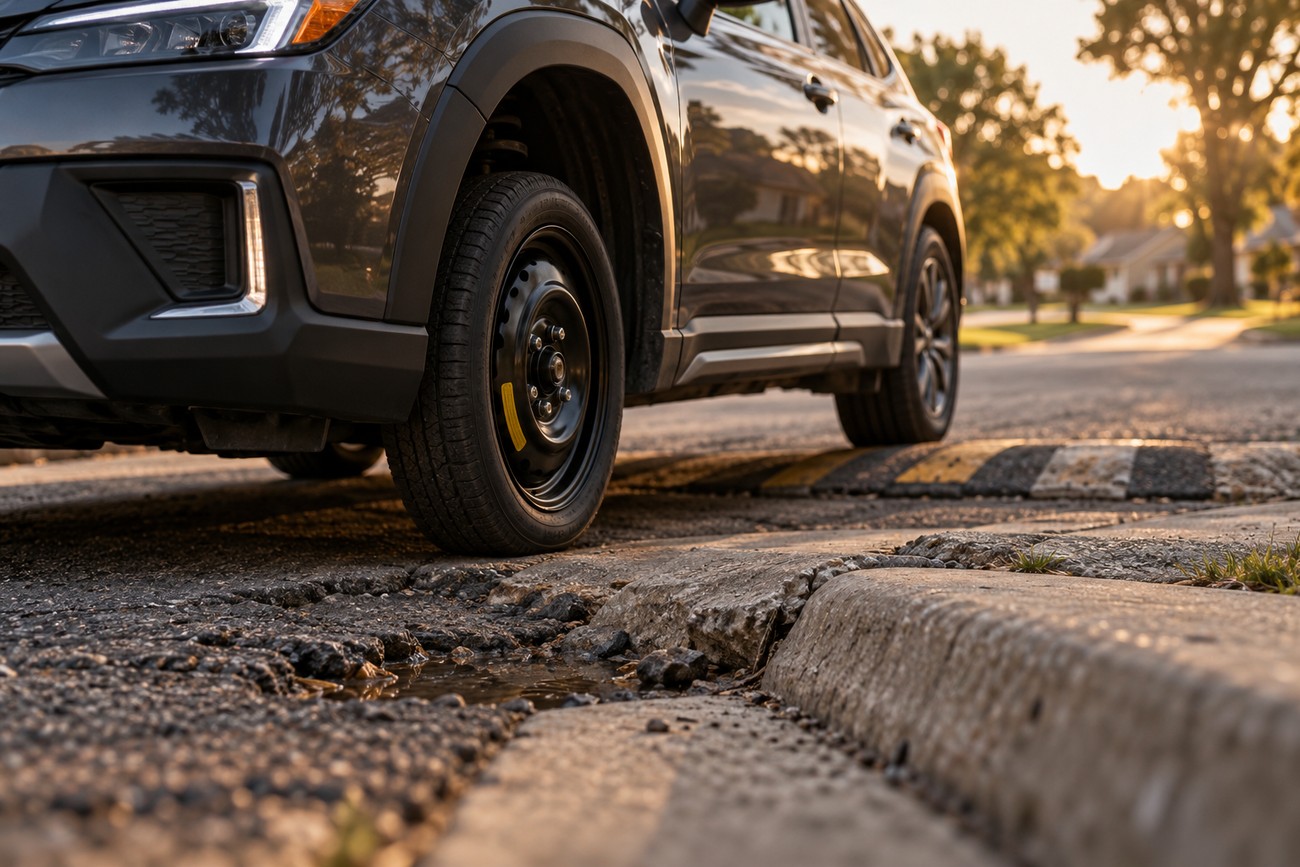
The smaller spare reduces ground clearance by approximately 1 inch (2.5 cm). That change can make a pothole, curb, uneven driveway, or speed bump more likely to contact the wheel, suspension, or underside of the vehicle. A route that feels manageable on normal tires can therefore create a damaging impact on the donut.
The smaller diameter also changes wheel rotation and handling characteristics. Steering response, braking balance, and vehicle stability can feel different, while grip is weaker on wet, snowy, or uneven surfaces. Kia’s warning to avoid sudden acceleration, braking, and steering reflects those altered characteristics.
Long-distance exposure adds heat and repeated impacts. Vehicle load, rain, snow, potholes, poor road quality, and uneven surfaces can all increase risk. No universal failure-rate statistic establishes that a 200-mile trip is safe on a Sportage compact spare.
Driving below 50 mph reduces speed-related stress, but it does not make the trip equivalent to driving on four full-size tires. The 50 mph figure is a maximum, not a recommended cruising speed or permission to complete 200 miles.
AWD Sportage Models Need Extra Caution
On an AWD Sportage, the compact spare’s different tire diameter can create AWD-system or drivetrain concerns. The exact consequences depend on the Sportage generation and transmission, so a general claim that every AWD system will react identically would be misleading.
Kia requires AWD Lock or AWD Auto Lock to be switched off when a compact spare is installed. Leaving the setting engaged can increase the concern created by the mismatch in wheel rotation. Follow the vehicle’s exact procedure rather than assuming the system will automatically compensate.
Some Sportage versions also warn against certain front-axle compact-spare use, particularly on snow or ice. The front axle controls steering and contributes to braking, so incorrect placement can make a marginal situation harder to manage.
If the AWD warning light appears, the vehicle vibrates, or the drivetrain feels abnormal, stop in a safe place and arrange assistance. Do not continue simply because the vehicle still moves under its own power.
If You Must Drive on the Donut
Use the compact spare only to reach the nearest tire shop, roadside-service location, or safe towing point. Keep speed at or below 50 mph (80 km/h), and slow further for rain, snow, traffic, rough pavement, curves, or heavy loading. The practical plan is to end the emergency trip as soon as a safe repair option is available.
Drive smoothly and leave extra stopping distance. Avoid hard acceleration, hard braking, sharp turns, curbs, potholes, rough shoulders, and unnecessary lane changes. Because ground clearance is reduced, approach ramps, speed bumps, and driveway edges slowly and as squarely as conditions allow.
Stop and seek help if you notice vibration, pulling, a burning-rubber smell, knocking, or an AWD warning. These signs can indicate a tire, wheel, suspension, or drivetrain problem that continued driving may worsen.
Kia recommends repairing or replacing the full-size tire at the first opportunity. If the nearest suitable facility is far away, towing or roadside assistance is generally the safer way to cover the distance than treating the compact spare as a temporary replacement for the normal wheel.
Donut Spare Myths That Can Turn a Short Escape Into a Long Breakdown
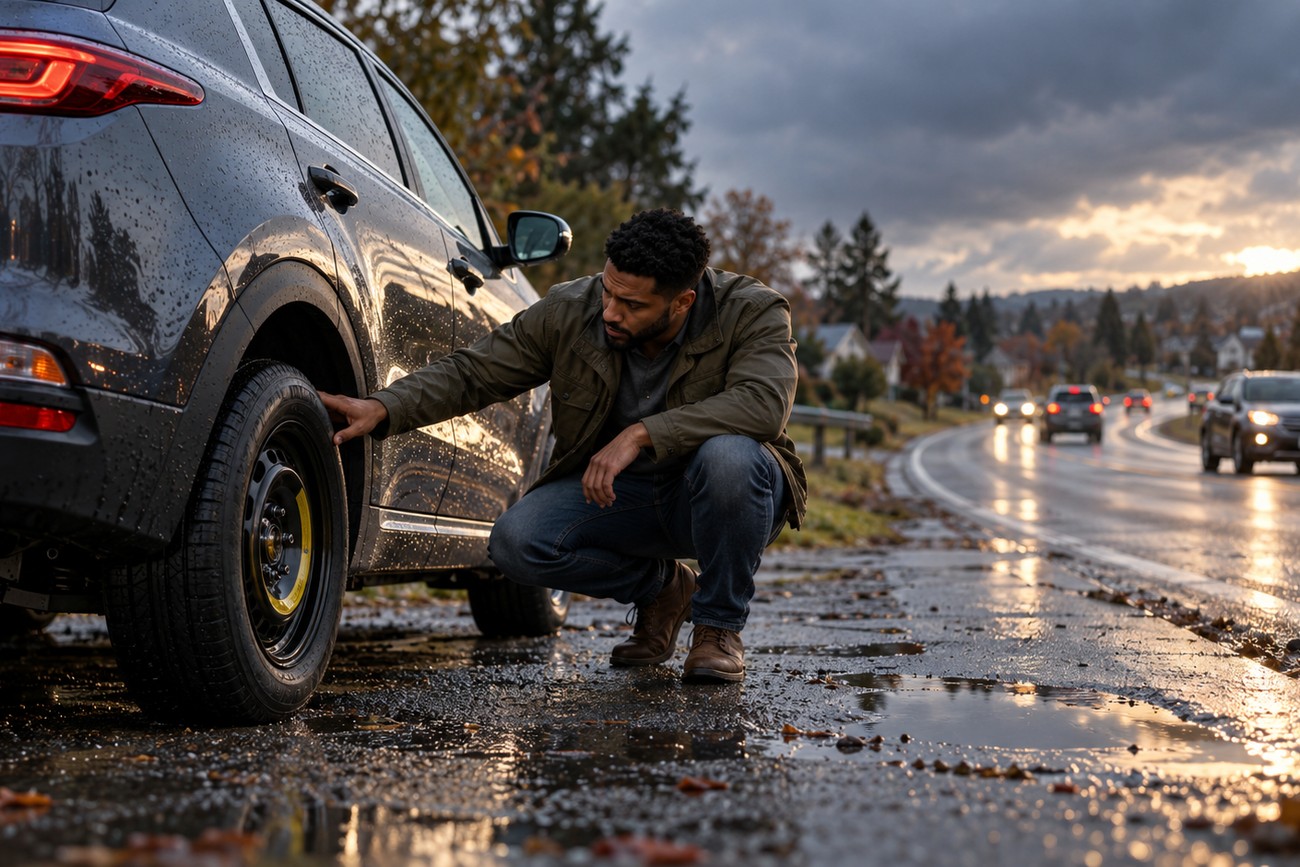
Myth: staying below 50 mph makes 200 miles approved. Reality: Kia does not provide a universal permitted distance for the compact spare. The 50 mph maximum limits speed; it does not create a distance allowance.
Myth: 50 mph is a comfortable cruising speed. Reality: it is an upper limit, and poor weather, road damage, traffic, vehicle load, or the vehicle’s handling may require a lower speed. A driver should choose a speed that preserves control and allows a prompt stop.
Myth: AWD automatically compensates for the different tire diameter. Reality: Kia requires AWD Lock or AWD Auto Lock to be switched off with a compact spare installed. The diameter mismatch can still create AWD-system or drivetrain concerns, with effects varying by generation and transmission.
Myth: a donut is suitable for long-distance travel because other drivers have completed long trips on one. Individual experience cannot replace Kia’s vehicle-specific manual. Official guidance remains emergency, temporary use only, with repair or replacement of the full-size tire at the first opportunity.
Frequently asked questions
The safest answer depends on the exact Sportage manual, the tire’s condition, and the distance to help. Kia’s guidance should take priority over assumptions based on what another driver managed.
What should I do if the donut spare loses pressure during the trip?
Stop safely and check the pressure with a reliable gauge. Do not continue on a visibly or measurably underinflated compact spare, because its construction and handling can be compromised.
Arrange roadside assistance or have the tire inflated and inspected before moving again. If it will not hold the specified pressure, use a tow or other recovery option rather than attempting to reach a distant repair shop.
What happens if I drive 100 miles on a spare tire that feels normal?
A normal-feeling vehicle does not prove that the compact spare has a safe internal temperature, remaining structural margin, or acceptable drivetrain loading. Heat, load, road impacts, and changing weather can increase risk without producing an immediate warning.
The absence of vibration or pulling also does not create approval for cumulative distance. Kia does not state a universal permitted mileage, so a driver should arrange repair at the first safe opportunity instead of using a symptom-free trip as a test.
What is the safest option if every tire shop is closed?
Use roadside assistance, towing, or a safe overnight location rather than assuming that a closed shop justifies completing the route on the donut. A secure location near help is preferable to extending an emergency tire’s use over a long highway journey.
If moving the vehicle is necessary to get out of immediate danger, keep the trip short, stay at or below 50 mph, and drive more slowly when conditions require. Recheck the manual, pressure, installation, and AWD setting before moving.







