
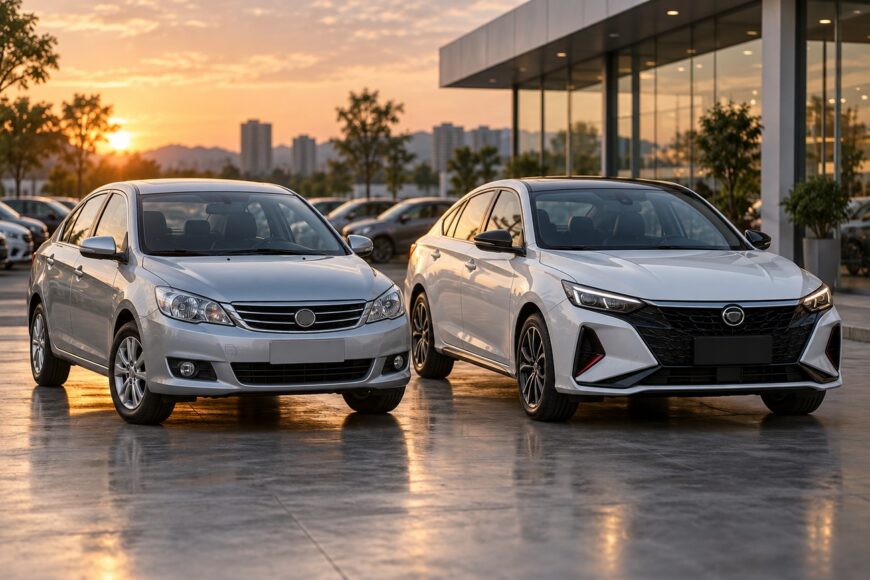
Dongfeng is associated with trucks, yet Fengshen, also called Aeolus, is its passenger-car marque. Calling a Fengshen sedan a “truck maker’s sedan” describes the corporate connection loosely; it does not mean Fengshen builds trucks or that its cars share truck hardware.
For a buyer, the badge is only a starting point. An older A30 with a naturally aspirated engine and manual gearbox is a different proposition from a newer turbocharged Yixuan with a dual-clutch transmission. The useful questions are which sedan, year, specification, and sales market you are looking at—and who can maintain that particular car where you live.
- Is Dongfeng Fengshen a truck maker’s sedan?
- Fengshen A30, Yixuan, and Yixuan MAX: key differences
- What the simpler A30 offers—and what its numbers cannot prove
- The newer Yixuan: performance versus complexity
- Warranty, software, and parts: the ownership risks
- How to check a Fengshen sedan before buying
- Frequently asked questions
- How much does a Dongfeng Fengshen sedan cost?
- What is the $8,000 Chinese car—is it a Fengshen?
- What should I request before paying a deposit on an imported Fengshen?
Is Dongfeng Fengshen a truck maker’s sedan?
Fengshen is Dongfeng’s passenger-car marque, also known as Aeolus. Dongfeng’s wider automotive business explains the truck association, but the available evidence does not establish Fengshen itself as a truck manufacturer. A listing that calls the sedan a “truck maker’s car” should therefore be read as shorthand for its parent company, not as a technical description.
The Fengshen S30 debuted in China in 2009, giving the passenger-car name a history separate from any individual sedan now for sale. Since then, the name has appeared on cars with different engines, transmissions, sizes, and equipment. A broad claim about “Dongfeng reliability” tells you little about the vehicle in front of you.
Even a familiar model name may conceal a market difference. Chinese and export versions can have different powertrains, multimedia systems, or safety equipment. Check the year, trim, destination market, and vehicle identification number (VIN) before relying on an advertisement’s specification sheet.
Fengshen A30, Yixuan, and Yixuan MAX: key differences
These examples show why Fengshen sedan specifications should be attached to a particular version. Unspecified entries need confirmation from that car’s documents rather than an assumption based on another model.
| Model | Supported powertrain details | Supported size details |
|---|---|---|
| Fengshen A30 | Front-wheel drive; naturally aspirated 1.5-liter DFMA15, 116 hp; five-speed manual transmission | 4,530 × 1,730 × 1,490 mm; 2,620 mm wheelbase |
| Cited 2024 Yixuan version | Turbocharged 1.5-liter direct-injection engine, 197 hp; six-speed wet DCT | Confirm dimensions for the version offered |
| Yixuan MAX | Confirm engine and transmission for the version offered | 4,797 × 1,870 × 1,475 mm; 2,770 mm wheelbase |
The cited 2024 Yixuan powertrain must not be assigned automatically to Yixuan MAX. Nor should a seller’s equipment list for one sales market be treated as standard elsewhere.
What the simpler A30 offers—and what its numbers cannot prove
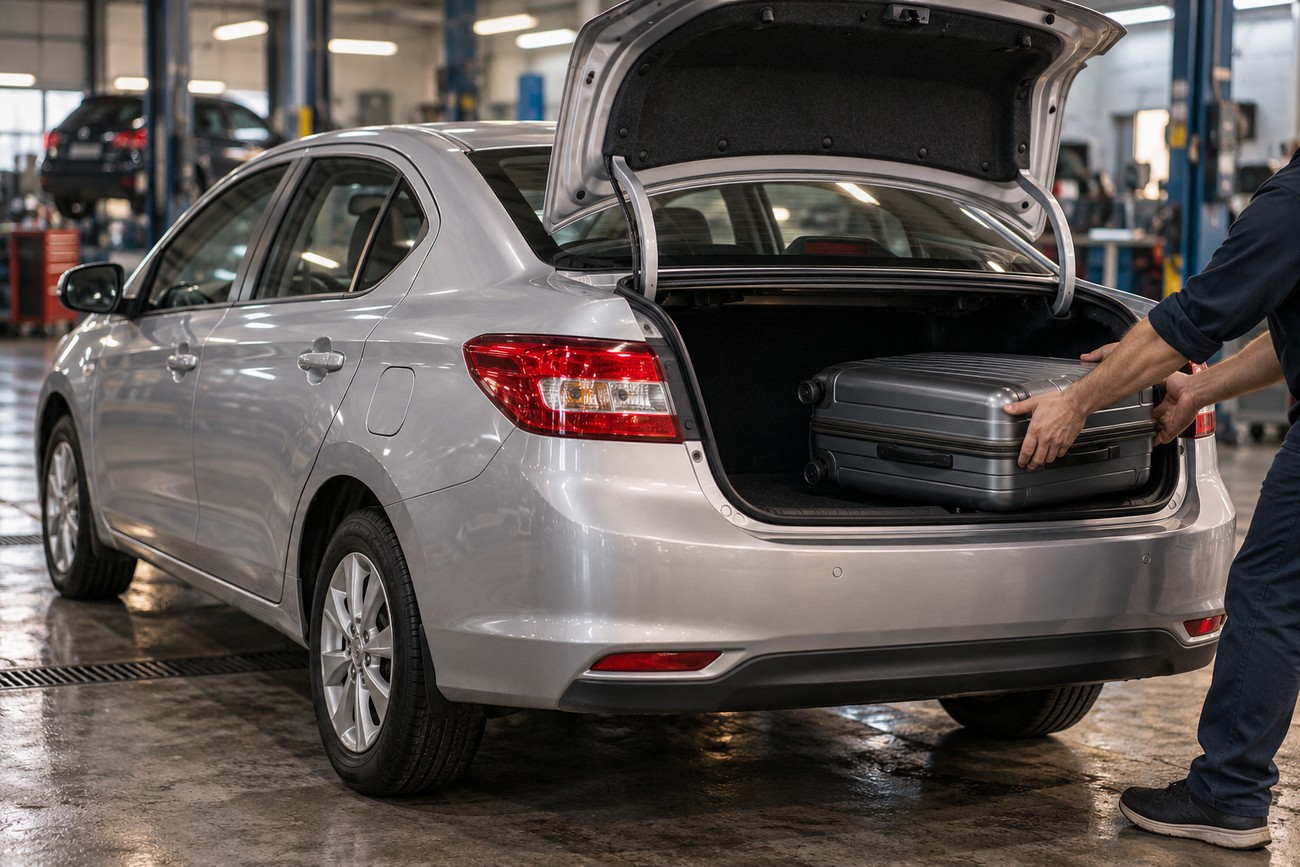
The A30 measures 4,530 × 1,730 × 1,490 mm, with a 2,620 mm wheelbase and a stated 502-liter trunk. That trunk figure suggests useful luggage capacity for a sedan, although its opening and shape matter when loading bulky items. Rear-seat space is best judged with the front seats set for the people who will actually drive the car.
Its MacPherson front suspension, rear torsion beam, and standard 195/60 R15 tires are straightforward components to assess during an inspection. The naturally aspirated 1.5-liter DFMA15 engine and five-speed manual transmission also avoid the turbocharger and dual-clutch system fitted to the cited newer Yixuan. Simpler hardware may make diagnosis and repair less involved, provided suitable parts and competent service are available.
None of that proves the A30 is reliable as a whole. Age, maintenance, corrosion, previous repairs, and parts supply still govern the condition of a used example. A clean test drive should be backed by records and an inspection underneath the car.
The claimed 160 mm ground clearance is worth noting if you use rough entrances or uneven roads, but it is not an off-road rating. Overhangs, underbody protection, tire size, and the load on board affect what the car will clear in practice. Inspect the underside for damage rather than judging usability from the clearance figure alone.
The newer Yixuan: performance versus complexity
The cited 2024 Yixuan version combines a turbocharged 1.5-liter direct-injection engine rated at 197 hp with a six-speed wet dual-clutch transmission (DCT). That is a substantial mechanical change from the A30’s naturally aspirated engine and manual gearbox. The power rating describes a specification, not how an individual used car will drive or how long its components will last.
For this engine, ask for oil-service records, confirm the fuel requirement in the manual, and check that maintenance matches the car’s use. Fuel-grade listings for other Fengshen versions are no substitute for instructions covering the exact engine and market. During a test drive, assess the DCT in traffic as well as at steady speed, and investigate any hesitation or warning rather than explaining it away.
Yixuan MAX is the larger named sedan here: its listed dimensions are 4,797 × 1,870 × 1,475 mm, with a 2,770 mm wheelbase. Listings also give an unladen weight of about 1,253 kg and a 52-liter fuel tank. Those measurements help with parking-space and packaging comparisons; they do not establish rear headroom, real-world range, or the engine fitted to a particular MAX.
Published acceleration and fuel-economy figures depend on test conditions and specification. Treat them as comparison points, then assess the car with your normal passengers and route in mind. Above all, keep the cited 2024 Yixuan powertrain separate from Yixuan MAX unless the latter’s documents confirm it.
Warranty, software, and parts: the ownership risks
Some Chinese-market Fengshen versions list a warranty of three years or 100,000 km. That does not automatically cover a car imported into another country: eligibility depends on its original market, seller or importer, and written terms. Ask who would authorize and pay for a claim locally before assigning value to the advertised warranty.
Connected equipment needs the same scrutiny. Some functions may depend on Chinese online services, local maps, accounts, or over-the-air (OTA) update infrastructure; compatibility outside China is unconfirmed. At a viewing, try the navigation, phone connection, language settings, and any connected features you expect to use. A feature shown in a Chinese-market brochure may have little practical value if it cannot be activated locally.
Reports of screens freezing in cold weather, slow OTA releases, and difficulty obtaining service appointments appear in limited reporting. They do not establish widespread defects, and independent owner evidence on Fengshen sedans is too thin to rank problems by frequency. Use those reports as prompts for specific checks, not as predictions that a car will fail.
Physical support can matter more than a long equipment list. Before buying, find out whether a local workshop can obtain body panels, electronic modules, and diagnostic support, as well as routine service parts. A minor collision or electronic fault can keep a car off the road if a component has no clear supply route, even when the mechanical repair is straightforward.
How to check a Fengshen sedan before buying
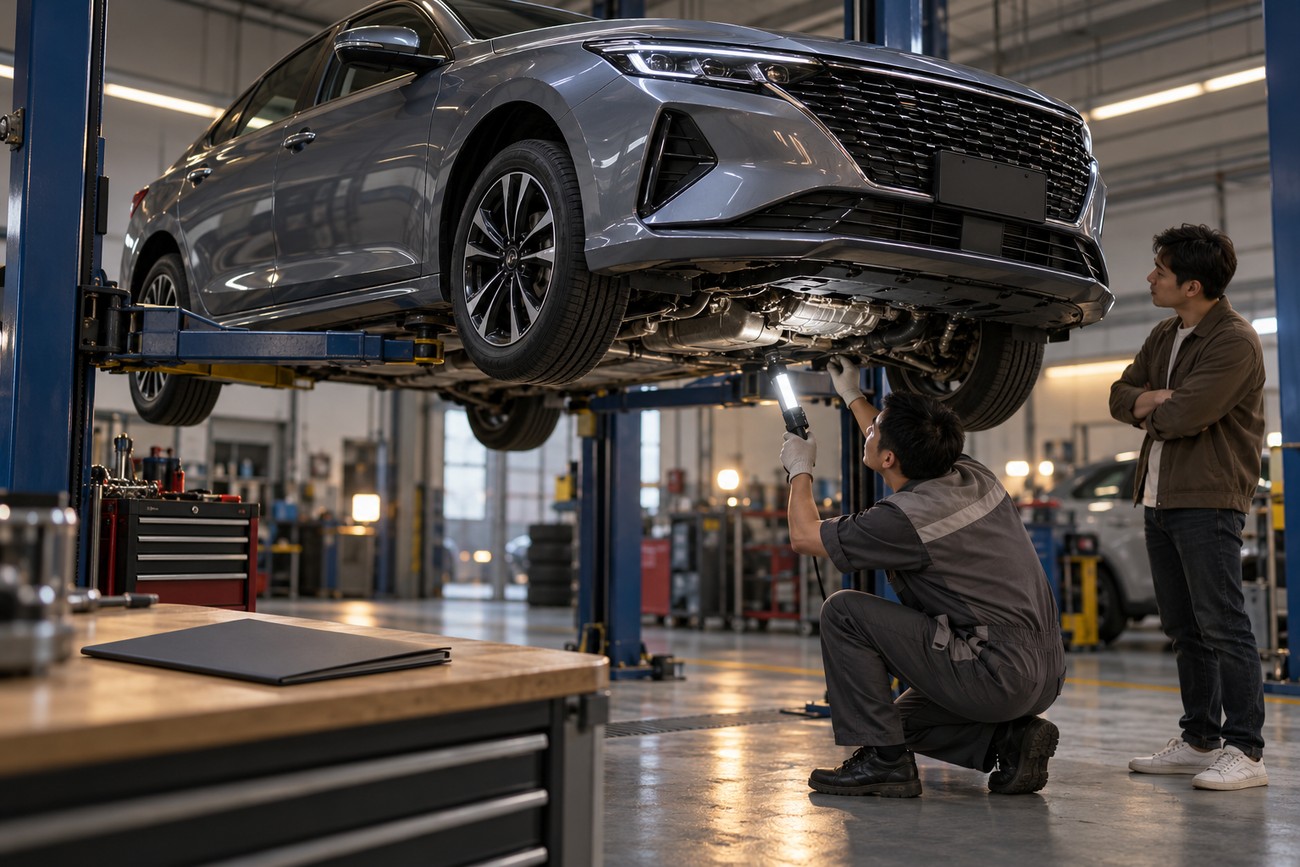
Start with the car and its paperwork, not the listing headline. Record the VIN, model, year, engine, gearbox, and original destination market, then compare those details with the registration and import documents. This first step prevents an A30 with a naturally aspirated engine and five-speed manual from being confused with the cited turbocharged, six-speed wet-DCT Yixuan.
Next, request a VIN-linked specification or original documentation for the equipment that matters to you. Check safety features and multimedia functions on the vehicle itself, since versions sharing a model name can differ between China and export markets. Obtain written warranty terms that identify who provides coverage where the car will be registered; a Chinese-market three-year or 100,000-km listing is not enough.
Have a specialist assess any DCT car for clutch engagement, mechatronics faults, stored error codes, and software status. Pair a test drive with maintenance and software records: a smooth drive cannot establish the condition of the clutches or mechatronics. Investigate an observed shudder or warning, while avoiding the opposite mistake of predicting a failure solely because the gearbox is a DCT. For any version, arrange an independent inspection and verify that a workshop and parts supplier can support it locally.
Finally, separate advertised figures from your likely use. Fuel economy, acceleration, and estimated range are not guaranteed results in traffic, on poor roads, or with passengers and luggage aboard. Compare the full purchase and support costs only after the seller has established exactly what car is being offered.
Frequently asked questions
Prices, import terms, and even fuel guidance depend on the individual car and market. The answers below identify what to confirm before relying on a headline figure or paying a deposit.
How much does a Dongfeng Fengshen sedan cost?
There is no defensible universal current price for a Fengshen sedan in the available information. Request a dated quote for the exact model, year, trim, and sales market, then ask for import charges, registration costs, taxes where applicable, and any separately priced warranty or service support. Compare offers on that same basis rather than comparing an overseas sticker price with a locally registered car.
What is the $8,000 Chinese car—is it a Fengshen?
A price alone cannot identify a make or model, and no verified $8,000 Fengshen model is established here. Ask for the listing’s model, year, market, and price basis: a domestic-market starting price, an export quote, and a used-car asking price are different figures. Confirm what is included before using the number to judge value.
What should I request before paying a deposit on an imported Fengshen?
Request a VIN-linked specification, ownership and import paperwork, and written warranty terms naming the party responsible for claims. Get a clear local commitment on parts supply and servicing, including who will handle electronic diagnostics. These documents help establish what you are buying and who will support it after delivery.







