
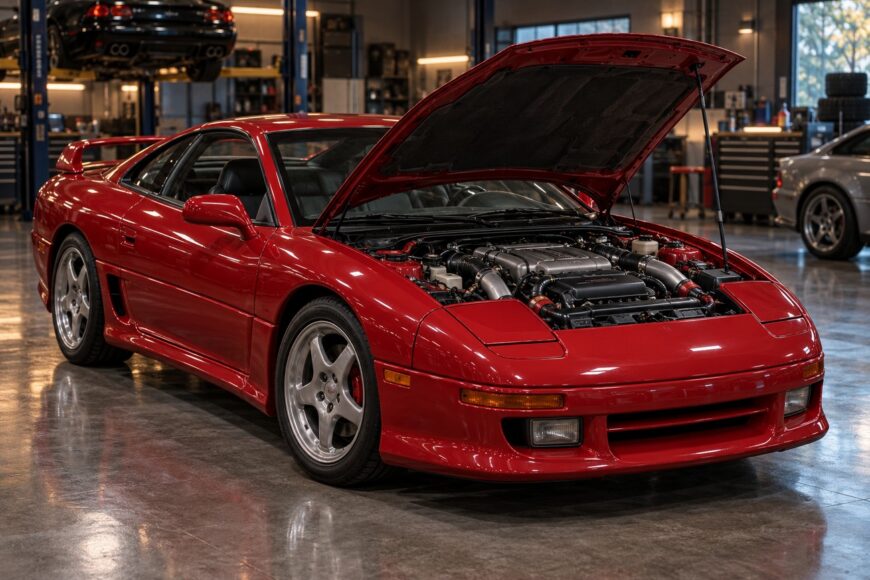
The Dodge Stealth R/T Twin Turbo has an unusual appeal: an American badge wrapped around a Mitsubishi-developed performance platform. Its twin-turbocharged V6, all-wheel drive, and wide-bodied coupe shape give it the presence of a classic American grand tourer, while the engineering links it directly to Japan’s Mitsubishi GTO and 3000GT family.
The buying dilemma begins with the specifications. Similar-looking cars can carry different quoted power figures depending on market, year, calibration, and equipment. With a car this old, condition can matter more than the badge or the number in an advertisement, especially when access to the engine bay is difficult and replacement parts may take time to locate.
- A Dodge badge on Mitsubishi engineering
- Stealth R/T Twin Turbo vs. Japanese GTO Twin Turbo: quoted specifications
- Why the horsepower figures do not tell the whole story
- Fast on paper, substantial on the road
- What to inspect before buying one
- The ownership costs hidden behind the specification sheet
- Frequently asked questions
- What is the top speed of a 1991 Dodge Stealth R/T Twin Turbo?
- How do I choose a repair manual for a Dodge Stealth rather than a GTO or 3000GT?
- How can I check whether a seller’s horsepower claim describes a stock car?
A Dodge badge on Mitsubishi engineering
The Stealth R/T Twin Turbo shares its engineering platform with the Mitsubishi GTO and 3000GT family. Its core package is a twin-turbocharged, liquid-cooled 3.0-liter 6G72 DOHC 24-valve V6 with an 8.0:1 compression ratio and all-wheel drive. That mechanical relationship explains why parts research and technical documentation often cross between Dodge and Mitsubishi sources.
Shared engineering does not make every car interchangeable. Market, badging, calibration, equipment, and quoted specifications can differ, so a repair instruction for a GTO or 3000GT should be checked against the exact Stealth year and market before work begins. The same caution applies when comparing engine output or drivetrain components.
The American-market Stealth was presented as a Dodge product, while the Japanese-market GTO carried Mitsubishi identification. Their family resemblance is therefore useful for research, but the badge alone is not a complete parts catalog. A seller who describes a car simply as “the same as a GTO” may be simplifying details that matter during restoration.
For a prospective buyer, the platform connection is an advantage because it broadens the pool of technical knowledge. It also creates a trap: generic 3S-platform advice can overlook market-specific wiring, calibration, equipment, or documentation. Confirming the car’s year, drivetrain, engine configuration, and market is the sensible starting point.
Stealth R/T Twin Turbo vs. Japanese GTO Twin Turbo: quoted specifications
The figures below are commonly quoted catalog specifications. They describe market versions and stated ratings, rather than a measured performance difference between every surviving car.
| Version | Market | Commonly quoted power | Commonly quoted torque | Interpretation |
|---|---|---|---|---|
| Dodge Stealth R/T Twin Turbo | United States | 300 hp in early listings | 417 Nm | Early catalog figures; year and exact specification must be confirmed. |
| Mitsubishi GTO Twin Turbo | Japan | 280 hp | 427 Nm | Japanese-market stated rating; it should not be treated as universal across all years or markets. |
Why the horsepower figures do not tell the whole story
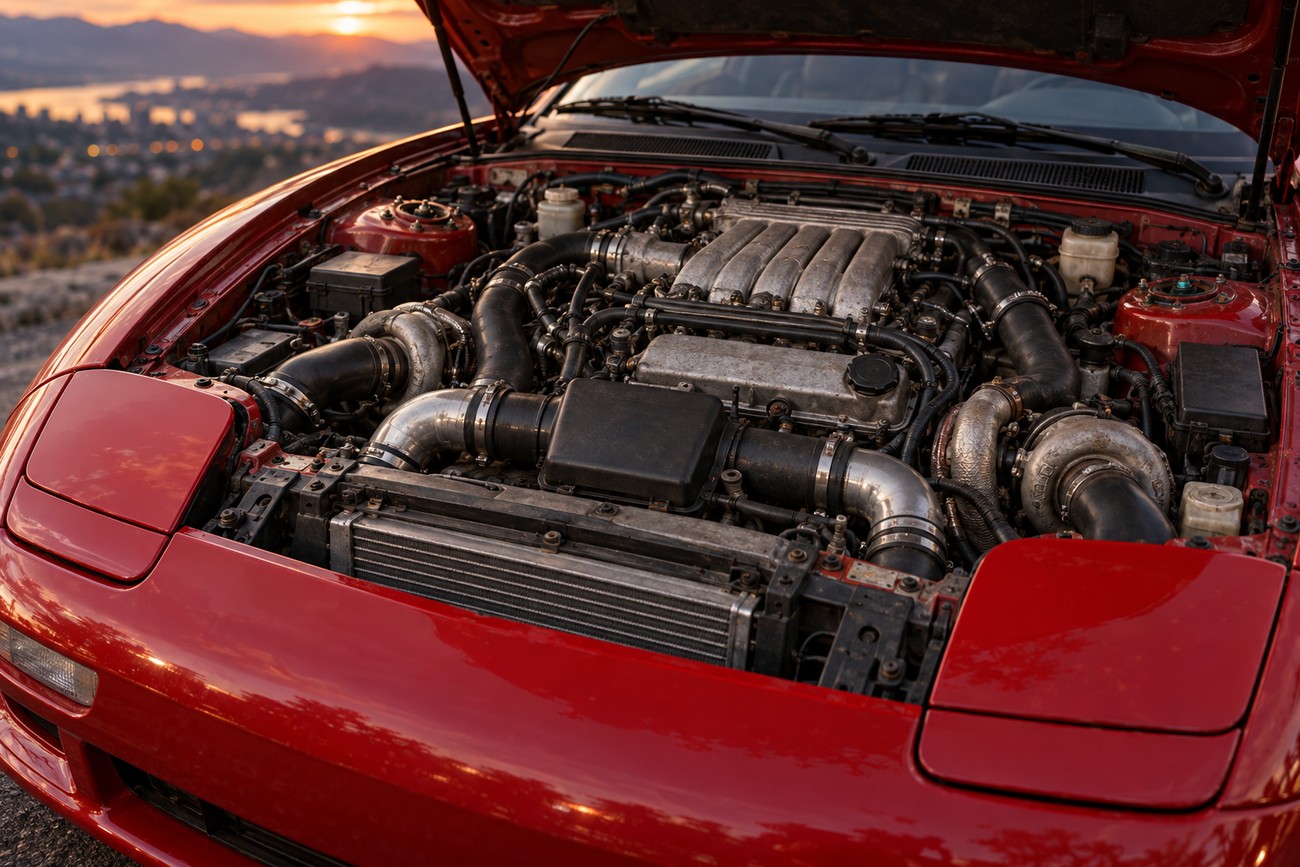
The 6G72 twin-turbo engine is a liquid-cooled 3.0-liter DOHC 24-valve V6 with an 8.0:1 compression ratio. Its forced-induction layout gives the Stealth strong midrange performance, while the all-wheel-drive system helps convert that output into forward motion. These figures describe the architecture, though they say little about how consistently an aging example can deliver boost.
Early Stealth R/T Twin Turbo listings commonly quote 300 hp and 417 Nm. Japanese-market GTO Twin Turbo listings commonly quote 280 hp and 427 Nm. The difference reflects market-specific stated ratings and should not be interpreted as proof that one badge automatically identifies a stronger engine.
Some later or differently specified Stealth listings quote 320–324 hp. That range explains much of the confusion in advertisements and online discussions. It does not establish a universal factory rating for every Stealth R/T Twin Turbo, and a modified car or a dyno result cannot be used to rewrite the original catalog specification.
A surviving car may also produce less than its published figure because of boost leaks, tired turbochargers, cooling problems, aging sensors, or an incomplete repair. Conversely, modifications may raise the output beyond the factory rating. For a purchase decision, the car’s documented configuration and current mechanical condition carry more weight than the highest number found in a specification database.
Fast on paper, substantial on the road
The platform combines the twin-turbo V6 with all-wheel drive and, on some versions, a five-speed manual transmission. Weighing approximately 1.7 tonnes, the Stealth R/T Twin Turbo delivers its performance with the character of a substantial grand tourer rather than a lightweight sports coupe. That weight can make the car feel planted, while also increasing the work demanded of its running gear.
Early Stealth R/T Twin Turbo catalog listings indicate roughly 6.0 seconds from 0–100 km/h. This is a catalog-era indication, not a promise for an individual surviving car. Clutch condition, boost control, tire grip, transmission health, and engine output can all change the result substantially.
That same mass places added load on brakes, suspension components, and driveline hardware during hard use. A car that feels strong during a short drive may still need attention in those areas. Repeated acceleration runs can expose slipping, vibration, temperature, or boost-control problems that ordinary commuting will not reveal.
This is why the Stealth’s performance should be judged as a complete system. The engine provides the headline appeal, but all-wheel-drive hardware, the manual transmission where fitted, cooling system, brakes, and suspension determine whether the car remains enjoyable after regular spirited driving.
What to inspect before buying one
Start with the car’s history before evaluating its performance. Look for service records, evidence of previous modifications, and a clear account of work on the engine, turbochargers, cooling system, transmission, and all-wheel-drive hardware. A short test drive cannot establish that an old twin-turbo system is healthy.
Compression testing should form part of a serious inspection, along with checks for boost-system sealing. Inspect the turbochargers, intercoolers, hoses, and control components, then examine the cooling system for signs of neglect or instability. Tight engine-bay packaging can make diagnosis and repairs labor-intensive, so faults that appear simple may require considerable access time.
Low boost should be traced through the complete control system before the turbochargers are condemned. A leak, damaged hose, or control problem can imitate turbocharger failure and lead to an unnecessarily expensive repair.
Cooling and intercooler condition deserve particular attention because stable temperature and sealed intake plumbing are central to consistent boost. Inspect the transmission and all-wheel-drive hardware for abnormal noise, engagement problems, leaks, or evidence of hard use. The approximately 1.7-tonne mass also makes brake and suspension inspection important, especially on cars used for performance driving.
Owners report aging wiring, sensors, and vacuum lines as recurring concerns on old examples, although these are inspection priorities rather than guaranteed faults. Check the condition of connectors, brittle hoses, and electrical repairs instead of assuming that an apparently clean engine bay is original or reliable.
A specialist familiar with this 3S-platform family is worth involving when records are incomplete, modifications are extensive, or boost behavior is inconsistent. The cost of a focused inspection is easier to justify when engine-bay access is difficult and parts availability may be limited. A healthy-looking idle and a strong first pull do not replace compression, sealing, and system checks.
The ownership costs hidden behind the specification sheet
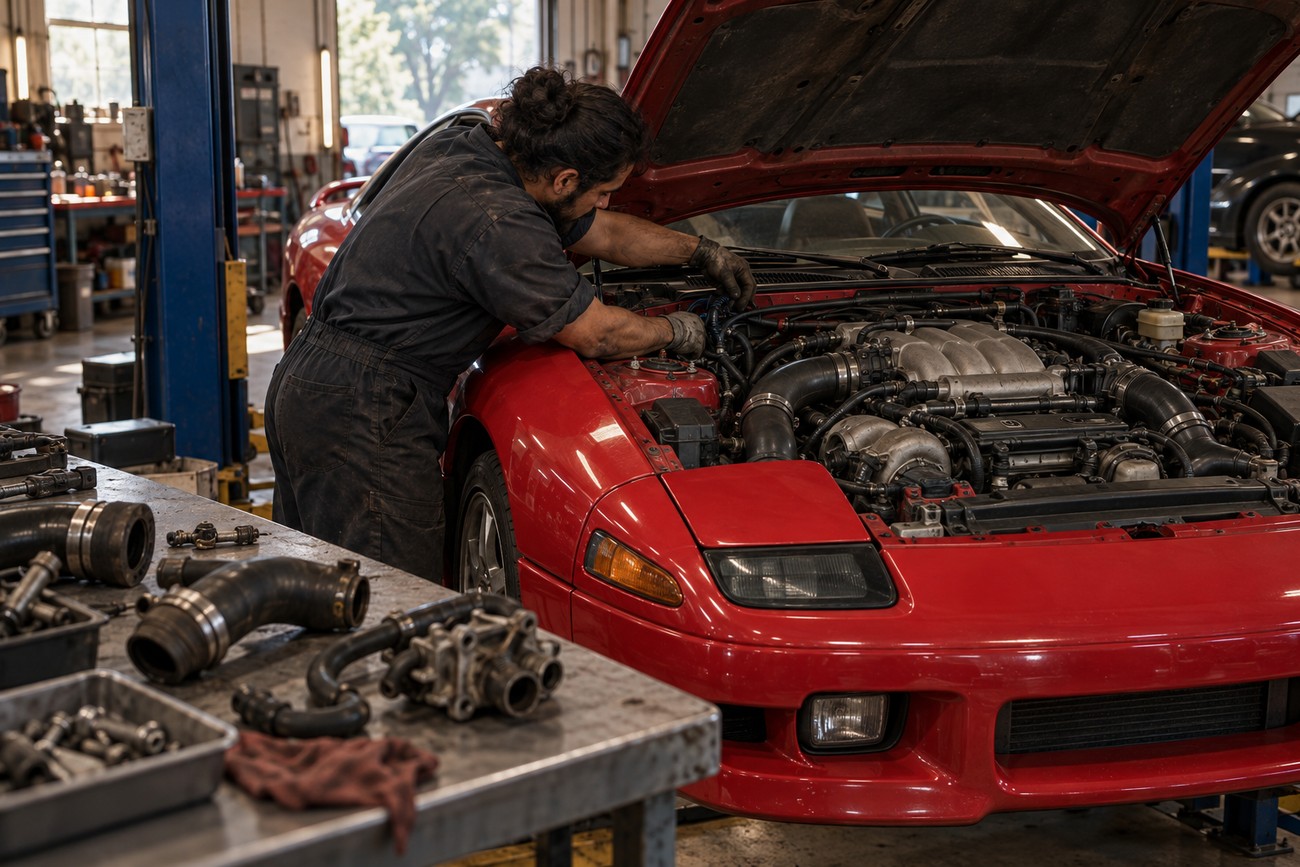
The Stealth R/T Twin Turbo can be inexpensive to buy in relation to its historical performance, yet repair labor can quickly change that calculation. The tight packaging around the 6G72 may turn routine access into a longer job, particularly when several aged components need to be removed together. This is one reason a documented car can be worth more than a cheaper example with an attractive specification sheet.
Owners also report difficulty or delays sourcing some body, drivetrain, and electronic parts. Availability varies by market and by the exact component, so a repair may involve searching across Dodge, Mitsubishi, and specialist sources. The platform relationship helps identify compatible information, but it does not guarantee immediate access to the correct part.
Modified cars require extra scrutiny because the advertised power may conceal changes to the intake, boost control, exhaust, engine management, or drivetrain. A low purchase price can become expensive when the current configuration is poorly documented or when original components are missing. Downtime while parts are located should be treated as part of the ownership equation.
The sensible basis for a buying decision is the condition of the individual car, its exact year, and its market specification. Quoted output varies with year and market, while real performance depends on maintenance and modifications. The badge remains part of the appeal, but it should not outweigh inspection evidence and usable documentation.
Frequently asked questions
What is the top speed of a 1991 Dodge Stealth R/T Twin Turbo?
Catalog figures for the Stealth R/T Twin Turbo are approximately 250–257 km/h. The available specifications do not verify a figure exclusive to the 1991 model year, so that range should be treated as a general catalog reference rather than a confirmed 1991-only result.
An individual car may perform differently because of condition, tuning, tires, drivetrain health, and speed restrictions. A top-speed claim in an advertisement therefore needs support from the car’s exact specification and records.
How do I choose a repair manual for a Dodge Stealth rather than a GTO or 3000GT?
Match the manual to the model year, market, drivetrain, and engine configuration before relying on its procedures or wiring information. The shared platform makes Mitsubishi GTO and 3000GT documentation valuable, but market-specific calibration, equipment, and connectors may differ.
Use the vehicle identification information and the manual’s application tables together. Confirm that the procedure covers the twin-turbo 6G72 and the relevant transmission or all-wheel-drive system, rather than assuming that every 3S-platform instruction applies unchanged.
How can I check whether a seller’s horsepower claim describes a stock car?
Compare the claim with the car’s year and market first. Early Stealth listings commonly quote 300 hp, while some later or differently specified listings quote 320–324 hp; Japanese-market GTO listings commonly quote 280 hp. Those figures are stated specifications, not proof of the current car’s configuration.
Ask for modification records, details of the engine-management and boost systems, and evidence showing what components are currently fitted. A dyno number can describe a modified or altered setup, so it should be considered alongside the car’s documentation rather than accepted as proof of a stock factory rating.







