
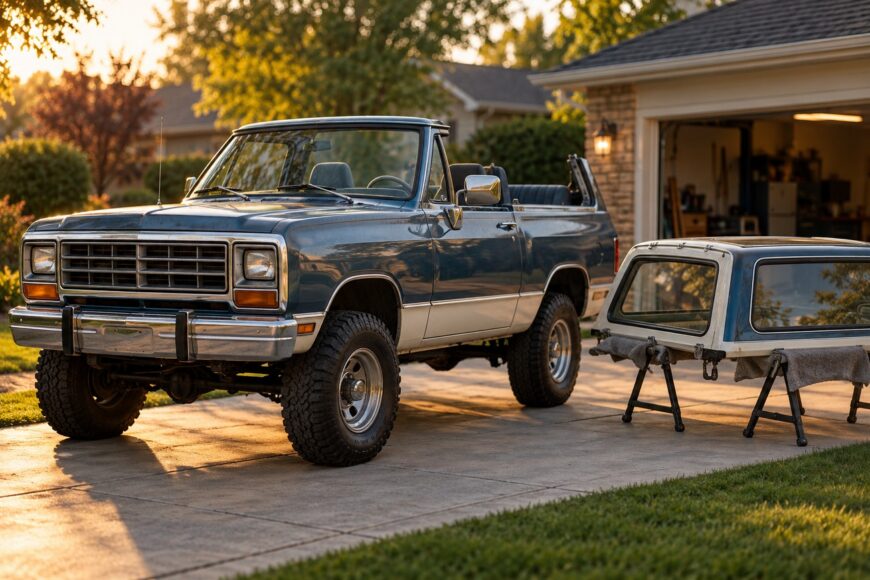
An open-air, full-size Dodge SUV has an appeal few modern vehicles can reproduce: a broad cabin, pickup-derived hardware, and a hardtop you can remove for a clear view overhead. The catch is historical and practical. The removable roof belongs to early Ramchargers, not every truck bearing the name, and a poorly fitting top can matter more to daily use than the novelty of taking it off.
The Ramcharger began as Dodge’s entry in a 1970s contest with the Ford Bronco and Chevrolet Blazer. Its short pickup-based chassis made it a substantial three-door SUV rather than a small trail vehicle. For a buyer today, the interesting questions extend beyond engine choice: which roof and four-wheel-drive parts are actually fitted, how sound are the body and seals, and can missing pieces be found where the truck will live?
- A full-size answer to the Bronco and Blazer
- What the removable roof actually offered
- Pickup hardware beneath the open-air body
- Early removable-top and later Ramchargers: key differences
- The ownership costs that specifications miss
- How to inspect a removable-top Ramcharger before buying
- Frequently asked questions
- How should you store a removed Ramcharger hardtop?
- How can you identify an original dealer-offered canvas top?
- What paperwork matters when importing a classic Ramcharger?
A full-size answer to the Bronco and Blazer
Dodge introduced the Ramcharger for 1974 as its answer to the Bronco and Blazer. The historical Ramcharger run spanned 1974–2001, although availability varied by market. Those dates describe a model family, not a single specification that remained unchanged throughout production.
Early first-generation trucks used shortened Dodge pickup underpinnings and a 106-inch wheelbase. The result was a three-door, full-size SUV with familiar truck hardware beneath a shorter passenger body. That ancestry helps explain both its useful mechanical simplicity and its size and weight compared with a smaller off-roader.
The pickup connection also makes photographs easy to misread. Front-end styling and shared design cues can make a Ramcharger resemble a Dodge pickup of the same period, while the enclosed rear body changes how it carries people and luggage. Confirm the vehicle’s identity from its records and physical identification rather than a grille or badge alone.
The Durango later followed in Dodge’s SUV lineup, but it was not an identical removable-top replacement. Anyone shopping specifically for an open-air Ramcharger needs to focus on the early design, then judge each survivor on its own condition and equipment.
What the removable roof actually offered
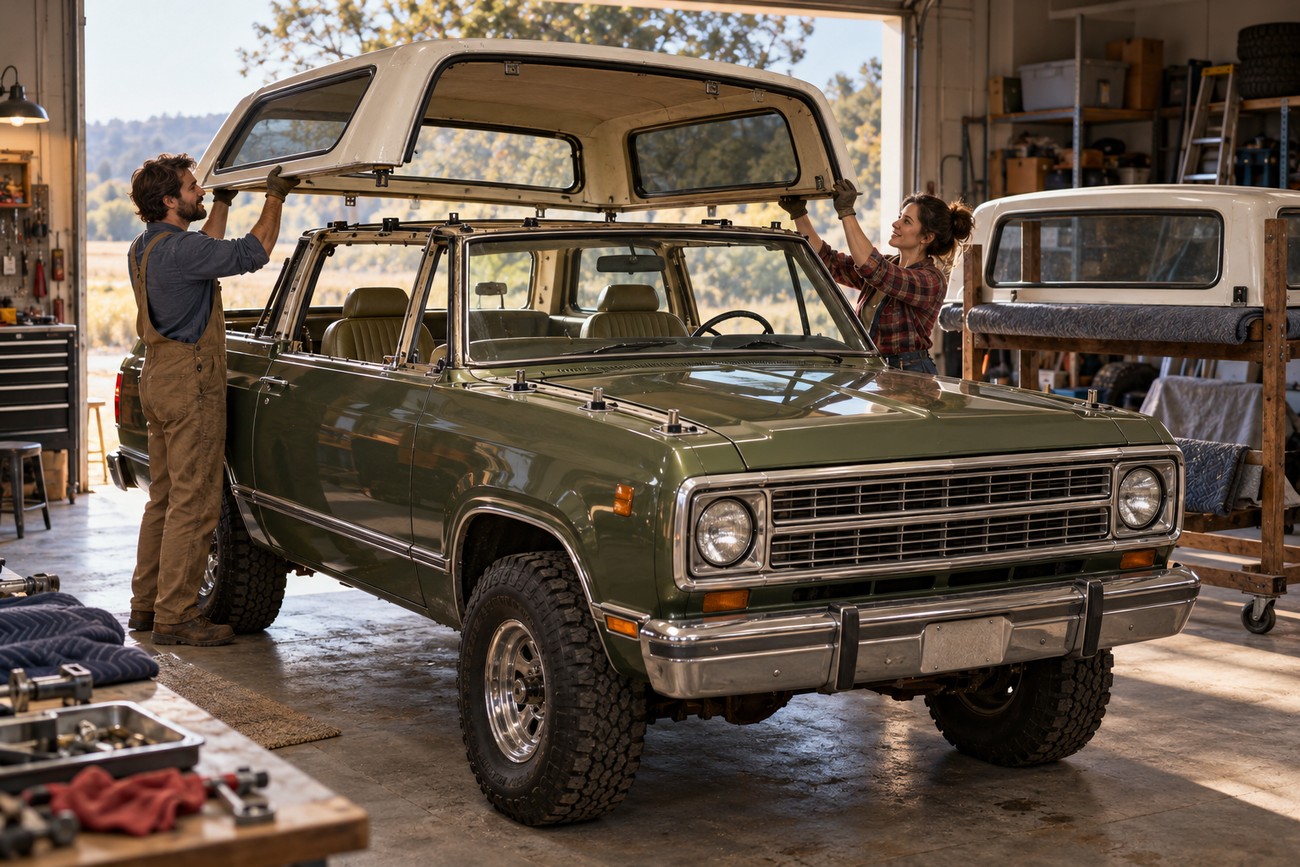
Early Ramchargers had a removable hardtop, giving owners a way to open much of the passenger area to the weather. Removing it changes the character of the vehicle, but the top is a large body component that needs careful handling and somewhere suitable to sit when it is off the truck. Open-air use also leaves occupants and the interior exposed if conditions change.
A canvas top with lift-up side windows was also offered through dealers. It is an interesting alternative to the hardtop, though its presence on a surviving truck should be checked against the vehicle’s history. An old-looking canvas assembly is not, by itself, proof of original equipment.
With either roof, weather protection depends on the parts in front of you. Inspect the sealing edges, attachment points, fasteners, and adjoining body surfaces for damage or poor fit; listen for wind noise and look for signs of water entry. These are condition-dependent concerns, not defects to assume on every Ramcharger.
Later Ramchargers did not retain the same removable-roof design. A listing that calls a later truck a “removable-top Ramcharger” deserves a close look at what the seller means, especially if the claim rests on photographs alone. Roof configuration should be verified before you arrange travel, shipping, or parts purchases.
Pickup hardware beneath the open-air body
The shortened pickup underpinnings bring truck-like strength and serviceable mechanical layouts, along with the mass and steering feel of an older full-size vehicle. That combination suits deliberate driving better than abrupt changes of direction. A sound example can still feel different from a modern SUV even after its worn components are repaired.
Early engine offerings, depending on year and configuration, included a 225 inline-six and 318, 360, 400, and 440 V8s. The 318 and 360 are LA-series V8s; the 400 and 440 should not be grouped under that label. Identifying the installed engine matters when ordering parts, particularly on a vehicle whose drivetrain may have changed during its life.
Some early configurations had full-time four-wheel drive and an NP203 transfer case with a 2.0:1 low range. Full-time means the system is intended to drive both axles in normal use; low range provides lower gearing for slow work. Neither the NP203 nor that operating arrangement is a specification for every Ramcharger.
Check the actual transmission, transfer case, and axle arrangement before assuming how a particular truck should operate. Decades of repairs and modifications can separate a survivor from its original specification. Correct identification makes a road test more informative and helps prevent a parts order based solely on model year or badge.
Early removable-top and later Ramchargers: key differences
The roof is the clearest distinction, while drivetrain details require a vehicle-by-vehicle check.
| Check | Early removable-top Ramcharger | Later Ramcharger |
|---|---|---|
| Roof arrangement | Removable hardtop; inspect its fit, seals, mounts, and fasteners. | Fixed-roof design; do not assume the early top arrangement applies. |
| Canvas option | Dealer-offered canvas top with lift-up side windows; verify provenance and completeness. | Do not infer a comparable original option from the nameplate. |
| Drivetrain | Full-time 4WD and an NP203 were possible; confirm fitted equipment. | Confirm fitted equipment rather than assigning one transfer case to all years. |
| Buying priority | Check roof-specific parts alongside body condition and mechanical operation. | Focus on body and mechanical condition without budgeting for an assumed removable top. |
A removable roof is a useful way to narrow a search, not a complete identification method. Records, hardware, and the body itself need to agree before a buyer treats a truck as an intact early configuration.
Condition can outweigh category. A later fixed-roof truck with sound bodywork may be a more manageable purchase than an early example missing its top hardware, even if the open-air version is the one that first caught your attention.
The ownership costs that specifications miss
Owners report substantial fuel use, which is unsurprising in a heavy, older full-size SUV, though consumption depends on engine, gearing, condition, and driving. Leave room in the budget for running costs rather than judging a purchase by its asking price alone. Mechanical work may be familiar to a truck shop, but that does not make every repair inexpensive.
Road manners call for similar realism. The high center of gravity and reported sensitivity to road ruts can reduce confidence, particularly when steering or suspension components have wear. Allow time and space for maneuvers, and evaluate the truck at a measured pace instead of treating its four-wheel drive as a road-handling aid.
Cabin noise is another reported concern, especially relevant around a removable roof with aging seals. Some owners also describe a chilly rear cabin in winter. A test drive and a close check of the roof and cabin will tell you more about a particular truck than either complaint taken as a universal rule.
Small, vehicle-specific pieces can dictate how long a restoration sits unfinished. Weatherstrips, roof hardware, body trim, and interior fittings may take longer to source than routine mechanical parts, particularly outside the US. Check availability before buying a rare trim or incomplete top configuration; a running engine offers little comfort if the truck cannot be made weather-tight.
How to inspect a removable-top Ramcharger before buying
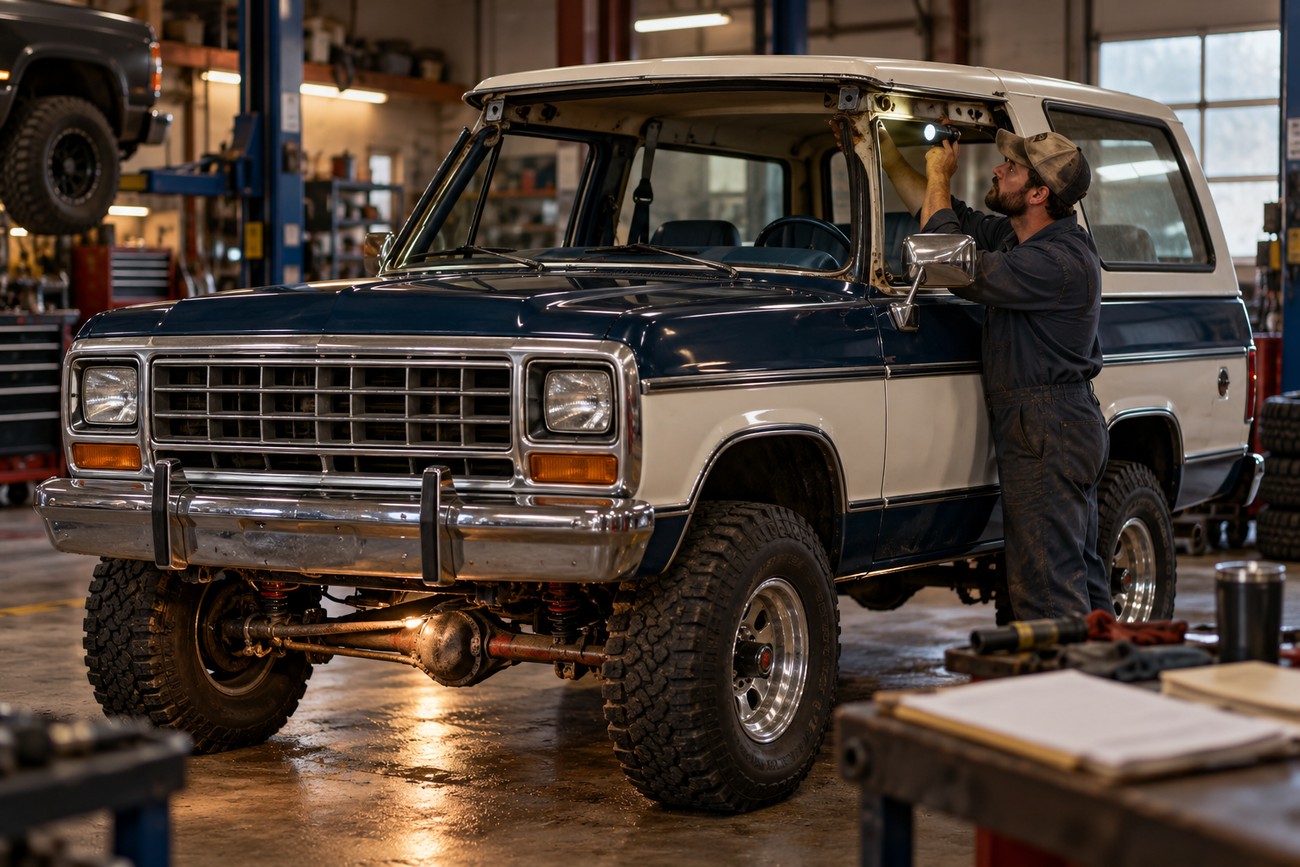
Start with identity before evaluating paint or arranging mechanical repairs. Compare the vehicle identification on the truck with its ownership documents and available history, and resolve discrepancies before committing to a purchase. If import or registration is involved, check the relevant authority’s requirements rather than assuming an existing title settles every question.
Next, examine the roof as a complete assembly. Look at its mounts, fasteners, sealing surfaces, and the body edges they meet, then check the cabin for evidence of water entry. Inspect the adjoining body for corrosion and previous repairs that could affect how the top sits; a fresh seal alone cannot correct a distorted mounting surface.
Match every roof fastener and seal surface to the body before pricing cosmetic work. Missing vehicle-specific hardware can halt an otherwise straightforward restoration while the finished paint waits.
Continue through the rest of the body, paying attention to areas where corrosion or poorly executed repairs could compromise fittings and alignment. Note missing trim and interior pieces individually rather than treating them as minor bargaining points. For an unusual top or trim arrangement, establish whether replacements can be sourced before you buy.
Finish with the heavy-vehicle checks: steering play, front suspension wear, and four-wheel-drive operation. Verify the installed transfer case, then assess how it works under appropriate conditions; a selector moving into position does not, by itself, prove that the system functions correctly. If the seller cannot demonstrate its operation safely, allow for a specialist inspection instead of assuming the mechanism is sound.
Frequently asked questions
Roof equipment, documentation, and storage arrangements vary among surviving trucks. These checks help turn a promising listing into a clearer picture of what you would own.
How should you store a removed Ramcharger hardtop?
Support the hardtop evenly in a dry, secure place, with padding that protects its edges and sealing surfaces. Avoid leaving its weight concentrated on a corner or a fragile trim piece. Keep the removed fasteners together in labeled containers so the correct hardware is available when the top goes back on.
How can you identify an original dealer-offered canvas top?
Look for period paperwork or photographs tied to the vehicle, then compare the top’s hardware, mounting points, and construction details with that evidence. Appearance alone cannot authenticate a canvas top: fabric can be replaced, and an older-looking assembly may have been added later. Assess completeness and condition separately from claims of originality.
What paperwork matters when importing a classic Ramcharger?
Keep ownership records and vehicle-identification evidence together, and check that their details match the truck. Customs documents and registration requirements are separate matters that depend on the destination jurisdiction. Confirm the applicable requirements with the relevant authorities before arranging shipment or relying on the seller’s paperwork.







