
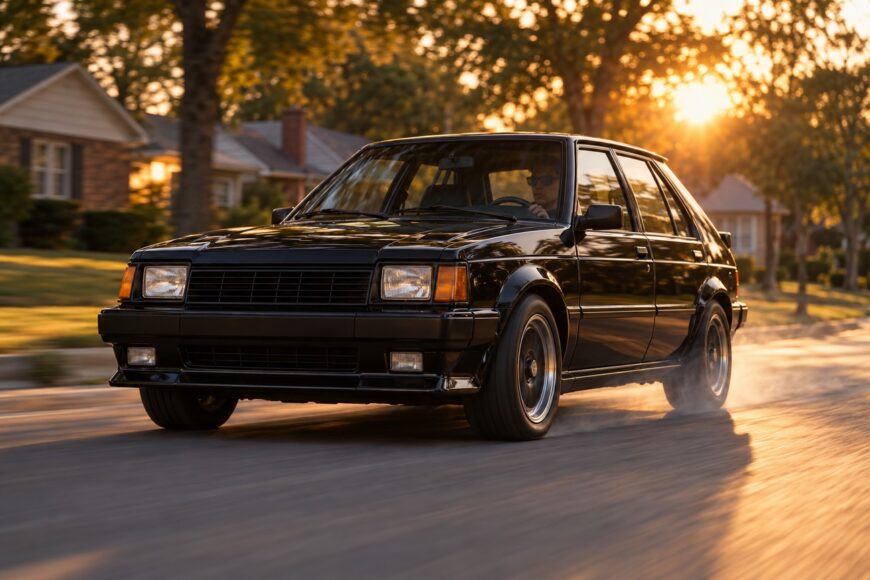
The Dodge Omni GLH began as an inexpensive front-wheel-drive hatchback and became a genuinely quick car through Shelby’s work. That unlikely combination is still its appeal. It is also a reason to be cautious: decades of heat, boost, rust, and amateur tuning can turn a lively purchase into an expensive diagnostic project.
The names matter. The original GLH made about 110 hp, the later GLH-T made about 146 hp, and the 1986 Shelby Omni GLHS made 175 hp. Each offers a different balance of performance and risk. A sound, documented car can be rewarding; a modified one with an unclear history may be an entertaining liability.
- What the Dodge Omni GLH Actually Was
- GLH, GLH-T, and GLHS: The Numbers That Matter
- Why Shelby’s Cheap Hatchback Felt So Fast
- The Real Ownership Problems: Heat, Rust, and Torque Steer
- How to Inspect a GLH or GLHS Before Buying
- Tuning the 2.2 Turbo Without Destroying It
- Is the Omni GLH a Good Car Today?
- Frequently asked questions
- How much horsepower does the Dodge Omni GLH have?
- Was the Dodge Omni a good car?
- Why do Shelby identification plates matter on a GLHS?
What the Dodge Omni GLH Actually Was
Launched in 1984, the Dodge Omni GLH put a stronger engine and sharper chassis tuning into Chrysler’s practical Omni hatchback. GLH stood for “Goes Like Hell,” a characteristically blunt description of what Shelby wanted the car to do. Its appeal depended on an ordinary-looking body delivering more pace than other drivers expected.
Shelby did not design the Omni platform or its engine from scratch. The underlying car and 2.2-liter four-cylinder were Chrysler products; Shelby’s contribution lay in developing the performance package and, later, the more ambitious turbocharged versions. That distinction matters when assessing a car: ordinary Omni components may be familiar, while some Shelby-specific equipment is much harder to replace.
The 1984 GLH used a 2.2-liter naturally aspirated SOHC inline-four producing about 110 hp at 5600 rpm and about 129 lb-ft (175 N·m) at 3600 rpm. Its relatively low weight helped make that output enjoyable, but it was a different proposition from the turbo cars. Calling every GLH a 175-hp Shelby car obscures both the model’s history and what a particular example should cost to maintain.
Turbocharging arrived with the 1985 GLH-T, while the 1986 GLHS took the formula further with intercooling. Badges alone cannot establish which version you are viewing, especially after years of engine swaps and cosmetic changes. The specification, equipment, and documentation need to agree.
GLH, GLH-T, and GLHS: The Numbers That Matter
These figures distinguish the three versions; approximate weights and performance numbers should be treated as guides, especially for cars whose condition or specification has changed.
| Version | Engine and induction | Power | Torque | Factory boost | Drivetrain and transmission | Approximate curb weight | Stated performance |
|---|---|---|---|---|---|---|---|
| 1984 GLH | 2.2-liter naturally aspirated SOHC inline-four | About 110 hp at 5600 rpm | About 129 lb-ft (175 N·m) at 3600 rpm | None | Front-wheel drive; five-speed manual | About 1038 kg for an early non-turbo GLH | No comparable figure specified here |
| 1985 GLH-T | Garrett-turbocharged 2.2-liter inline-four | About 146 hp | No figure specified here | About 9 psi | Front-wheel drive; five-speed manual | No figure specified here | No comparable figure specified here |
| 1986 Shelby Omni GLHS | Intercooled 2.2 Turbo II | 175 hp at about 5300 rpm | 175 lb-ft at 3600 rpm | About 12 psi | Front-wheel drive; five-speed manual | About 2540 lb (approximately 1150–1200 kg) | About 6.5 seconds from 0–60 mph; quarter-mile in about 14.9 seconds at 93 mph; top speed about 130 mph (approximately 209–210 km/h) |
The GLHS figures describe a well-sorted example, not a promise that a surviving car will reproduce them. Tire choice, mechanical condition, and modifications can change the result. The often-quoted 175 hp belongs specifically to the 1986 GLHS, not to the GLH name as a whole.
Why Shelby’s Cheap Hatchback Felt So Fast

Low mass did much of the work. An early non-turbo GLH weighed about 1038 kg, while the more powerful GLHS weighed about 2540 lb (approximately 1150–1200 kg). In a compact hatchback, that combination of weight and turbocharged torque made acceleration feel immediate and busy, with the five-speed manual keeping the driver involved.
Shelby’s suspension work and engine calibration gave the Chrysler-based car a distinct performance character. The GLH-T ran about 9 psi of factory boost, and the intercooled GLHS ran about 12 psi. Those settings provide engineering context for the power figures; they are no assurance that an aged engine will tolerate additional boost.
Putting turbo torque through the front wheels brought pronounced torque steer under acceleration. The car can also feel nervous in fast corners when its tires or suspension are worn. A correct alignment and quality tires generally do more for predictable handling than simply adding stiffer springs or a larger anti-roll bar.
Compact dimensions, a stiff suspension, and front-wheel drive help explain the model’s continuing use in autocross and amateur track builds. Its responses can be engaging on a short course, provided the brakes, mounts, tires, and cooling system are fit for the work. It does not offer the effortless stability or safety margin of a modern hot hatch.
The Real Ownership Problems: Heat, Rust, and Torque Steer
Heat is a serious concern on a turbo 2.2. Overheating, excessive boost, poor oil service, or inadequate fuel delivery can lead to head-gasket failure, cylinder-head cracks, piston wear, or detonation. A car that makes strong boost on a brief test drive may still have suffered damage from earlier tuning.
Torque steer becomes more pronounced with old or poor-quality tires, and worn suspension can make the chassis unsettled through quick corners. Hard springs or coilovers may add another problem by stressing tired mounting points and bodywork. Inspect the structure as well as the replaceable suspension parts.
Corrosion deserves a slow examination of the sills, wheel arches, and underbody, particularly on cars used where roads were salted. Fresh paint can hide work in those areas, while an honest, tired interior is easier to assess. Inside, brittle plastic, squeaks, deteriorating upholstery, and weak sound insulation are reminders of the Omni’s budget-car origins.
Aging boost sensors and fuel injectors can cause hesitation, unstable running, and potentially damaging detonation. Intermittent faults may take longer to trace than a visible leak, especially if wiring or engine calibration has been altered. Access to a specialist who understands the older turbo system can therefore matter as much as access to parts.
Passive safety is another firm limit on how the car can sensibly be used. The Omni platform offers limited protection by modern standards and lacks airbags. That does not erase its appeal as a period performance car, but it weighs heavily against treating one as a carefree everyday vehicle.
How to Inspect a GLH or GLHS Before Buying
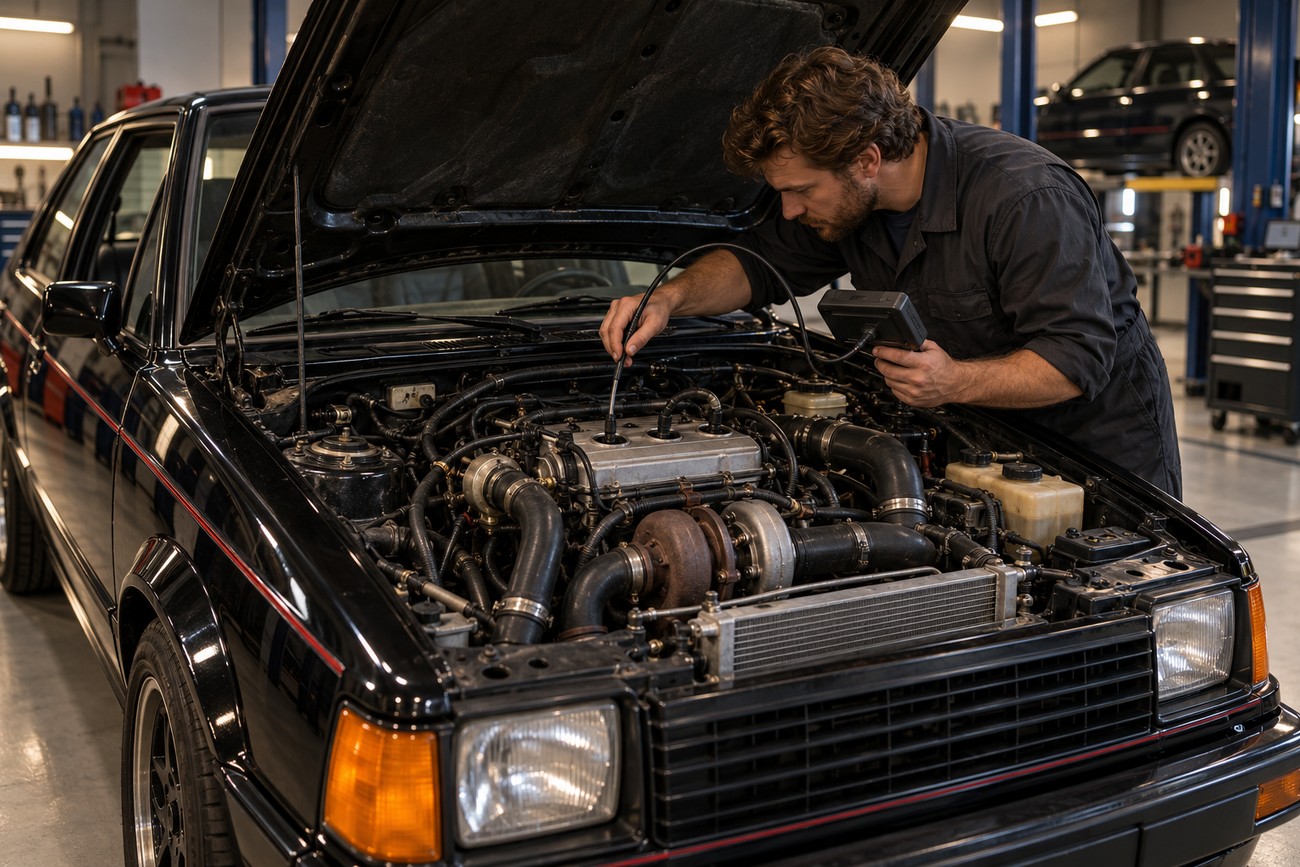
Start with mechanical health rather than paint, badges, or an advertised power figure. Arrange a pre-purchase inspection that includes an internal engine assessment, with endoscopic inspection where practical, and checks of the turbocharger and boost system. Ask for evidence of oil changes and cooling-system work; a clean engine bay is no substitute for that history.
Look for signs of previous overheating, oil deposits, boost leaks, and alterations to fuel delivery, ignition, or calibration. Replacement turbos and homemade intercooler installations warrant careful scrutiny because the supporting work may be incomplete. A specialist should assess suspicious running before you assume it needs only a sensor.
On the road, check for gearbox problems, driveline vibration, and excessive pull under power. Repeated hard launches can shorten gearbox and driveshaft life. Back on a lift, inspect suspension mounts and the surrounding metal, then examine the sills, arches, and underbody for corrosion or poorly repaired damage.
When a seller describes a car as a GLHS, check VIN information, Shelby identification plates, and the completeness of its original equipment against the documentation. Those details support authenticity and collector confidence; missing plates should prompt further investigation rather than an automatic conclusion. Original Shelby-specific parts, including intake, intercooler, suspension, trim, and badges, can be difficult to source and may require used or reproduction replacements.
Tuning the 2.2 Turbo Without Destroying It
The factory boost settings—about 9 psi for the GLH-T and 12 psi for the GLHS—reflect a balance between output and durability. Raising boost with a controller while leaving fuel delivery, cooling, ignition, and calibration untouched can quickly damage the engine. The fact that a modification produces more power briefly says little about how long the car will tolerate it.
Reliability work is a better starting point for a car intended to be driven. A sound modern radiator, appropriate intercooling, and oil cooling can substantially improve temperature control when correctly installed. They do not excuse neglected oil changes: deposits and overheating remain threats to the turbocharger and engine.
Ignition timing must suit the fuel actually used and the engine’s calibration. A change to one part of the system should be checked against the others, rather than relying on a boost gauge as the sole measure of safety. Documented, coherent work is more valuable to a buyer than a collection of unidentified performance parts.
Chassis modifications need the same restraint. Oversized wheels and cheap tires can worsen geometry, torque steer, and ride quality, while overly stiff suspension can punish aging mounts. Properly chosen tires, alignment, and sound original structure make a better foundation for speed.
Is the Omni GLH a Good Car Today?
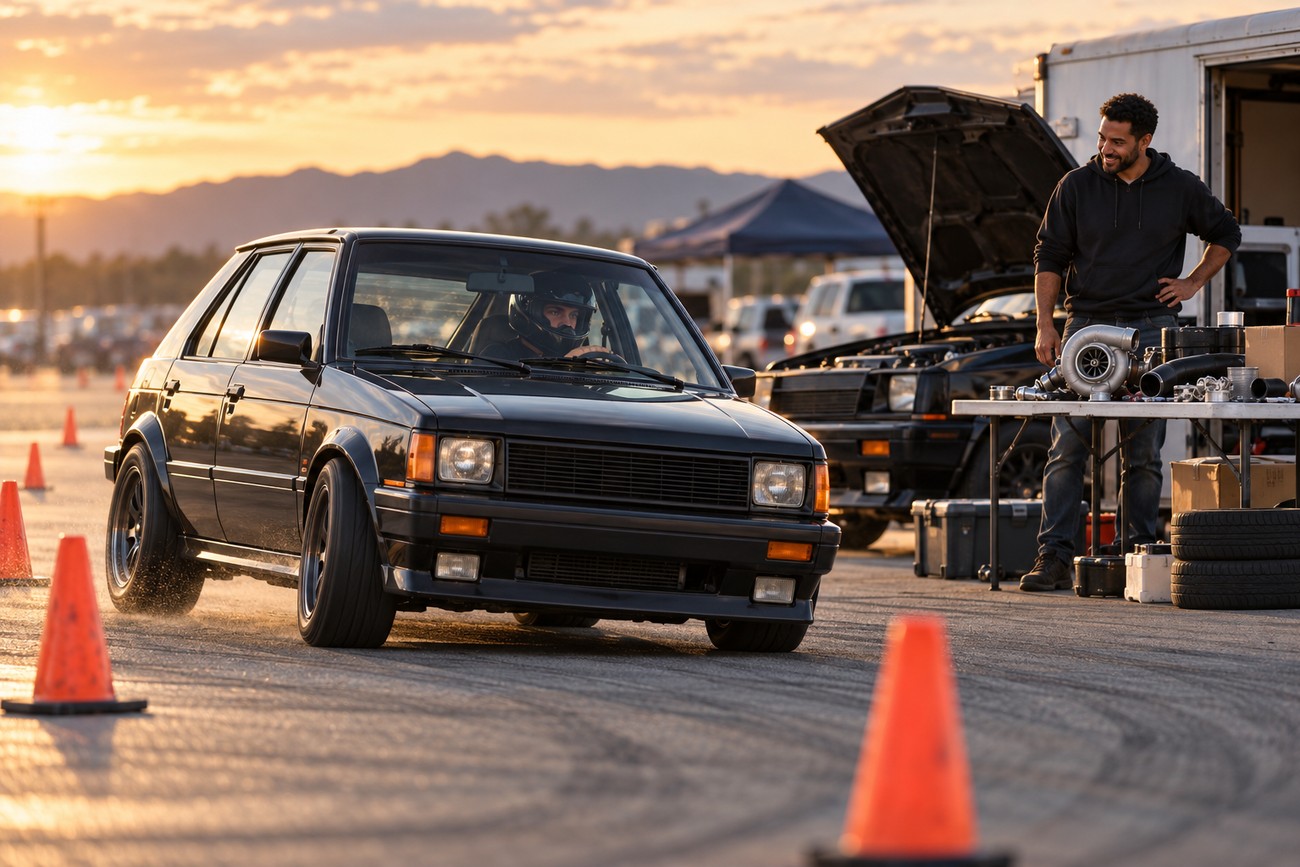
A sound GLH is an appealing way to experience a light, direct 1980s performance hatchback. The compact body, manual transmission, and responsive chassis suit an owner who enjoys working with the car’s limits. Autocross or amateur track use can make sense after a thorough inspection and appropriate preparation.
Running costs are less charming. The GLHS was rated at approximately 19 mpg city, 22 mpg combined, and 27 mpg highway under EPA figures, while testing or active use has returned about 19 mpg. Fuel is only part of the calculation when scarce Shelby-specific parts and limited 2.2 Turbo specialist support can delay a repair.
An original, documented example and a heavily modified project are different purchases, even if the latter advertises more power. The project may offer track potential, but it also places more weight on the quality of someone else’s cooling, fueling, wiring, and structural work. Low modern passive safety adds a risk that restoration cannot fully remove.
The best-fit owner values the Omni’s period character and accepts diagnostic work, careful maintenance, and occasional parts hunting. Someone seeking a trouble-free daily driver should look elsewhere. Buy the GLH or GLHS for the car it demonstrably is, rather than the performance its badge promises.
Frequently asked questions
The answers below depend on the exact version and, for a car offered for sale, the evidence supporting its identity. Decades of repairs and modifications make that distinction worth checking.
How much horsepower does the Dodge Omni GLH have?
It depends on the version. The original 1984 naturally aspirated GLH produced about 110 hp, and the 1985 turbocharged GLH-T produced about 146 hp. The 175-hp figure belongs to the intercooled 1986 Shelby Omni GLHS.
“GLH” is often used loosely in listings and conversation. Check the model designation and engine specification before using a quoted output to judge performance or price.
Was the Dodge Omni a good car?
The ordinary Omni was a basic transportation hatchback; the GLH and later turbo versions appealed to drivers who wanted much more performance from that modest platform. Shelby’s upgrades made the car engaging without changing its budget-car interior or its age-related limitations.
As a purchase now, its merit rests largely on condition and intended use. A well-maintained example can be rewarding for an enthusiast, while corrosion, scarce parts, low modern passive safety, and specialist maintenance make it a demanding choice for routine transport.
Why do Shelby identification plates matter on a GLHS?
Shelby identification plates help establish that a claimed GLHS is the 1986 special model rather than an ordinary Omni or GLH fitted with similar parts. Alongside VIN information, records, and complete original equipment, they give collectors stronger evidence of what they are buying.
A missing plate does not, by itself, settle a car’s identity. It does mean the seller’s claim needs stronger documentation, particularly if the car has been modified. Clear provenance supports buyer confidence and can materially affect collector value.







