
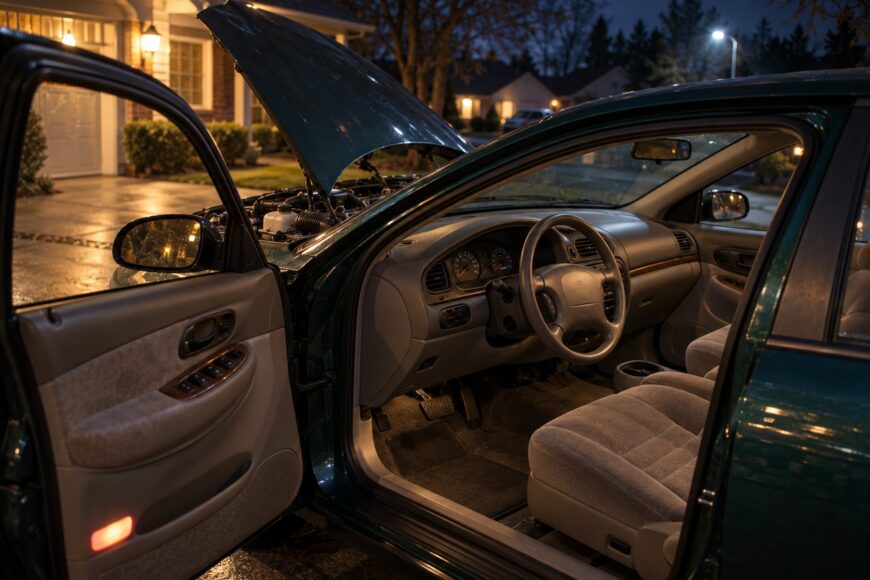
A 1999 Ford Taurus might have seemed capable of refusing to start at midnight on January 1, 2000. The practical expectation was different: a calendar-driven freeze of the engine or transmission was considered unlikely because their controllers generally did not use calendar-date calculations for normal operation.
The more plausible trouble spots were the clock, radio, climate-control functions, displays, service reminders, and some diagnostic features. A date-related fault in those systems would more likely reset the time or stored settings than prevent the car from starting or driving. That expectation did not guarantee identical behavior from every module or vehicle.
For a Taurus today, ordinary age is the more useful explanation for most electrical and mechanical faults. A 20-plus-year-old car can develop worn wiring, poor connections, charging problems, or transmission trouble that has nothing to do with Y2K.
- Could Y2K Freeze a 1999 Ford Taurus?
- What Were the Y2K Fears in 1999?
- Which Taurus Systems Were More Exposed Than the Engine Computer?
- How to Tell a Y2K-Type Glitch From an Old Taurus Failure
- What to Check Before Buying a 1999 Ford Taurus Today
- Frequently asked questions
- What were the Y2K fears in 1999?
- What should I do if a 1999 Taurus clock or radio resets?
- Why did some people confuse ordinary Taurus breakdowns with Y2K problems?
Could Y2K Freeze a 1999 Ford Taurus?
The 1999 Ford Taurus was generally expected to keep running through the Y2K rollover. Its engine and transmission controllers were generally understood not to use calendar-date or day-of-month values in normal operating calculations, so a midnight shutdown was considered unlikely.
That conclusion describes the core control strategy as it was commonly understood, rather than guaranteeing the behavior of every electronic module. A vehicle contains several computers and electronic functions, and they do not all perform the same job. The system that controls fuel or shifting has different requirements from the module that runs a clock or display.
A no-start condition would therefore have been a different class of failure from a clock showing the wrong date, a radio losing its settings, or a climate-control display behaving incorrectly. The latter faults were more plausible Y2K-related outcomes for a late-1990s vehicle.
If a Taurus had continued to crank and drive while its clock or stored settings reset, that behavior would have fit the expected pattern. A complete Y2K freeze of the engine or automatic transmission was considered unlikely, although available discussions do not establish a universal result for every 1999 Taurus and every module.
What Were the Y2K Fears in 1999?

The main fear was that a vehicle computer would interpret the change from 1999 to 2000 as an invalid value and fail at precisely midnight. Owners worried that the engine would not start, the transmission would not shift, or an electronic security function would refuse to authorize the car.
Technician and owner discussions about Ford and GM vehicles commonly focused on a simpler question: did the controller actually use the day or date in its core calculations? The prevailing view in those discussions was that engine and transmission controllers generally did not, which made a calendar-triggered shutdown unlikely.
Those forum conclusions should be treated as practical expectations rather than formal Ford engineering documentation. They also do not prove that every vehicle was tested in the same way or that every accessory module was immune to date-related errors.
The timing of the concern added to the confusion. The third-generation Ford Taurus was produced from 1995 through 1999, making 1999 the final model year of that generation. As a result, many vehicles associated with the end of the decade were discussed alongside broader fears about aging electronics and the approaching rollover.
Which Taurus Systems Were More Exposed Than the Engine Computer?
Late-1990s automotive Y2K concerns focused more often on radios, clocks, climate controls, displays, service reminders, and other convenience or information modules. These systems had more reason to store or show calendar information than the basic engine-control functions.
A date-related fault in one of those modules would more plausibly reset the time, calendar, or stored settings. It could also affect the way service information was displayed. Such a failure could be irritating and useful as a diagnostic clue without preventing the Taurus from starting or moving.
One discussion suggested that some diagnostic or error- and odometer-stamping functions might use time or date. That possibility is limited evidence, and it was not established as a widespread 1999 Ford Taurus problem. It should not be treated as proof that the vehicle’s main controller would lock up.
The useful distinction is between information that records when something happened and control logic that determines whether the engine can run. A recording or display function may mishandle a date while the engine controller continues to calculate fuel, ignition, and other operating functions normally.
How to Tell a Y2K-Type Glitch From an Old Taurus Failure
A reset clock or radio points toward a convenience module, its power supply, or an aging connection. It does not, by itself, show that the engine computer has failed. Check whether other electrical functions changed at the same time, and record whether the problem is repeatable.
A no-start condition requires ordinary fault diagnosis. Battery condition, alternator output, wiring, grounds, relays, sensors, fuel delivery, and communication between modules can all matter on an older Taurus. A shifting problem likewise calls for transmission and control-system testing rather than a calendar-based explanation.
Separate a settings reset from a power, charging, communication, or transmission-control fault before blaming the calendar. The symptom’s scope is often more informative than the word “computer” in the complaint.
Owner reports about 1999 Taurus vehicles more commonly concerned aging electrical systems, automatic transmissions, water pumps, brake cylinders, fuel filters, and alternators. These failures can appear around the same period in an old vehicle and may be mistakenly linked to a memorable date.
Age-related electrical trouble can also produce misleadingly broad symptoms. A weak alternator or poor ground may affect the radio, displays, and starting behavior together, while corrosion or a failing connector can create intermittent faults. A display or clock failure remains a different class of problem from an engine that will not start.
What to Check Before Buying a 1999 Ford Taurus Today

The relevant modern risk is accumulated age and module wear, rather than a delayed Y2K countdown. Inspect the condition of wiring, connectors, grounds, charging components, and visible signs of corrosion or water intrusion. Equipment lists and sales descriptions rarely reveal the condition of these parts.
Test the dashboard, radio, clock, climate-control functions, and other displays during the inspection. Ask whether settings reset, warning lights appear, or electrical behavior changes when the engine is started. These checks help identify an aging electrical system before it becomes a starting or drivability problem.
Drive the car long enough to assess transmission operation and listen for abnormal behavior from the engine and accessories. Check the maintenance and repair history for evidence involving the alternator, fuel system, water pump, brake components, or transmission.
Inspecting only the engine and transmission can miss the faults that make an old Taurus difficult to own. A car that drives well but has unstable charging voltage, damaged connectors, or unreliable climate and display functions may require more electrical work than its appearance suggests.
Frequently asked questions
These answers distinguish possible date-related glitches from ordinary electrical and mechanical failures in an aging Taurus. They also outline practical checks for clock, radio, starting, and transmission problems.
What were the Y2K fears in 1999?
People feared that the two-digit year change from 99 to 00 would disable essential computer systems. For cars, the concern narrowed to whether a particular controller actually used the date in a decision needed for starting, fueling, or shifting.
Discussions about Ford and GM vehicles commonly concluded that core engine and transmission calculations did not depend on the day or calendar date. That was a practical expectation from technician and owner discussions, rather than a guarantee covering every module in every vehicle.
What should I do if a 1999 Taurus clock or radio resets?
First, treat the symptom as a convenience-module or electrical problem. Check whether the battery, alternator, grounds, connectors, and related power supply are in sound condition, then determine whether only the clock or radio loses its settings.
A reset by itself does not show that the engine computer is defective. If the Taurus also has a no-start condition, warning lights, or transmission problems, diagnose those symptoms separately with normal electrical, fuel, ignition, and transmission checks.
Why did some people confuse ordinary Taurus breakdowns with Y2K problems?
The timing made the confusion understandable: an aging vehicle could develop electrical, charging, transmission, or accessory faults during the same period that Y2K fears were receiving attention. The word “computer” also encouraged owners to group unrelated electronic and mechanical failures together.
In practice, a failing alternator, poor connection, worn transmission, or damaged component can explain many Taurus complaints without involving a calendar rollover. The pattern and repeatability of the fault are more useful than its association with a particular date.







