
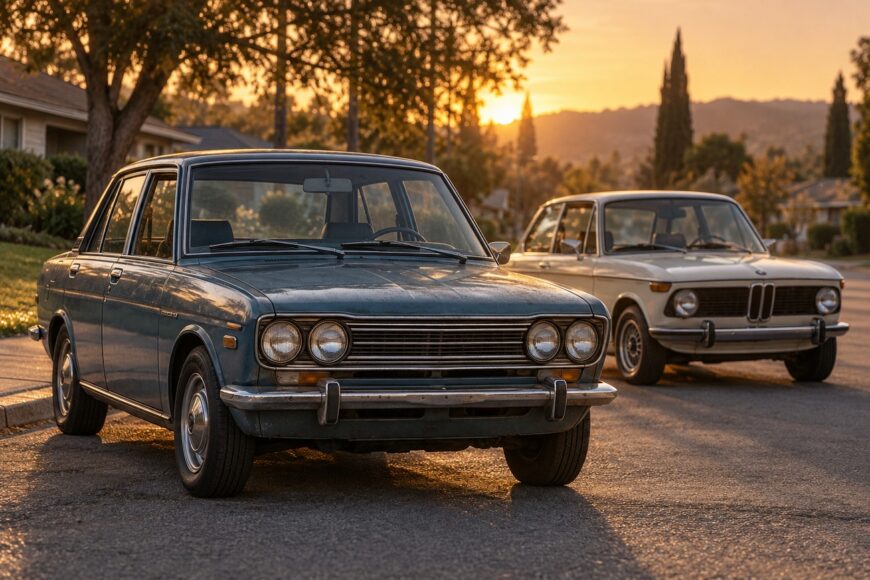
The Datsun 510 offered some of the appeal that made the BMW 2002 a favorite among keen drivers: compact dimensions, rear-wheel drive, and a chassis that rewards attention. Historically, it offered that appeal at a lower entry price. For a buyer now, though, an inexpensive-looking 510 can conceal rust beneath fresh paint, missing trim, and repairs that cost more than the car’s mechanical work.
“Poor man’s BMW” captures a useful connection between two engaging cars, but it can mislead. Their engineering differs, neither car is guaranteed to handle better, and the cost of buying a 510 is only the beginning of the ownership calculation.
- Why the Datsun 510 Became the Poor Man’s BMW
- Datsun 510 vs BMW 2002: What the Comparison Actually Shows
- How the 510 Earned Its Reputation on Road and Track
- The First Buying Test: Rust, Structure, and Completeness
- The Restoration Budget Hides in Parts and Modifications
- What a Datsun 510 Is Worth Today—and Who Should Buy One
- Frequently asked questions
- How much is a BMW 2002 worth today?
- What should you do before driving a long-stored Datsun 510?
- What paperwork should you check before importing a Datsun 510?
Why the Datsun 510 Became the Poor Man’s BMW
The Datsun 510, also known as the Nissan Bluebird 510, belongs to the 1968–1973 production era, although dates varied by market. The BMW 2002, part of BMW’s 02 family, was produced from 1968–1976. Both gave drivers a compact rear-wheel-drive car with useful everyday space and a lively character.
BMW positioned the 2002 as the more upmarket car. The 510 was generally lighter and historically less expensive, so it became an accessible route into a similar kind of enthusiast motoring. That is the point of the nickname; it is not evidence that Nissan copied the BMW or built an identical car.
The distinction matters when shopping today. A low asking price can reflect corrosion, absent original parts, or unfinished modifications rather than an enduring bargain. The better comparison is between complete cars in known condition, with enough money left to make either one safe and enjoyable.
Datsun 510 vs BMW 2002: What the Comparison Actually Shows
These broad differences describe a 510 sedan or coupe alongside a base BMW 2002; specifications vary by market and individual car.
| Feature | Datsun 510 sedan or coupe | Base BMW 2002 |
|---|---|---|
| Layout | Compact, rear-wheel drive | Compact, rear-wheel drive |
| Typical engine | L16 1.6-liter four-cylinder; other market-dependent versions exist | 2.0-liter four-cylinder |
| Relative weight | Generally lighter, depending on specification | Generally heavier, depending on specification |
| Rear suspension | Independent | Independent |
| Original market position | Historically less expensive | More premium |
The 510 wagon is an important exception to the suspension comparison: it has a live rear axle with leaf springs, rather than the independent rear suspension found in the sedan and coupe.
How the 510 Earned Its Reputation on Road and Track
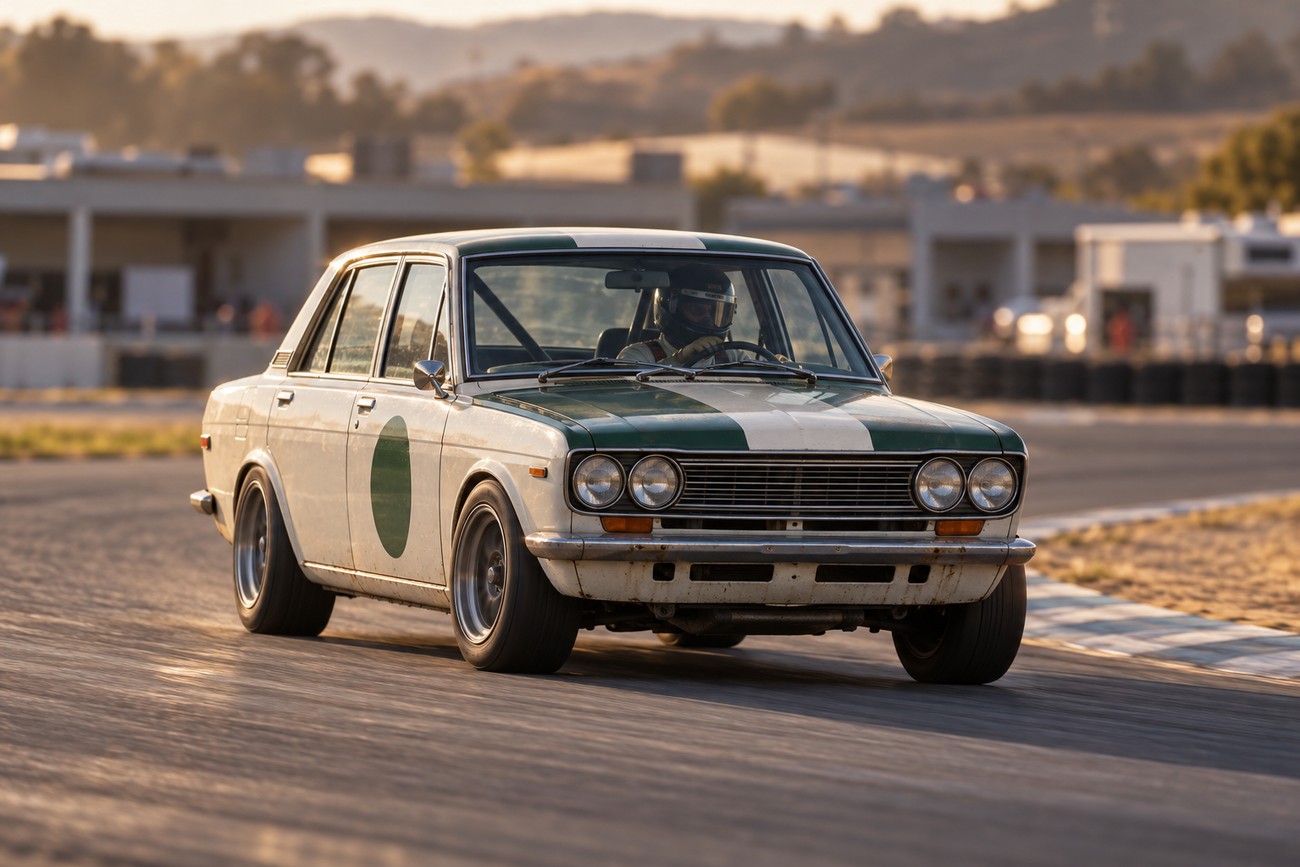
A light body, independent front suspension, and, in the sedan and coupe, independent rear suspension help explain the 510’s responsive feel. Its mechanical layout also gave enthusiasts a workable basis for changes. Those qualities contributed to its notable SCCA sedan-racing history and its continuing use in track and rally builds.
Race preparation, however, says little about how a particular road car will behave. Tires, dampers, alignment, and worn suspension components can change a 510’s steering response and balance substantially. The wagon’s different rear suspension means its setup should not be treated as interchangeable with a sedan’s.
The same caution applies across the BMW comparison. A sorted 2002 on suitable tires may be more satisfying than a tired 510, while a carefully set-up Datsun may feel sharper than a neglected BMW. Engine output and the condition of both cars belong in any honest driving verdict; neither model wins on its badge alone.
The First Buying Test: Rust, Structure, and Completeness
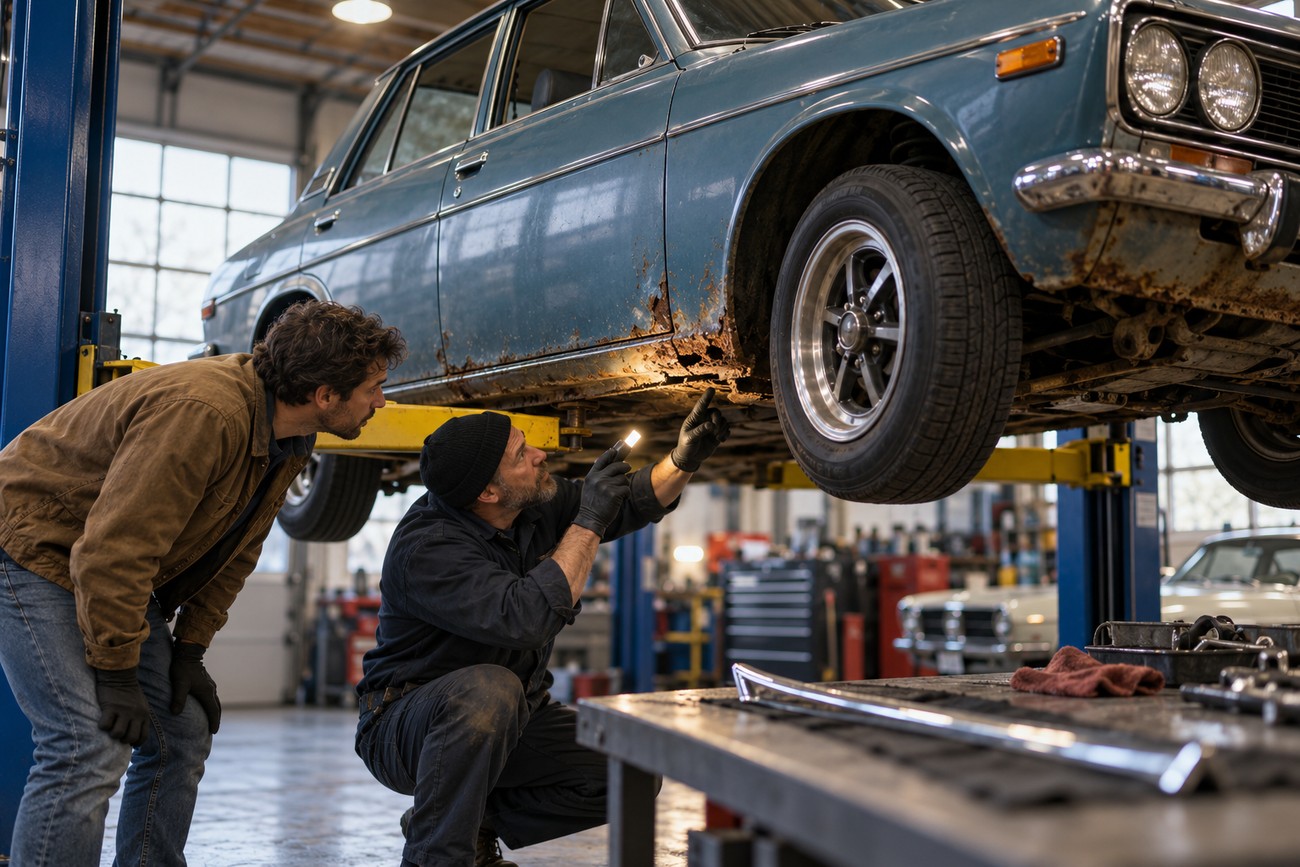
Start beneath the car, then work outward. Inspect the sills, wheel arches, floors, structural rails, suspension mounting areas, and trunk for corrosion and previous repairs. Lift trim and coverings where access is permitted, and compare what you see on both sides of the shell. A polished exterior gives little assurance about metal hidden underneath.
Fresh paint deserves a closer look, particularly around seams and lower panels where filler can hide damaged steel. Modified cars also need a check for straight body and suspension geometry. If a seller cannot explain substantial repairs or alterations, allow for a specialist inspection before agreeing on value.
Check repair seams from inside the panel wherever access allows: sound-looking exterior paint cannot show whether a patch was properly joined or simply covered with filler.
Completeness is the next test. Check that glass, trim, interior fittings, and other original pieces are present and usable, even if the plan is to improve the engine later. A solid, complete shell can be harder and more expensive to secure than an engine, so an attractive powertrain should not set the price of a structurally doubtful car.
Judge the car you can verify rather than the restoration described in an advertisement. Photographs of metalwork, parts records, and a consistent account of modifications help, but they do not replace an inspection. Walking away from uncertain structure can be the least expensive decision in the project.
The Restoration Budget Hides in Parts and Modifications
The 510’s straightforward mechanical construction does not make a full restoration straightforward. Original trim, interior pieces, seals, clips, and other small fittings may take time to find and cost disproportionately to replace. A project that runs well yet lacks these items can still require a long, expensive search.
Age adds work that a fresh engine cannot resolve. Wiring faults, leaks, deteriorated hoses, tired fuel components, and old brake lines or hydraulics all need attention before regular use. Sorting those systems may feel less rewarding than a performance upgrade, but it determines whether the car starts, stops, and remains dependable.
Engine swaps deserve scrutiny for the work around the engine. Brakes, cooling, transmission, and wiring must suit the new installation, and altered mounts or suspension parts should be examined for workmanship and geometry. A more powerful 510 with incomplete supporting work can be a worse purchase than a slower, well-sorted example.
Parts from other Nissan or Datsun models may offer a route forward, but apparent similarity is not proof of fit. Verify part numbers and documented fitment before budgeting around an interchange. For an original-looking driver, careful mechanical updates can preserve much of the car’s character without creating another owner’s unfinished engineering problem.
What a Datsun 510 Is Worth Today—and Who Should Buy One
There is no useful universal price for a Datsun 510 today. Body style and market matter, as do structural condition, completeness, originality, and the quality and history of modifications. An isolated asking price or auction result cannot establish what a different car, in a different condition, is worth.
Separate the purchase price from the eventual spend. A cheaper car needing metalwork and scarce fittings may absorb more money than a sounder, more complete example. Obtain a realistic view of the shell and missing parts before treating any low price as savings.
A collector seeking originality and a driver seeking thoughtful upgrades may value the same car differently. Extensive changes can improve performance while narrowing its appeal to buyers who want factory details; well-documented, carefully executed work is easier to assess than an undocumented swap. Neither approach excuses corrosion or poor workmanship.
The nickname still fits a 510 that delivers engaging compact-car driving for a sensible total outlay. It stops being useful when it suggests cheap restoration or an automatic advantage over a BMW 2002. Buy the best structure and most credible work you can justify, then decide which car’s character you prefer.
Frequently asked questions
A few practical checks sit outside the driving comparison. They matter most when pricing another car, returning a stored 510 to the road, or moving one across a border. Each calls for current evidence rather than an assumption based on the model name.
How much is a BMW 2002 worth today?
A BMW 2002 has no responsible single-value answer without its variant, market, condition, and originality. Compare current listings for similar cars in the same market, then examine the evidence behind each asking price: structural condition, completeness, documented work, and specification. An asking price is a reference point, not proof of a completed sale or of what another example will cost to put right.
What should you do before driving a long-stored Datsun 510?
Recommission it before taking it into traffic. Check the fuel supply for deterioration or leaks, inspect brake hydraulics and lines, assess tire age and condition, and look for fluid leaks before starting and moving the car. Once those systems are safe, confirm that it steers, charges, and brakes properly on a cautious test rather than assuming that a running engine makes it roadworthy.
What paperwork should you check before importing a Datsun 510?
Match the car’s identity to its ownership records, and obtain the export and import documents required for the countries involved. Confirm the destination’s customs, registration, and inspection requirements before shipping, especially if the car has been modified or its records are incomplete. Requirements vary by jurisdiction, so verify them with the relevant authorities rather than relying on a seller’s assurance.







