
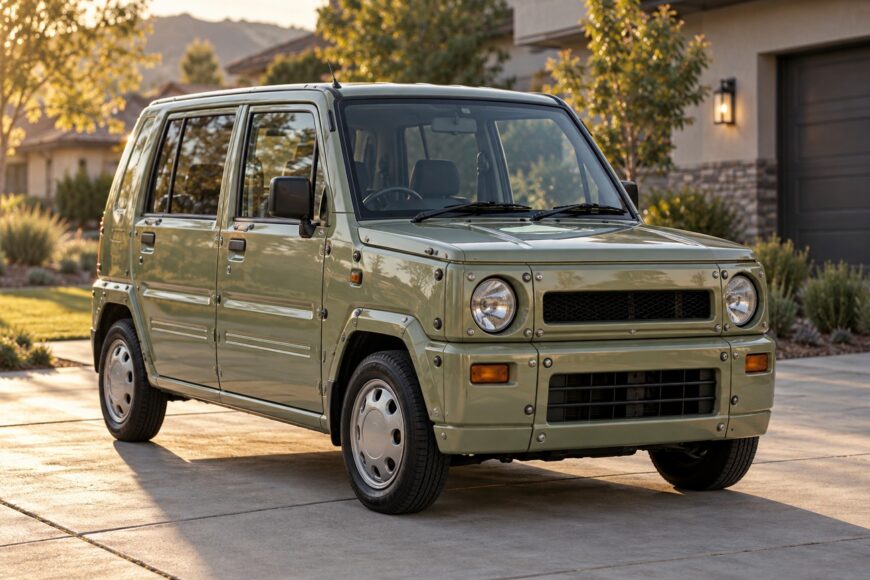
The exposed bolts make the Daihatsu Naked recognizable before its badge comes into view. Its straight-edged panels and upright body give this small car an industrial character, while the five-door cabin promises more practical space than its footprint suggests. For a buyer, the real question is whether that useful layout outweighs cabin noise, modest performance, and the risks that come with an aging car.
The Naked was shaped around Japan’s kei-car dimensions, where every bit of interior space matters. That helps explain the boxy roofline as much as the styling does. It also explains why the car makes the most sense as a compact, adaptable runabout rather than a substitute for a larger vehicle on long journeys.
- Why the Daihatsu Naked wears its bolts on the outside
- What the small engine and boxy cabin feel like to use
- Naturally aspirated, turbo and 4WD: the ownership trade-offs
- The compromises a short test drive can hide
- Inspect the body, paperwork and mechanical condition before buying
- Who will enjoy a Naked—and who should look elsewhere
- Frequently asked questions
- What should I check before importing or registering a Daihatsu Naked?
- How can I tell whether a Move or Mira part will fit my Naked?
- How fast does a 660cc kei truck go?
- How much will a kei truck cost?
Why the Daihatsu Naked wears its bolts on the outside
Produced approximately from 1999 to 2004, the Naked is a five-door kei hatchback. Its exposed fasteners, flat-looking panels, and square outlines were deliberate industrial styling choices. The result is distinctive without relying on the rounded shapes common to many small cars of its era.
Kei-car limits relevant to the Naked are up to 3.4 m in length, 1.48 m in width, and 660 cm³ of engine displacement. Within that narrow exterior, an upright body helps preserve usable headroom and gives the rear doors a practical purpose. The shape can suggest a miniature SUV, but the packaging is better understood as a way to make a small hatchback easier to use.
Those visible bolts also attract owners who want to personalize the car. Their appearance alone, however, does not show that a fastener can safely carry a shelf, rail, or other accessory. Check what it attaches to, the load it would carry, and whether the proposed installation affects body panels or safety equipment before using it as a mounting point.
What the small engine and boxy cabin feel like to use
The Naked’s reconfigurable seating is a major part of its appeal. Folding and arranging the seats can make room for hobby equipment or small loads that would be awkward in a less upright car. The five-door layout helps when you need to reach that space regularly, though you still need to check that your intended load fits and can be secured.
Engine choices include naturally aspirated and turbocharged 658 cm³ units, with catalog output of approximately 45–64 hp depending on version. A naturally aspirated car may feel adequate on short, lightly loaded trips, then require more planning with passengers and air conditioning running. On faster roads, limited reserve power makes overtaking and sustained travel less relaxed.
A turbocharged version offers more useful response, but it does not turn the Naked into a quiet long-distance car. It also adds maintenance demands, particularly around oil service. Check the transmission fitted to the individual vehicle and test its operation; transmission type should never be inferred from the engine or a sales listing alone.
Owner-reported fuel-use estimates are around 5–7 L/100 km in town and 4.5–5.5 L/100 km on a gentle highway run. These are estimates rather than guaranteed results, and turbocharged or 4WD cars may use more. A car that needs frequent high revs to keep pace with your normal route may deliver a different result from one driven gently on local streets.
Naturally aspirated, turbo and 4WD: the ownership trade-offs
Turbocharging describes the engine; 4WD describes the driven wheels, so a car can have both. Compare the equipment on the actual vehicle before weighing these choices.
| Configuration | Practical benefit | Likely compromise | Verify before purchase |
|---|---|---|---|
| Naturally aspirated, front-wheel drive | Simple choice for gentle local use. | Limited response with passengers, air conditioning, or faster traffic. | Cold starting, smooth running under load, and the operation of the fitted transmission. |
| Turbocharged | Stronger response when joining traffic or climbing. | Greater sensitivity to poor oil maintenance; fuel use may rise. | Oil-service evidence, exhaust smoke, boost delivery, and the fitted transmission. |
| 4WD | Extra traction where roads are slippery or steep, especially with suitable tires. | Additional drivetrain components and potentially higher fuel use. | Evidence that the 4WD system works, matching tires, and drivetrain noises or leaks. |
A test drive should include the kind of road you will actually use. A version that feels responsive on an empty neighborhood street can feel strained on a steep route with passengers aboard. Likewise, 4WD improves traction; it cannot compensate for unsuitable tires or poor mechanical condition.
Service records deserve more weight than the configuration name. A well-maintained naturally aspirated car may be a better purchase for local driving than a neglected turbo car, while an inspected 4WD car may justify its extra complexity where traction matters regularly.
The compromises a short test drive can hide
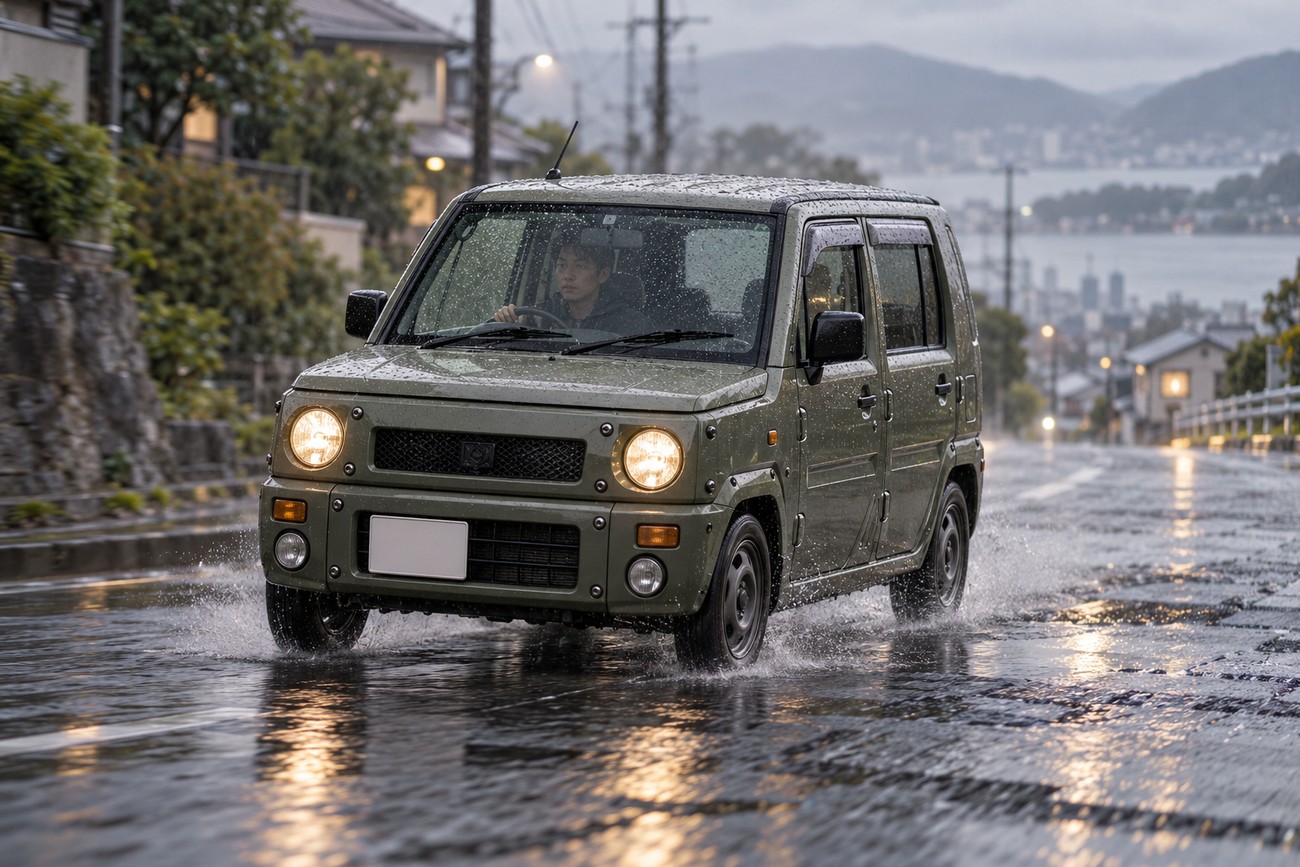
Owners commonly report substantial engine, road, and transmission noise, with rain on the roof adding to the impression of a lightly insulated cabin. A brief drive on smooth streets may miss most of it. Try a stretch of rougher road and a speed representative of your normal travel before deciding whether you can live with the sound.
The suspension is also described by owners as firm, particularly over joints and broken surfaces. Wheel and tire choices can amplify that response. Cheap tires or unsuitable replacement suspension parts may make the car feel unsettled as well as less pleasant to drive.
Lowering the Naked for its appearance can undermine one of its useful traits: an upright small car that can cope with everyday entrances, ramps, and uneven streets. Reduced clearance makes those obstacles harder to manage. Inspect any modified car carefully, including tire fitment and signs of contact underneath.
Some descriptions call the Naked a comfortable city crossover; owners also describe a noisy, utilitarian small car with a firm ride. Both impressions depend partly on expectations and the condition of the individual vehicle. Its short-trip usefulness should not be mistaken for effortless highway comfort, especially if you travel long distances frequently.
Heating that feels modest in winter and air conditioning that struggles in severe heat also appear in owner reports. Performance will depend on climate, maintenance, and the particular car, so operate both systems during inspection rather than assuming the complaint applies to every Naked. Allow enough time to see whether cabin temperature changes meaningfully.
Inspect the body, paperwork and mechanical condition before buying
Start with the available auction sheet, repair records, and service history, then compare them with the car in front of you. Look for unexplained repairs or corrosion notes before judging it by its exterior presentation. A small body is no assurance that it has escaped damage.
Next, examine the wheel arches, lower door edges, and exhaust mountings, all reported corrosion points. Check underneath as well as along visible painted edges; an appealing industrial look can draw attention away from ordinary rust. Where roads are salted or a car has lived near the coast, the condition of these areas deserves particular care.
After the body check, start the engine cold if possible and drive until it is warm. Listen for irregular running, check for smoke or leaks, and test the actual transmission fitted through normal acceleration and low-speed maneuvers. Oil-service evidence matters particularly on a turbocharged car, whose condition can be more sensitive to neglected maintenance.
Some components are shared with other Daihatsu models, but interchange is not universal. Confirm exact part numbers before relying on a seller’s claim that a Move, Mira, or other related model will supply what the Naked needs. Body and interior pieces specific to the Naked can be harder to source outside Japan than routine service items.
Finally, inspect the restraint equipment on the particular version. Airbag fitment varies, and modern side-curtain protection or child-seat anchors should not be assumed. Check belts, labels, manuals, and any child-seat fitting points you intend to use; this is an older small car, so assess its safety equipment against your needs rather than its styling.
Who will enjoy a Naked—and who should look elsewhere
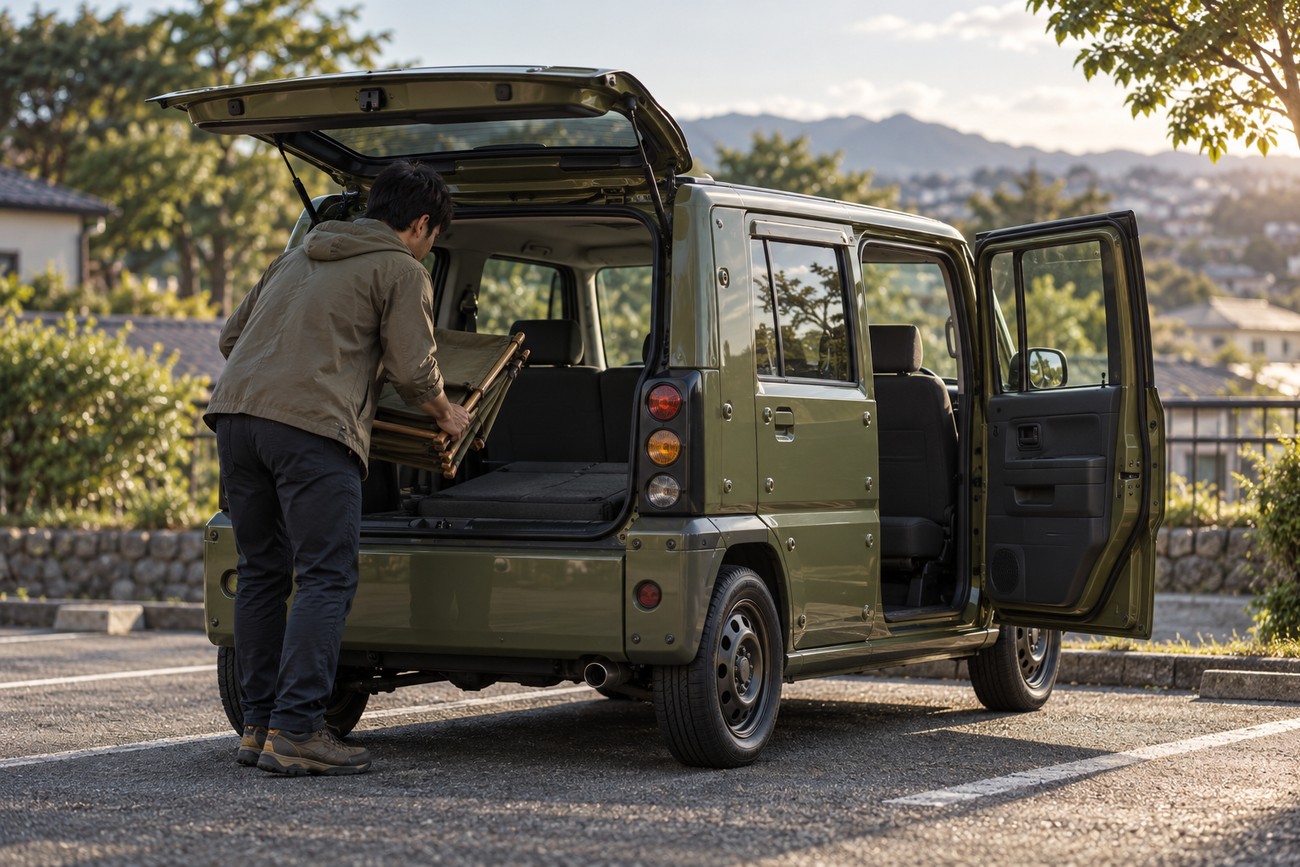
The Naked suits a driver who values a reconfigurable five-door cabin in a compact footprint and genuinely likes its exposed-fastener design. For short trips and occasional awkward loads, that combination has a clear purpose. A sound front-wheel-drive example may be enough if traction is rarely a concern.
Available 4WD broadens its appeal on slippery or steep local roads, provided the system is working and the tires suit the conditions. It does not make the car a larger or more refined vehicle. Buyers planning frequent long-distance travel should take the reported noise, firm ride, and limited performance seriously.
Anyone expecting modern passive safety or easy access to every replacement panel should also pause. Naked-specific body and interior parts can be difficult to source outside Japan, and equipment varies between cars. Buy the best-documented, best-preserved example you can inspect, with local parts access and intended use carrying more weight than the exposed bolts.
Frequently asked questions
The details that matter after choosing a Naked often depend on where you live and on the exact car. Import rules, replacement parts, and related kei-vehicle comparisons all need vehicle-specific checks. These answers provide a starting point without assuming that one market’s rules apply everywhere.
What should I check before importing or registering a Daihatsu Naked?
Confirm that the vehicle is eligible for import and road registration in your destination before paying for it. Ask the relevant authorities about age or emissions requirements, right-hand-drive restrictions, required inspection or modification, and which original documents they will accept. Give an insurer the exact model and vehicle details in advance, since coverage and valuation can be harder to arrange for an uncommon import.
How can I tell whether a Move or Mira part will fit my Naked?
Use the Naked’s vehicle identification details to find its original part number, then compare that number with the proposed Move or Mira part. If the numbers differ, check the applicable catalog notes and compare connectors, mounting points, dimensions, and relevant version details before ordering. Shared Daihatsu components make a match possible; a visual resemblance or a broad model-family listing does not confirm one.
How fast does a 660cc kei truck go?
There is no single top speed for a 660cc kei truck: it depends on the truck’s model, gearing, load, condition, and whether the road is level. A seller’s speed claim is less useful than checking how comfortably the specific truck maintains the speeds your route requires. A kei truck is a different vehicle from the Naked, so its performance should not be used to predict how this hatchback drives.
How much will a kei truck cost?
A kei truck’s total cost depends on its condition, location, and whether it must be imported; there is no reliable universal figure. Budget for the vehicle, shipping where applicable, duties and taxes, registration work, insurance, and repairs identified by inspection. Check those destination-specific costs before comparing an advertised truck price with a locally available Naked.







