
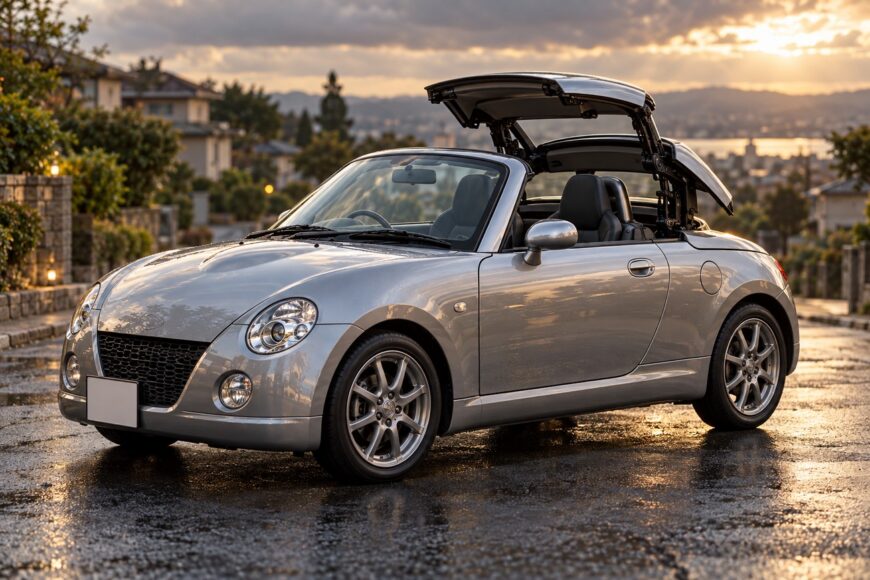
The Daihatsu Copen combines two ideas that rarely share the same small body: kei-car dimensions and power with a sophisticated folding hardtop and genuine roadster character. The result is a two-seat, two-door convertible that feels more special than its footprint suggests, while remaining constrained by the rules that define Japan’s kei-car class.
That distinction matters when assessing one. The Copen should not be judged like a conventional hatchback, and it should not be treated like a full-size convertible with extra seats removed. Its appeal lies in light weight, open-air driving, and unusual engineering. Its compromises are equally clear: limited cabin room, a firm ride, small luggage capacity, and a roof mechanism that can become expensive with age.
The buying decision is therefore simple in principle, even if inspection is not. Accept the restricted practicality and mechanical complexity, and the Copen can be an engaging specialist car. Expect everyday hatchback comfort or low-cost ownership merely because the car is small, and disappointment is likely.
- What Makes the Daihatsu Copen Different
- Kei-Car Dimensions and the Numbers That Matter
- Engines, Generations, and Market Differences
- How the Copen Drives in the Real World
- The Folding Hardtop: Best Feature and Main Risk
- Buying a Used Copen Without Falling for the Fun
- Frequently asked questions
- How much does a Daihatsu Copen cost?
- What is the Daihatsu Copen’s ground clearance?
What Makes the Daihatsu Copen Different
The Copen is a two-seat, two-door roadster/convertible built around a folding hardtop. This is a powered rigid roof, not a fabric soft top, so the car changes character at the press of a switch while retaining a more enclosed cabin when the roof is closed. The format gives it a stronger identity than a basic city car with a removable roof panel.
A hardtop brings practical benefits. It offers better weather protection than a fabric roof, feels more secure when the car is parked, and makes the Copen easier to use in colder or wetter conditions. It also adds hinges, drives, latches, sensors, seals, and control logic. Those parts work together every time the roof opens, so age and neglected maintenance can turn the car’s defining feature into its largest expense.
The kei-car format sets the boundaries around that engineering. Strict limits on size, engine capacity, and power, together with the need to keep the car light, leave little spare room for insulation, luggage, or a relaxed suspension. The Copen’s compactness is valuable in narrow streets and tight parking spaces, but the same compact structure limits shoulder room and makes road imperfections more noticeable.
This is why the Copen makes most sense as a niche sports roadster rather than a small all-purpose vehicle. It offers a distinctive driving position and open-air experience, but its usefulness depends heavily on whether you need two seats, how often you carry luggage, and how tolerant you are of mechanical inspection and upkeep.
Kei-Car Dimensions and the Numbers That Matter
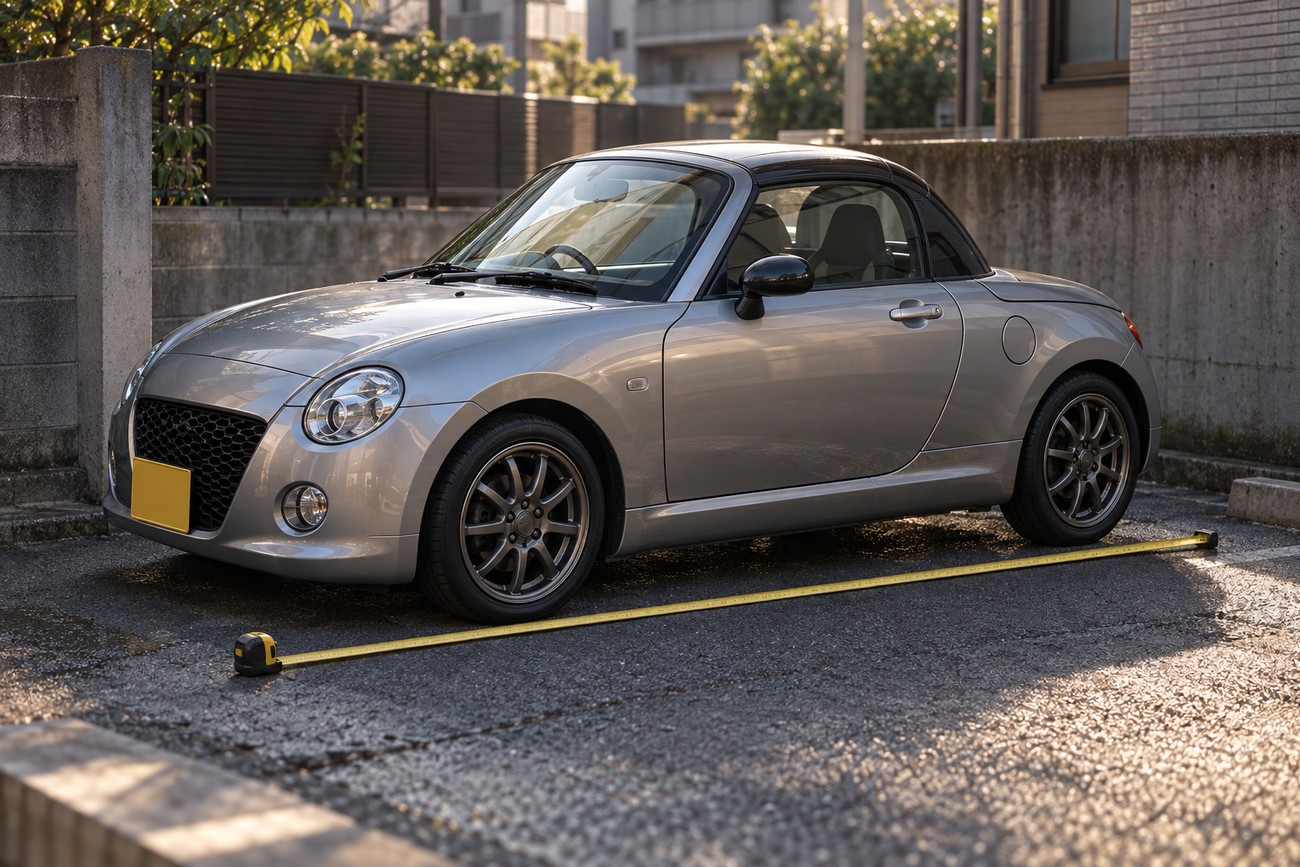
The second-generation Japanese kei Copen measures 3395 × 1475 × 1280 mm, with a 2230 mm wheelbase and a kerb weight of approximately 870 kg. Those figures explain its easy maneuverability and lively response at ordinary road speeds. They also explain why the cabin and ride can feel unusually concentrated around the occupants.
A short wheelbase helps the car turn in quickly and keeps the body compact, but it reduces the distance available to absorb bumps smoothly. Combined with the lightweight construction, it can make broken pavement feel busy and noisy. The narrow body is useful in urban parking spaces, although larger drivers may find that the available elbow and shoulder room disappears quickly.
The Japanese kei engine limit is 660 cm³, with a power ceiling of 64 hp. These rules shape the second-generation kei version’s 658 cm³, 64 hp specification. The modest output does not automatically make the car dull, because low mass helps it respond promptly, but it does limit the margin available for high-speed overtaking or heavily loaded driving.
Some catalogs list approximately 110 mm of ground clearance. Treat that as an orientation rather than a universal measurement: the exact version, wheel, and tire specification should be checked before purchase. A low car can be enjoyable on smooth roads, yet driveway ramps, rough surfaces, and winter damage deserve attention during a real inspection.
Engines, Generations, and Market Differences
There is no single mechanical specification that covers every Copen. The second-generation Japanese kei version uses a 658 cm³ engine and produces 64 hp, while some older or export-market versions use a 1298 cm³ engine. Across the cited versions, power ranges from 64–87 hp.
Early first-generation cars used a 659 cm³ turbocharged engine, front-wheel drive, and either a five-speed manual or a four-speed automatic. That combination is easy to confuse with later listings because advertisements often use the Copen name without clearly identifying the market or production specification.
The 64 hp ceiling is a regulatory limit for the kei class, rather than proof that every component was designed without additional engineering margin. A turbocharged small engine can give the car useful flexibility within its class, but the driving experience still depends on gearing, condition, and the specific market version.
Before comparing prices or performance, verify the generation, market, engine, transmission, and trim. A 1298 cm³ export car should not be used to estimate the running characteristics of a Japanese 658 cm³ kei model. The same caution applies to equipment, parts compatibility, and the likely availability of specialist knowledge.
How the Copen Drives in the Real World
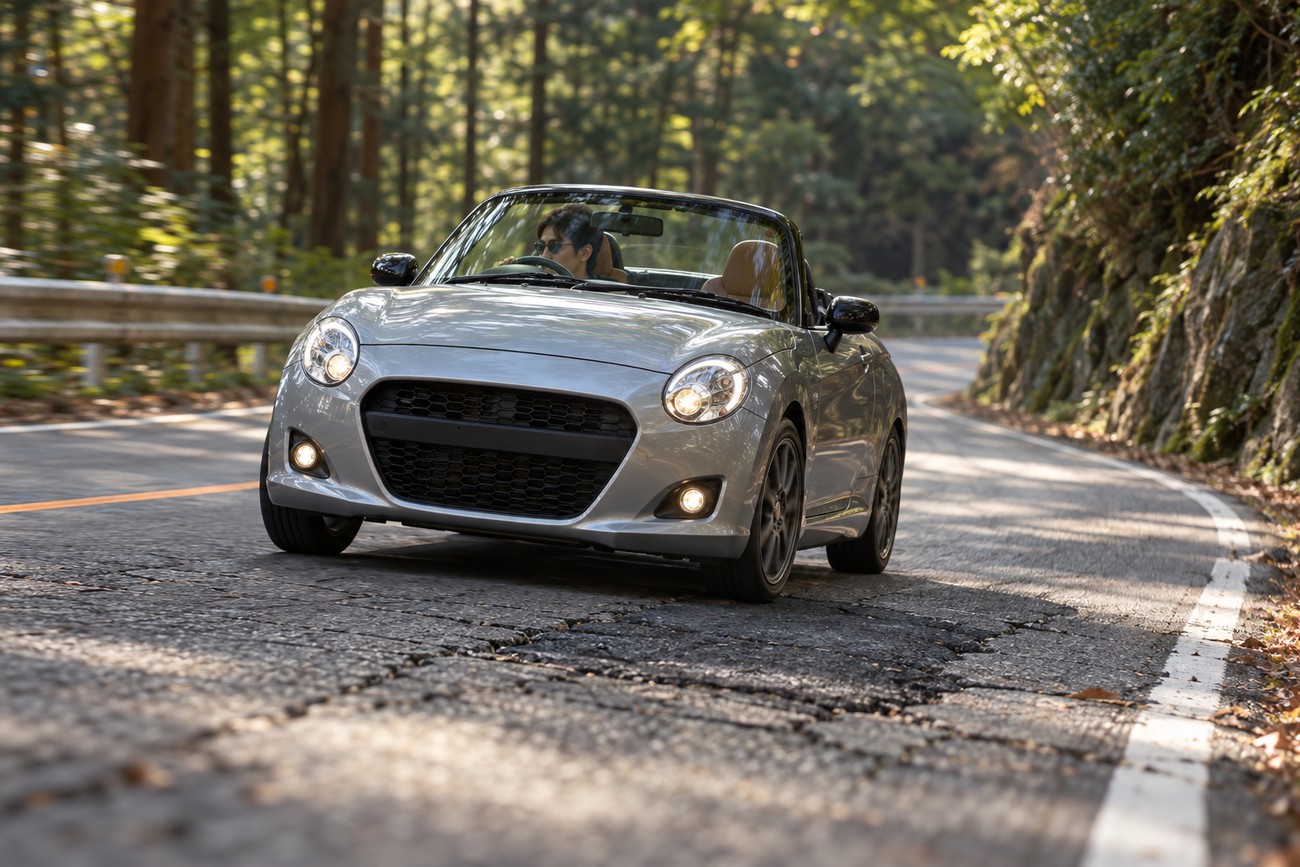
At approximately 870 kg in second-generation kei form, the Copen has little mass to move. That helps it feel alert in town and on winding roads, where compact dimensions and a low seating position make modest speeds feel involving. It is better understood as a responsive lightweight car than as a powerful sports car.
The short wheelbase and firm suspension are less attractive on poor surfaces. Broken pavement can produce a harsh, noisy, and unsettled response, especially when worn suspension bushes or struts are involved. A Copen that feels entertaining on smooth asphalt may become tiring on a daily route full of potholes and patched repairs.
Interior space is a fundamental limitation. The car has only two seats, and taller or broader occupants can run out of shoulder and elbow room quickly. Luggage capacity is also small, while access is shaped by the roadster body, so weekend bags and shopping require more planning than they would in a small hatchback.
Large wheels and heavy tires are a common temptation, particularly because the standard body looks capable of carrying more visual attitude. In practice, extra unstrung weight can worsen ride quality and add stress to suspension components. Keeping wheel and tire weight sensible usually protects the character that makes the Copen enjoyable.
The Folding Hardtop: Best Feature and Main Risk
The powered folding hardtop is the Copen’s clearest advantage over a traditional soft-top roadster. With the roof closed, it gives better protection from weather and a more secure-feeling cabin. For owners who drive through changing seasons, that practicality can make an open car easier to live with.
The mechanism also creates a long list of potential age-related faults. Drives, locks, and sensors may require attention, while tired seals can bring squeaks, rattles, wind noise, or water ingress. A roof that works once during a viewing may still have an intermittent electrical, latch, or alignment problem.
A proper roof inspection needs repeated complete cycles, close attention to sensor and latch behavior, and a careful search for dampness around the seals. One successful opening does not rule out an intermittent fault.
Operate the roof fully from its closed position and back again, then repeat the process after listening for abnormal noises. Check whether warning lights or messages behave normally, inspect the seals for damage or flattening, and look for water marks in the cabin and luggage areas. The roof should be tested as a system, rather than judged by the fact that its panels move.
That complexity does not make the hardtop a bad idea. It changes the ownership calculation. A well-maintained roof in the assessment of experienced practitioners
Buying a Used Copen Without Falling for the Fun
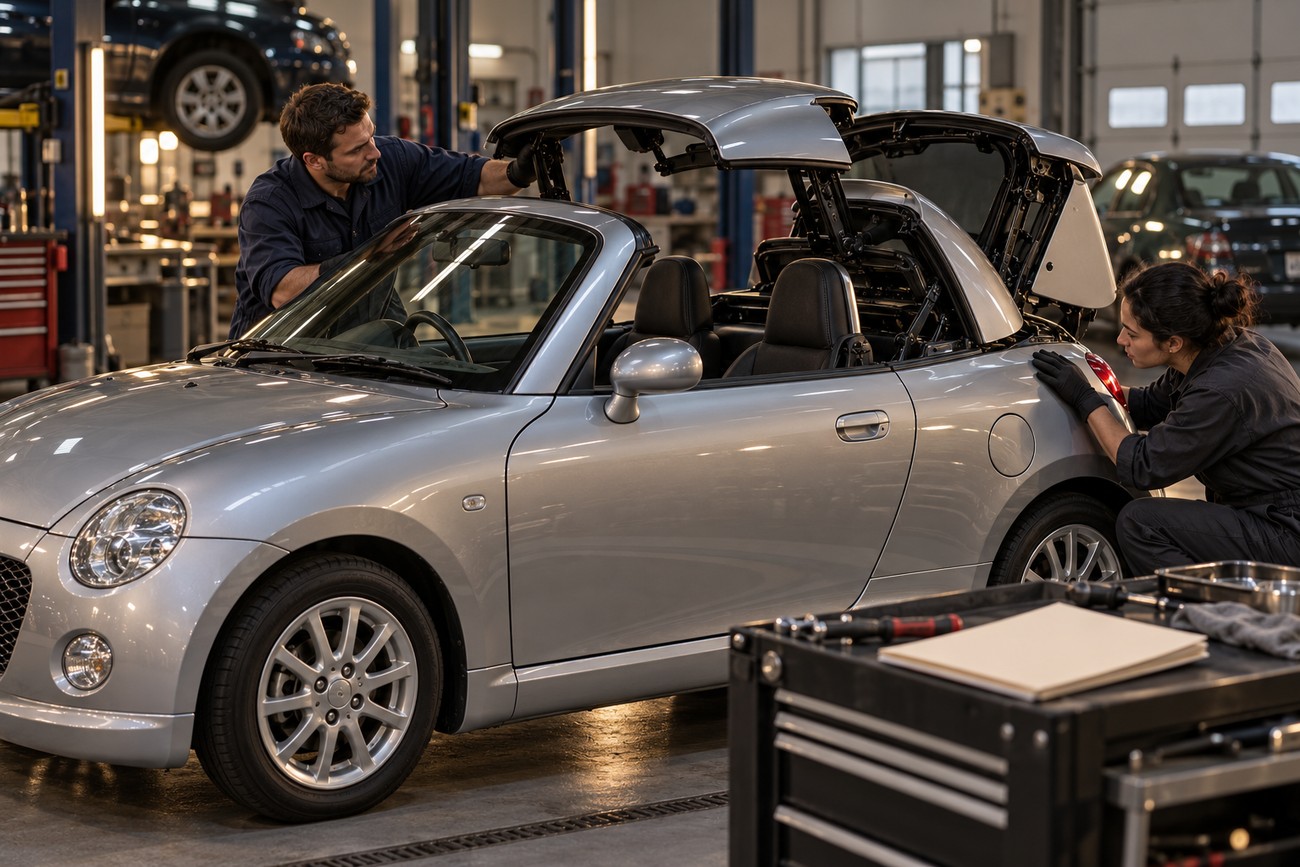
Start with identification, not enthusiasm. Listings can mix generations, markets, engines, transmissions, and equipment, so confirm the exact specification from the vehicle documents and identification details before comparing advertisements. This prevents an apparently cheap car from being compared with a different version that has different parts and repair expectations.
Next, make the roof the first major mechanical test. Complete several opening and closing cycles, listen for clicking or strain, check the warning behavior, and inspect every seal. Then examine the body for accident repairs, corrosion, and damaged panels; small specialist body parts may cost disproportionately more than the car’s size suggests.
The chassis deserves equal attention. Because the car is light and has a short wheelbase, worn suspension bushes and struts can noticeably affect its behavior. Check for knocks, uneven tire wear, poor alignment, and a nervous response over imperfect roads. Inspect aftermarket wheels carefully, especially if they are unusually large or heavy.
Catalog fuel figures for early-generation cars are often approximately 5.6–6.6 L/100 km, but that range should not replace a condition-based assessment. A small engine does not guarantee cheap ownership when the roof, seals, rare trim, or body panels need work. The Copen is usually more convincing as a second fair-weather car than as the sole vehicle for transport, luggage, and difficult roads.
Frequently asked questions
The Copen’s price and clearance figures vary with market, generation, wheels, and specification. These concise answers provide useful reference points without treating catalog data as universal.
How much does a Daihatsu Copen cost?
New second-generation Japanese-market Copen versions were priced at approximately 2.10–2.25 million yen in 2024–2026, depending on trim. That is a market reference rather than a global used-car value: import costs, taxes, exchange rates, condition, and local parts availability can change the final price substantially.
For an older car, the roof’s condition may matter more than a small difference in asking price. A cheaper example with faulty drives, seals, or sensors can quickly cost more to put right than a better-maintained car bought at a higher initial price.
What is the Daihatsu Copen’s ground clearance?
Some catalogs list approximately 110 mm of ground clearance. The figure should be verified for the exact version, wheel, and tire specification because catalog measurements are not necessarily interchangeable across generations and market variants.
During a viewing, check the underside, front approach area, and clearance over the owner’s usual driveways or ramps. Low clearance is manageable for many owners, but it becomes a daily inconvenience when combined with rough roads or oversize wheels that alter the car’s ride and suspension behavior.







