
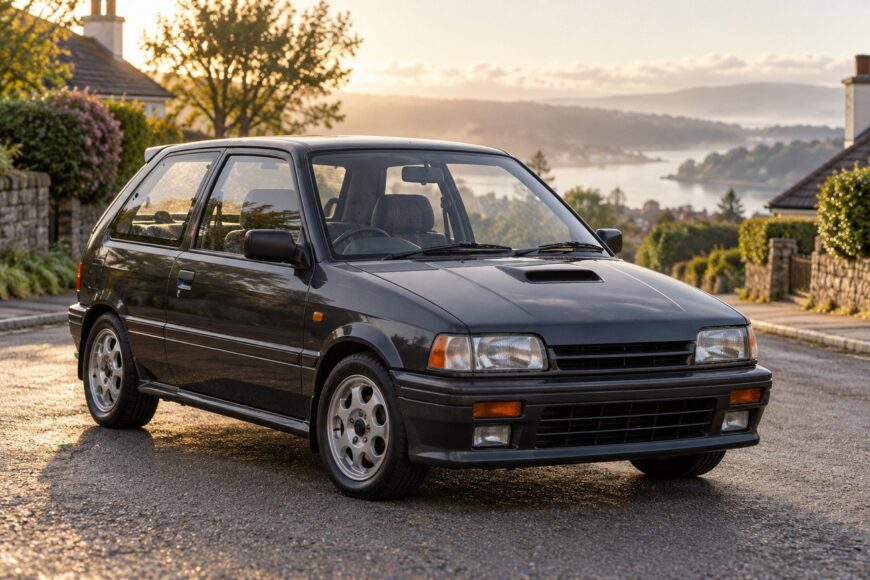
A 993cc three-cylinder can deliver genuine hot-hatch character. In the Daihatsu Charade GTti, turbocharging and low weight turn a small engine into something eager and distinctive. The usual quoted output of 100 PS is striking for its size, especially in a car weighing approximately 770–850 kg, depending on version and market.
That appeal comes with the realities of a turbo car more than 30 years old. A lively test drive can conceal brittle hoses, tired cooling components, a worn gearbox, or corrosion that costs more to address than the engine. Whether a GTti is a clever lightweight classic or a fragile project disguised as a bargain depends on the condition of the whole car.
- What Makes the Charade GTti Special?
- Performance: Small Numbers, Big Character
- How the GTti Feels on the Road
- The Problems That Age Has Exposed
- How to Buy a Good Charade GTti
- Living With and Maintaining a Three-Cylinder Turbo
- Frequently asked questions
- What are the most common problems with the Daihatsu Charade GTti?
- Was the Daihatsu Charade GTti sold in the United States?
- Why can a low-mileage GTti be a worse purchase than a higher-mileage one?
What Makes the Charade GTti Special?
The Daihatsu Charade GTti is associated with the G100/G200 generation and the 1988–1993 period. Its unusual specification is a 993cc, three-cylinder, 12-valve DOHC turbocharged engine with an intercooler and full fuel injection. It was built as a small hot hatch rather than an ordinary economy model with sporty trim.
Power is usually quoted as 100 PS at 6,500 rpm. That figure matters alongside the car’s approximate 770–850 kg weight range: the engine has relatively little mass to move, so modest displacement does not mean a dull drive. Exact equipment and mechanical specifications can differ by market and model year, however, so a brochure for one car may not describe another.
Its appeal lies partly in how unusual that combination remains. The three-cylinder engine has a character distinct from the larger engines found in many hot hatches, while the light body makes steering, braking, and throttle inputs feel consequential. Enthusiasts value the interaction as much as the quoted power.
Live, original examples are rare and are generally valued as enthusiast or collector cars rather than cheap transportation. That changes the buying calculation. A low asking price can lose its appeal quickly if missing trim, corroded metal, or GTti-specific components prove difficult to replace.
Performance: Small Numbers, Big Character

Approximately 130 Nm of torque is a substantial figure for a period 1.0-liter engine, though its delivery is more important than the peak number. Low-rpm response can feel weak, followed by a sharper increase in acceleration as boost and revs build. A driver who changes up early may never reach the part of the range that gives the GTti its reputation.
Reported 0–100 km/h figures are disputed and commonly fall around 8.5–10-plus seconds, depending on vehicle condition and testing. Treat them as a broad indication rather than a promise about a car for sale. Figures around 180 km/h also appear in catalogues, but that top-speed value is not equally confirmed across sources.
The GTti is usually front-wheel drive with a five-speed manual gearbox. Working the manual helps keep the engine in its useful range and is central to the car’s mechanical feel. Automatic versions exist, but they are less desirable to enthusiasts seeking that particular experience.
A healthy car can feel more urgent than its acceleration time suggests because there is little weight to gather speed or change direction. Equally, a weak example may fall well short of its reputation without having a fundamentally worn-out engine. Boost delivery, ignition, fuelling, and temperature control all influence what reaches the road.
How the GTti Feels on the Road
From low revs, the GTti may feel like the small-capacity hatchback it is. Let the engine spin, and the arrival of boost gives acceleration a noticeably sharper edge. The contrast is entertaining on a clear road, although frequent short trips and driving in too high a gear can make the car feel less capable than expected.
The three-cylinder sound and vibration are part of the experience. Some drivers enjoy the uneven acoustic texture and the need to use the gearbox; others find it wearing over distance. Neither response says much about condition on its own, so listen instead for changes, misfires, or noises that accompany a specific load or engine speed.
Low mass gives the GTti an alert quality without requiring high road speeds. That impression depends on suspension in good condition: tired dampers and worn bushes can turn a firm ride into poor control, particularly on uneven surfaces. Road noise and a busy engine also make it a more tiring daily driver than a modern hatchback.
A road test should include gentle driving as well as a careful run through the useful rev range once the engine is warm. Smooth, repeatable boost matters more than one dramatic surge. Leaking intercooler plumbing can blunt performance while leaving enough acceleration to make a brief test drive seem convincing.
The Problems That Age Has Exposed
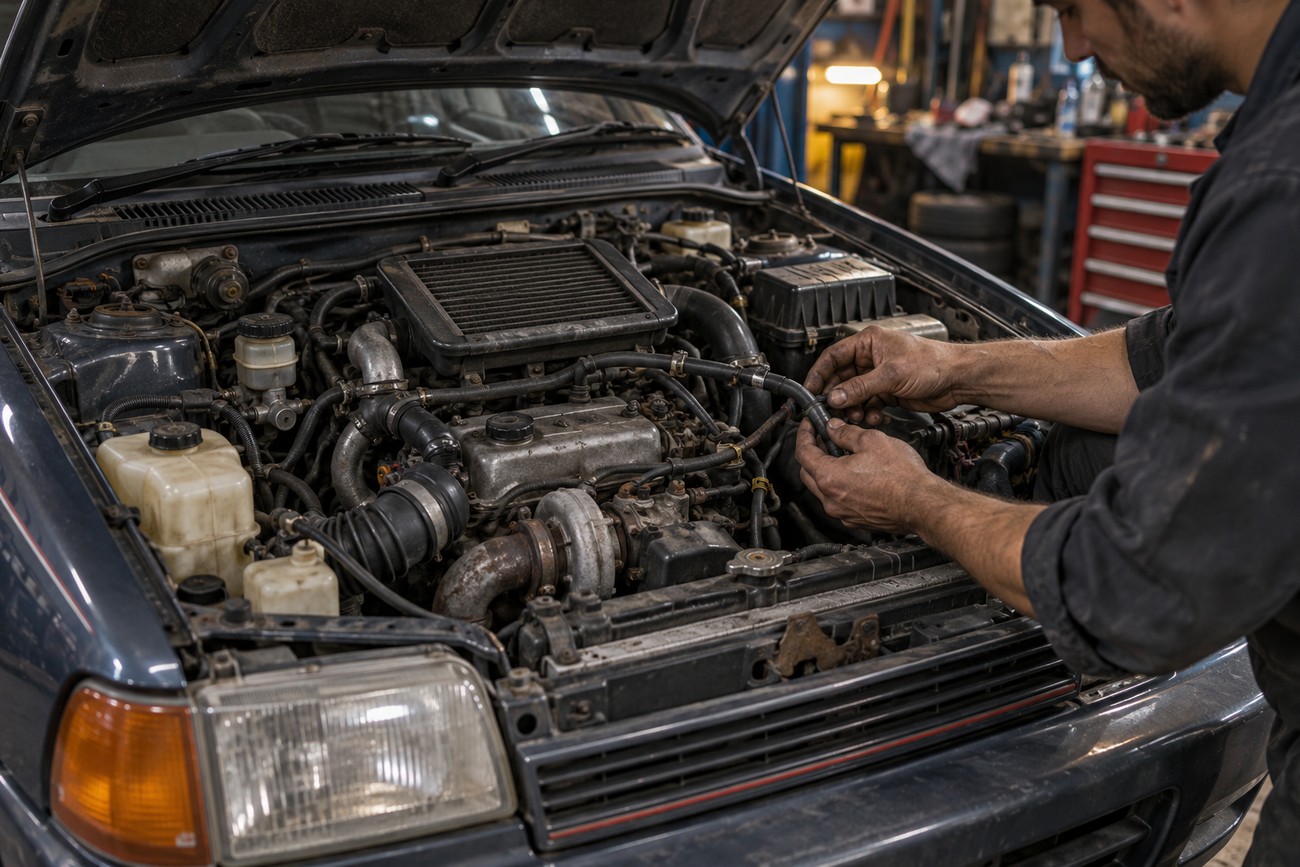
Age often attacks the supporting systems before the engine’s basic hardware. Wiring and connectors deteriorate, vacuum lines split, and seals begin to leak. The resulting symptoms can be intermittent: a car may idle acceptably, then hesitate or lose power as heat and load change.
Cooling deserves particular attention because old radiators, fans, and related components can allow temperature to climb in traffic. A car that remains stable during a short, flowing test drive has not proved it can cope with a prolonged stop. Ask about any overheating history and look for evidence of repairs rather than accepting a fresh coolant fill as reassurance.
Weak boost calls for a check of vacuum and intercooler hoses, electrical connections, ignition, and fuelling before the turbocharger is condemned. A split hose can leave an expensive component looking guilty while the actual fault remains in the plumbing.
Transmission wear creates a different set of clues. Worn synchronisers may produce a crunch during shifts, while selector linkage play can make the lever vague; heavy engagement needs investigation too. These faults matter because a GTti that cannot be shifted cleanly loses much of the benefit of its narrow, rev-dependent power band.
Corrosion is a financial and potentially structural concern, not simply a paint defect. Inspect the underside and concealed body areas as carefully as visible panels, and establish how extensive any previous repair was. Turbo hardware, sensors, vacuum components, body panels, and specific interior trim can be difficult to source, making a superficially cheap project expensive to finish.
How to Buy a Good Charade GTti
Begin with the body. Examine accessible structural areas, panel edges, and previous repairs, ideally with the car safely raised for an underside inspection. Rust can determine whether the purchase makes sense before any discussion of engine output; sound mechanical parts offer little comfort if the shell needs extensive metalwork.
Next, arrange to see the engine start cold. Watch for smoke, uneven running, leaks, and signs that warm-up has been masked before your arrival. A compression test and an inspection by someone familiar with older turbocharged engines are sensible where possible, particularly if the seller describes recent engine work without supporting records.
Once warm, verify stable temperature in both moving traffic and slower conditions. Check oil condition, ask directly about overheating, and assess boost pressure and delivery with appropriate equipment rather than judging by sensation alone. Vacuum hoses, electrical connectors, intercooler pipes, and cooling components should be checked before a lack of power is attributed to the turbocharger.
Drive through the gears under appropriate conditions and note synchro crunch, selector looseness, or unusually heavy engagement. Then inspect wiring repairs and ask for a clear account of modifications. Many GTtis have passed through tuning projects, so claimed originality deserves comparison with the car’s actual hardware and documentation.
Credible maintenance records are worth more than a low claimed odometer reading. They can also help identify the correct parts: equipment, gearing, and emissions specifications may vary by market and model year. Confirm what car you are buying before ordering components on the assumption that every GTti is identical.
Living With and Maintaining a Three-Cylinder Turbo
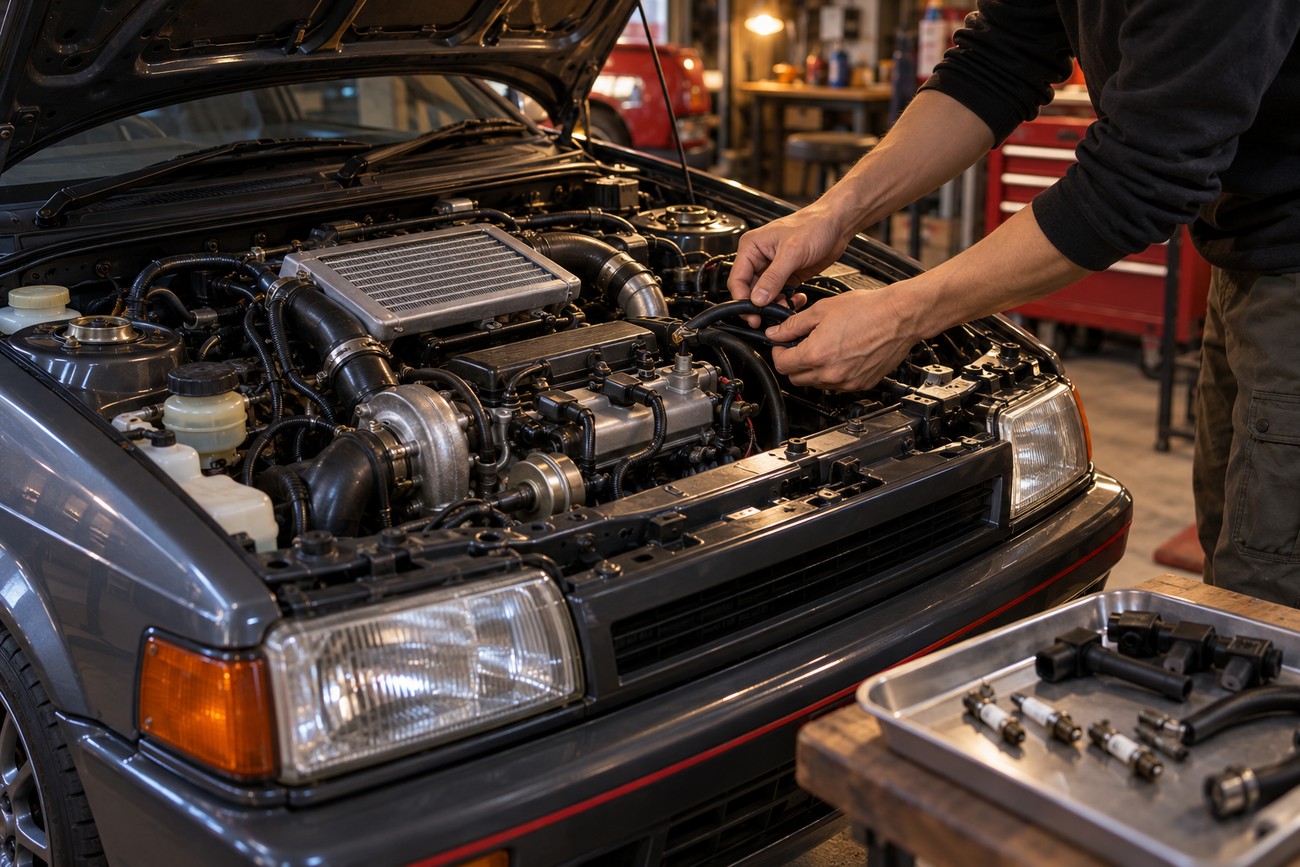
Keeping a GTti healthy means preserving the systems around its engine. Correctly matched hoses, spark plugs and heat ranges, oil, ignition parts, and fuelling components matter; cheap universal substitutes can introduce misfires, detonation, or overheating. Vacuum integrity and mixture control deserve particular care because small faults can become more consequential under boost.
Allow the engine to warm before demanding sustained power, and give it time to cool after sustained boost rather than stopping immediately after hard use. These habits reduce avoidable stress on the oil and turbocharger. They cannot compensate for a blocked radiator, a poor tune, or neglected fluid changes, so routine checks still come first.
Ownership costs are shaped less by the engine’s displacement than by parts availability, corrosion, and the condition of the cooling system, wiring, and gearbox. Keeping a spare hose or finding a compatible sensor may require more planning than with a common modern hatchback. An inspection-led maintenance approach is more useful than waiting for a single major failure.
A healthy GTti rewards that care with the qualities that made it interesting in the first place: low mass, direct mechanical involvement, and a rare three-cylinder turbo format. Buy for those qualities if they suit your driving and your tolerance for parts hunting. Do not expect age or scarcity to excuse faults that make the car unreliable or unsafe.
Frequently asked questions
The answers below separate common diagnostic clues from points that depend on an individual car’s history or market specification. They are a starting point for inspection, not a substitute for checking the vehicle itself.
What are the most common problems with the Daihatsu Charade GTti?
Start diagnosis with the symptom. Hesitation or weak boost calls for checks of vacuum and intercooler plumbing, ignition, fuelling, and connectors; rising temperature in traffic points first toward the radiator, fan, and wider cooling system. Crunching shifts or a loose-feeling lever suggest gearbox or linkage wear, while visible rust warrants a closer inspection for deeper corrosion. Several faults can coexist on an older car, so avoid treating the first symptom found as the entire problem.
Was the Daihatsu Charade GTti sold in the United States?
The GTti was not generally sold as a mainstream official US-market model, although individual imported examples may exist. For a car located in the United States, confirm its import documentation and original market specification before assuming that parts listings or equipment descriptions for another market will apply.
Why can a low-mileage GTti be a worse purchase than a higher-mileage one?
Long storage can leave rubber parts hardened, seals dry, and fuel-system components affected by stale fuel. Cooling maintenance may also have been deferred because the car was rarely driven. A higher-mileage GTti with evidence of regular servicing, sound temperature control, and recent attention to age-sensitive parts may be the better purchase than a dormant car whose odometer is its main selling point.







