

The Daewoo Lanos outlasted Daewoo as a market idea. The badge disappeared or changed, while the car continued through local production, Chevrolet rebadging, and used-car markets that valued simple mechanics. That longevity explains its reputation as cheap transport, but it does not make every surviving example a good buy.
A low asking price can conceal rust, deferred timing-belt work, cooling faults, and a long list of small repairs. Condition, market version, and service history matter more than the badge or the odometer. A carefully maintained Lanos can remain useful; a neglected one can consume its purchase price in bodywork and catch-up maintenance.
- How the Lanos Outlived Daewoo
- What the Common 1.5-Liter Lanos Is Actually Like
- The Cheap-to-Run Promise: What Owners Actually Notice
- The Real Lanos Weak Points: Rust, Cooling, and Electrics
- Buying a Used Lanos: Spend Money on the Right Inspection
- Fuel Economy, Myths, and the Question of Value
- Frequently asked questions
- Was the Daewoo Lanos sold in the USA?
- What car was the biggest flop?
- Which Lanos version is easiest to keep running today?
How the Lanos Outlived Daewoo
Daewoo Lanos production began in 1997 as part of the company’s attempt to establish a modern small family car. The model was offered as a sedan and hatchback, with the sedan especially common in post-Soviet markets. Its straightforward front-wheel-drive layout made it easy to adapt to different factories, suppliers, and local sales networks.
After Daewoo came under GM ownership, the model was also sold as the Chevrolet Lanos. That badge change is more important than it first appears: cars carrying the same basic name may come from different production periods, markets, and assembly arrangements. Equipment, corrosion protection, trim, and the quality of previous repairs can vary substantially.
Production ended at different times by market and body style, broadly ranging from 2008 to 2020. This unusually long afterlife helped the Lanos remain visible long after the original brand had lost its independent identity. It also created a used-car market where a model name covers more variation than a quick online specification suggests.
For buyers, the practical conclusion is simple. A Lanos should be identified by its exact market version, body condition, engine, and maintenance record rather than by a general reputation for simplicity. The same model can be an inexpensive daily driver or a tired shell with little economic sense left in it.
What the Common 1.5-Liter Lanos Is Actually Like
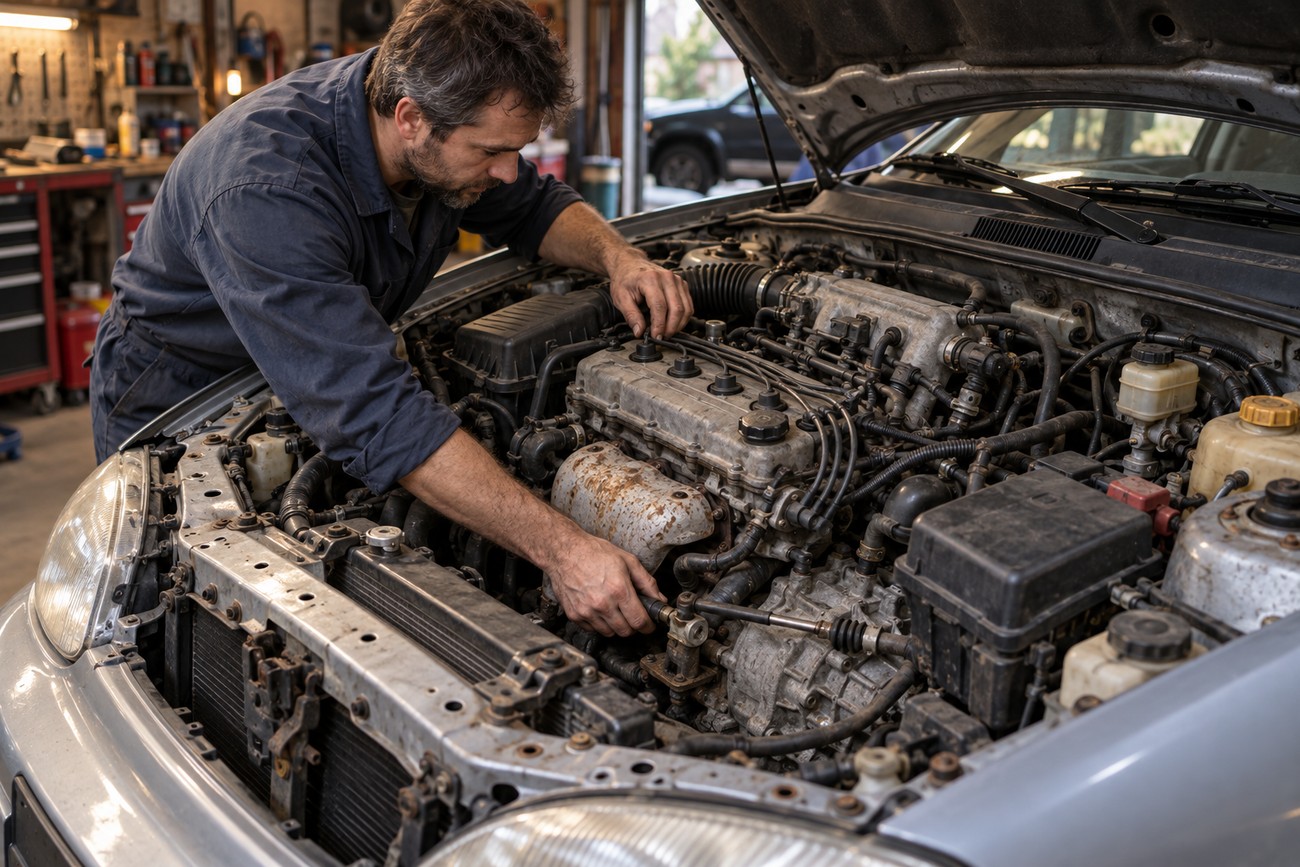
The common regional reference point is a sedan with a 1.5-liter engine rated at 86 hp and 130 Nm, a five-speed manual transmission, front-wheel drive, and a transverse engine layout. Quoted performance is 0–100 km/h in 12.5 seconds, with a top speed of 172 km/h. Those figures describe adequate basic transport rather than brisk acceleration.
A healthy car feels usable in town because its weight is modest and the controls are uncomplicated. A worn example can feel surprisingly slow, however. Poor spark plugs, tired sensors, weak engine response, clutch wear, or a gearbox that no longer shifts cleanly can make the car seem much worse than its advertised power suggests.
Cataloged engines include 1.3, 1.5, and 1.6 liters, producing approximately 70–106 hp. The sedan reference dimensions are 4,237 mm long and 1,678 mm wide, with a 2,520 mm wheelbase. Approximately 160 mm of ground clearance, varying by version and source, is useful on imperfect roads, although it does not excuse careless driving over severe impacts.
Reference practicality is respectable for a small, old sedan: a curb weight of approximately 900 kg, a 48-liter fuel tank, and 322 liters of trunk space, expanding to 960 liters with the rear seats folded. The cabin is easier to live with for two adults than for a full load of passengers. Air conditioning, luggage, and an uphill overtake expose the limits of the 1.5-liter engine.
The Cheap-to-Run Promise: What Owners Actually Notice
The Lanos is inexpensive to repair because its suspension, engine bay, and electrical systems are relatively accessible. That is different from being inexpensive to own without regular attention. Rubber components, stabilizer links, ball joints, and control-arm bushings wear during urban driving, even though the basic suspension architecture is simple and predictable on poor roads.
Owners commonly report substantial engine, tire, and wind noise at speed. The cabin uses basic materials, and it can feel cramped and inexpensive beside newer compact cars. These are permanent characteristics of the platform, so replacing worn parts will improve condition without transforming the Lanos into a quiet or refined vehicle.
The 1.5-liter engine can feel sluggish during overtaking, with the air conditioning on, or when the car is fully loaded. In daily use, the difference between a healthy and neglected example is more noticeable than the difference between two cars with similar brochure specifications. Correct ignition, fueling, cooling, and clutch operation matter more than optimistic claims about the model’s toughness.
Replacement parts are generally inexpensive, but aftermarket quality varies enough to cause repeat repairs. The common 1.5-liter manual versions are easiest to support through experienced mechanics, parts suppliers, and breakers. That support lowers repair cost, yet it does not justify fitting the cheapest available component when a poor part will require the same labor again.
The Real Lanos Weak Points: Rust, Cooling, and Electrics
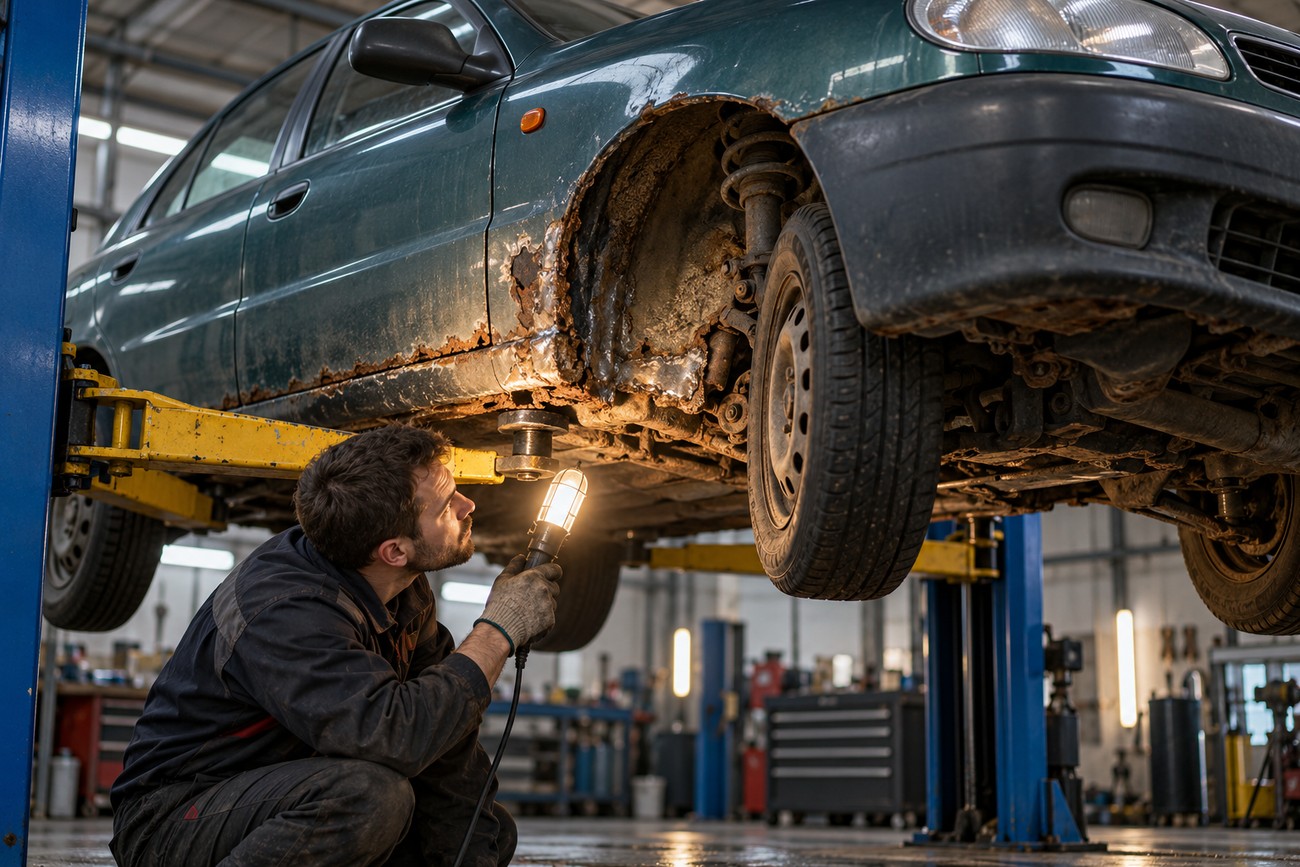
Bodywork deserves priority over mileage. Common corrosion areas include the wheel arches, sills, door edges, and underside, with poor previous welding often hiding more serious damage. A low odometer reading does not compensate for long storage, neglected drainage, winter road salt, or an old accident repair that was sealed without proper corrosion protection.
Polish or galvanized versions may reduce corrosion risk, but they do not make an older Lanos immune to rust. Inspect the underside, jacking points, suspension mounting areas, and the seams around repaired panels. Surface bubbling can be cosmetic, while corrosion near structural sections can change the purchase decision entirely.
Maintenance history matters under the hood as well. Before treating an old Lanos as reliable, verify the timing-belt and water-pump history. The cooling system and thermostat also deserve attention: inexpensive age-related faults can cause overheating, and an overheating history is more important than the engine’s otherwise simple design.
Inexpensive thermostats, poor grounds, and aging spark plugs can imitate a major engine fault during a quick inspection. Check cooling behavior and electrical connectors after the visual engine check, because overheating history can change the repair decision completely.
Owner reports include sensor failures, poor electrical contacts, aging wiring, and connector problems. These faults may appear as intermittent starting, unstable running, warning lights, or unexplained changes in fuel use. Cleaning a connector may solve one problem, while brittle wiring or repeated overheating can signal a larger repair burden.
Buying a Used Lanos: Spend Money on the Right Inspection
Start with the body, not the odometer. Inspect the arches, sills, door edges, floor, underside, and signs of uneven welding before discussing mileage. A structurally sound car with higher recorded mileage is usually a better starting point than a low-mileage example with concealed corrosion and poor panel repairs.
Then check the service risks that can become urgent soon after purchase. Ask for evidence of timing-belt and water-pump replacement, examine the cooling system, and watch the temperature during a proper drive. A cold start can reveal weak battery or ignition performance, unstable idle, smoke, and delayed oil-pressure behavior that a warm engine may hide.
During the road test, the gearbox should engage without excessive noise or resistance, and the clutch should take up consistently. Listen for suspension knocks over uneven roads and check steering response. Worn suspension does not make the platform fundamentally bad, but it requires an immediate budget for small components and possibly several separate visits to the repair shop.
- Inspect structural corrosion and welding before negotiating over mileage.
- Confirm timing-belt, water-pump, and cooling-system history.
- Test cold starting, engine response, temperature stability, and gearbox operation.
- Check lights, instruments, sensors, switches, connectors, and charging behavior.
- Estimate deferred repairs against the car’s low resale value before making an offer.
Engine response depends strongly on the condition of the spark plugs, sensors, engine, and gearbox rather than on advertised horsepower alone. Since the Lanos has low resale value, minor repairs after purchase can quickly approach the purchase price. The sensible buyer leaves money for immediate maintenance instead of spending every available dollar on the car itself.
Fuel Economy, Myths, and the Question of Value

Fuel figures for the Lanos vary by version, test method, and traffic. Some regional figures quote approximately 6.7 L/100 km combined, 10.4 L/100 km city, and 5.2 L/100 km highway. Other marketing specifications give a broader 6.4–8.4 L/100 km range, so catalog numbers should be treated as a reference rather than a promise for congested urban use.
The idea that every Lanos returns 6–7 L/100 km is too simplistic. Tire pressure, thermostat operation, sensor health, traffic, driving speed, and air-conditioning use all affect the result. A car using more fuel than expected may need diagnosis, while a figure from a controlled test may simply be irrelevant to daily driving.
The same caution applies to claims that the engine will run 400,000–450,000 km without overhaul. That is an unverified optimistic claim, not a dependable specification. Service history, cooling control, oil changes, operating conditions, and previous repairs determine longevity far more reliably than a repeated number in a sales listing.
The platform’s budget design brings compromises in noise, vibration, and basic passive protection even when the car is working correctly. It can still make sense as low-cost transport when parts and labor are accessible, the mechanical condition is known, and the buyer accepts its age-related limitations. The best-value example is a structurally sound, maintained car rather than simply the cheapest Lanos available.
Frequently asked questions
The Lanos name covers several markets and production periods, so short answers need a little context. The badge, country of assembly, and condition should be separated before comparing one car with another.
Was the Daewoo Lanos sold in the USA?
The Daewoo Lanos was not sold as a regular new-car model in the United States. A car seen in the USA may be a gray import, a private import, or a vehicle confused with another Daewoo model that had different U. S. market arrangements.
That distinction matters for ownership. Parts catalogs, emissions equipment, safety specifications, and registration requirements can differ from those of cars sold through normal local channels. A U. S. buyer should verify the vehicle’s import history and parts support instead of assuming that a familiar Daewoo badge guarantees domestic compatibility.
What car was the biggest flop?
There is no authoritative basis for calling the Daewoo Lanos the automotive industry’s biggest flop. A brand’s collapse, a model’s performance in one market, and a vehicle’s long afterlife are separate issues.
The Lanos had shortcomings in refinement, safety expectations, and corrosion resistance, yet it also remained in production across different markets and later appeared under Chevrolet branding. Its commercial outcome is therefore more complex than a simple success-or-failure label.
Which Lanos version is easiest to keep running today?
The common 1.5-liter manual configuration is generally the easiest to support today because mechanics, parts suppliers, and breakers are more familiar with it. Its five-speed manual transmission and simple front-wheel-drive layout also suit workshops that regularly repair older budget cars.
Market and assembly differences still matter. Confirm the exact engine, wiring, body panels, and local parts availability before buying. A pre-purchase compression test can help distinguish a tired engine from ignition, fueling, or sensor faults, but it cannot assess body corrosion or transmission condition.







