
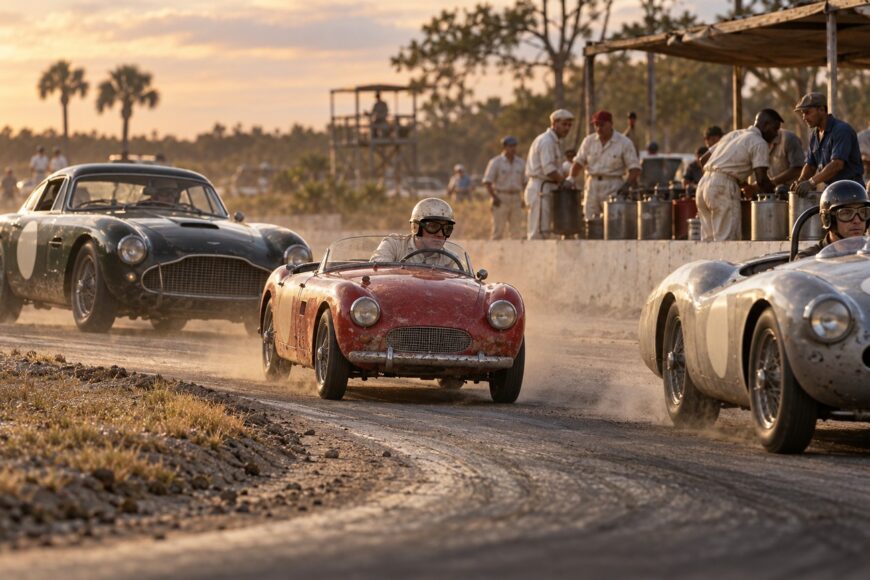
A 26.5-hp roadster winning at Sebring sounds like a contradiction. The Crosley Hotshot did exactly that in the 1950 Sebring six-hour race, where its achievement was tied to overall and Index of Performance success rather than outright speed. A tiny engine, low weight, and efficient use of fuel and machinery mattered more than beating larger cars in a simple contest of acceleration.
That context changes the car’s meaning. The Hotshot was a deliberately engineered sports car, yet it was also a narrow, noisy, minimally equipped machine with little tolerance for careless buying or unrealistic expectations. Its central appeal lies between those extremes: was it a genuine sports car with serious engineering value, or an impractical curiosity whose racing reputation has outgrown the road car?
- The Sebring Result: Victory Without Brute Force
- Small by Design: What the Hotshot Actually Was
- The Engineering Behind 26.5 Horsepower
- What It Is Like to Drive—and Why Owners Complain
- Hotshot, Super Hotshot, or Super Sports? Avoiding Buying Traps
- The Myths, the Speed Claims, and the Lasting Legacy
- Frequently asked questions
- What was the top speed of the Crosley Hotshot?
- How many Crosley Hotshots were built?
- What is the top speed of a Crosley car?
- What is the world’s fastest manual drag car?
- What is the lap record for the Sebring International Raceway?
The Sebring Result: Victory Without Brute Force
The Hotshot competed in the 1950 Sebring six-hour race with a CIBA/COBRA four-cylinder engine of about 44–44.2 cubic inches and approximately 26.5 hp. That output was modest even by the standards of the period. The result therefore cannot be read as evidence that the Crosley was the fastest car on the circuit.
Sebring rewarded more than peak speed. A light car placed less demand on its engine, tires, brakes, and fuel supply, while a small-displacement engine could make efficiency central to the race strategy. The Hotshot’s success is associated with the Index of Performance, a calculation that recognized performance relative to engine displacement and other limitations.
Its low mass was the essential advantage. A road-going Hotshot weighed roughly 1,104–1,175 pounds, so the engine had far less car to move than in a conventional sports machine. That did not create modern performance; it made the available power useful over a long race, where consistency, mechanical sympathy, and lower demands on consumables could outweigh a larger car’s speed.
The victory is best understood as a demonstration of proportion. Crosley produced a small, purposeful competition tool that used limited resources intelligently. Sebring established the Hotshot’s sporting credibility, but it did not turn a 26.5-hp roadster into a high-speed grand tourer or a lap-record car.
Small by Design: What the Hotshot Actually Was
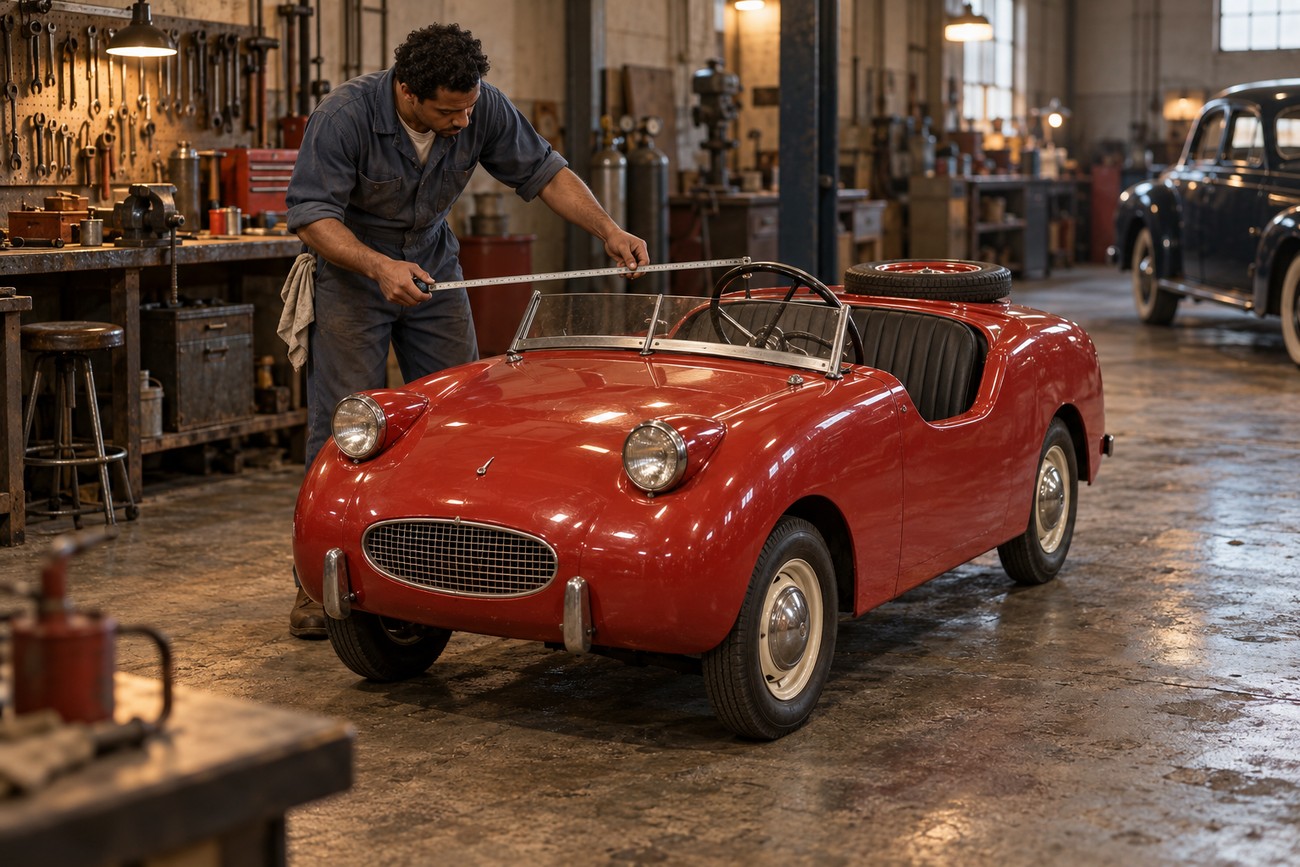
The Hotshot debuted in 1949 as Crosley’s first postwar purpose-built sports car. That description is more accurate than calling it an ordinary microcar with a sporty body. It is commonly placed among the first American postwar purpose-built sports cars, although the broader claim that it was simply the first American sports car depends on how the category is defined.
Its dimensions explain the character immediately. The Hotshot was approximately 137–145 inches long and only 51 inches wide, with a road-going weight of around 1,104–1,175 pounds. The narrow body reduced frontal area and mass, but it also left little spare room for occupants, luggage, insulation, or the structural compromises normally hidden inside a larger roadster.
In base form, the car had no doors and no soft top. Access meant stepping over the side of the body, and weather protection was secondary to lightness and simplicity. The layout was front-mid-engine, rear-wheel drive, with a three-speed manual transmission identified by Lane Motor Museum as a Warner unit.
That packaging mattered on a road course. Keeping the engine relatively far back helped weight distribution, while rear-wheel drive preserved a familiar sports-car driving relationship. The same decisions that made the Hotshot agile and economical also produced a car that feels exposed, cramped, and almost unfinished beside a conventional vintage convertible.
The Engineering Behind 26.5 Horsepower
The CIBA/COBRA engine was a four-cylinder overhead-cam design with approximately 724–748 cc, or 44–44.2 cubic inches. An overhead camshaft in such a small American engine gave the Hotshot a technically distinctive character. Its base output is commonly listed at approximately 26.5–27 hp at 5,400 rpm.
Power-to-weight thinking is essential here, but it should be used carefully. Low mass helped the Hotshot respond more eagerly than its horsepower figure suggests, especially at modest speeds. It could feel lively because the driver was close to the mechanical action, not because the engine offered a generous reserve for modern traffic.
The Hotshot is also associated with some of the earliest production automotive disc-brake applications. That claim should be handled precisely: surviving cars must be checked individually, and Hotshot-family equipment was not uniform. Early disc brakes make the model historically important, but they do not guarantee that every example has the same system, condition, or braking behavior.
Engine figures can create another trap. Approximately 35 hp may refer to a different Hotshot-family version or a modification, so it should not be applied universally to the base Hotshot. The names, engines, and equipment changed across the family, which is why a specification sheet or seller’s description is only a starting point rather than proof of identity.
What It Is Like to Drive—and Why Owners Complain

The Hotshot’s 26.5 hp provides very modest performance by modern standards. On a quiet secondary road, the low weight and open cockpit can make moderate speed feel involving. In contemporary traffic, however, planning matters: hills, headwinds, and faster vehicles quickly expose the limited power reserve.
Accommodation is equally specific. A 51-inch-wide car can be too tight for some adult drivers, particularly with the steering wheel, pedals, and side structure competing for space. The absence of doors and a standard soft top makes entry awkward and leaves the occupants exposed to wind, weather, and road noise.
Braking and handling demand a sympathetic approach. Period hardware, narrow dimensions, and the car’s light construction reward smooth inputs rather than abrupt steering or late braking. The Hotshot can feel engaging precisely because it communicates so much, but that directness should not be confused with the secure, predictable behavior of a modern sports car.
On a surviving Hotshot, mechanical condition matters more than the romance of the specification sheet: a light car with worn brakes, tired steering, or poorly adjusted controls can become demanding long before it becomes enjoyable.
Owners and commentators sometimes describe these cars as fragile, noisy, or mechanically temperamental. Reports of overheating and engine quirks appear in popular criticism, but the supplied evidence does not establish them as universal faults. The sensible conclusion is narrower: inspect cooling, lubrication, brakes, and steering carefully, and do not assume that a famous race result guarantees easy road use.
Hotshot, Super Hotshot, or Super Sports? Avoiding Buying Traps
The Hotshot family included the Hotshot, Super Hotshot, and Super Sports versions. Published output figures can therefore differ, including approximately 26.5, 27, and 35 hp depending on the version or modification. A car advertised simply as a “Crosley Hotshot” may need closer identification before its value, performance, or originality can be judged.
Production was limited. The combined Hotshot, Super Hotshot, and Super Sports family is estimated at 2,498 examples, a figure that includes related versions rather than only the base model. Good surviving cars and original replacement parts can be difficult to find, so restoration often depends on patient research and careful evaluation of what is already present.
Identify the exact variant before negotiating on originality or price, then check whether the engine, brakes, trim, and running gear can be supported; altered parts may be sensible upgrades, but they change what the car is.
A specialist should verify the engine casting and configuration, transmission, brake arrangement, body details, and evidence of previous repairs. A tidy appearance can hide non-original mechanical parts, while an unrestored car may retain valuable specification details beneath imperfect paint. Condition and parts support matter more than the Hotshot name alone.
Universal repair-shop support should not be assumed. The car’s unusual scale and early engineering require someone comfortable with scarce components, period systems, and custom sourcing. Buying the cheapest incomplete example can become more expensive than paying for a sound, correctly identified car with usable parts already in place.
The Myths, the Speed Claims, and the Lasting Legacy
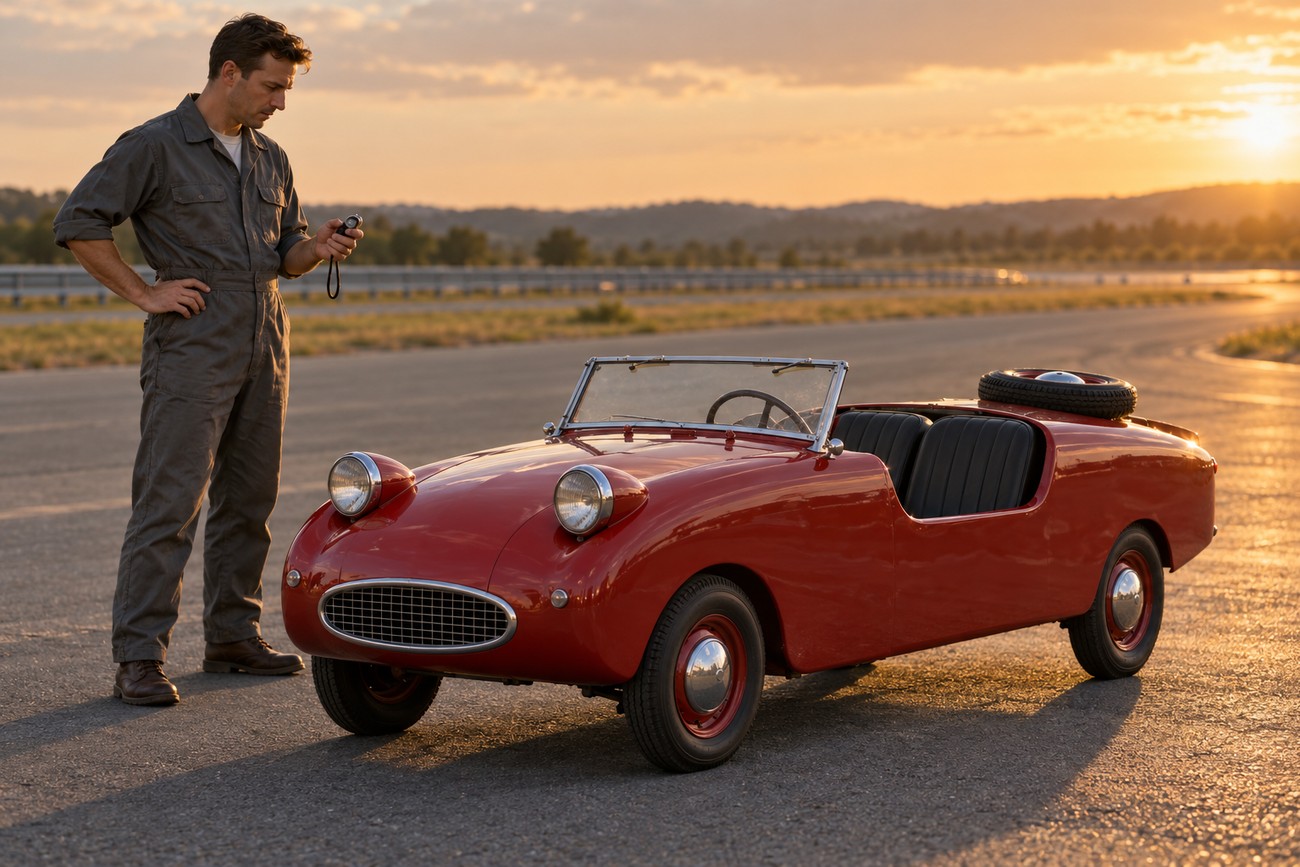
The Hotshot is best described as one of the first American postwar purpose-built sports cars. Calling it unconditionally the first American sports car ignores competing definitions and earlier cars. “First postwar purpose-built American sports car” is a more defensible historical formulation.
Top-speed claims are similarly inconsistent. Common specifications cite approximately 74–77 mph, while some claims reach up to 90 mph in lightweight form. Those figures may reflect different body equipment, preparation, gearing, test conditions, or measurement standards, so they should not be compared as though they came from one controlled test.
The Sebring result does not prove outright speed against larger sports cars. It proves that a very light, small-displacement car could exploit efficiency, packaging, and endurance conditions exceptionally well. That distinction is important for anyone considering ownership: the Hotshot delivers historical character at modest speeds rather than effortless performance.
Its legacy survives because the idea was unusually clear. Crosley combined low mass, rear-wheel drive, compact packaging, an overhead-cam engine, and early braking technology in an American car built expressly to be sporty. The result was limited, sometimes crude, and difficult to support, yet its engineering experiment and Sebring success gave the tiny roadster a place far beyond the microcar category.
Frequently asked questions
The Hotshot’s surviving reputation often rests on simplified figures. These answers separate the commonly quoted specifications from claims that depend on version, preparation, or historical interpretation.
What was the top speed of the Crosley Hotshot?
Common specifications place the Crosley Hotshot’s top speed at approximately 74–77 mph. Some sources claim up to 90 mph for a lighter setup, but that figure is not directly comparable without knowing the car’s equipment, gearing, preparation, and test method.
How many Crosley Hotshots were built?
An estimated 2,498 examples were built for the combined Hotshot, Super Hotshot, and Super Sports family. The figure therefore covers related versions and should not be treated as the production total for the base Hotshot alone.
What is the top speed of a Crosley car?
There is no single top speed for every Crosley car. For the Hotshot, approximately 74–77 mph is the commonly cited range, while claims of up to 90 mph apply to a lighter or differently prepared setup rather than every production example.
What is the world’s fastest manual drag car?
There is no single universally accepted answer because records vary by sanctioning body, class, track, engine configuration, and whether the car remains street-based. That question is unrelated to the Crosley Hotshot, whose significance comes from lightweight endurance efficiency rather than drag-racing speed.
What is the lap record for the Sebring International Raceway?
A single lap-record figure requires a defined circuit layout, car class, and event period. The Hotshot’s 1950 Sebring achievement was an endurance-race result associated with overall and Index of Performance success, not a modern-style Sebring lap-record claim.







