
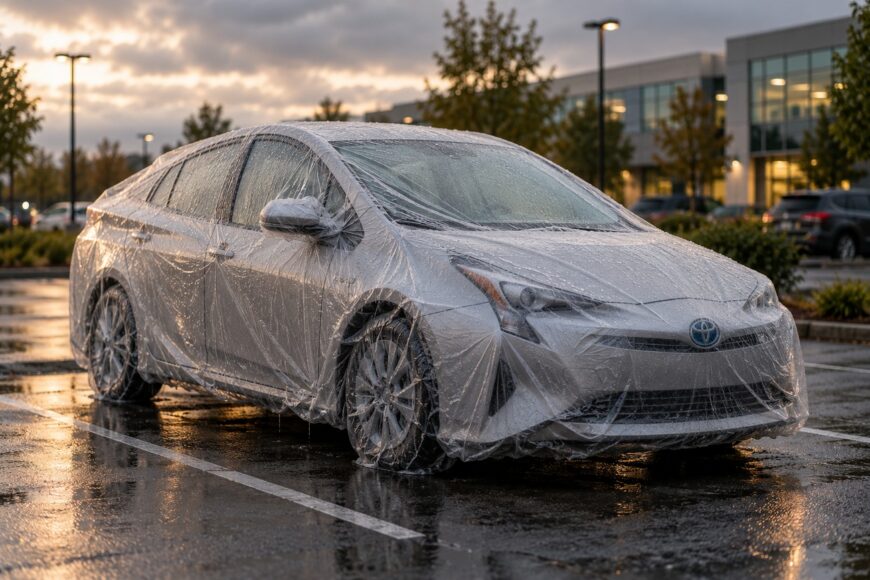
Finding your Toyota Prius covered in plastic is an absurd way to start a workday. The covering may come off without a trace, but film can trap moisture, hold abrasive dirt against the paint, press on trim, and conceal mirrors, sensors, or existing damage. Once it is torn away, it also becomes harder to show what happened while the car was wrapped.
Resist the urge to pull everything off in one dramatic motion. A rushed removal can drag grit across the finish or snap film caught around a mirror; aggressive heat can turn a minor nuisance into damaged trim. Document the car first, then remove the covering carefully enough to preserve both the Prius and the evidence.
- What Plastic Wrap Can—and Cannot—Protect on a Prius
- Before You Tear It Off: Document the Prank and the Car
- How to Remove the Wrap Without Creating New Damage
- Inspect the Prius for Moisture, Scuffs, and Hidden Electrical Problems
- Cleaning Adhesive and Treating Plastic Scuffs
- When a Workplace Prank Becomes a Damage Claim
- Frequently asked questions
- How much does it cost to professionally wrap a Toyota Prius?
- What are the downsides of vinyl wrapping a car compared with temporary plastic film?
- How long can plastic wrap stay on a Prius before moisture becomes a problem?
What Plastic Wrap Can—and Cannot—Protect on a Prius
Vehicle packaging is designed for a particular exposure, such as storage or transport. Film can keep some rain and dust off a car, but that does not make an airtight covering harmless. Initial moisture, ventilation, temperature, and the time spent wrapped all affect the result.
GOST 23170-78 describes packaging for engineering products in terms of preserving the product during transport and storage; the choice depends on product design, storage and transport conditions, and the required preservation period. Its reference to GOST 24597-81 for transport packages likewise ties packaging parameters to specific products. Neither provides a universal method for wrapping a parked Prius, much less a guarantee for a workplace prank.
Professional vehicle packaging may use ventilation hatches and silica gel to reduce condensation. A tightly closed covering without a way to manage humidity can trap damp air, particularly if the car or its interior was wet beforehand. One practical description of thermofilm reports air beneath it reaching about +50 °C during the procedure; that is a technology-specific reported figure, not a universal safe limit for film, paint, or trim.
Look closely at places where film has been stretched or pressed: mirrors, antennas, sensors, door edges, and body corners. Those contact points can suffer pressure or rubbing even when broad painted panels look untouched. The purpose of the covering matters, but its preparation and removal matter just as much.
Before You Tear It Off: Document the Prank and the Car
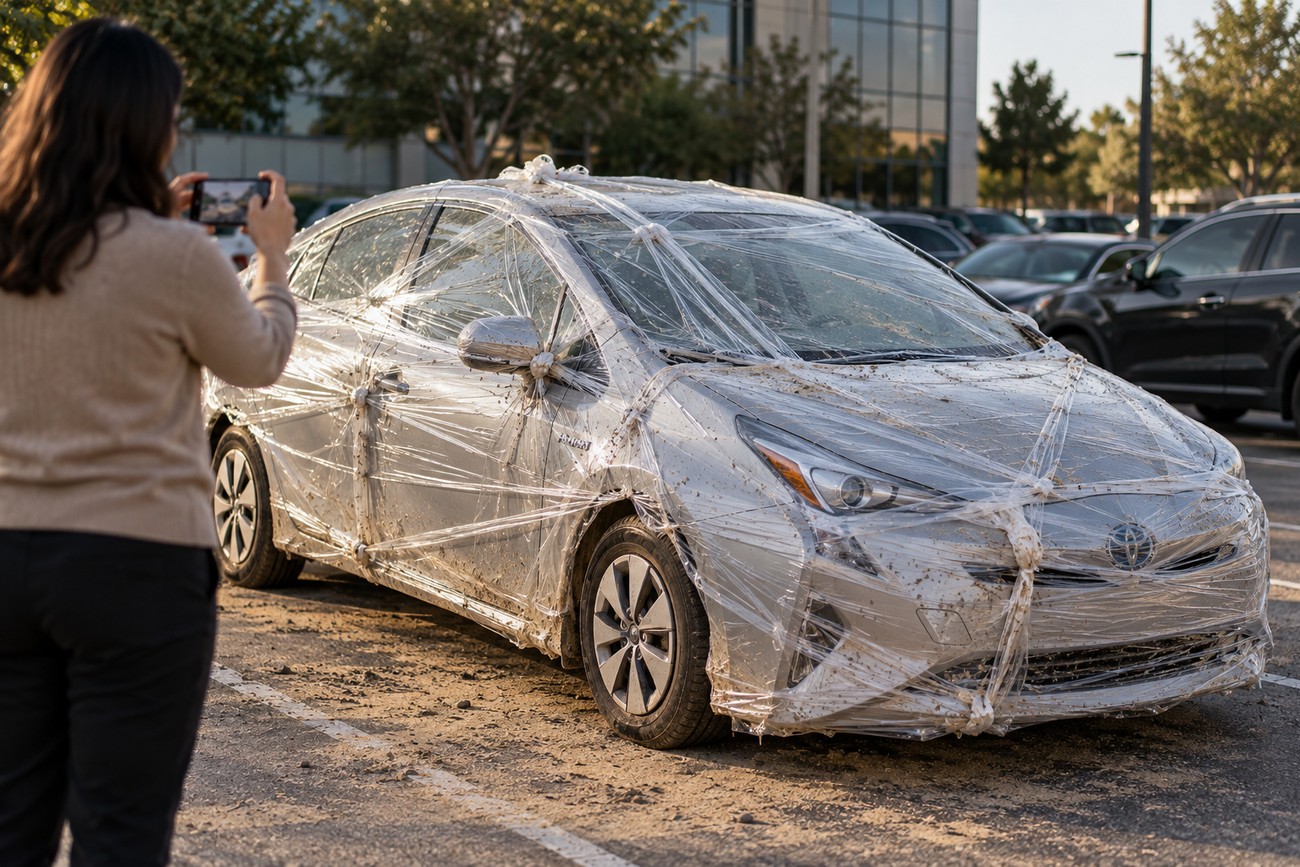
Photograph the whole Prius from each side before anyone touches the film. Then record close-ups of folds, knots, tape, adhesive, contact points, visible marks, and the ground around the car. Keep the original images so their sequence and detail remain available if damage is discovered later.
Take separate photographs of the mirrors, antenna, sensor areas, lights, and panel edges. Note whether dirt or sand is caught under the film: it can act as an abrasive against paint, plastic, and trim when the covering shifts. Photograph visible scratches without assuming when they occurred.
The removal itself should also be documented. A short sequence of photos as each area is uncovered can help distinguish a mark already visible beneath the film from one that appears after a difficult pull. Without that sequence, a dispute over pre-existing damage, wrapping damage, or removal damage becomes harder to resolve.
Do not drive while film blocks visibility, lights, mirrors, or exterior controls. If a section is tightly bonded or caught on a protruding part, stop rather than pulling harder. You can preserve the evidence and arrange careful removal without leaving the car in an unsafe position.
How to Remove the Wrap Without Creating New Damage
Start at a loose edge and work in small sections, supporting the film as you lift it. Free mirrors, antennas, and corners individually instead of using a long pull across them. If film is trapped around trim, cut the free material away from the vehicle cautiously rather than putting a blade against the finish.
Watch for grit as each panel is exposed. A dirty car is more vulnerable because dust and sand under film can scratch paint, plastic, and trim during removal. Lift contaminated film away where possible; do not rub the newly exposed surface or use the film itself to wipe it clean.
Adhesive or stubborn film may tempt you to reach for heat. Some films respond to careful warming, but aggressive heating can damage finishes or deform soft plastic and exterior trim. There is no single removal temperature that is safe for every film and surface, so stop if the material resists controlled lifting.
Good packaging treats local protection, ventilation, drying, and controlled removal as parts of one method. A prank usually has none of those controls. That is a reason to slow down at edges and fittings, where a small amount of caught film can cause more damage than the broad sheet across a panel.
Inspect the Prius for Moisture, Scuffs, and Hidden Electrical Problems
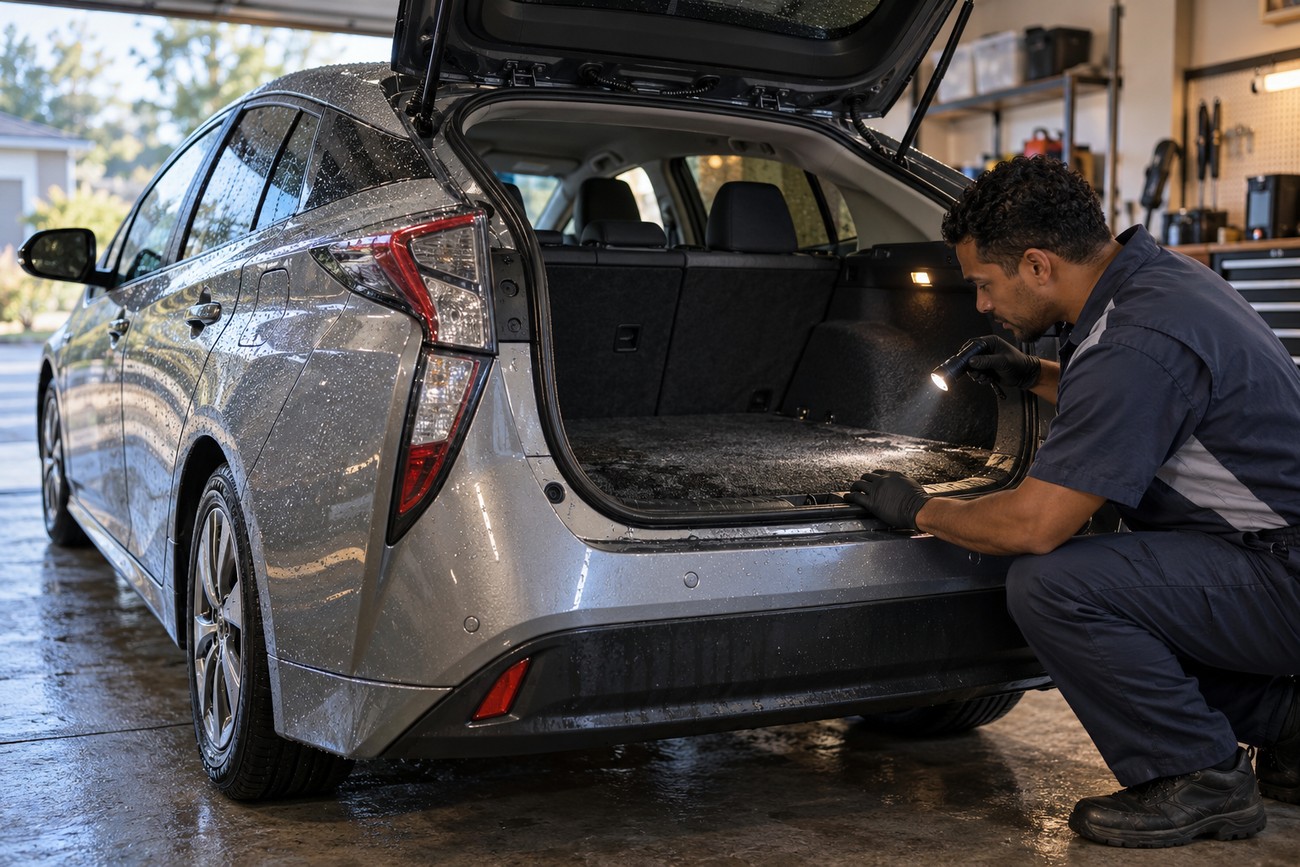
Once the film is off, inspect the exterior in steady light. Check paint and trim where the covering was tight, then examine door gaps, glass, weather seals, mirrors, lights, and visible sensor areas. Record new-looking scuffs, displaced parts, or residue before cleaning them.
Move into the cabin even if the exterior appears sound. Check carpets, the cargo area, seat fabric, and the edges of interior panels for dampness, condensation, or a musty odor. Plastic film can block some external rain and dust while still trapping humidity; longer storage under poorly ventilated film increases the risk of mildew in fabric and other soft materials.
Before treating a marked interior panel as a simple trim repair, establish what lies behind it. Airbag zones, sensor mounts, and concealed wiring can change how that panel should be inspected or removed.
The Toyota Prius combines gasoline and electric power components, so careless work around panels, wiring, and sensors can have consequences beyond a cosmetic scuff. Do not pull apart interior trim to hunt for moisture or attempt work near unfamiliar electrical components. Record where the concern appears and have a suitably qualified technician assess anything that requires access behind panels.
A dry, faint surface mark can usually be documented and assessed without interrupting normal use. Persistent dampness, a strong odor, damaged controls, or warning lights deserve attention before you resume ordinary driving. Avoid assuming that a clean exterior proves the cabin and hidden components were unaffected.
Cleaning Adhesive and Treating Plastic Scuffs
Separate what is on the surface from damage to the surface. Loose dirt, adhesive residue, and a true scratch call for different treatment, and cleaning can erase evidence if you have not photographed the area first. Check an inconspicuous spot before using any cleaner on visible trim or paint.
Remove loose dust and sand gently before wiping, polishing, or applying a cleaning product. Otherwise, abrasive particles can be rubbed deeper into plastic or dragged across the finish. Use the least aggressive method suitable for the material, and stop if the surface changes appearance.
Heat may help with some shallow plastic marks, but it is not a universal scratch repair. A hair dryer or heat gun can worsen soft plastic, alter its texture, or deform nearby trim. If a mark remains after careful cleaning, an assessment is safer than trying to make it disappear before its cause is recorded.
When a Workplace Prank Becomes a Damage Claim
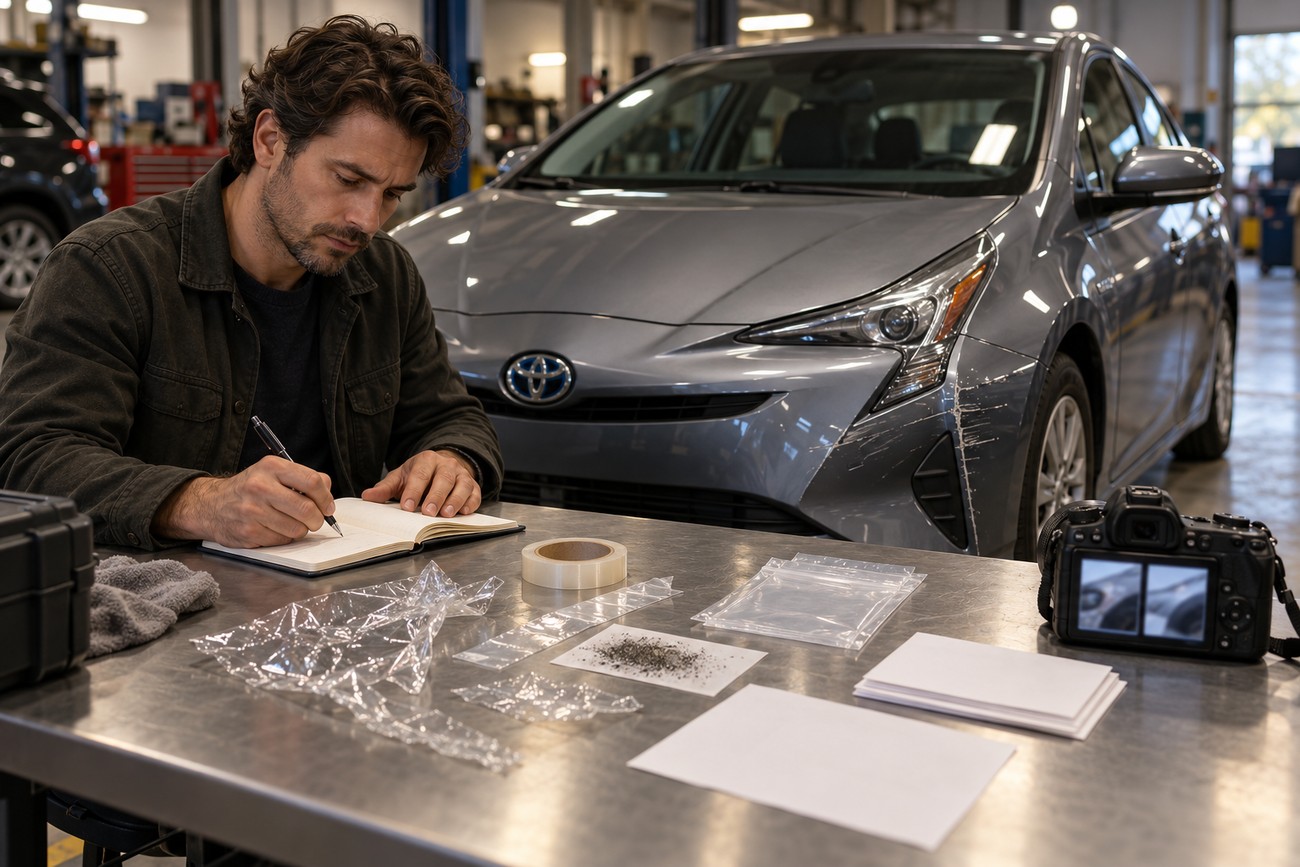
Keep the before-and-after photographs, relevant pieces of removed film, receipts, inspection notes, and the names of anyone who saw the car wrapped or helped remove it. Write down the sequence while it is fresh: when you found the Prius, its condition, how the covering came off, and when each concern became visible. Stick to observations rather than guesses about intent.
Wrapping that leaves no damage is different from scratched paint, broken trim, moisture damage, or an interior contaminated with adhesive and grit. The central question is often whether a mark existed before the prank, arose during wrapping, or happened during removal. Clear photographs and a measured removal process help keep those possibilities separate.
Send a factual written report to the relevant manager, property owner, or insurer, as appropriate, and retain a copy. If repair is needed, ask for an itemized assessment that identifies the affected areas and proposed work. Avoid cleaning or repairing disputed damage before it has been recorded, unless delay would allow a problem such as moisture to worsen.
A claim that plastic wrapping “will not damage the car” depends on temperature, duration, initial moisture, ventilation, preparation, and removal technique. A clean-looking exterior is useful news, but it is not a complete inspection of the cabin, trim, or sensors. Let the documented condition of this Prius guide the discussion, rather than a general promise about film.
Frequently asked questions
Temporary plastic covering and a planned automotive vinyl wrap serve different purposes. The answers below keep that distinction clear, particularly when discussing cost, long-term finish care, and moisture.
How much does it cost to professionally wrap a Toyota Prius?
There is no reliable price based on the Prius name alone. A professional vinyl-wrap quote depends on the film, how much of the car will be covered, surface preparation, and the condition of the existing finish. Ask for a written description of the coverage and preparation so estimates can be compared on the same basis.
A temporary prank covering is not a substitute for a vinyl-wrap quote or a repair estimate. If the prank caused damage, request an assessment of that damage separately from any price to install decorative film.
What are the downsides of vinyl wrapping a car compared with temporary plastic film?
Vinyl is intended to remain fitted to prepared exterior surfaces, so installation quality, ongoing condition, and removal timing matter. Poor preparation can leave defects visible, while removal may expose pre-existing paint problems. Have the paint inspected before installation and follow the film installer’s care and removal guidance.
Temporary plastic film has a different risk profile: folds, trapped grit, blocked access, and poor ventilation are more immediate concerns. Neither process should be described simply as “wrapping the car” when you are assessing what might have caused a mark.
How long can plastic wrap stay on a Prius before moisture becomes a problem?
There is no universal safe duration. A wet car wrapped tightly outdoors can develop condensation sooner than a dry car under a covering with ventilation, and changing temperatures can make trapped humidity harder to detect from outside.
If the covering is still on, arrange its careful removal rather than waiting for an arbitrary time limit. Once it is off, check the cabin and soft materials for dampness and odor, especially if the car was wet when wrapped or stood covered for an extended period.







