
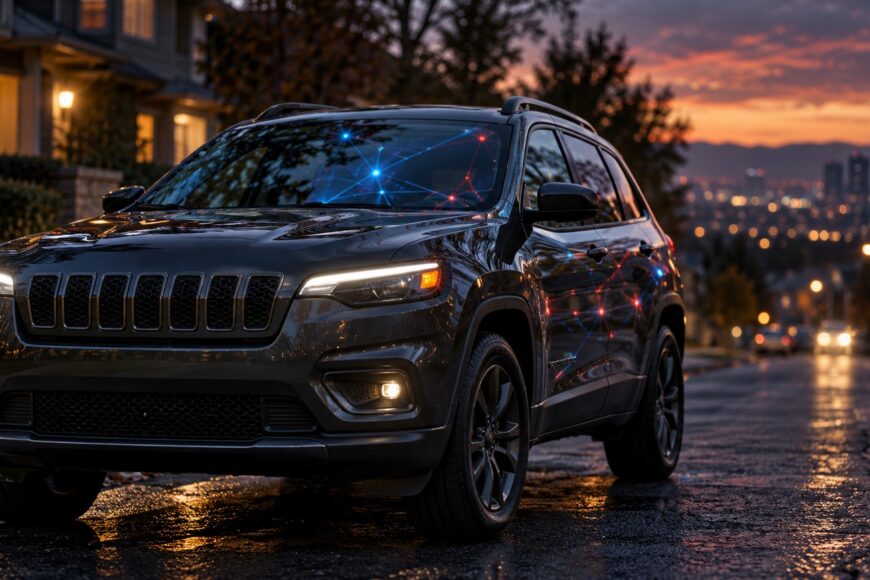
Yes. In 2015, security researchers demonstrated that a vulnerable Uconnect-equipped Jeep Cherokee could be slowed, stopped, and partially controlled remotely through its internet-connected telematics system. The demonstration included blocking acceleration, reducing speed, interfering with the engine and brakes, and limited steering interference under a specific transmission condition.
That result established a credible safety risk, yet it does not mean any hacker can instantly seize any Jeep. Charlie Miller and Chris Valasek spent months reverse-engineering Uconnect firmware and CAN messages before conducting the research. Their work targeted a vulnerable vehicle configuration and a particular software path.
The case created a difficult question for owners: how much trust should a driver place in connected convenience when the same electronics can interact with safety-critical systems? The practical answer starts with the vehicle’s software and recall status, rather than with panic or the assumption that deleting a phone app makes the car unreachable.
- What the 2015 Jeep Cherokee Hack Actually Proved
- How an Internet Connection Reached the Car’s Critical Controls
- Could Hackers Really Stop a Jeep While It Was Driving?
- What Fiat Chrysler Fixed—and What Owners Still Need to Check
- The Owner Mistakes That Keep Connected Cars Exposed
- What the Jeep Case Changed—and What It Did Not
- Frequently asked questions
- How do you tell if your car is hacked?
- Which part of a connected car is most often targeted by hackers?
- What device gets hacked the most?
What the 2015 Jeep Cherokee Hack Actually Proved
In 2015, Charlie Miller and Chris Valasek remotely compromised a Jeep Cherokee through its Uconnect telematics system. The vehicle’s connected head unit communicated through Sprint’s cellular network, giving the researchers a route that did not require physical access to the Jeep. They used knowledge of the vulnerable head unit’s internet-facing IP address as the entry point.
Once inside the relevant system, the researchers reached the vehicle’s CAN bus, the internal network used by electronic control units to exchange messages. Their demonstration showed that a connected infotainment and telematics system could issue or relay commands affecting functions associated with driving. The effects included engine interference, blocking acceleration, brake manipulation, and limited steering interference.
The research became widely known because it showed the Jeep being affected while in motion, rather than merely displaying a harmless change on the radio screen. The researchers operated from roughly 10–15 km away, using an internet connection to reach the vehicle. That distance mattered because it showed that proximity to the car was not essential to the attack.
The exposure affected a vehicle family and software configuration, rather than one uniquely modified test car. After the vulnerability became public, Fiat Chrysler announced a recall covering about 1.4 million Chrysler, Dodge, Jeep, and Ram vehicles from approximately the 2013–2015 period. The scale of the campaign reflected the presence of the same general risk across many connected vehicles.
How an Internet Connection Reached the Car’s Critical Controls
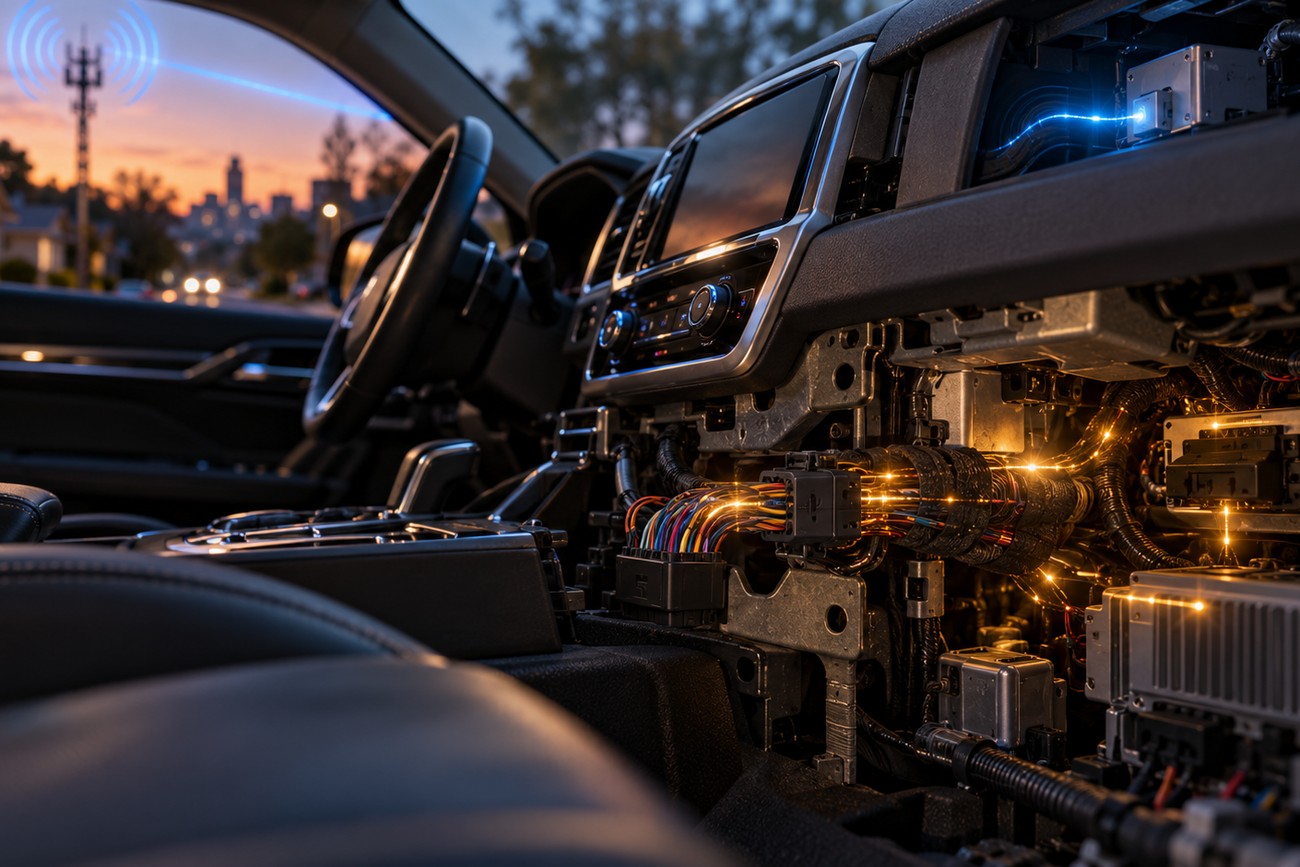
The attack chain began with a cellular modem inside the connected vehicle. Uconnect used that connection for telematics and infotainment-related services, while the head unit handled communications between the outside network and vehicle electronics. A vulnerable internet-facing service on the head unit gave the researchers a way to interact with the system remotely.
From there, the significant step was moving toward the CAN bus. The CAN bus is the vehicle’s internal communications network: electronic control units use it to share information about speed, engine operation, braking, transmission status, and other functions. Messages on that network are interpreted by the modules responsible for different parts of the car.
The architectural weakness was insufficient logical isolation between the connected telematics and infotainment system and critical vehicle functions. A system designed to provide entertainment or remote services had excessive reach into networks involved in drivability. In a better-separated design, compromising the head unit would be contained instead of providing a path toward safety- and motion-related controllers.
That description does not mean the head unit directly “contained” the brakes or steering. It served as a connected gateway into a larger electronic architecture. The researchers studied how the systems communicated, identified relevant CAN messages, and used that understanding to demonstrate effects on the vehicle.
The work required months of reverse-engineering Uconnect firmware and CAN messages. It was a model-specific research effort involving detailed knowledge of the vehicle’s software and electronics. This distinction helps owners judge the risk accurately: the weakness was serious, while the exploit was not a casual, one-click trick available to anyone with a laptop.
Could Hackers Really Stop a Jeep While It Was Driving?
Yes, the researchers demonstrated that a vulnerable Jeep could be slowed and brought toward a roadside ditch through remote interference. They blocked acceleration and reduced the vehicle’s speed while operating from roughly 10–15 km away. The result showed that a remote attacker could create a dangerous loss of normal vehicle response.
The demonstration also included engine interference and manipulation of the brakes. The brake effect was shown at low speed, and the researchers used several vehicle behaviors to illustrate how electronic commands could affect motion. These findings established a credible safety risk even though they did not amount to unrestricted control under every driving condition.
Steering interference had an important limitation. It was demonstrated under a particular condition involving reverse gear, rather than as unrestricted steering control in every situation. That condition is easy to lose in sensational summaries, yet it is essential to describing what the research actually proved.
No mass criminal exploitation of this exact demonstration was documented. The absence of a documented crime wave does not erase the engineering significance of the result: a remote path from a cellular-connected head unit to vehicle control functions had been shown to exist. The research also gave manufacturers a concrete reason to redesign network separation and update vulnerable software.
What Fiat Chrysler Fixed—and What Owners Still Need to Check
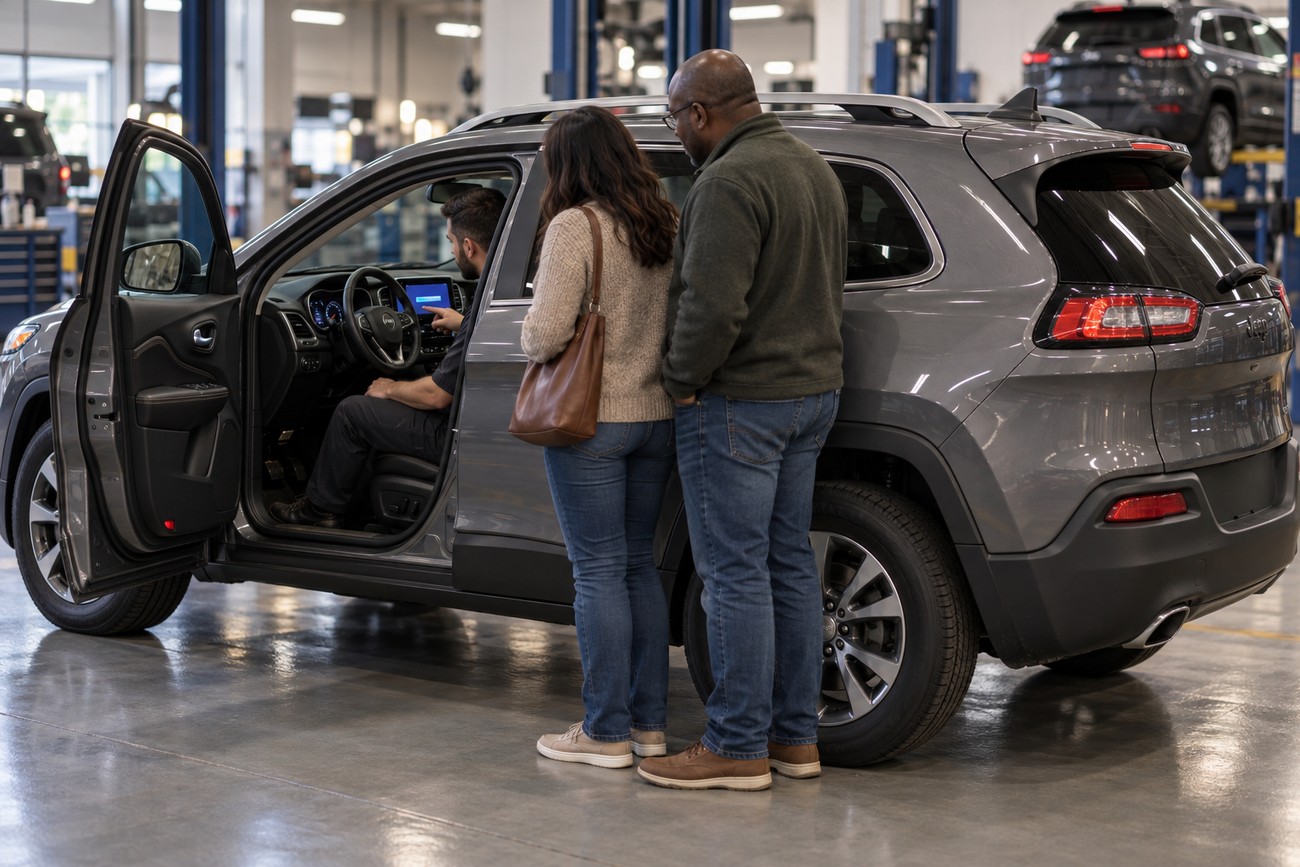
Fiat Chrysler’s response centered on a Uconnect software update intended to close the known remote-access vulnerability. The campaign covered about 1.4 million Chrysler, Dodge, Jeep, and Ram vehicles from approximately the 2013–2015 period. Owners were expected to have the applicable software work completed through the recall process.
A completed campaign addresses the known vulnerability identified in that research. It cannot guarantee immunity from every future automotive cybersecurity flaw, because later problems may involve different software, hardware, suppliers, or communication paths. Recall completion remains an important baseline check for an affected vehicle.
For a used vehicle, a seller’s verbal assurance is weaker evidence than a technician verifying campaign closure by VIN and confirming that the applicable Uconnect software work was performed.
If you own or are considering a Jeep Cherokee from the affected period, use the vehicle identification number to check official recall records or ask a dealer to verify the campaign status. Ask for confirmation that the relevant update was completed, rather than relying on a general statement that the vehicle has been “serviced.” Keep the paperwork with the vehicle records.
- Check the VIN through the manufacturer’s official recall system or an authorized dealer.
- Confirm whether the campaign is open, completed, or recorded as previously addressed.
- Ask what software update or recall operation was applied to the Uconnect system.
- Have unresolved campaign work completed before treating the vehicle as ready for normal connected use.
- For a used-car purchase, make VIN verification part of the inspection rather than accepting a seller’s verbal assurance.
The Owner Mistakes That Keep Connected Cars Exposed
The clearest mistake is ignoring a manufacturer’s software update. Owners sometimes treat a recall notice as a public-relations exercise, especially when the vehicle still starts and drives normally. A car can appear completely healthy while retaining a known network weakness, so normal driving behavior does not prove that the relevant software is current.
Another error is assuming the event was only a laboratory exercise and therefore irrelevant. The 2015 work was conducted under controlled research conditions, yet it involved a real vehicle architecture and led to a large recall. The sensible response is proportionate: verify the update, monitor official notices, and avoid treating connected systems as harmless simply because they are built into the dashboard.
Aftermarket equipment can create another path into the vehicle. Trackers, alarms, remote starters, and other devices connected to the CAN network may expand the attack surface when they are poorly designed, badly secured, or installed without understanding the vehicle’s communications architecture. A reputable installation and documented device security are more useful safeguards than adding several unreviewed accessories.
Owners also sometimes believe that avoiding the Uconnect app or deleting a phone pairing removes the risk. The telematics modem may remain active even when the driver does not use connected services, so phone settings and app removal do not necessarily disable the vehicle’s cellular path.
Seat belts, defensive driving, and sensible vehicle maintenance remain essential. They address collision and mechanical risks, while current software and verified recall status address a different category of exposure. One set of precautions cannot substitute for the other.
What the Jeep Case Changed—and What It Did Not
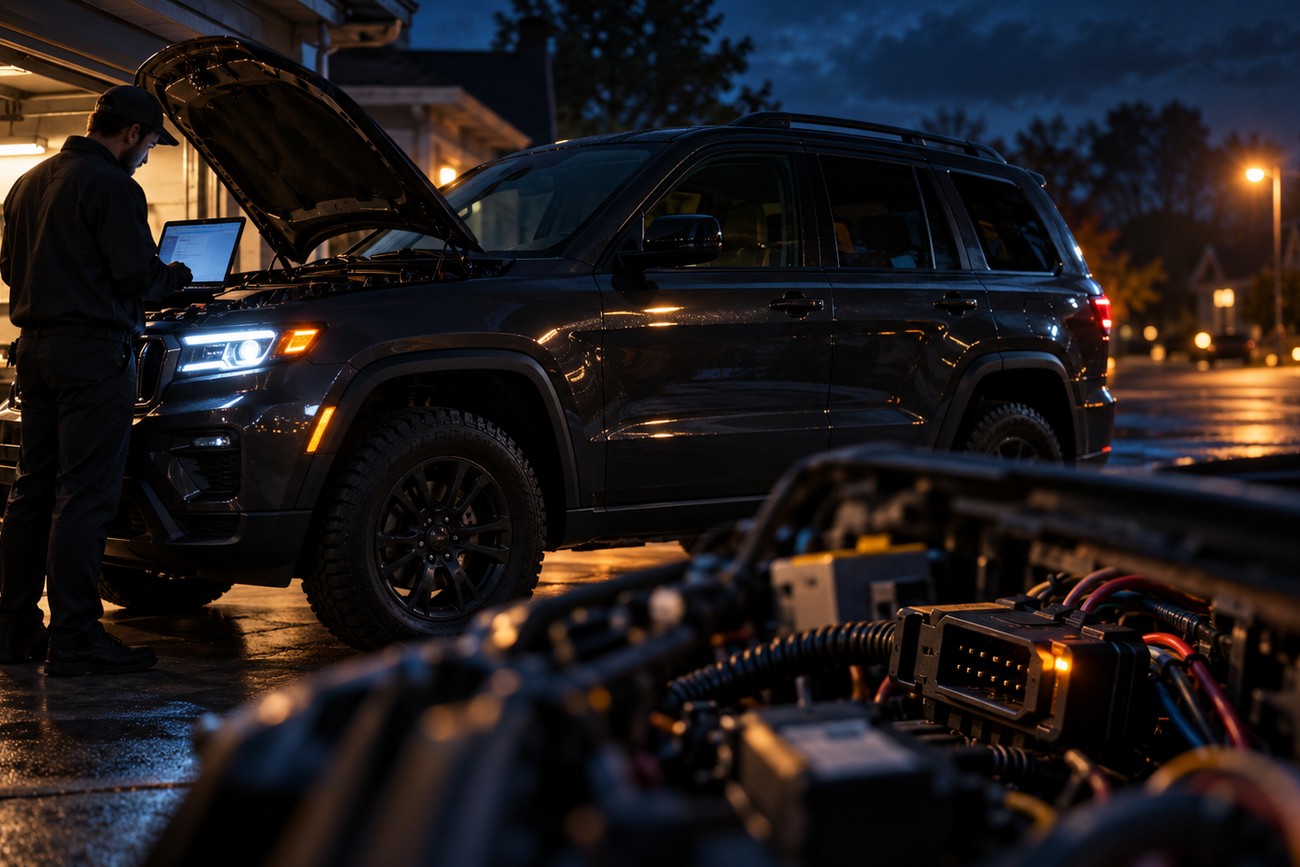
The event was not a staged media trick. The vulnerability was recognized by the manufacturer, and its public disclosure led to a recall of about 1.4 million vehicles. That response provides strong evidence that the underlying security issue was real and relevant to production vehicles.
The compromise also went beyond the radio. The researchers reached the CAN bus and demonstrated effects involving acceleration, engine operation, brakes, and transmission-related behavior. Steering interference had a defined reverse-gear condition, so the evidence supports a serious but bounded description of the vehicle’s exposure.
The opposite myth is equally misleading: a novice could not simply open a laptop and stop any Jeep. The research required model-specific knowledge, months of reverse-engineering, and an understanding of Uconnect firmware and CAN messages. Attack tools and knowledge can change over time, which is why a difficult attack today should still be addressed through software updates and better architecture.
The broader industry lesson was the need for stronger separation between telematics and critical vehicle networks. Manufacturers moved toward more restricted communication paths and improved security practices, but older connected vehicles remain in service. Cybersecurity practices are also not uniform across the industry, so owners should evaluate each vehicle’s recall history, connected features, aftermarket equipment, and software support separately.
The less obvious concern is the supply chain. Vehicle software and electronic modules often depend on outside suppliers, and a weakness in one component can affect the security of the whole vehicle. Owners cannot audit those relationships themselves, which makes transparent recall notices, long-term software support, and clear dealer records especially important.
Frequently asked questions
The Jeep case involved a specific vehicle configuration, software weakness, and attack path. The questions below separate that documented research from broader assumptions about connected-car security.
How do you tell if your car is hacked?
Glitches, battery drain, unexpected warning messages, or Uconnect failures do not prove that a car has been hacked. Those symptoms can also result from a weak battery, software faults, damaged wiring, failed modules, or ordinary electrical problems. There is no single dashboard message that conclusively identifies a cyberattack.
If unusual behavior affects vehicle operation, avoid testing the car while driving. Record the warning messages, timing, recent repairs, aftermarket devices, and connected-service failures, then seek an assessment from a dealer or a qualified automotive cybersecurity specialist. A proper diagnosis should examine vehicle fault codes and module communications rather than relying on a guess based on one symptom.
Which part of a connected car is most often targeted by hackers?
Infotainment and telematics units are common remote entry points because they communicate with cellular networks, Wi-Fi, Bluetooth, mobile apps, and internet services. Their connectivity makes them attractive targets even though they are not themselves the engine or brake controller.
An entry point and a safety-critical controller are different parts of the attack path. Reaching an infotainment unit does not automatically provide control of the engine or brakes; an attacker would need additional access across the vehicle’s internal networks. The Jeep case was serious because inadequate isolation allowed researchers to demonstrate that further movement.
What device gets hacked the most?
There is no universal device that is hacked most often across every automotive incident. Connected phones, cloud accounts, keyless-entry systems, telematics units, and aftermarket equipment each have different weaknesses and attack opportunities.
For a connected car, the practical priority is to secure every externally connected component: keep vehicle software current, protect associated accounts, remove unknown aftermarket devices, and investigate unexpected behavior through a qualified service channel. Focusing on one supposedly most-hacked device can obscure weaknesses elsewhere in the vehicle ecosystem.







