
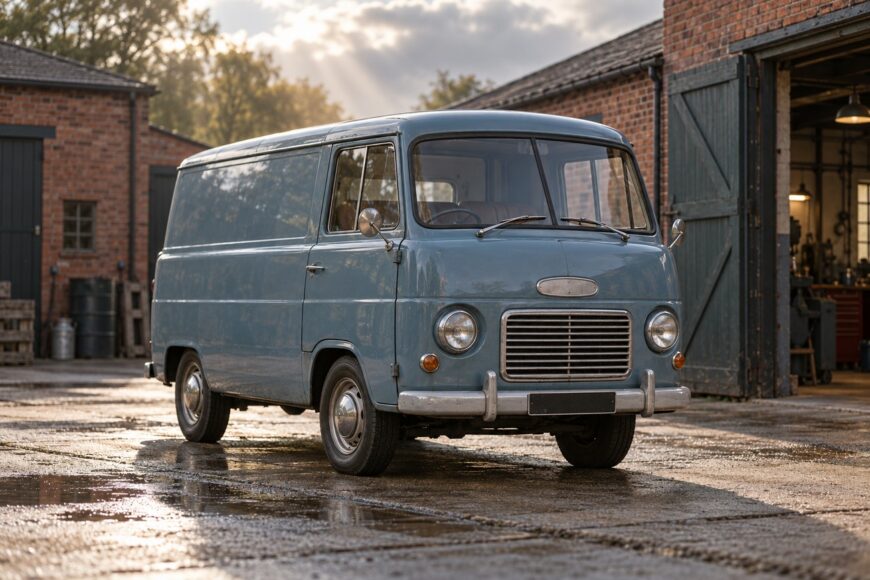
Commer Karrier is best understood as a family of British utility vehicles rather than a single van. The name covers vehicles with different model indices, bodies, powertrains, and working purposes, while the Commer FC belongs to the LCV (light commercial vehicle) class. That distinction matters because a parts catalogue or auction description using only “Commer Karrier” may conceal substantial mechanical and structural differences.
The attraction is clear: these vehicles have strong industrial character, simple-looking mechanical layouts, and a direct connection with post-war British transport. The ownership calculation is less romantic. Parts scarcity, uncertain modifications, corrosion in load-bearing metal, limited safety equipment, and long repair delays can make a surviving Commer more expensive to operate than a modern utility van.
Advertised payload, a tidy exterior, and a confident seller’s description are not enough to judge one. Before buying, you need the exact model identity, engine, body configuration, chassis condition, brake and steering performance, and a realistic plan for sourcing parts. A presentable restoration may be an excellent collection vehicle while being wholly unsuitable for regular commercial work.
- What the Commer Karrier name actually covers
- A short history: from British manufacturer to classic-van subject
- Commer FC, Karrier BF, and the engines behind the reputation
- What ownership is really like: parts, corrosion, and downtime
- How to inspect and buy a surviving Commer utility van
- Safety, standards, and the limits of using a vintage van for work
- Frequently asked questions
- What happened to Commer vans?
- Where were Commer vans made?
- What is a Commer knocker?
- How should I research the history of a Commer van?
What the Commer Karrier name actually covers
Commer was a British manufacturer of commercial and military vehicles operating from 1905 to 1979. Its products served several parts of the working-vehicle market, so the badge does not identify one fixed body style or one universal mechanical specification. A light van, a heavier goods vehicle, and a specialist chassis may all appear in historical material connected with Commer.
Karrier is equally easy to oversimplify. Commer/Karrier refers to a range of commercial vehicles with multiple model indices, purposes, bodies, and powertrains; it is not a single van model. The name may therefore describe a particular vehicle family, a badge applied to a commercial chassis, or an entry in an auction catalogue that needs further verification before it can guide a restoration.
The Commer FC is a useful example of why the terminology matters. It is an LCV (light commercial vehicle) line produced from 1960 to 1983, but that date range should not be transferred automatically to every Karrier-badged vehicle. An FC parts reference, engine mount, brake component, or body panel may be irrelevant to an earlier or heavier chassis.
Start any investigation with the model index and chassis identity, then match the engine and body configuration to period documentation. Registration paperwork, chassis plates, stamped numbers, surviving factory literature, and specialist club records can each answer part of the question. Only after those details agree should you rely on a parts catalogue or compare the vehicle with an apparently similar Commer.
A short history: from British manufacturer to classic-van subject

Commer operated from 1905 to 1979, building a long commercial-vehicle history that crossed civilian haulage, municipal work, and military use. Its post-war range reflected the demand for vehicles with different carrying capacities and body arrangements. Historical Commer materials cited payload classes of 5 tonnes and 7 tonnes, showing that the marque extended well beyond the compact utility van image often used in modern listings.
Those payload references describe classes in post-war Commer materials, not a universal rating for every vehicle carrying the badge. A surviving chassis may have been rebodied, uprated, derated, or used in a role far removed from its original specification. The actual permitted mass must therefore be established from the vehicle’s documentation and present condition rather than inferred from a general brochure statement.
The Commer FC line was produced from 1960 to 1983. That production timeline belongs to the FC range and should be kept separate from the company operating period. Historical records can appear contradictory when a manufacturer’s corporate life, a model’s production run, later assembly, and registration dates are treated as if they were the same event.
Museum, club, and auction records may also use different naming conventions or repeat an earlier description without checking the chassis. Years, indices, and payloads should be compared across more than one specialist source. By the time a Commer reaches a collection or specialist sale, it may be better understood as a restoration project with a documented past than as a straightforward used commercial vehicle.
Commer FC, Karrier BF, and the engines behind the reputation
The FC-era utility van and a Karrier-badged commercial vehicle should be compared by specification, not by appearance. They may differ in chassis dimensions, body construction, axle arrangement, engine installation, and intended workload. The shared Commer connection is historically relevant, but it does not create automatic compatibility between their mechanical parts.
A useful illustration is a 1958 Commer Karrier BF auction example listed with a 2.2-litre petrol engine. That description identifies one vehicle at one point in its documented life; it does not establish a universal Karrier BF engine specification, nor does it describe the later Commer FC line. Engine swaps and other modifications were possible during decades of commercial use, so the fitted unit must be checked physically.
Look for the engine number, mounting arrangement, carburetor and cooling layout, gearbox linkage, and evidence of altered wiring or fabrication. A catalogue reference based only on the registration year can send a restorer towards the wrong gaskets, belts, ignition parts, or clutch components. The same caution applies to brakes and axle assemblies, which may have been changed to keep an old working vehicle in service.
“Commer knocker” is an engine-related historical nickname, not a universal description of every Commer or Karrier. It should be used when discussing the relevant engine history and sound, not as proof that a particular van has one standard mechanical layout. Identify the engine actually fitted before judging its originality, likely faults, or availability of replacement parts.
What ownership is really like: parts, corrosion, and downtime
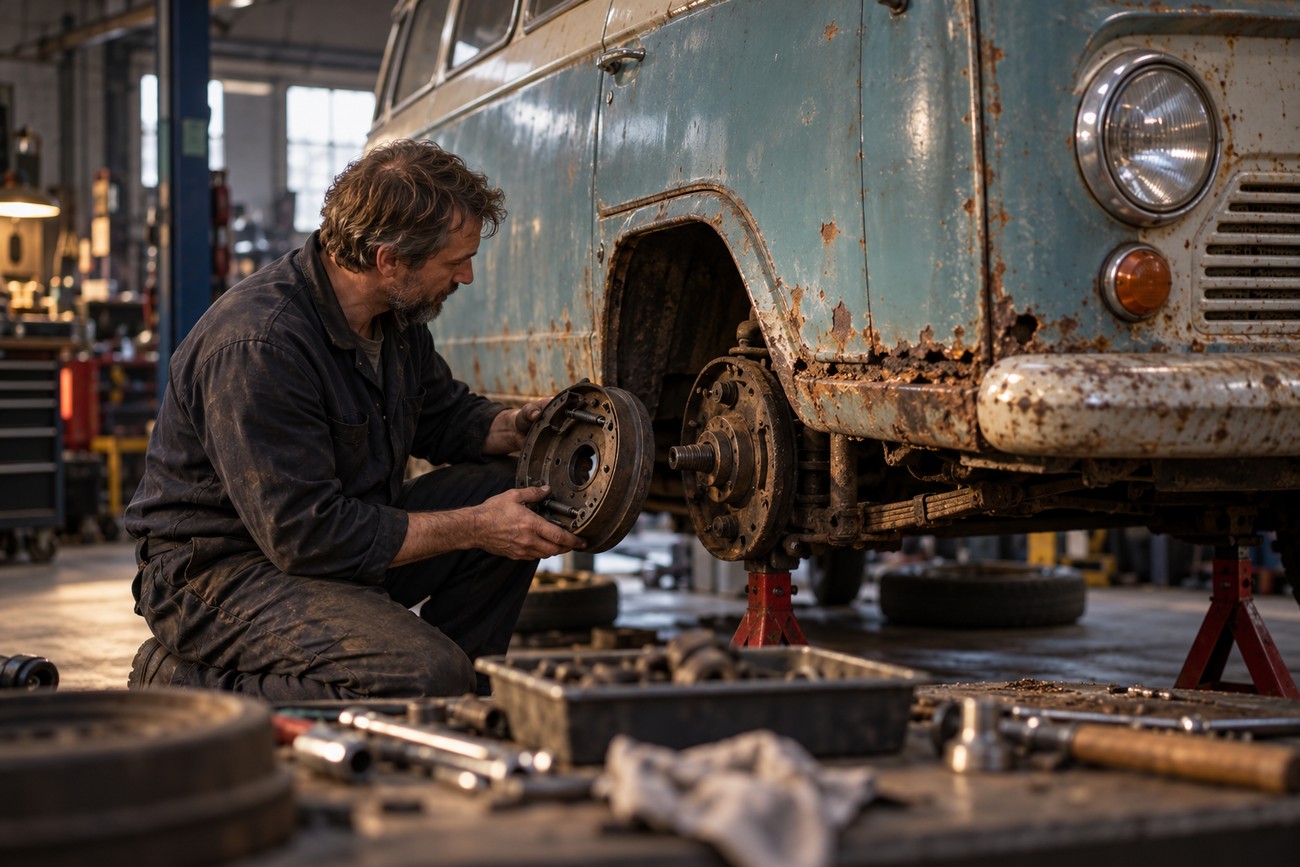
Rare Commer vehicles can have limited parts interchangeability. Owners may depend on clubs, dismantles, donor vehicles, custom adaptation, or hand-fitting, especially for trim, glass, braking components, electrical items, and body hardware. A part that looks similar in a photograph may have different dimensions, mounting points, or operating clearances.
That supply problem changes the meaning of a bargain purchase. A low sale price may leave room for restoration, or it may simply reflect the cost and uncertainty transferred to the buyer. Before committing, identify which service parts are available off the shelf, which can be rebuilt, and which would require a donor or a specialist fabrication job.
Corrosion deserves attention beneath the visible bodywork. Hidden corrosion and metal fatigue in load-bearing elements can matter more than a clean exterior, particularly where the vehicle has carried commercial loads or spent years exposed to water and road dirt. Examine chassis rails, cross-members, suspension mounts, spring hangers, floor edges, cab supports, and areas where repairs meet original metal.
Access can also determine the real cost of a repair. Old commercial vehicles may require awkward removal of surrounding components before a small fault can be reached, and a scarce replacement can extend downtime while a suitable part is found or adapted. These are risks to investigate rather than automatic defects, but they make a workshop plan and reserve budget essential.
Advertised payload or volume cannot replace inspection of the actual chassis, brakes, steering, and body structure. A vehicle that once belonged to a higher payload class may be unsafe or legally unsuitable if its frame has weakened, its braking system is poor, or its body conversion has changed the load distribution. The useful question is what the surviving vehicle can safely do now.
How to inspect and buy a surviving Commer utility van
Begin with identity and paperwork. Record the exact model index, year, engine, body configuration, chassis number, registration history, and every stated modification. Compare the seller’s description with the plate, stamped numbers, period documents, and photographs of the vehicle before restoration; inconsistencies are often more valuable than a polished sales narrative.
Next, inspect the structure before considering paint or interior trim. Look for corrosion and previous repairs in load-bearing metal, then assess the frame, body mounts, suspension attachments, floor, doors, and cab structure. A neat exterior can conceal extensive filler, thin repaired sections, or fatigue around areas that have carried equipment and cargo for decades.
Brake and steering condition should be assessed as primary systems, not as finishing items. Check hydraulic or mechanical operation, pipes, hoses, drums, shoes, master-cylinder condition, steering play, linkages, wheel bearings, and evidence of non-standard parts. A claimed historical payload has little practical value if the vehicle cannot stop, turn, and carry its present load with predictable control.
Audit the electrical system and modifications separately. Old wiring may have been extended or bypassed repeatedly, while later lights, batteries, ignition parts, seats, belts, engines, and gearboxes may be fitted without clear records. Ask for evidence of compatibility rather than accepting phrases such as “fully interchangeable” or “correct for the model”; physical measurement and specialist confirmation are safer.
Search specifically for Commer, Karrier, the exact index, and the engine code. Do not confuse Commer with modern Carrier companies or unrelated searches for “Karrier,” since that can produce the wrong catalogues and suppliers. Before purchase, contact relevant clubs, dismantles, and specialist sellers with the actual chassis and component details, then decide whether the van is intended for display, occasional events, or regular work.
Safety, standards, and the limits of using a vintage van for work

Historical authenticity does not remove present-day risk. An original vintage Commer may lack modern brakes, seat belts, lighting, guarding, impact protection, or other protective features unless those systems have been upgraded. Even a careful restoration can retain limitations that were acceptable in its original period but are unsuitable for frequent commercial use.
EN ISO 12100 provides a useful starting framework because it is a type A standard covering general principles for machinery risk assessment and risk reduction. Type A standards address general principles, type B standards cover horizontal safety solutions, and type C standards address specific machines. This structure helps organize a risk review, but reference to EN ISO 12100 does not prove that a particular Commer complies with modern vehicle or workplace requirements.
For a working vehicle, assess foreseeable use, loading, braking distances, visibility, lighting, restraint systems, access, maintenance, and the consequences of a component failure. A specialist inspection should distinguish original equipment from later upgrades and record whether the modifications are engineered, secure, and maintainable. Local registration, roadworthiness, insurance, and workplace rules may impose additional requirements.
OHSAS 18001 is an older occupational-safety management framework mentioned in unrelated British Engines material. It is not a Commer model standard and should not be presented as evidence of vehicle safety or factory compliance. The practical priority remains a documented assessment of the individual van and the work it will perform.
Frequently asked questions
Questions about Commer vans often turn on the difference between a manufacturer, a model line, and an individual vehicle. Dates and nicknames can be useful starting points, but they do not identify every variant. For a specific van, check its records against the vehicle itself.
What happened to Commer vans?
Commer operated from 1905 to 1979, but the Commer FC line is associated with production from 1960 to 1983. These dates describe different things: the first is the manufacturer’s operating period, while the second belongs to a particular vehicle line and its production history. They should not be collapsed into one company-wide manufacturing date.
Surviving vehicles now appear mainly through collections, clubs, specialist sales, and restoration projects because their working life has ended for most examples. Their rarity also means that condition and documentation vary widely. A van preserved for display may need different decisions from one expected to carry equipment on a regular basis.
Where were Commer vans made?
Commer was a British manufacturer, so its identity and historical production are firmly associated with Britain. That fact alone does not establish one factory for every Commer or Karrier variant. Different ranges, chassis, bodies, and periods require confirmation from the individual vehicle’s plate, registration file, and period documentation.
For a specific van, record the chassis identity and compare it with factory literature, club research, auction records, and physical evidence. A later body, imported vehicle, or undocumented rebuild can make a simple location claim misleading. The safest description is therefore the one supported by the vehicle’s own records rather than a generic statement about the marque.
What is a Commer knocker?
“Commer knocker” is an engine-history term linked to a particular reputation or engine family; it is not a universal name for every Commer or Karrier. The nickname should not be used to identify an engine without checking what is actually installed in the vehicle.
Confirm the engine number, fuel system, mounting arrangement, and period specification before sourcing parts or diagnosing an unusual sound. A 1958 Commer Karrier BF auction example is listed with a 2.2-litre petrol engine, but that single example cannot define every Karrier or establish the specification of a later FC.
How should I research the history of a Commer van?
Start with the chassis or model identity, then build a record from period documents, registration information, specialist catalogues, club knowledge, and auction descriptions. Compare stated year, index, payload, engine, and body configuration across sources. Conflicting information is a reason to investigate further, not a reason to choose the most flattering description.
Finish the research with physical inspection. Check whether the engine, body, axles, brakes, wiring, and major repairs match the claimed history, and document every modification that affects parts or safety. This method is slower than searching by a badge alone, but it prevents the common mistake of buying a visually convincing Commer whose identity and usable specification remain uncertain.







