
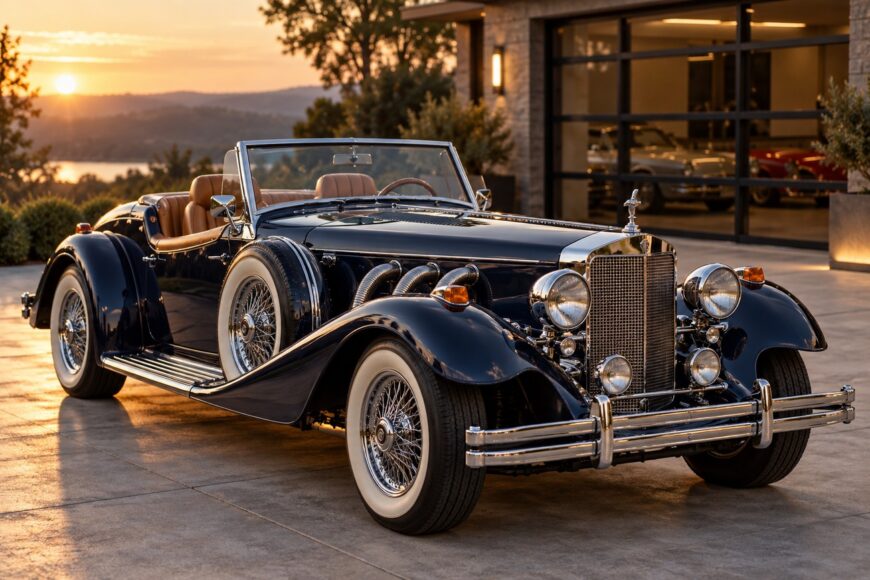
The Clénet Series I looks as though it belongs outside a grand hotel in the 1930s: long hood, dramatic proportions, and enough chrome to make its arrival an event. Under that prewar-inspired exterior, however, sits Ford- and Lincoln-derived engineering. This is a 1970s interpretation of vintage luxury, rather than a preserved antique or a clean-sheet sports car.
Its appeal depends on what you want to do with it. As a mobile art object for shows, parades, and occasional drives, the Series I has a presence few cars can match. As a practical roadster, it asks for compromises. Conflicting engine descriptions, scarce Clénet-specific trim, and incomplete restoration histories make the individual car far more important than the romance of the model name.
- What the Clénet Series I Really Is
- A Neo-Classic Roadster Built for Theater, Not Speed
- Clénet Series I Specifications and the Numbers That Do Not Always Match
- The Ford and Lincoln Donor Reality
- Buying One: Originality, Restoration, and Documentation
- Ownership Costs, Hidden Weaknesses, and Who Should Buy It
- Frequently asked questions
- Why do some catalogs describe the Clénet Series I as a 2+2?
- How should the production date of a Clénet Series I be described?
- What can go wrong with a low-mileage Clénet that has been stored for years?
What the Clénet Series I Really Is
The Clénet Series I is a two-seat neo-classic luxury roadster built in a limited run of 250 examples. Its styling draws on prewar Mercedes-Benz forms and shares the theatrical language often associated with Excalibur. It is neither an Excalibur variant nor a car from the prewar period; it is a distinct Clénet model conceived and built in the 1970s.
Production is generally dated to 1976–1979. Some accounts instead identify 1977 as the debut or first series-built delivery. Those statements can describe different milestones, so a production-range reference should not be treated as proof that any particular car was delivered in 1976.
That distinction matters in advertisements and paperwork. A seller may quote a model year, a build period, or a first-registration date as though they were the same fact. For a buyer, the useful evidence is the car’s identification information and dated history, read alongside what is actually fitted to it.
The run of 250 examples makes the Series I unusual, but scarcity does not guarantee a quick resale. Buyers of such a specialized car can be selective about finish, completeness, and records. A rare example with missing trim or an unexplained engine change may be harder to place than a well-documented, carefully restored one.
A Neo-Classic Roadster Built for Theater, Not Speed
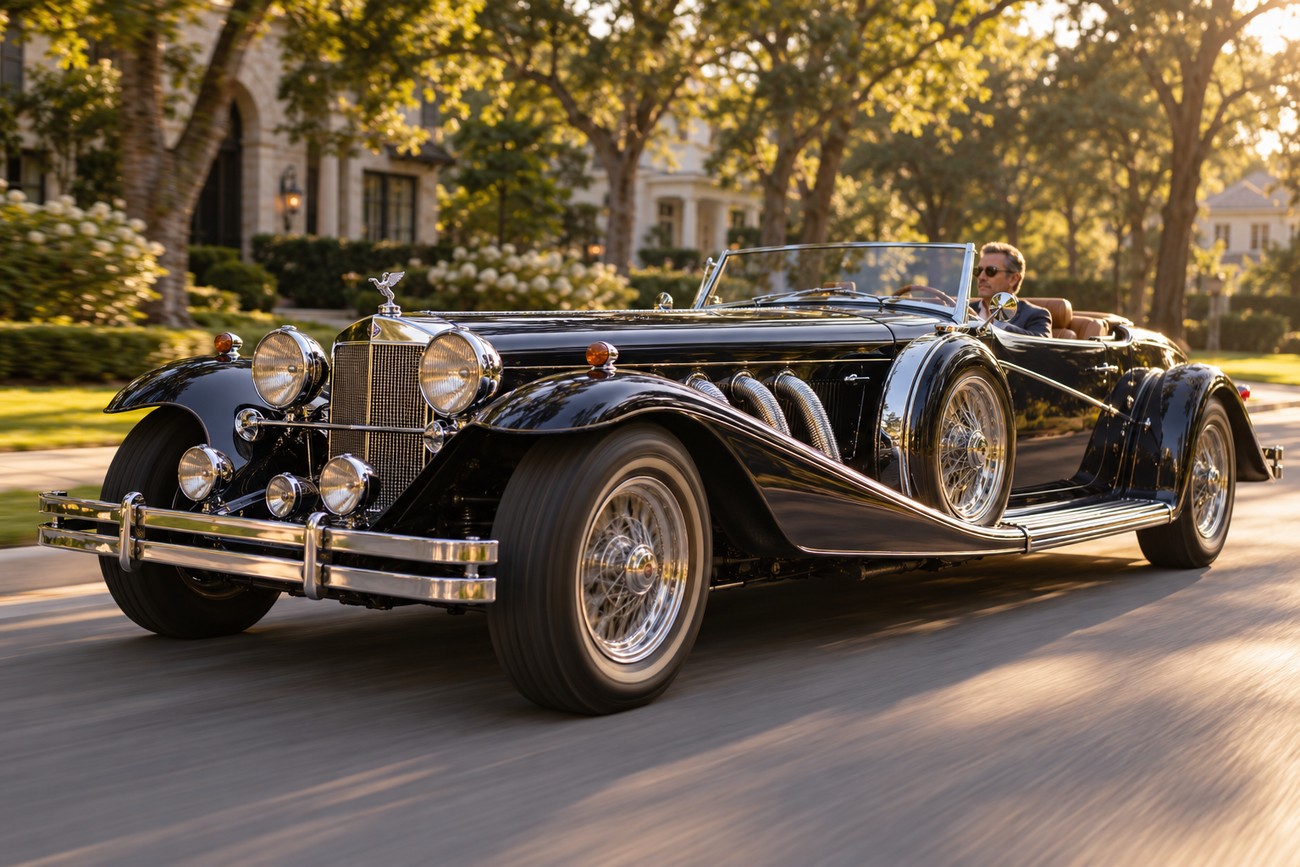
The long front end and chrome-heavy presentation give the Series I its purpose. It was designed to be noticed at low speed, where its prewar-inspired shape can do the work. The resemblance to other neo-classics is understandable, but the Clénet’s identity deserves more than a casual “Excalibur” label on a show placard or sales listing.
Its scale reinforces the effect. Reported dimensions put it at 4,875 mm long and 1,865 mm wide, with a mass of approximately 1,630 kg. Those figures describe a substantial luxury car wearing roadster clothes. Expect the measured pace of a heavy cruiser, rather than the quick responses of an agile sports car.
The styling also shapes everyday use. Sightlines, entry and exit, and close-quarters maneuvering deserve a real trial before purchase, especially if you intend to use the car in a dense city. A tight parking space can expose the gap between how compact a two-seater sounds and how much room this one occupies.
A gentle event drive is closer to its natural role than a demanding commute. The 1970s donor architecture brings period controls and road manners beneath the vintage silhouette. Buyers who enjoy that contrast may find it part of the charm; buyers expecting modern luxury-car ease are likely to feel it every time they park.
Clénet Series I Specifications and the Numbers That Do Not Always Match
Published figures are useful starting points, not a universal build sheet. Engine and body descriptions differ across references and auction examples, and an individual car may have changed during restoration.
| Item | Reported specification | Buyer’s qualification |
|---|---|---|
| Engine and output | Reference listings commonly cite a 6.6-liter V8 at 166 hp; auction examples document a 351 cu in / 5.8-liter V8 at approximately 150–159 bhp. | These are differing reported configurations, not interchangeable descriptions of every car. Verify the installed engine. |
| Transmission | Generally identified as a Ford C6 three-speed automatic. | Confirm the unit fitted to the car under inspection. |
| Layout and brakes | Front-engine, rear-wheel drive; front disc brakes and rear drum brakes. | Inspect condition and any subsequent changes. |
| Dimensions | 4,875 mm long; 1,865 mm wide; 1,450 mm high; 3,058 mm wheelbase. | Reported reference dimensions, useful when planning storage and transport. |
| Mass | Approximately 1,630 kg. | An approximate figure, consistent with its cruiser character. |
| Body materials and trim | Descriptions variously identify fiberglass and steel elements; trim also varies in listings. | Examine the actual construction and finish rather than assuming one specification applies throughout the run. |
The difference between the reported V8s is too large to dismiss as a unit conversion. Output figures also come with different labels, hp and bhp, and should remain attached to their respective source descriptions. The sensible approach is to identify the engine in the car, then check whether its documents and restoration record explain what you found.
Body-material shorthand presents a similar trap. Calling every Series I an all-steel or all-fiberglass car would overstate what the available descriptions establish. For inspection purposes, the condition of each panel, its mounting, and the quality of repairs matter more than a blanket material claim.
The Ford and Lincoln Donor Reality
The Series I uses Lincoln Continental Mark V chassis architecture and Ford- and Lincoln-derived mechanical components. That foundation explains much about its size, weight, and relaxed driving character. It also corrects the idea that every mechanical part beneath the bespoke-looking body was developed exclusively for Clénet.
Donor origins can make diagnosis more manageable. A mechanic familiar with large Ford and Lincoln V8 systems is well placed to assess the carbureted engine and the Ford C6 three-speed automatic usually identified with the model. Correct carburetor setup and attentive transmission service matter more to a satisfying drive than the badge on the grille.
There is an important limit to that advantage. Finding a service part by tracing its Ford or Lincoln application is a different task from replacing a damaged Clénet-specific piece of chrome, an interior fitting, or a body element. Shared mechanical ancestry does not turn this low-volume roadster into an ordinary donor car for repairs.
Ask a prospective workshop how it will identify parts before it orders them. An answer based solely on the registration description may be unreliable if components have been changed. The strongest repair plan starts with the installed assembly and its identifying details, then works outward to a suitable donor application.
Buying One: Originality, Restoration, and Documentation
Approach a Series I as an individual car with a history to establish, rather than as a fixed factory specification waiting to be confirmed. Repaints, restoration, replacement trim, and major mechanical changes can blur the line between original equipment and later work. A polished exterior is evidence of presentation, not proof of what lies underneath.
Begin with identification documents and chassis information, then record the engine and transmission actually installed. Compare those findings with the seller’s description, earlier photographs, restoration invoices, and any surviving ownership records. Disagreements about displacement, output, or trim deserve an explanation before they become part of your purchase decision.
Judge restoration by the work you can inspect and the work the paperwork can support. A carefully finished car with invoices and photographs may be a sounder purchase than an allegedly untouched example whose preservation claim rests on a few sentences. Documentation also helps the next buyer understand sensible changes instead of treating every unfamiliar detail as a warning.
Pay particular attention to the cabin and exterior brightwork. Interior details and chrome are central to the Series I’s visual appeal and perceived value, yet model-specific replacements may take time to locate. Uneven plating, incomplete fittings, or trim that looks improvised can turn a seemingly minor cosmetic list into a difficult post-purchase project.
Inspect the result of any repaint from several angles and in good light, and look for evidence of work beneath the visible finish. Repairs and alterations need not disqualify a car, but they should be identifiable and competently executed. Uncertainty is costly here because a later buyer will have to resolve the same questions you leave unanswered.
Ownership Costs, Hidden Weaknesses, and Who Should Buy It
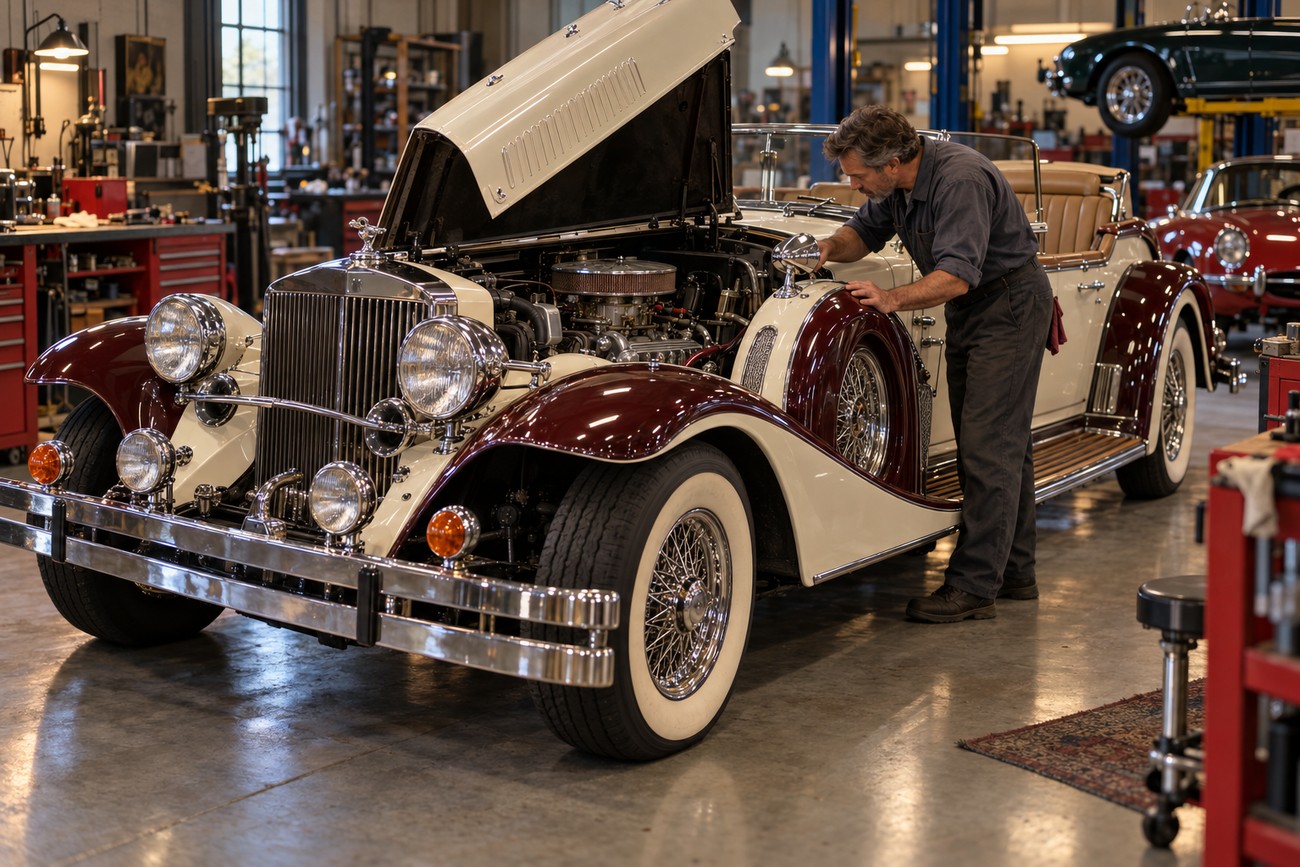
Mechanical parts research often begins with Ford and Lincoln donor applications, while Clénet-specific body, chrome, and interior pieces can be scarce. That split defines ownership more clearly than a general claim that parts are either easy or impossible to find. Routine service may be straightforward for the right workshop; a small piece of damaged bespoke trim can leave the car waiting.
The carbureted V8 and older automatic reward proper adjustment and regular attention. A car that starts and drives around a block still needs assessment under realistic conditions, including how the transmission shifts and how consistently the engine runs. Budget for sorting after purchase when maintenance evidence is thin, even if the paint and upholstery look fresh.
Low use brings its own risks. Long periods parked can leave fuel-system, brake, seal, and transmission-related work to the next owner, while a search for rare finishing parts can extend downtime further. Storage should therefore preserve more than appearance; a credible recommissioning record is more useful than a low odometer reading alone.
Size remains a cost in time and convenience. At 4,875 mm long and approximately 1,630 kg, the Series I needs suitable storage and patience in narrow streets or tight parking. It is poorly matched to anyone who wants the simple access and easy maneuverability of a modern open car.
The right buyer wants visual drama, occasional event use, and the process of caring for an unusual machine. The wrong buyer expects effortless daily transport, sharp handling, or a quick resale simply because only 250 were built. Condition, documented history, restoration quality, and completeness give rarity its value; they cannot be replaced by it.
Frequently asked questions
Catalog entries for low-volume cars can compress differences that matter when buying one. Use these answers to describe the Series I precisely and to test claims about a specific example.
Why do some catalogs describe the Clénet Series I as a 2+2?
Some catalogs use “2+2,” but the Clénet Series I is normally described as a two-seat roadster. Treat the catalog term as a discrepancy, not as assurance of usable rear seating. If seating matters for registration or your intended use, inspect the particular car and its documents before repeating the claim.
How should the production date of a Clénet Series I be described?
“Produced from 1976 to 1979” reflects the generally cited range. Some sources identify 1977 as the first series-built delivery, which is a narrower milestone rather than necessarily a conflicting production start. For an individual car, distinguish its documented build, delivery, and registration dates instead of using a general range as its personal history.
What can go wrong with a low-mileage Clénet that has been stored for years?
Low mileage does not rule out recommissioning work after long storage. Have the carburetor and fuel delivery checked, inspect the brakes and seals, and assess how the automatic transmission behaves once the car is properly running. A fresh appearance or an easy start cannot establish the condition of systems that have spent years largely unused.







