
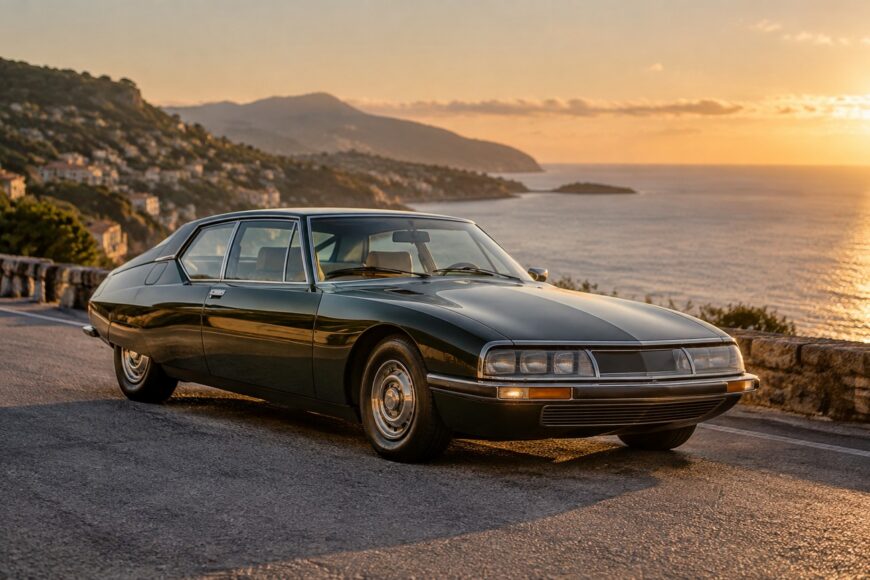
The Citroën SM is an extraordinary grand tourer whose Maserati V6, hydropneumatic suspension, and DIRAVI steering create a driving experience unlike an ordinary classic. Those same systems make condition more important than appearance: a polished body can conceal weak spheres, leaking hydraulic lines, poor carburetor work, or steering that no longer behaves as designed.
Built from 1970–1975, the SM promised high-speed distance with unusual refinement and technical ambition. A healthy example can cover long roads with remarkable composure, yet ownership depends on specialist maintenance, correct hydraulic fluid, heat control, and access to scarce parts. The buyer’s real choice is between an exceptional long-distance GT and a complex old machine that can turn small faults into interconnected repairs.
- Why the Citroën SM Is More Than a Maserati-Powered Citroën
- Maserati V6, Gearboxes, and Real-World Performance
- Hydropneumatic Suspension and DIRAVI Explained
- What the SM Feels Like on the Road
- The Ownership Problems Brochures Leave Out
- How to Inspect a Citroën SM Before Buying
- Restoration Economics and the Right Owner
- Frequently asked questions
- Which Citroën cars had hydropneumatic suspension?
- Why was the Citroën SM banned in the United States?
- Which other cars have hydropneumatic suspension?
- What does LHM mean, and why must it not be mixed with other hydraulic fluids?
Why the Citroën SM Is More Than a Maserati-Powered Citroën
The SM was conceived as a front-wheel-drive grand tourer for fast, sustained travel rather than as a conventional sports car with a luxurious cabin. Citroën supplied the distinctive body, front-drive layout, hydropneumatic suspension, and advanced steering system, while Maserati provided the compact 2.7-litre V6. The result was a car designed around the interaction of those elements from the beginning.
That integration is the reason the usual description—“a beautiful Citroën with a Maserati engine”—falls short. The engine’s character matters, but so do the hydraulic systems that control suspension height, braking-related functions, and steering assistance. The long body, enclosed front-end details, aerodynamic intent, and unusual control responses all make sense as parts of one high-speed touring concept.
Production ran from 1970–1975, a short period in which the SM occupied a technically distinctive position within Citroën’s range. It was neither a lightly modified family car nor a simple luxury derivative. Its identity came from combining a Maserati V6 with a shared high-pressure Citroën hydraulic system and DIRAVI, the self-centering hydraulic steering system with a very quick ratio and variable steering effort.
This architecture also explains why two cars that look equally attractive can feel entirely different. A correctly maintained SM settles at the right height, steers with deliberate precision, and absorbs distance with unusual calm. A neglected one may have the same dramatic profile while delivering a hard ride, nervous responses, hydraulic leaks, poor starting, and a driving experience that bears little resemblance to the original design.
Maserati V6, Gearboxes, and Real-World Performance
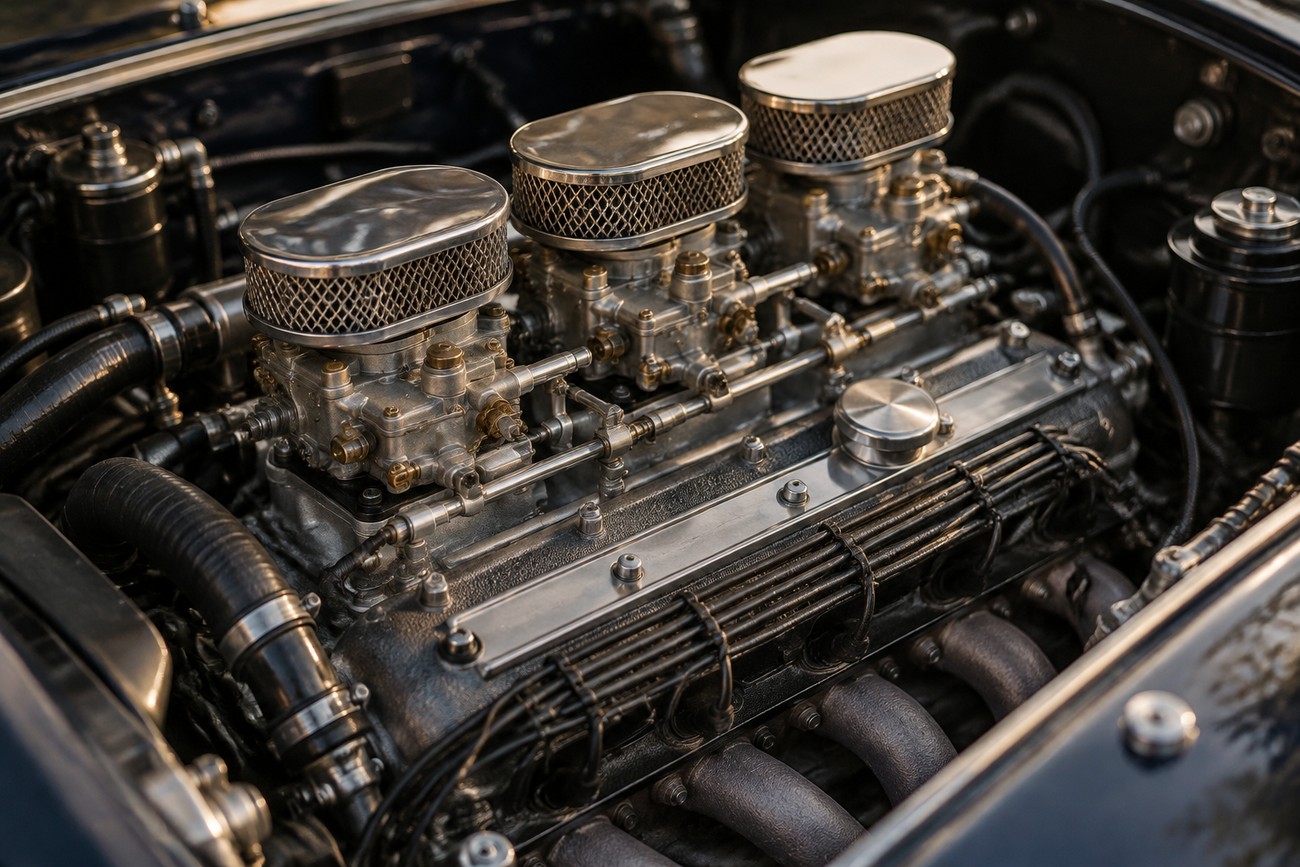
The SM uses a 2.7-litre Maserati V6, and early or original carbureted versions used three twin-choke Weber carburetors. Published power is commonly quoted at approximately 170–180 hp, depending on market, year, and specification. That range is more useful than a single definitive figure because carburetor settings, measurement standards, and later alterations can change both the quoted output and the way the car delivers it.
The standard manual transmission is a five-speed gearbox, which suits the car’s grand-touring purpose by keeping the engine in a useful part of its rev range during fast road work. A three-speed Borg-Warner automatic was available in some markets and model years. Transmission choice changes the character substantially: the manual feels more immediate and gives the driver greater control over the V6, while the automatic places more emphasis on smooth progress and the condition of its shift and kickdown systems.
Well-sorted examples are commonly quoted at around 220 km/h, with 0–100 km/h in approximately 8–9 seconds. These figures depend heavily on engine condition, carburetor tuning, transmission, vehicle weight, and the health of the rest of the drivetrain. A tired SM can feel much slower than the period descriptions suggest, especially when the carburetors are out of synchronization or the engine is struggling with heat-related faults.
The three-carburetor arrangement rewards careful setup and punishes casual adjustment. Stable idle, clean progression, and reliable cold starting depend on synchronization, linkage condition, ignition health, and correct mixture settings. A car that starts only after extended throttle work, hunts at idle, or develops hesitation as it warms may require more than a minor tune-up.
Heat in the engine bay is part of the ownership equation. It can accelerate deterioration of wiring, hoses, and carburetor-related components, while also exposing weaknesses in cooling and previous repair work. A brief demonstration drive may show an enthusiastic V6 and acceptable oil pressure, then miss the hesitation, rising temperature, hot restart difficulty, or rough running that appears only after the car has reached full operating temperature.
Hydropneumatic Suspension and DIRAVI Explained
The SM uses a shared high-pressure Citroën hydraulic system rather than a conventional arrangement of steel springs, ordinary power steering, and separate mechanical controls. Its main components include spheres, a pump, a pressure regulator, and height correctors. The system uses LHM-type mineral hydraulic fluid, and the correct fluid type and system cleanliness are essential to the behavior of the car.
The spheres provide the springing effect through gas pressure, while hydraulic fluid transfers force through the suspension and control circuits. Height correctors respond to changes in load and help maintain the intended ride height. The pump supplies pressure, and the regulator manages that pressure so the system can perform its different functions without relying on a conventional coil-spring suspension layout.
DIRAVI adds another layer of unfamiliarity. It provides strong self-centering, a very quick steering ratio, and variable steering effort. At low speed, the wheel can feel very light and almost artificially quick, while the steering may seem light and disconnected from the road compared with a conventional classic. At higher speed, the system can feel precise and stable, provided the hydraulic pressure, geometry, ride height, and steering components are all correct.
Incorrect fluid, contamination, leaking seals, weak pressure, or poor height correction can materially change both comfort and control. A leak is therefore more than an untidy mark on the garage floor: it may indicate loss of pressure, damaged components, or a system that has been repeatedly topped up without proper diagnosis. Mixing incompatible fluid families can damage seals and complicate later servicing.
The front suspension and steering are closely connected to hydraulic-system condition. A car can have apparently sound mechanical joints and still behave badly because the spheres are tired, the pump is weak, the regulator is malfunctioning, or the ride height is wrong. The system rewards correct maintenance with an unusually coherent driving experience, while improvised repairs tend to produce faults that are difficult to isolate.
What the SM Feels Like on the Road

A healthy SM feels composed rather than conventionally sporty. The V6 supplies enough pace for serious touring, while the suspension smooths long undulations and surface changes in a way that ordinary spring-and-damper classics rarely can. The car’s size and front-wheel-drive layout remain perceptible, yet the driving experience becomes remarkably fluent once the hydraulic systems are working correctly.
DIRAVI requires a period of adjustment. At low speed, its quick ratio and light, unusual weighting can feel artificial, and the steering may offer less conventional road feedback than a driver expects from a performance car. Precision is still present, but it arrives through the steering’s response and stability rather than through a heavily weighted wheel transmitting every texture of the pavement.
Ride height matters more than many first-time evaluators expect. Incorrect height changes suspension geometry, weight transfer, and driver confidence, so a car that sits too high or too low may feel nervous even when its spheres appear serviceable. Healthy spheres support the intended supple ride; tired spheres can make the car hard, unsettled, and uncomfortable.
The SM generally makes more sense at sustained speed than in urban stop-start traffic. City driving exposes the quick steering, heat buildup, clutch or automatic-transmission behavior, and awkward low-speed responses without allowing the chassis to settle into its natural rhythm. A long, fully warmed road test reveals far more than a static inspection or a short trip around the block.
The Ownership Problems Brochures Leave Out
Age-related hydraulic lines and seals are among the most persistent sources of trouble. Leak-chasing can involve accessible pipes, hidden connections, worn seals, and components that were disturbed during earlier repairs. A dry underside is useful evidence, but it proves little if the car has only been started briefly or if the system has not been held at pressure and cycled repeatedly.
Tired spheres are another common failure pattern. Their loss of gas pressure removes the compliance that gives hydropneumatic suspension its purpose, leaving the car hard and nervous. Owners sometimes blame the body, tires, or alignment when the real problem is that the suspension is no longer operating within its intended pressure range.
Heat around the engine bay can accelerate the deterioration of wiring, hoses, and carburetor-related components. Old insulation becomes brittle, connections develop resistance, and hoses may appear acceptable until they are exposed to sustained temperature. A car can therefore pass a visual inspection while carrying electrical and fuel-system weaknesses that emerge only after a long drive.
The carbureted V6 can be difficult to synchronize and set up for stable idle and cold starting. Poor linkage adjustment, vacuum leaks, worn components, or an improvised ignition installation may be treated as separate faults even though they interact. A seller who describes difficult starting as “normal for an old Maserati engine” is offering a warning, not reassurance.
Unique body, interior, hydraulic, and Maserati-specific parts may be rare and expensive. Small fittings, hoses, trim pieces, fasteners, and interior hardware can cost disproportionately more than their size suggests, especially when a previous restoration has discarded original components. A long-stored or poorly restored SM can become a continuing restoration project, and specialist knowledge is a major ownership requirement rather than a minor convenience.
How to Inspect a Citroën SM Before Buying
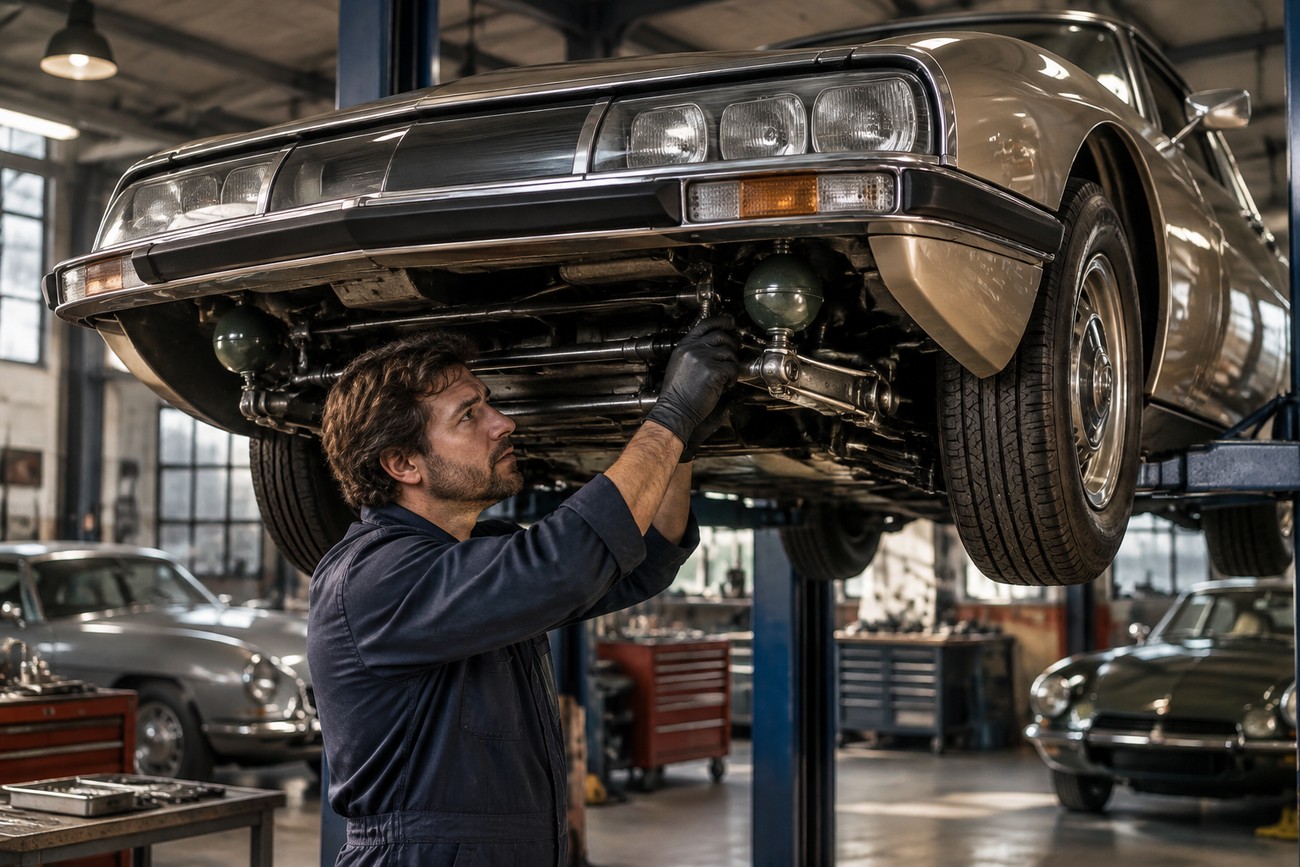
Begin with the service history, giving documented hydraulic maintenance greater weight than low mileage or fresh cosmetics. Look for evidence of correct LHM-type fluid, sphere replacement or testing, pump and regulator work, height-corrector service, and replacement of aging lines and seals. The absence of records does not automatically condemn a car, but it should move the inspection toward proof rather than assumption.
Inspect the car cold and observe how it starts, how quickly it settles to the correct ride height, and whether the hydraulic system shows unusual hesitation or noise. Check for leaks around lines, unions, pump connections, regulators, and suspension components. Once the car is running, confirm that repeated suspension-height cycles produce consistent results and that the vehicle returns to the correct position rather than stopping at a visibly abnormal height.
Assess DIRAVI at low speed and during the road test. The steering should self-center decisively without unexplained hesitation, binding, wandering, or abnormal changes in effort. Pay attention to whether the car tracks confidently at speed and whether the steering response changes as the hydraulic system warms.
The engine should be evaluated cold and fully warmed. Check cold starting, idle stability, throttle response, carburetor synchronization, cooling behavior, hot restarting, and any smell of fuel or signs of overheating. Wiring repairs, hose substitutions, mixed hydraulic fluids, improvised brackets, and non-original components deserve close scrutiny because they may reveal earlier attempts to solve symptoms without correcting the underlying fault.
A long road test is essential. Drive long enough for the engine, transmission, hydraulic system, and cooling system to reach normal operating temperature, then listen for changes in ride, steering, and engine behavior. Recheck the car afterward for fresh leaks, pressure-related symptoms, fluid smells, and changes in ride height. Cosmetic perfection cannot prove hydraulic, electrical, or drivetrain health.
Restoration Economics and the Right Owner
An inexpensive-looking SM project can become costly through specialist labor and interconnected failures. A small hydraulic leak may involve a rare hose or fitting, while an electrical fault may be linked to heat-damaged wiring or an earlier modification. Unique trim, interior pieces, and body hardware can consume time and money even when the major mechanical parts appear present.
Previous low-quality repairs and restorations deserve particular suspicion. Incorrect fasteners, poorly routed pipes, mixed materials, non-original wiring, and unsuitable hydraulic components can work temporarily while creating future failures. The car’s complexity means that “mostly complete” is not always close to usable; missing small parts may stop a system from being assembled correctly.
The right target for most owners is a usable, properly maintained grand tourer rather than a perfect museum object or an indefinite restoration. A well-maintained SM can function as a long-distance GT, but reliable ownership depends on maintenance discipline, correct parts, and access to competent specialists. It rewards an owner who records work, investigates symptoms early, and avoids treating the car as an ordinary classic.
The strongest purchase is therefore not necessarily the most cosmetically perfect example. A credible service history, correct hydraulic components, sound wiring, healthy cooling, and a convincing warmed road test matter more than fresh paint or a low odometer reading. The SM is fascinating because its systems work together; buying one responsibly means evaluating that whole system rather than collecting attractive individual features.
Frequently asked questions
These questions cover the SM’s hydraulic technology, related Citroën systems, and the practical issues that matter when inspecting one. The answers also clarify where similar engineering terms can cause confusion.
Understanding those distinctions helps buyers assess the car’s condition more accurately and seek appropriate specialist advice.
Which Citroën cars had hydropneumatic suspension?
Hydropneumatic suspension appeared across several Citroën model families, including the DS, GS and GSA, CX, BX, XM, Xantia, and C5. Equipment varied by model, trim, engine, market, and model year, so the name of a family alone does not confirm that every example used the system.
The SM belongs to this broader Citroën engineering history, but its particular installation was shaped by the car’s front-wheel-drive grand-tourer role and its DIRAVI steering. That distinction matters when sourcing parts or seeking advice: knowledge of a different hydropneumatic Citroën can be useful, yet it does not automatically cover the SM’s Maserati engine, packaging, or steering controls.
Why was the Citroën SM banned in the United States?
The SM was not simply prohibited by one universal United States ban. Its limited sustained availability resulted from a combination of safety and emissions requirements, homologation pressures, market conditions, and commercial difficulties that made continued support challenging.
That explanation is more accurate than attributing the car’s absence to a single rule. United States-market requirements could affect lighting, bumpers, emissions equipment, and certification, while the SM’s specialized design and limited sales prospects complicated the business case. Individual cars can therefore have different import and specification histories, and their documentation should be checked rather than inferred from a blanket statement.
Which other cars have hydropneumatic suspension?
Beyond Citroën’s own production cars, related or licensed hydropneumatic applications appeared in some Rolls-Royce and Bentley models. These systems shared broad principles of hydraulic self-leveling, yet their implementation, controls, and service procedures were not necessarily identical to those of a Citroën SM.
Self-leveling suspension should also be distinguished from hydropneumatic suspension. Many later vehicles used air springs, electronically controlled dampers, or hydraulic load-leveling units without reproducing the Citroën arrangement of gas-filled spheres, hydraulic pressure, and height correction. The system’s name describes a specific engineering family, not every suspension that maintains ride height.
What does LHM mean, and why must it not be mixed with other hydraulic fluids?
LHM refers to a green mineral hydraulic fluid family used by the SM’s high-pressure system. The fluid works with the seals, hoses, valves, pump, regulator, and other components designed for that specification. It should not be casually mixed with incompatible hydraulic-fluid families because the resulting contamination can damage seals, alter system behavior, and make diagnosis more difficult.
Fluid identification should be part of any inspection or repair. If the history is unclear, the system may require proper cleaning and servicing rather than a simple top-up. Using the correct fluid is only one part of hydraulic health, but using the wrong fluid can undermine otherwise sound components and create faults that resemble ordinary age-related wear.







