
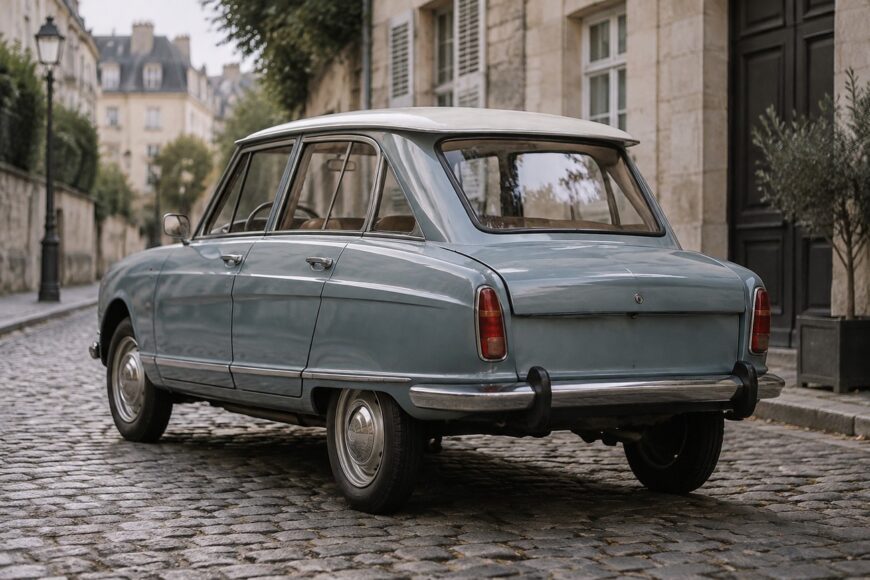
The rear window of the Citroën Ami 6 saloon seems to lean the wrong way. Its top sits farther back than its lower edge, giving the car a profile that can look counterintuitive in a photograph. Yet that shape served a purpose: it helped Citroën make room for people in the back without simply raising the whole roof.
The crucial space is above a rear passenger’s head. In a small saloon, a roof that falls away too soon can make an otherwise usable seat feel cramped. The Ami 6’s unusual rear body allowed the roof to extend farther back before the window descended toward the boot. Once you see the shape as a way of arranging cabin and luggage space, its apparent oddness becomes easier to understand.
- What the Ami 6’s reverse-rake window actually does
- The main reason: rear-seat headroom without a taller roof
- Why that compromise suited a small Citroën
- Did the backwards window help aerodynamics or rain visibility?
- The everyday trade-offs: boot access, visibility, and upkeep
- Why the shape still divides opinion
- Frequently asked questions
- Was the Ami 6 the first car with a reverse-rake rear window?
- What does “reverse rake” mean?
- What is the thing on the side of a Citroën Cactus?
- How much does it cost to replace the battery in a Citroën Ami?
What the Ami 6’s reverse-rake window actually does
On the Ami 6 saloon, the top of the rear glass sits farther back than its lower edge. That is reverse rake: the window leans backward as it rises, opposite to the direction many people expect from a conventional saloon rear window. The slant is especially noticeable because it forms a sharp visual break between the roof and the boot.
Reverse rake describes the angle of the glass, not the entire body style. A window can lean this way while the car retains a separate boot lid; the term does not mean fastback or hatchback. Calling the Ami 6 a fastback solely because its rear profile looks unusual obscures how its saloon body is actually arranged.
The distinction matters when judging what the design accomplishes. Moving the upper edge of the glass rearward changes where the roof can end and where the glazed rear wall begins. It does not, by itself, tell you the volume of the boot, the size of its opening, or how easily a passenger can get into the rear seat.
From the side, the window is the feature that catches the eye. Viewed at an angle, the roof, rear seats, glass, and boot read more clearly as connected parts of one compact body. The famous silhouette comes from their relationship, rather than from an isolated piece of glass installed at an unusual angle.
The main reason: rear-seat headroom without a taller roof
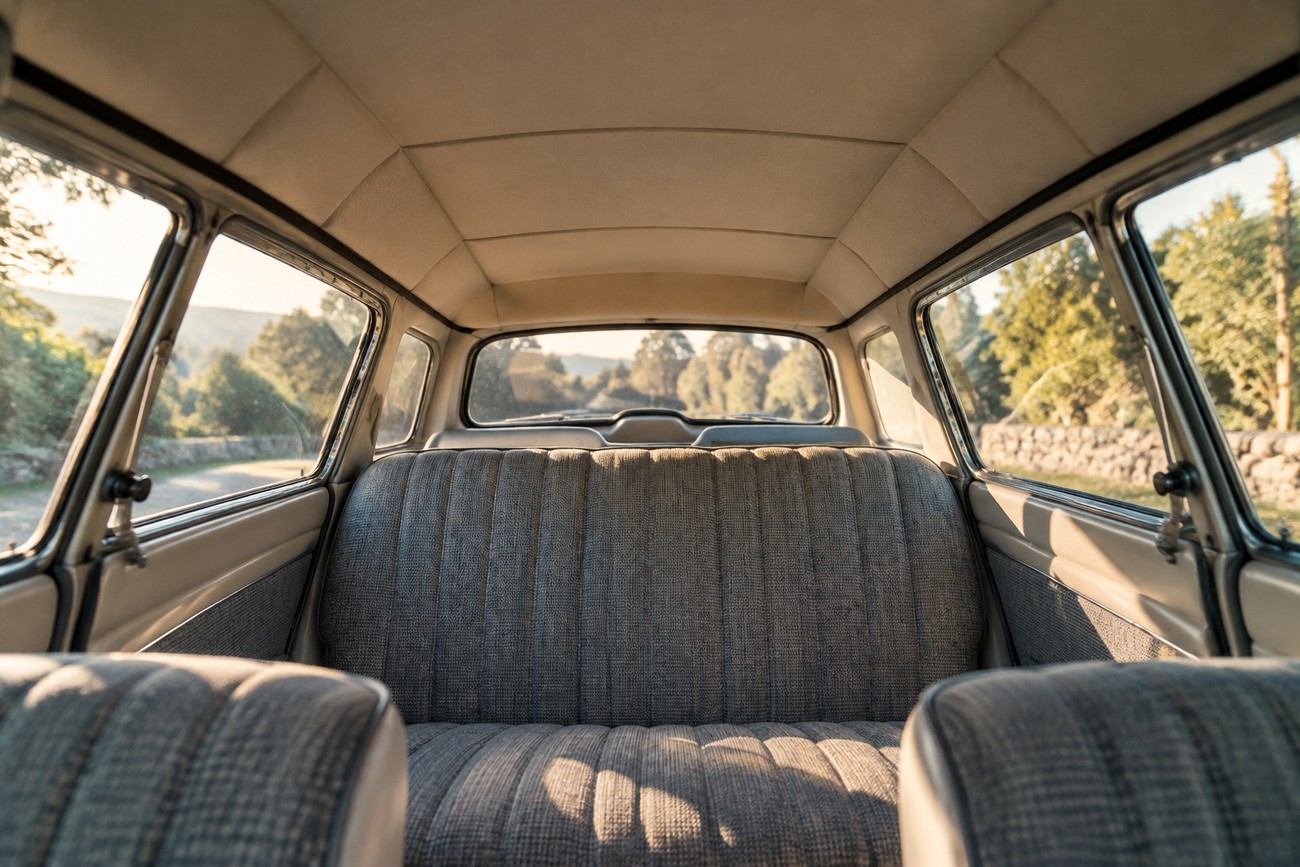
Citroën linked the Ami 6’s rear-body layout to greater rear-seat headroom and luggage practicality without raising the overall roof height. The roof could continue over the rear passengers before meeting the top of the backward-leaning window. This placed useful roof space where seated occupants needed it, while allowing the body to step down toward a separate boot.
Consider the alternative in simple geometric terms. If a low roof began sloping down toward the rear immediately behind the front occupants, it would pass closer to the heads of people in the back. Raising the entire roof could recover that space, but would change the height and proportions of the whole car. The reverse-rake arrangement offered another route through that packaging problem.
The benefit belongs to the arrangement of the roof, cabin, rear glass, and boot together. Tilting a pane backward on an otherwise unchanged car would not automatically create headroom. The seats have to sit in the useful part of the cabin, and the surrounding body must provide enough space above them.
Luggage practicality was part of Citroën’s stated rationale, but the window angle alone does not enlarge the boot. Capacity and usefulness depend on the space beneath the lid and the way that space can be reached. The Ami 6’s rear end was therefore a compromise between passengers and luggage, expressed in a shape that made the compromise visible.
Why that compromise suited a small Citroën
The Citroën Ami 6 was produced from 1961 to 1971 and was a volume-production model, not a one-off design exercise. Its rear end was intended for a car people would use routinely. Making a small, modest-power car feel accommodating called for careful use of the space within its body, especially where rear passengers and luggage competed for room.
A conventional low-roof saloon outline would have presented a different choice. Its rear window could slope forward from the roof in a familiar way, but that roofline would need enough length or height to clear the rear seat. On a compact body, those dimensions cannot be considered independently of the boot and the car’s overall proportions.
The Ami 6 made its space-saving logic conspicuous rather than hiding it behind a more familiar roofline. That does not mean every aspect of the shape was dictated by a single measurement: body design also has to look coherent and be built as a complete car. Citroën’s documented explanation, however, points to packaging rather than visual provocation as the principal reason for the layout.
Its appearance became part of the model’s identity once the car reached the road. The reverse-rake window made an Ami 6 saloon easy to recognize, whether a viewer liked the profile or not. That recognition matters historically: an unusual solution to an ordinary small-car problem became one of the car’s defining features.
Did the backwards window help aerodynamics or rain visibility?
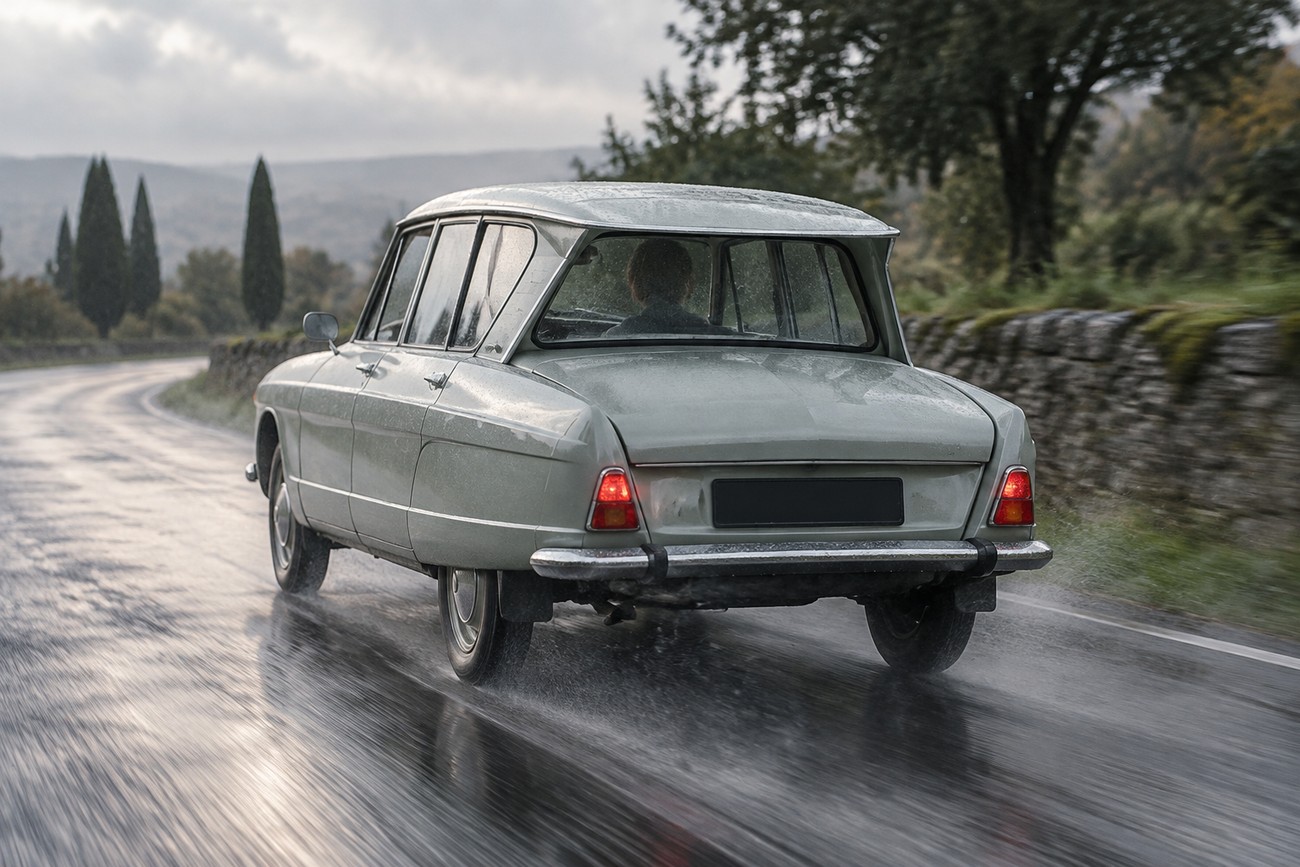
A reverse-rake rear window is not inherently more aerodynamic. Air moves over the roof and around the entire tail, including the edges of the glass and the boot. Changing the window angle may change that flow, but it cannot establish the drag of a car in isolation. The complete body shape is what matters.
Nor does the unusual angle guarantee that the rear glass stays clean. Dirt and water collect or clear according to airflow, road conditions, weather, and the condition of the car. Owners may find visibility troublesome in rain or when grime builds up, but the reverse rake alone cannot predict every driver’s experience.
Rearward visibility is a separate question from aerodynamic efficiency. A driver looks through a particular area of glass, at a particular angle, using mirrors positioned within the car. The distinctive rear geometry can take some getting used to, especially when judging what lies close behind the boot; familiarity with the view matters more than an assumption based on a side photograph.
Claims that the window was designed chiefly as a self-cleaning device, or that it must have improved airflow, go beyond what its shape proves. The defensible explanation is narrower and more useful: the rear-body layout addressed packaging. Any effect on airflow and wet-weather visibility has to be considered in the context of the whole car and its conditions of use.
The everyday trade-offs: boot access, visibility, and upkeep
A practical boot and an easy-to-load boot are not identical. A compartment may take ordinary bags while its lid opening still makes a bulky object awkward to maneuver. On the Ami 6 saloon, it is worth looking past the dramatic window angle to the actual opening, the boot floor, and the path an item must follow to fit inside.
The same direct approach helps with the view from the driver’s seat. Sit in the car, adjust the mirror, and look at where the glass edges and boot line fall in the rearward sightline. Some drivers may adapt readily; others may find the view less intuitive. Neither response can be established from the reverse-rake angle alone.
Body condition deserves particular attention because the glass, seals, and adjoining panels must fit one another accurately. Unusual rear-body geometry can complicate repairs and parts matching, and a replacement chosen by model name alone may be wrong for the body style. Careful inspection is more informative than assuming every Ami 6 has the same leak or visibility fault.
These checks also keep the original design brief in perspective. The rear layout sought usable room for passengers and luggage, but it did not promise that every shape of cargo would pass easily through the boot opening. Cabin headroom, loading access, and outward visibility are related parts of daily use, yet each needs to be judged on its own terms.
Why the shape still divides opinion
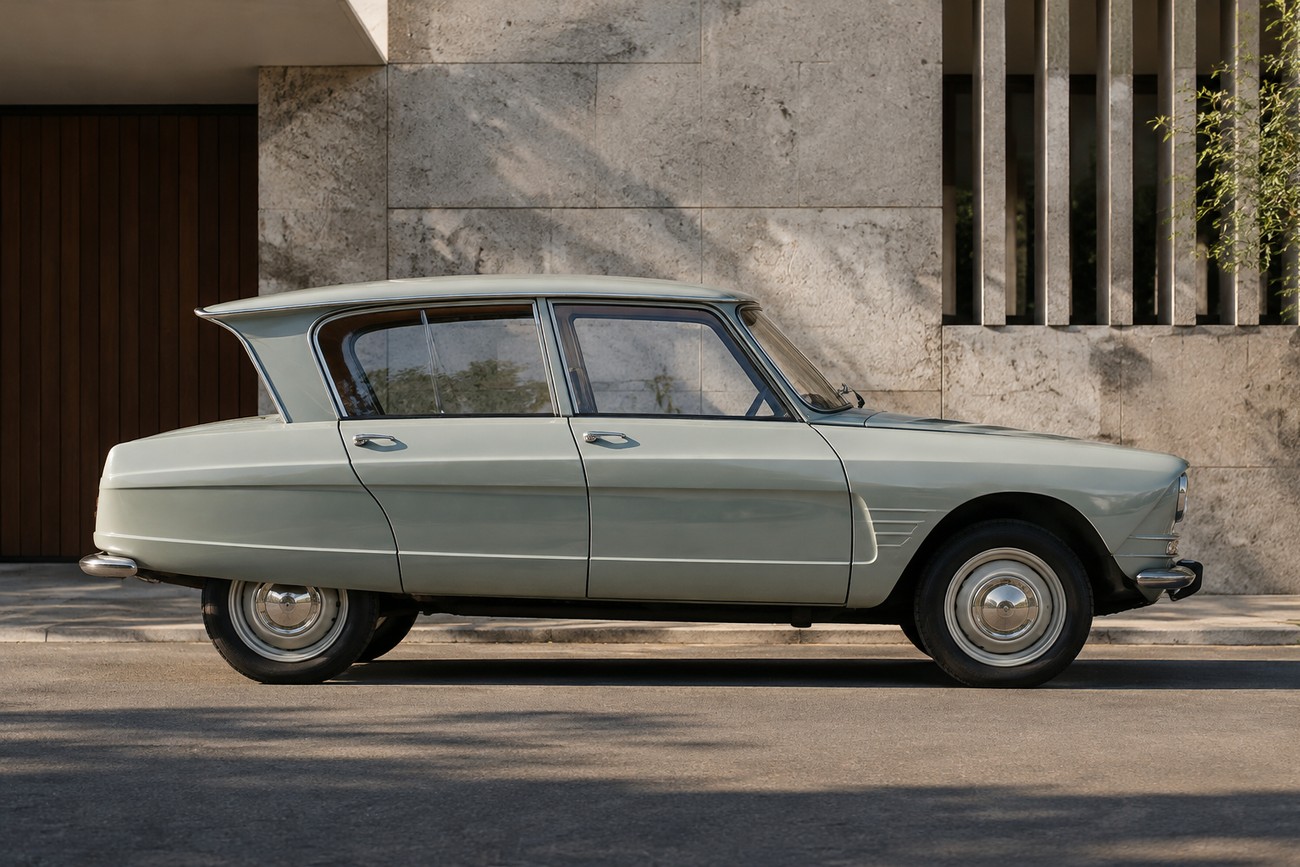
The Ami 6 saloon can look as though its rear window has been fitted backward, particularly in a flat side view. A familiar saloon profile prepares the eye for glass that slopes the other way. The Ami 6 interrupts that expectation, so its practical purpose is rarely obvious from appearance alone.
That first reaction is a response to styling, not a verdict on the engineering. The rear profile was deliberate, and its packaging purpose remains relevant whether someone finds the result appealing or awkward. Equally, a sound reason for the layout does not require every observer to like its proportions.
A closer look gives a prospective buyer or enthusiast better grounds for judgment. Check the space above a rear passenger’s head, try the boot opening with the sort of luggage you would actually carry, and inspect the rear glass and surrounding bodywork. Those observations reveal more about the car’s usefulness and condition than a profile photograph can.
The window endures as the Ami 6’s most recognizable feature because the functional decision is so visible. It made the car distinctive in its own time and continues to divide opinion. Understanding why it leans backward does not erase the visual surprise; it explains what Citroën was trying to fit beneath that roof.
Frequently asked questions
These questions often arise because similar-looking names and body shapes describe different things. The Ami 6 saloon’s rear window is a specific design feature, so identifying the car and the part under discussion matters.
Was the Ami 6 the first car with a reverse-rake rear window?
No. The Ford Anglia 105E, introduced before the Ami 6, is another production-car example with a reverse-rake rear window. The Ami 6’s distinction lies in how prominently it used the feature in a small saloon whose rear-body layout was linked to passenger room and luggage practicality. It should be recognized for that application, rather than credited with inventing the angle.
What does “reverse rake” mean?
Reverse rake means that a window leans back as it rises: viewed from the side, its top edge sits farther toward the rear of the car than its bottom edge. The term describes an angle, not a type of boot lid or rear door. That is why it can be used to describe the Ami 6 saloon’s glass without calling the car a hatchback.
What is the thing on the side of a Citroën Cactus?
The distinctive pads on the sides of the Citroën C4 Cactus are called Airbumps. They are exterior protective panels intended to help guard against minor knocks. They belong to a different Citroën model and serve a different purpose from the Ami 6 saloon’s reverse-rake rear window.
How much does it cost to replace the battery in a Citroën Ami?
There is no single reliable price without identifying the vehicle and battery. The modern electric Citroën Ami is a different vehicle from the 1961–1971 Ami 6, and a quote also needs to specify which battery or electrical component requires replacement. Ask for the exact part, labor, and any associated checks before comparing costs; an Ami 6 rear-window discussion cannot establish an electric Ami battery price.







