
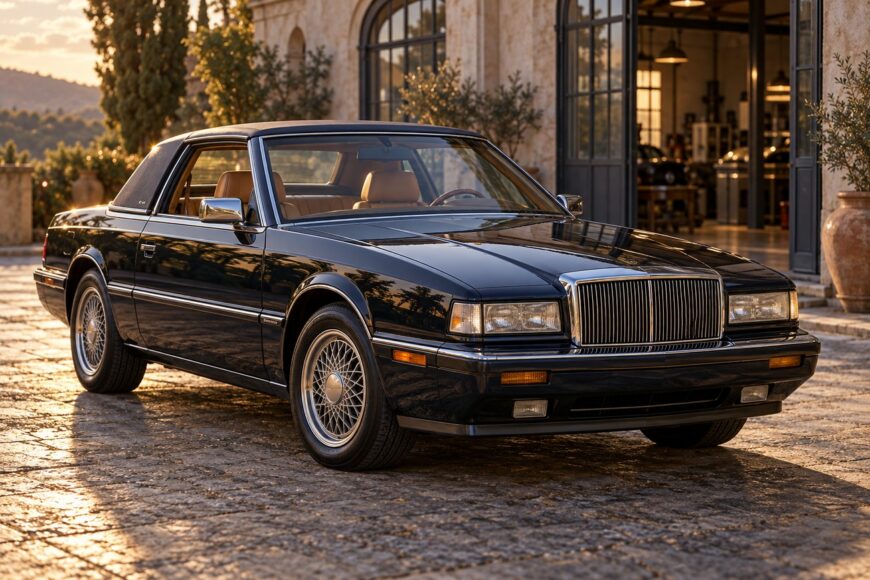
The Chrysler TC by Maserati is an Italian-built roadster wearing a Maserati badge while relying heavily on Chrysler, Mitsubishi, and Getrag hardware. That contradiction defines the car. Its body and presentation suggest an exotic grand tourer, while its engineering reflects a late-1980s Chrysler project with selected Italian involvement.
Your choice depends on which compromise you prefer. The rare 200-hp turbocharged four-cylinder with a five-speed manual has the strongest collector appeal, the later V6 cars offer smoother cruising, and ordinary automatic examples can be inexpensive ways into an unusual piece of automotive history. Each version also carries the support problems of a low-volume, aging car.
- What the Chrysler TC by Maserati really was
- 1989–1991 Chrysler TC by Maserati: engines and transmissions
- Why the Maserati badge promises more than the driving experience
- The mistakes buyers make with a TC by Maserati
- Dimensions, weight, and the hardware behind the image
- What a Chrysler TC by Maserati is worth today
- Who should buy one—and who should walk away
- Frequently asked questions
- What is the average price of a Chrysler TC by Maserati?
- What is the value of a 1990 Chrysler TC by Maserati?
- What is the value of a 1989 Chrysler TC by Maserati base version?
- Why is the rare 200-hp manual TC more desirable than the V6 car?
What the Chrysler TC by Maserati really was
The Chrysler TC by Maserati was produced only from 1989 through 1991 and built in Italy as a joint Chrysler–Maserati project. It emerged during the Iacocca/de Tomaso era, when Chrysler was pursuing a more upscale image and Maserati was part of a broader Italian industrial story. The result was a compact two-seat grand tourer with Italian presentation and a largely American engineering foundation.
Calling it a conventional Maserati sports car creates the wrong expectations. The TC was designed to provide style, open-air touring, and a degree of exclusivity rather than deliver the focused balance or mechanical identity associated with Maserati’s more serious performance cars. Its character makes more sense beside luxury-oriented personal cars of the period than beside a contemporary Italian exotic.
Approximately 7,300 cars were sold over the full production run. That volume is small enough to make surviving examples unusual, yet large enough to prevent rarity alone from turning every car into a high-value collectible. Collectors generally value the TC as an Iacocca/de Tomaso-era historical artifact, especially when the car retains its correct specification and complete equipment.
1989–1991 Chrysler TC by Maserati: engines and transmissions
The engine and gearbox determine the car’s character more decisively than the badge. These are the three configurations a buyer should identify before considering mileage, trim, or cosmetic appeal.
| Configuration | Engine and output | Transmission | Buyer significance |
|---|---|---|---|
| 1989 base version | 2.2-liter turbocharged four-cylinder, approximately 160 hp | Three-speed A413 automatic | The common turbo specification; period character, but greater risk of turbo lag and coarse operation |
| Rare performance version | 2.2-liter DOHC 16-valve turbocharged four-cylinder, 200 hp | Five-speed Getrag 284 manual | The most desirable configuration and the closest match to the car’s sporting image |
| 1990–1991 standard version | 3.0-liter Mitsubishi V6, 141 hp | Four-speed A604 automatic | Smoother and easier to drive, though less distinctive and not genuinely quick for the car’s image |
The 200-hp DOHC version is the one most likely to be confused with an ordinary turbo car. Heritage lists 501 examples, while Hemmings describes the version as very scarce. A seller’s use of “turbo” or “Maserati” proves little; the engine layout, transmission, and supporting documentation deserve direct verification.
The 1989 base car uses a 2.2-liter turbocharged four-cylinder with approximately 160 hp and a three-speed A413 automatic. It can provide more period character than the V6, but its turbo response and coarse operation may disappoint anyone expecting immediate acceleration. The rare manual car gains both output and driver involvement from its DOHC engine and Getrag gearbox.
From 1990, the standard powertrain became the 3.0-liter Mitsubishi V6 with 141 hp and a four-speed A604 automatic. This change favored smoothness and relaxed cruising. It also means that a later TC should never be assumed to have the performance character of the rare 200-hp car.
Why the Maserati badge promises more than the driving experience
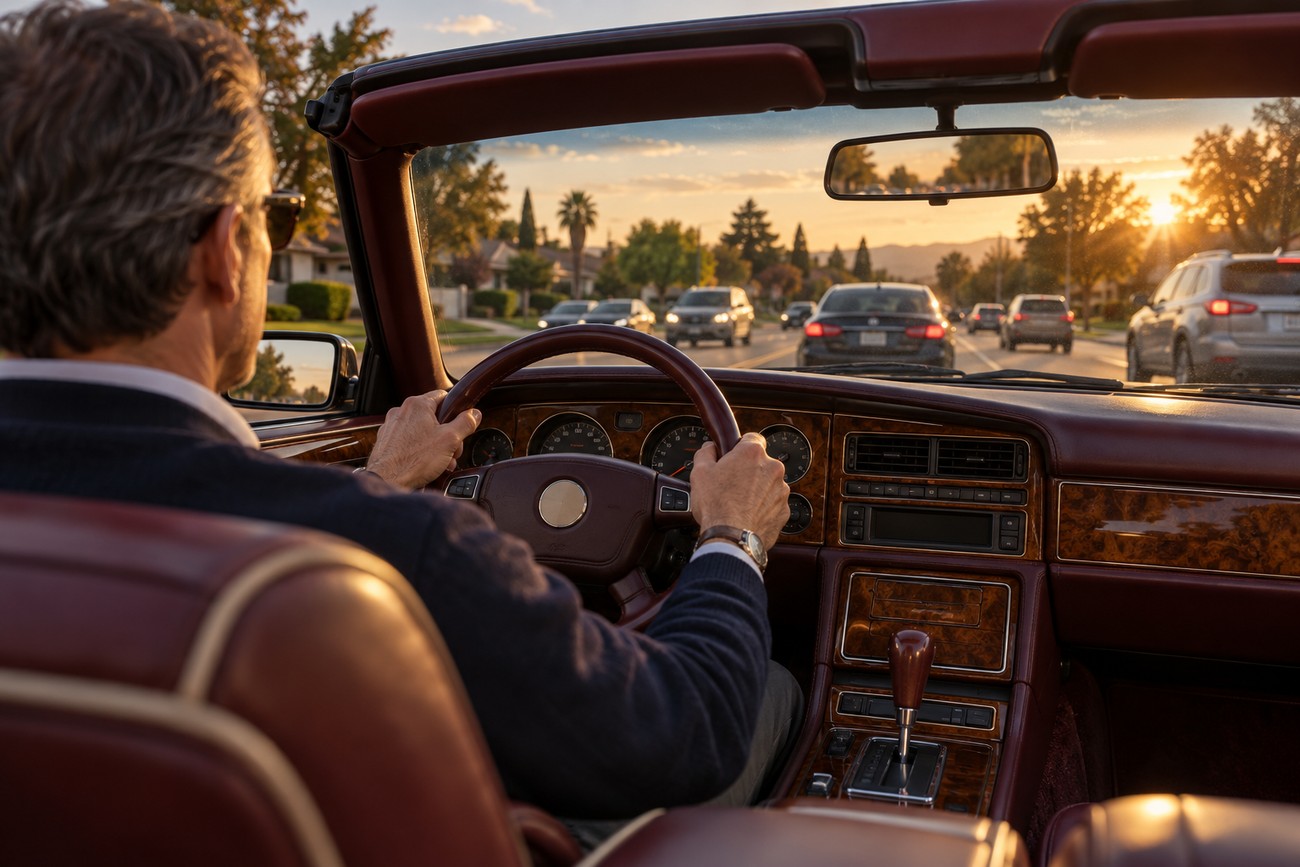
The TC’s styling establishes expectations that its road manners cannot consistently meet. The turbocharged four-cylinder is often criticized for turbo lag and coarse operation, so acceleration can arrive in a less progressive way than the exterior suggests. The automatic transmission further softens the experience, particularly in ordinary 1989 cars.
The Mitsubishi V6 improves refinement and makes the car more agreeable in traffic. Its 141 hp, however, gives the later car a quieter and less distinctive personality rather than a major performance advantage. Automatic V6 examples can feel slow and heavy relative to the low roofline, leather-lined cabin, and Maserati branding.
Handling should be judged through the lens of a niche late-1980s grand tourer. The TC suits measured cruising and relaxed open-air travel better than modern sports-car driving, where steering response, braking feel, and acceleration create a much sharper experience. Its appeal is tied to period atmosphere and historical oddity as much as to speed.
An isolated owner report claims approximately 6.9 seconds from 0–60 mph, but that figure is not representative evidence for the range. It should not be used to describe an automatic V6 car or to establish expectations for an unknown example. Some references also list a top speed of about 210 km/h, although that remains an unverified catalog or specification figure rather than an independent test result.
The mistakes buyers make with a TC by Maserati
The first error is buying the badge before identifying the specification. Many cars are ordinary 160-hp turbo automatics, while the most desirable version combines the 200-hp DOHC 16-valve engine with the five-speed Getrag 284 manual. A polished advertisement can make the two look equivalent even though their rarity, driving character, and collector interest differ substantially.
A pre-purchase inspection should examine turbo response, cooling behavior, leaks, hoses, and evidence of neglected maintenance. The cooling system deserves particular attention because an old turbocharged engine has little tolerance for marginal components. A road test should include cold operation, warm operation, boost delivery, and any signs of unstable temperature.
Identify the engine and gearbox before the road test begins, then judge turbo response, cooling behavior, and automatic shift quality against that specification. The badge can conceal the car’s actual risk profile.
Automatic transmission operation is equally important. Delayed engagement, harsh shifts, slipping, or inconsistent behavior can turn an inexpensive purchase into a prolonged repair project. Interior condition also needs careful interpretation: attractive materials can coexist with poor assembly details, age-related faults, and missing trim that is difficult to replace.
Parts availability is the ownership issue many buyers discover too late. Low production volume can make specialized components, body panels, and model-specific trim difficult to locate. A complete but cosmetically imperfect car may therefore be a safer purchase than a cheaper example missing rare pieces.
Documentation should establish which engine and transmission the car actually has, whether its equipment is complete, and how previous owners addressed cooling and drivetrain work. The inspection is valuable because the TC’s purchase price can represent only part of the eventual cost.
Dimensions, weight, and the hardware behind the image
The TC has the proportions of a compact luxury roadster rather than a tiny sports car. Its dimensions help explain the relatively substantial road presence, while published weight figures show why automatic versions may feel more deliberate than the styling implies.
| Specification | Published figure | Interpretation |
|---|---|---|
| Length | 175.8 in (4,465 mm) | Compact by modern standards, with enough body length for a grand-touring layout |
| Width | 68.5 in (1,740 mm) | Narrow enough for period road use, with a formal rather than aggressive stance |
| Height | 51.9 in (1,318 mm) | Low roofline that contributes strongly to the sports-car image |
| Curb weight | About 3,033 lb (1,376 kg) to 3,276 lb for a 1991 model | Source-dependent figures; the discrepancy should be acknowledged rather than resolved by assumption |
The hardware is a genuine mixture. Chrysler supplied much of the platform and drivetrain context, Maserati contributed to the project’s identity and Italian production setting, Mitsubishi supplied the later V6, and Getrag provided the five-speed manual used in the rare performance configuration. That combination is historically interesting precisely because the car resists a single national or engineering label.
Published curb weights vary from about 3,033 lb (1,376 kg) to 3,276 lb for a 1991 model. Differences may reflect source conventions, equipment, or model-year assumptions, so the figures should be treated as reference points rather than a precise promise about every car.
The dimensions and weight also explain why the TC works better as a relaxed grand tourer than as a modern sports car. Its low profile creates visual drama, while its mechanical specification and mass favor composed cruising. The body communicates more urgency than the chassis and powertrains necessarily deliver.
What a Chrysler TC by Maserati is worth today
Rarity has created interest without producing uniformly high prices. Hagerty gives an approximate range of $4,467–$7,500 for a 1989 TC in good condition. That figure is useful as a reference for a defined year and condition level, rather than as an average for every TC by Maserati.
Condition matters because neglected examples can require specialized work after purchase. A sound cooling system, functioning turbo or V6, healthy transmission, complete interior, and usable body trim can matter more than a low asking price. Missing model-specific pieces may take longer to find than the car itself took to buy.
Mileage, documentation, completeness, and powertrain all influence the market. The rare 200-hp manual version is more desirable than ordinary automatic cars, while a clean V6 may appeal to buyers who prioritize smooth cruising. An automatic car with attractive cosmetics still needs to be valued according to its actual drivetrain.
Buyers should also separate collectible interest from investment claims. Approximately 7,300 cars were sold, which supports a niche following and makes good survivors worth preserving. It does not guarantee a premium price, especially when the car has unresolved mechanical faults or an incomplete specification.
Who should buy one—and who should walk away
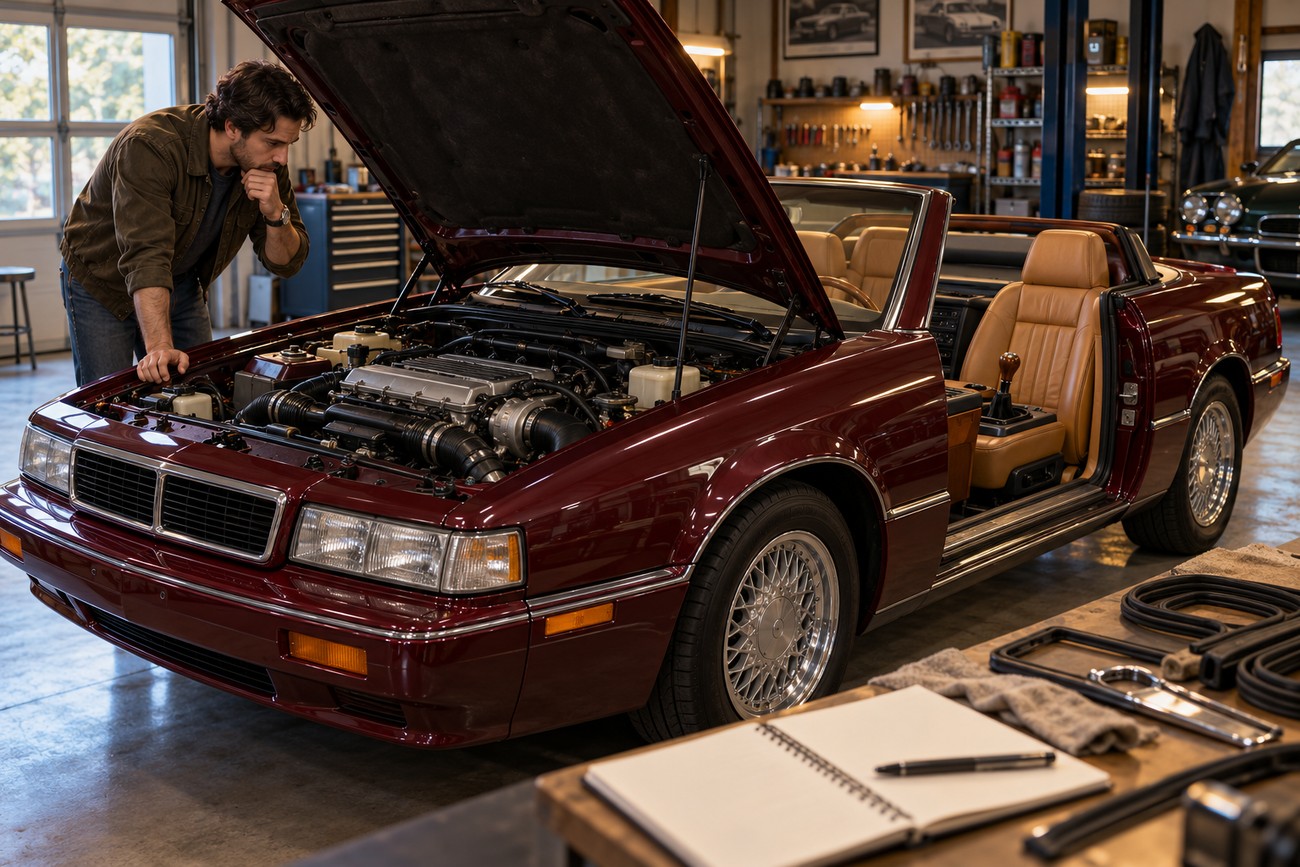
The TC suits a collector interested in unusual Chrysler–Maserati history, late-1980s grand touring, and the Iacocca/de Tomaso period. It is a strong conversation starter because its badge, production story, and mixed hardware invite explanation. The right owner will enjoy researching the car as much as driving it.
The five-speed 200-hp version best matches the car’s sporting image. Its DOHC turbocharged engine and Getrag manual provide a more involving mechanical experience, although rarity makes correct identification essential. The 1990–1991 V6 cars favor smoothness and comfort, making them sensible choices for relaxed use if their condition is strong.
A buyer seeking a bargain Maserati sports car or modern convertible performance should walk away. The TC’s automatic versions can feel heavy and unhurried, and even the turbo cars retain period limitations. Its value lies in character, history, and unusual specification rather than universally impressive speed.
Ownership cost is shaped by parts scarcity and age-related faults as well as the purchase price. Someone unwilling to wait for specialized trim or investigate drivetrain problems may find the car frustrating. Someone prepared to verify the specification and preserve a complete example can own an unusually tangible piece of Chrysler–Maserati history.
Frequently asked questions
The TC’s market is too varied for one universal figure or one universal buying recommendation. Year, engine, transmission, mileage, condition, and completeness should be established before comparing prices.
What is the average price of a Chrysler TC by Maserati?
There is no single reliable average for every Chrysler TC by Maserati. Hagerty lists approximately $4,467–$7,500 for a 1989 car in good condition, but that range should not be applied equally to later V6 cars, neglected examples, or the rare 200-hp manual configuration.
Condition and specification have an unusually large effect because specialized parts and body panels can be difficult to source. A complete, mechanically sound car may justify more than a cheaper example with missing trim or drivetrain problems.
What is the value of a 1990 Chrysler TC by Maserati?
A responsible fixed value for a 1990 TC cannot be established from the available data. The 1990 car normally uses the 3.0-liter Mitsubishi V6 with 141 hp and a four-speed A604 automatic, so its condition, mileage, completeness, and transmission behavior must be assessed before assigning a price.
It should also be separated from the rare 200-hp DOHC turbo manual cars. The V6’s smoother character may suit a cruiser, while its specification generally does not carry the same desirability as the five-speed performance version.
What is the value of a 1989 Chrysler TC by Maserati base version?
Hagerty’s supported estimate for a 1989 TC in good condition is approximately $4,467–$7,500. The ordinary base car uses the 2.2-liter turbocharged four-cylinder with approximately 160 hp and a three-speed A413 automatic.
That base specification should be distinguished from the much rarer 200-hp DOHC 16-valve turbo with the five-speed Getrag 284 manual. The latter is more desirable and should be evaluated separately rather than treated as a typical 1989 example.
Why is the rare 200-hp manual TC more desirable than the V6 car?
The 200-hp car combines the higher-output DOHC turbocharged engine with a five-speed Getrag 284 manual, giving the TC a more involved and sporting character. The V6 produces 141 hp and uses a four-speed automatic, prioritizing smoothness over the sharper response and mechanical involvement collectors associate with the rare version.
Rarity strengthens that preference, but it is not the sole reason. The manual gearbox and stronger engine change how the car is experienced, making the specification a closer match for its Italian styling and performance-oriented image.







