
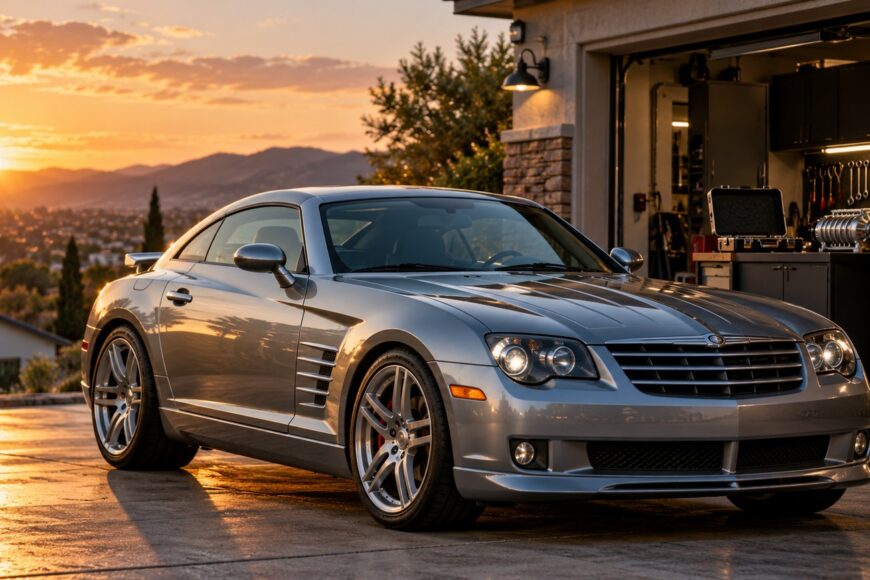
The Chrysler Crossfire SRT-6 is an unusually serious performance car with an inconvenient ownership reality: a cheap example can become expensive quickly. Its AMG hardware gives it genuine pace, while age, specialized parts, and neglected electrical systems can turn a tempting purchase into a long diagnostic exercise.
This is not a chipped Crossfire. The SRT-6 uses the AMG version of the Mercedes M112 3.2-liter supercharged V6 and shares important engineering with the Mercedes SLK32 AMG. The sensible way to assess one is through verified specifications, fault patterns, component condition, and service history rather than badge value or nostalgia.
- What the Crossfire SRT-6 Really Is
- Performance, Transmission, and Factory Hardware
- The SRT-6 Specification at a Glance
- Where Age Turns Performance Into Risk
- A Buyer’s Inspection: What to Check Before Paying
- Ownership Costs, Parts, and the Myths That Distort Prices
- Frequently asked questions
- What is the average price of a Chrysler Crossfire SRT-6?
- How many SRT-6 Crossfires were made?
What the Crossfire SRT-6 Really Is
The SRT-6 is a distinct AMG-powered derivative of the Chrysler Crossfire. Its AMG version of the Mercedes M112 3.2-liter supercharged V6 drives the rear wheels and was paired with hardware developed for substantially higher performance than the regular model.
Production took place in Osnabrück, Germany, and the SRT-6 was offered as both a coupe and a roadster. The body styles share the same basic performance concept, although condition, roof mechanisms, seals, and body-specific parts can affect ownership costs differently.
The technical relationship to the Mercedes SLK32 AMG is valuable when diagnosing the car. The engine, powertrain, suspension elements, and brakes have a shared base, which can help identify service procedures and component families.
That relationship does not make every part automatically interchangeable. SRT-6 calibration, packaging, bodywork, wheels, and some suspension and brake components must be checked by application and specification. A parts catalog reference to an SLK32 AMG is a useful starting point, not proof of direct fitment.
Performance, Transmission, and Factory Hardware
The supported factory output is 330 hp and 310 lb-ft, approximately 420 Nm. With a healthy supercharger system, appropriate fuel, and suitable tires, the published performance target was 0–62 mph in slightly over 5 seconds, with top speed electronically limited to 158 mph.
Every factory SRT-6 used a five-speed Mercedes automatic with AutoStick; there was no factory manual transmission. That gearbox suits the engine’s torque delivery and is part of the original specification, so a buyer should not treat the automatic as evidence of a missing performance option.
The original staggered tire fitment was Michelin Pilot Sport 225/40R18 at the front and Michelin Pilot Sport 255/35R19 at the rear. The different wheel and tire sizes support the intended balance, although they prevent normal front-to-rear rotation and make replacement planning more expensive.
Stopping hardware included ventilated discs on all wheels with two-piston calipers, while ESP was standard equipment. A car that has warning lights, mismatched tires, or uncertain brake parts deserves closer inspection because these systems directly affect how the SRT-6 manages its power.
The SRT-6 Specification at a Glance
This table separates confirmed factory specifications from later claims and assumptions found in advertisements.
| Specification | Factory detail |
|---|---|
| Engine | AMG version of the Mercedes M112 3.2-liter supercharged V6 |
| Power | 330 hp |
| Torque | 310 lb-ft, approximately 420 Nm |
| Drivetrain | Rear-wheel drive |
| Transmission | Five-speed Mercedes automatic with AutoStick; no factory manual transmission |
| Acceleration | 0–62 mph in slightly over 5 seconds |
| Top speed | Electronically limited to 158 mph |
| Front tires | Michelin Pilot Sport 225/40R18 |
| Rear tires | Michelin Pilot Sport 255/35R19 |
| Brakes | Ventilated discs on all wheels with two-piston calipers |
| Body styles | Coupe and roadster |
| Production location | Osnabrück, Germany |
Where Age Turns Performance Into Risk
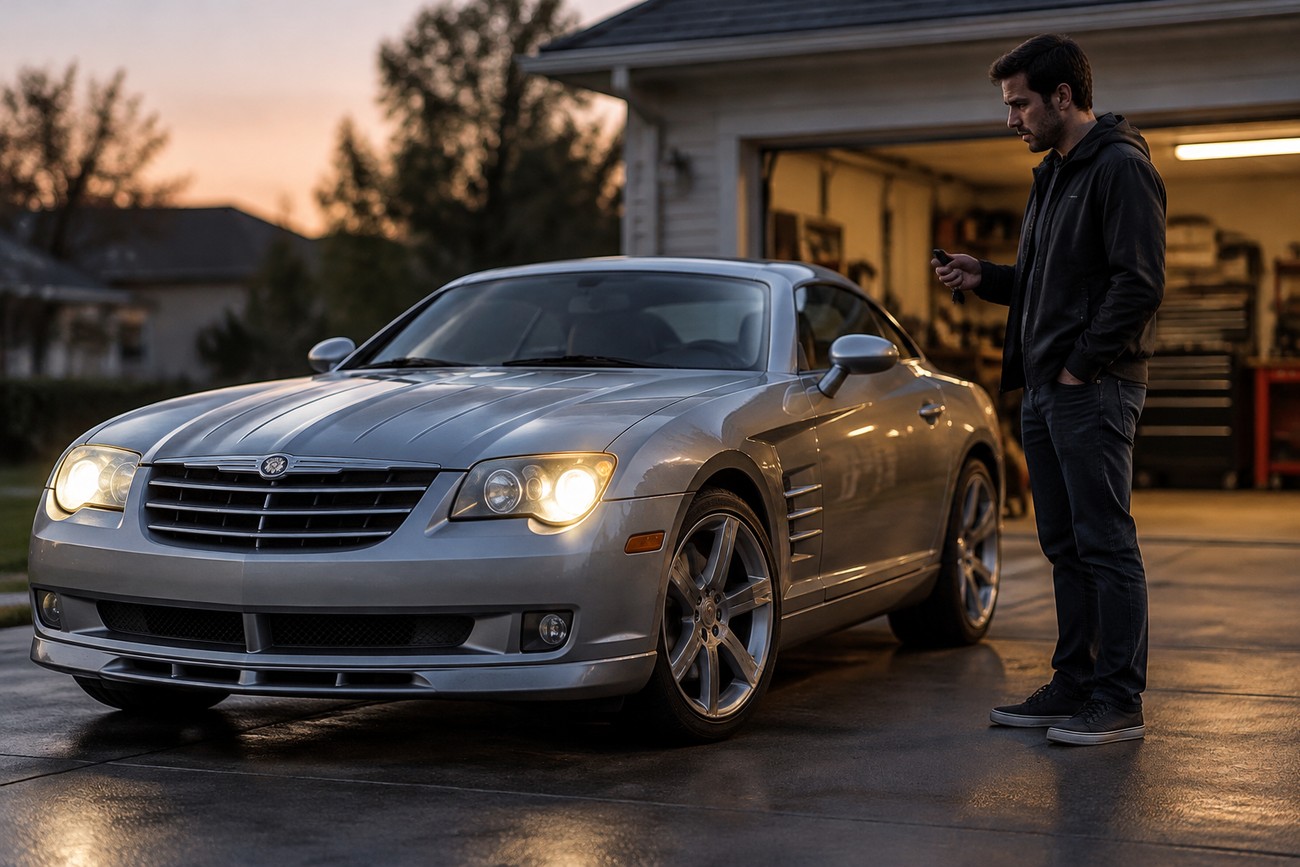
Intermittent crank-but-no-start events are among the most frustrating reported faults. Some owners associate them with a discharged battery or a previous low-voltage event, but replacing the battery alone does not establish that the underlying problem has been solved. A car that starts reliably cold and fails after sitting, or behaves differently after battery work, needs stored-fault and power-supply checks.
Electrical complaints can involve BAS/ESP, airbags, central locking, flashing lights, and failed brake lights. These symptoms should not be dismissed as minor electronic irritation: a voltage problem, communication fault, or control-module issue can affect safety systems and may contribute to a starting failure.
Low-voltage history combined with BAS/ESP warnings or intermittent no-start symptoms calls for a complete scan, power-supply check, and fault-path diagnosis before replacing modules or the starter.
Loss of boost or an apparently inconsistent supercharger should also be diagnosed systematically. The check should include control operation, the belt, pulley and fasteners, sensors, and stored fault codes. Forum discussions describe specific compressor and pulley failure scenarios, including pulley-fastener problems, but the available reports do not establish how frequently these failures occur.
Fluid leaks add another age-related risk. Cooling-system leaks and automatic-transmission line damage can appear after radiator-related work, so the area around the radiator, hose connections, transmission lines, and underbody should be inspected for fresh residue, staining, or improvised repairs.
A Buyer’s Inspection: What to Check Before Paying
Begin with identity, not acceleration. Verify the VIN, body style, service history, accident history, engine, supercharger assembly, brakes, wheels, and other ancillary equipment before accepting the seller’s SRT-6 description. A badge, body kit, or claimed engine swap is insufficient evidence of original specification.
Inspect the car both cold and fully warm. Record how it starts after an extended rest, how it restarts hot, and whether any crank-but-no-start event appears after a battery discharge or jump-start. A scan tool should read all relevant systems, including stored and pending faults, rather than relying only on the absence of a dashboard warning.
Examine charging behavior and battery history alongside the scan results. BAS/ESP and airbag faults deserve a proper power-supply and communication diagnosis. Check the central locking, exterior lighting, brake lights, warning indicators, and any signs of water intrusion or amateur wiring.
Test the supercharger under load and inspect the belt, pulley, fasteners, tensioning components, sensors, and related fault data. A quiet belt does not prove that the system is healthy, and a complaint that the supercharger “does not come on” cannot be resolved by fitting a belt without checking the complete control path.
During the road test, assess automatic-transmission engagement, shift quality, kickdown, and AutoStick operation. Inspect cooling-system evidence, transmission lines, brake discs and calipers, suspension joints, and the staggered tires. Confirm the Michelin Pilot Sport 225/40R18 front and 255/35R19 rear sizes, load and speed ratings, and overall condition before budgeting for replacements.
Ownership Costs, Parts, and the Myths That Distort Prices
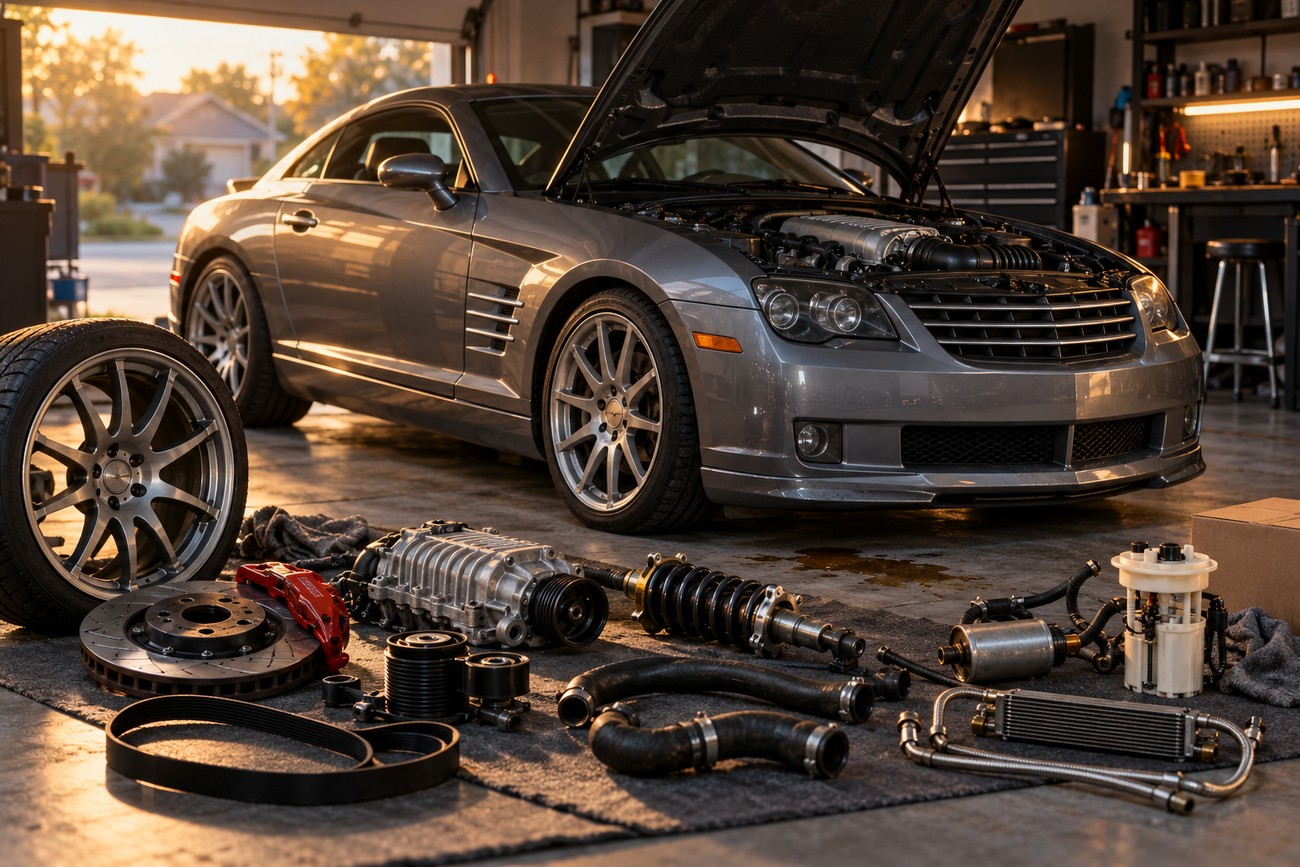
The purchase price tells only part of the financial story. Supercharger-drive parts, SRT-6 body pieces, brakes, wheels, and some suspension components can cost substantially more than equivalent base Crossfire parts. A car that needs several of these items at once can erase the apparent saving over a better-documented example.
Age can also create several unrelated problems at the same time. Electrical faults may arrive alongside deteriorated rubber, fuel-system issues, cooling leaks, and transmission-line damage. The strength of the AMG engine does not prevent the surrounding vehicle from aging.
The SRT-6 was not simply a software upgrade, and it never had a factory manual transmission. Its rear spoiler was a fixed SRT-6 item; the base Crossfire’s electronic deplorable spoiler was not a factory SRT-6 feature. Claims that every stock car produces more than 330 hp should also be treated cautiously: 330 hp is the supported factory figure, while marketplace claims of 340-plus hp in stock form are not officially confirmed.
Fuel-economy anecdotes need the same discipline. A reported 9 mpg is an isolated owner result, not a specification or norm. Driving style, traffic, mechanical condition, and boost use can change consumption substantially, so one extreme report should not be used as a normal ownership benchmark.
Frequently asked questions
These answers focus on valuation and production claims, where incomplete advertisements often create more confusion than the factory specification.
What is the average price of a Chrysler Crossfire SRT-6?
There is no single reliable average price that represents every SRT-6. Separate the seller’s asking price from the final transaction price, then adjust for coupe or roadster body style, verified originality, accident history, tire condition, electrical faults, and any required supercharger-related work.
A documented car with correct AMG hardware and healthy brakes may justify a stronger price than a cosmetically attractive example with uncertain identity or intermittent faults. The cost of deferred repairs matters more than a small difference in advertised price.
How many SRT-6 Crossfires were made?
Production-count claims should be accepted only when supported by a documented total. Treat coupe and roadster figures separately, and distinguish manufacturer or registry information from unsourced marketplace statements.
Without reliable documentation for the specific total being quoted, the responsible answer is to avoid inventing a number. A VIN check and verified specification provide more useful purchase evidence than an unsupported rarity claim.







