
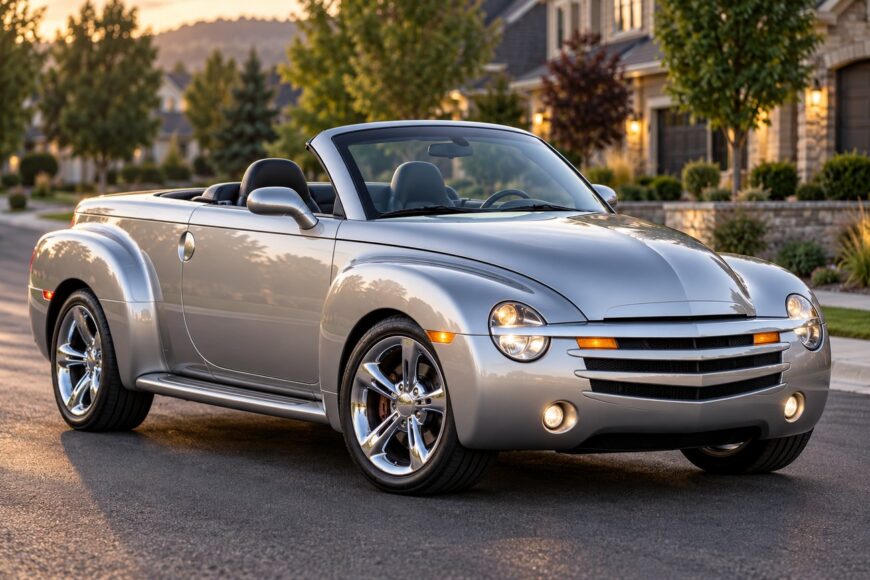
The Chevrolet SSR is one of the most visually spectacular compromises of the modern used-car market. It combines retro pickup styling, rear-wheel drive, a V8, and a two-section power-retractable hardtop that folds electrically into a compartment between the cabin and cargo area.
That combination gives the SSR genuine character, especially in 6.0-liter form. It also creates the central ownership conflict: two seats, substantial weight, limited cargo usefulness, a complicated roof mechanism, and potentially scarce body and trim parts. The SSR is best understood as a style-led roadster utility vehicle rather than a conventional pickup.
- What the Chevrolet SSR Actually Is
- Chevrolet SSR 5.3 vs. 6.0: Key Specifications
- How the Retractable Hardtop Works—and Why It Matters
- Driving, Comfort, and Everyday Practicality
- Common Buying Mistakes and Hidden Ownership Risks
- Why the Chevrolet SSR Failed—and Why It Is Expensive Today
- SSR Specifications That Need a Source Warning
- Frequently asked questions
- Why did the Chevrolet SSR fail?
- Why is the Chevy SSR so expensive?
- What does roadster utility mean on the Chevrolet SSR?
What the Chevrolet SSR Actually Is
Chevrolet produced the SSR from 2003 through 2006. It is a two-door, two-seat, rear-wheel-drive roadster utility vehicle with a short cargo area and a power-retractable hardtop. The configuration was unusual even when new because the vehicle pursued open-air cruising and show-car presence more than commercial usefulness.
The roof is a two-section hardtop rather than a conventional fabric convertible top. When activated, it folds electrically into a compartment between the cabin and cargo area. That arrangement gives the SSR its defining visual trick while also consuming space that a normal pickup could devote to usable cargo.
The cargo bed can carry selected items, but the SSR is poorly suited to regular hauling, bulky loads, or family transport. There are only two seats, the cabin is tight, and the roof mechanism limits how flexibly the rear section can be used. Its pickup shape should therefore be treated as part of the design language, not as evidence of work-truck capability.
That distinction matters on the used market. Someone buying the SSR as a recreational cruiser may accept its compromises; someone expecting a practical truck is likely to find the layout frustrating. The model’s identity is closer to a roadster with a small utility area than to a shortened Silverado.
Chevrolet SSR 5.3 vs. 6.0: Key Specifications
The most important mechanical distinction is the engine. Early SSRs used the 5.3-liter Vortec V8, while later versions received the stronger 6.0-liter LS2. Transmission availability and 2006 power ratings vary by model year and source, so an individual vehicle should be verified by its documentation and equipment.
| Specification | 5.3-liter version | 6.0-liter version |
|---|---|---|
| Model-year context | 2003–2004 | Later production; used through 2006 |
| Engine | 5.3-liter Vortec V8 | 6.0-liter LS2 V8 |
| Power | 300 hp | 390 hp; some 2006 sources list 395 hp automatic and 400 hp manual |
| Torque | 449 Nm | 549 Nm |
| Transmission notes | Verify the exact model year and transmission | Manual and automatic specifications can differ by source and model year |
| 0–100 km/h | Not specified in the supplied data | Approximately 5.2–5.5 seconds, depending on source |
| Top speed | Not specified in the supplied data | Approximately 210 km/h |
| Dimensions | Not specified in the supplied data | Approximately 4862 × 1996 × 1631 mm for the automatic |
| Wheelbase | Not specified in the supplied data | Approximately 2945–2946 mm |
| Curb weight | Not specified in the supplied data | Approximately 2159–2160 kg for the automatic |
| Catalog cargo figure | Some catalogs list 1130 liters | Some catalogs list 1130 liters; this is not guaranteed usable cargo capacity |
The 6.0-liter SSR is the performance choice, but the 5.3-liter version is not interchangeable with it in buyer expectations. Engine output, acceleration potential, and likely transmission configuration can differ materially, so the vehicle identification and service records deserve close attention.
How the Retractable Hardtop Works—and Why It Matters
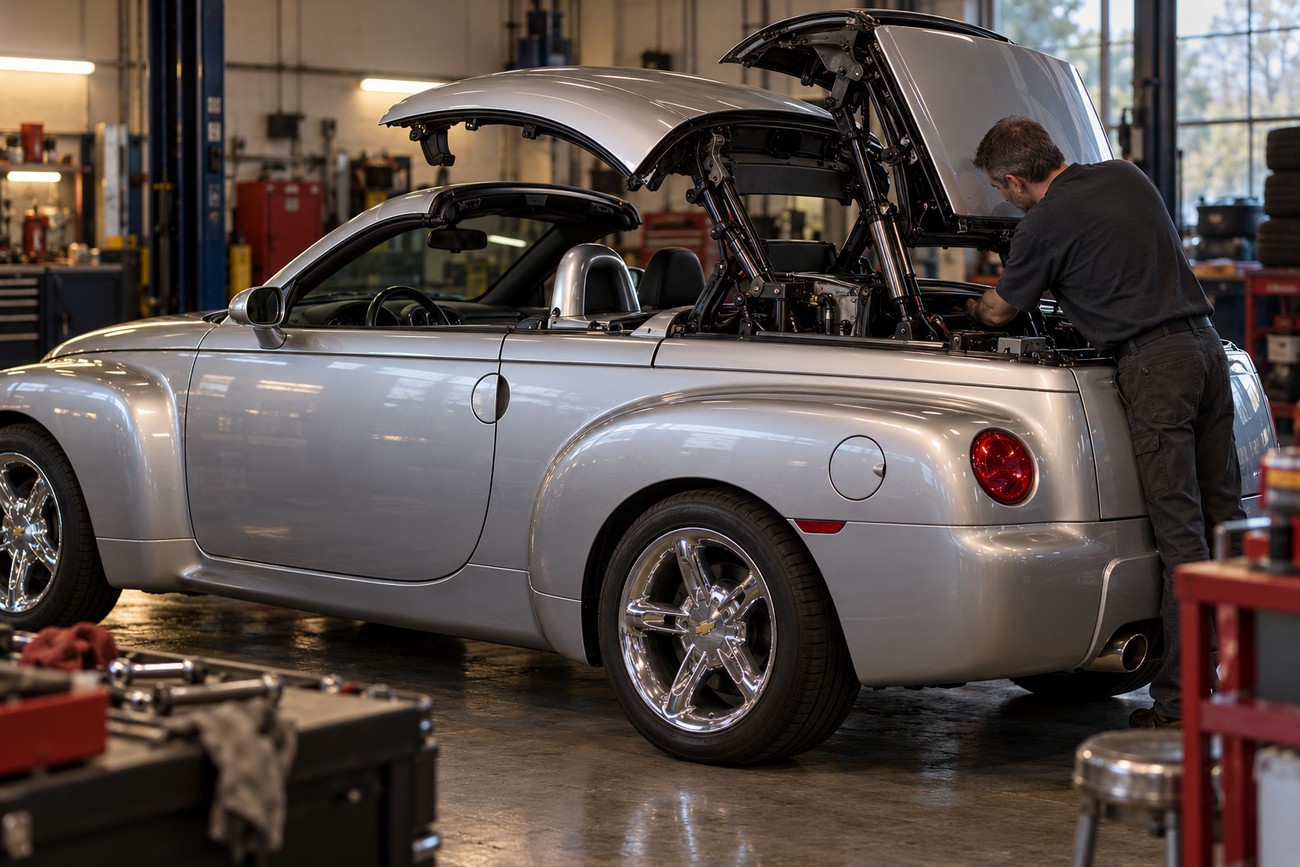
The SSR uses a two-section power-retractable hardtop, not a soft top. An electric system moves the roof into a compartment between the cabin and cargo area, allowing the vehicle to change from a closed retro pickup shape to an open roadster. That mechanism is the feature that makes the SSR distinctive.
It is also one of the vehicle’s most important inspection points. Owner reports describe slow operation, sensitivity to careful maintenance, unusual noises, and possible faults when the system has been neglected. These reports do not mean every SSR has a defective roof, but they make a working demonstration essential.
Cycle the roof repeatedly during inspection and watch for slow movement, abnormal noise, incomplete locking, or signs that previous owners avoided using it. A single successful cycle does not prove that the mechanism is healthy.
The roof’s storage position affects the cargo area even when the system works correctly. Buyers who expect a flexible pickup bed may discover that the mechanism and surrounding structure dictate what can be loaded and how it must be secured. A specialist inspection is sensible if the roof hesitates, stops partway, or makes unfamiliar sounds.
Driving, Comfort, and Everyday Practicality
The SSR’s rear-wheel-drive layout and V8 engines provide the basic ingredients for an entertaining cruiser. The 6.0-liter version is quoted at approximately 5.2–5.5 seconds from 0–100 km/h, depending on the source, which gives it credible straight-line performance. The engine character is a major part of the vehicle’s appeal.
Published acceleration figures do not fully describe the driving experience. The 6.0 automatic weighs approximately 2159–2160 kg, and that mass can make the SSR feel less agile than its low, dramatic body suggests. Weight also tends to increase fuel consumption and makes tight urban maneuvering less relaxed.
The cabin seats two people, and storage is shaped by the roof system and short cargo area. That makes the SSR workable as a weekend cruiser but restrictive as a daily load carrier. A raised-looking pickup body does not provide the easy utility of a conventional truck.
Parking and low-speed use require a realistic assessment of the vehicle’s size, visibility, and weight. The SSR can be enjoyable on open roads, especially with the V8 working through the rear wheels, yet its styling promises more lightness and practicality than the hardware delivers.
Common Buying Mistakes and Hidden Ownership Risks
The first mistake is treating all SSRs as equivalent. The 2003–2004 cars used the 5.3-liter Vortec V8 rated at 300 hp and 449 Nm, while the 6.0-liter LS2 produced 390 hp and 549 Nm. Some 2006 sources list different power figures for automatic and manual cars, so the advertised engine alone is not enough to establish the exact specification.
The second mistake is buying one as a work truck. The two-seat layout, short cargo area, and roof storage compartment restrict the vehicle’s useful carrying function. Before purchase, consider the largest items you actually transport and whether they can be loaded without interfering with the roof or interior.
The retractable hardtop deserves repeated testing before money changes hands. Run it through several complete cycles, listen for abnormal noises, and confirm that it opens, closes, and locks consistently. Owner reports describe slow operation and maintenance sensitivity, so a roof that works only when treated gently may already be signaling future trouble.
Weight and fuel use are easy to underestimate because the SSR looks compact and highly stylized. The 6.0 automatic’s approximate 2159–2160 kg curb weight affects acceleration feel, cornering response, parking, and running costs. The stronger engine improves performance, but it does not make the vehicle light.
Finally, inspect body panels, roof-related parts, interior trim, and seals with unusual care. The SSR’s short production period and niche status can make replacement parts expensive or difficult to source compared with mass-market GM models. Reported parts concerns are not universal failures, but they are a reason to favor a complete, well-documented example.
Why the Chevrolet SSR Failed—and Why It Is Expensive Today
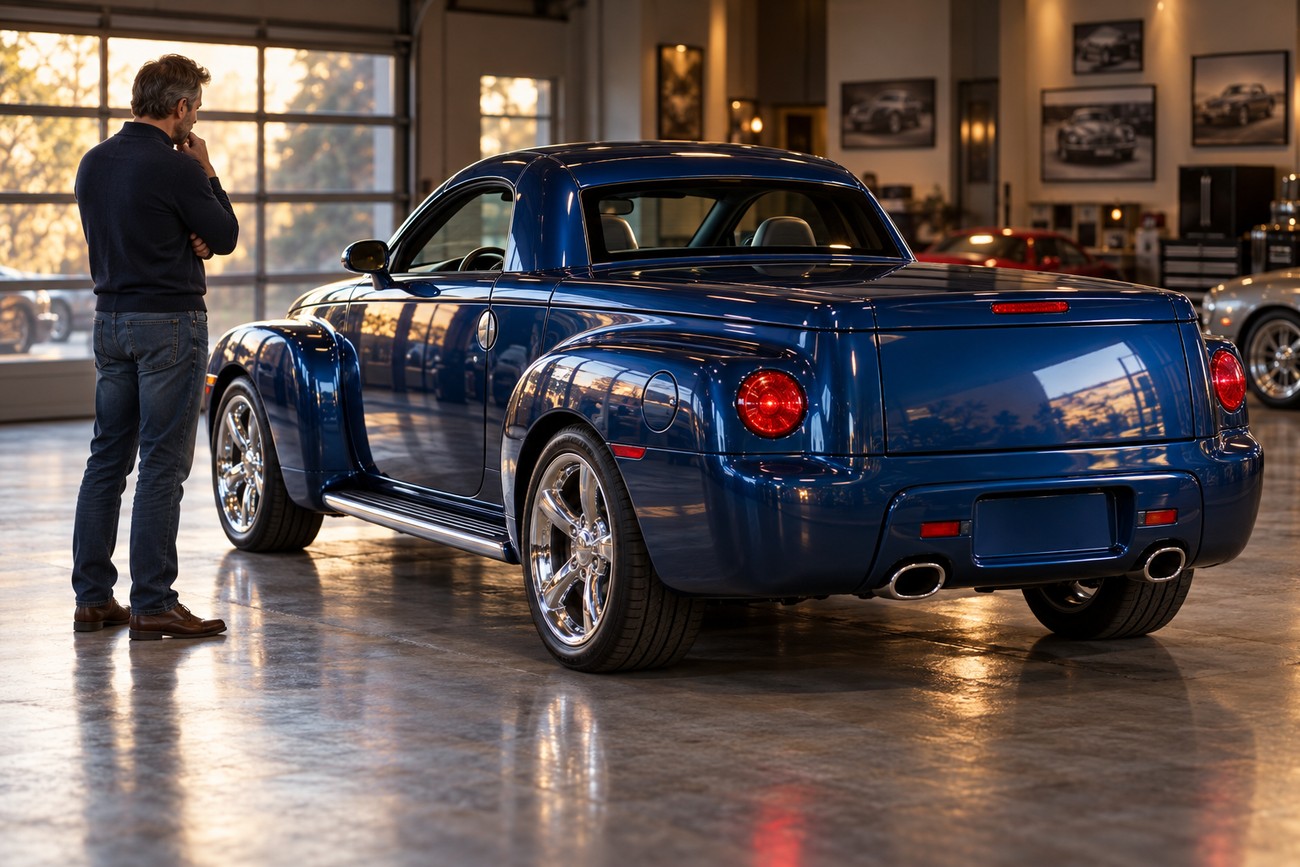
The SSR occupied a narrow market position. It looked like a pickup, drove like a rear-wheel-drive cruiser, and offered open-air motoring, yet it lacked the seating and cargo flexibility expected from a practical truck. That limited the number of buyers for whom its compromises made sense.
Its weight and roof complexity further narrowed the appeal. The hardtop delivered a memorable feature, but it added mechanical complexity and occupied valuable space between the cabin and cargo area. The result was a vehicle with strong visual identity but a less convincing everyday case.
Production ended in 2006 after a short model life. Low volume means fewer interchangeable body, roof, and trim components, and it can also reduce the number of repair specialists familiar with the model. Those factors may increase ownership and replacement-part costs even when the underlying V8 drivetrain is relatively familiar.
Current interest comes from rarity, design, and the unusual combination of pickup styling and retractable hardtop. Enthusiast demand can support good examples, especially those with the preferred engine and a documented roof system. Rarity alone does not make every SSR valuable; condition, specification, completeness, and repair history remain decisive.
The SSR therefore failed as a broad-market proposition rather than as a memorable machine. Its commercial difficulty came from the same qualities that attract collectors today: an unusual shape, limited practicality, high mass, and a complex feature that requires the right buyer.
SSR Specifications That Need a Source Warning
Several SSR figures vary between catalogs and secondary specifications. The safest approach is to treat them as reference data unless a factory document or vehicle-specific record confirms the number.
| Item | Published or catalog variation | How to interpret it |
|---|---|---|
| Ground clearance | Approximately 121 mm or 155 mm | Disputed without a confirming factory manual; do not treat either figure as universally definitive |
| 2006 power | Some sources list 395 hp for the automatic and 400 hp for the manual | Verify the transmission and exact model-year specification |
| 6.0 acceleration | Approximately 5.2–5.5 seconds from 0–100 km/h | Variation reflects differing sources and test conditions |
| Catalog cargo volume | 1130 liters in some catalogs | A reference figure, not guaranteed usable loading space |
The cargo number is particularly easy to misuse. A catalog volume does not account for the roof mechanism, the shape of the loading area, or the practical restrictions created by the two-seat layout. It should not be compared directly with the useful capacity of a conventional pickup.
Performance figures also need context. The 6.0-liter SSR is commonly quoted at approximately 5.2–5.5 seconds to 100 km/h and approximately 210 km/h at the top end, while 2006 power figures can vary with transmission. These differences are small on paper but useful when identifying a specific car.
Frequently asked questions
Why did the Chevrolet SSR fail?
The SSR struggled because it targeted a narrow audience with a heavy, two-seat vehicle that offered limited cargo usefulness and a complex retractable hardtop. It looked like a pickup without delivering conventional pickup practicality, while its weight and operating compromises reduced its appeal as a sports car.
That mismatch made the SSR difficult to position as either a rational utility vehicle or an accessible performance car. Production ended in 2006, and its unusual format never reached the broad market needed for a longer commercial life.
Why is the Chevy SSR so expensive?
Ownership can be expensive because production was short and niche body, roof, interior, and trim components may be difficult to source. Specialist labor can also matter when the retractable hardtop needs diagnosis or adjustment.
Enthusiast interest may raise prices for complete, well-maintained examples, but the SSR is not automatically valuable simply because it is unusual. Condition, engine, transmission, roof operation, and parts completeness are more useful buying indicators than rarity alone.
What does roadster utility mean on the Chevrolet SSR?
Roadster utility describes the SSR’s combination of open-air, rear-wheel-drive cruising character with a small cargo area. It offers the visual idea of a pickup and some limited carrying ability while retaining a two-seat cabin and a retractable hardtop.
In practical terms, it is a recreational vehicle with utility features rather than a conventional work pickup. The cargo area is useful for selected loads, but the roof mechanism and two-seat layout limit its flexibility.







