
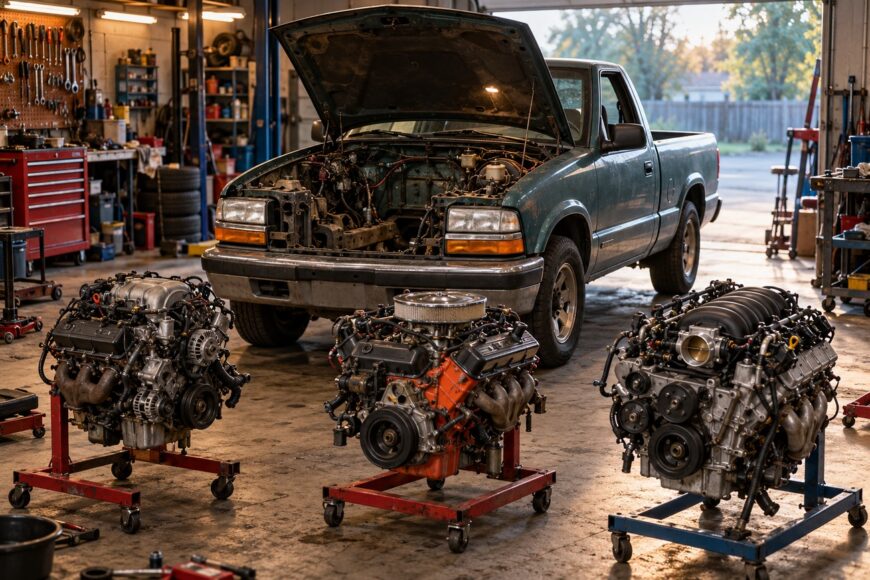
The Chevrolet S-10 appeals to swappers because it puts a useful truck body on a compact footprint. A low purchase price can make the project look modest at first. Once the engine is out, though, wiring, fuel delivery, cooling, exhaust, and driveline fit can turn that purchase into a much larger build.
Choose the truck and the swap architecture together. A sound chassis with the wrong cab layout or missing electrical parts may require more effort than a less glamorous, complete example. Decide whether you want to restore a 4.3-liter V6 truck, build a simpler carbureted V8, or integrate an LS before shopping for an engine alone.
- Why the S-10 Works as a Swap Platform—and Where It Does Not
- 4.3 V6, Carbureted Small-Block, or LS: Which Swap Fits the Goal?
- Before Replacing the 4.3, Prove the Engine Is the Problem
- Match the Entire Donor Package, Not Just the Engine
- The Systems That Turn an Engine Swap Into a Truck Build
- Buying the Truck: Inspect the Chassis Before Pricing the Swap
- Frequently asked questions
- Which year of the Chevy S-10 is best for a swap?
- What is a Chevy S-10 worth today?
- Which Chevrolet S-10 years should I avoid?
- What paperwork should come with a swap donor?
Why the S-10 Works as a Swap Platform—and Where It Does Not
The second-generation S-10 came with a 2.2-liter inline-four and a 4.3-liter V6 among its factory engine choices. One cited 4.3-liter V6 specification is 190 hp and 250 lb-ft; that output should not be assigned to every model year. The range gives builders a compact truck to work with while leaving important differences in factory equipment to check on each candidate.
Body choice changes the project’s proportions. The Regular Cab Short Bed has a 2,751 mm wheelbase, the Regular Cab Long Bed measures 2,995 mm, and the Extended Cab Short Bed measures 3,122 mm. The shorter truck is easier to place in a tight garage and maneuver on the road, but engine position and added front-end weight deserve particular attention before mounts are made.
A longer wheelbase offers a different starting layout, though it does not establish that a proposed engine, transmission, or driveshaft will fit. Measure the actual truck and planned components rather than treating “S-10” as one set of dimensions. Cab and bed choice should follow the truck’s intended use as well as the swap.
Payload needs the same care. Published examples include 1,601 lb for a 1996 S-10 and 1,111 lb for a 2003 Extended Cab. Those figures describe different years and configurations, so they cannot establish a rating for another truck or prove that cab style alone caused the difference. Check the specific vehicle’s rating before planning to haul parts or equipment after the build.
4.3 V6, Carbureted Small-Block, or LS: Which Swap Fits the Goal?
Pick the route by the work you are prepared to integrate, not by the appeal of the engine on its own. These paths solve different problems and call for different donor parts.
| Project path | Best fit | Electrical and fuel demands | Donor and supporting work |
|---|---|---|---|
| Matched 4.3-liter V6 replacement | Keeping the truck close to its existing layout | Closest to straightforward with compatible years, but intake, EGR, sensors, connectors, ECU, and fuel-system details still need checking | Compare the engine and its controls with the recipient; inspect reused injection parts and accessories |
| Carbureted small-block V8 | A builder prioritizing simpler engine wiring and lower initial cost | Generally simpler to wire than an LS; fuel delivery must suit the chosen setup | Plan mounts, cooling, exhaust, transmission and driveshaft fit, plus the truck’s remaining electrical and compliance needs |
| LS swap | A builder seeking greater control, tuning, and upgrade potential | Greater electronics and fuel-system demands; ECU, harness, sensors, and throttle configuration must work together | Plan mounts, cooling, exhaust, driveshaft, and fuel delivery; verify transmission-control compatibility |
A carbureted small-block may reduce the initial wiring task, but it does not remove the need to finish the rest of the truck. An LS offers more scope for electronic control and later tuning, with more components that must agree before it runs properly. Neither path has a universal advantage if the available donor is incomplete.
A replacement 4.3 can be the most contained job when donor and recipient come from compatible years. Even then, a familiar-looking block is no guarantee that its intake, EGR hardware, or connectors match. Compare those details before buying, while the seller can still account for the parts that come with it.
Before Replacing the 4.3, Prove the Engine Is the Problem
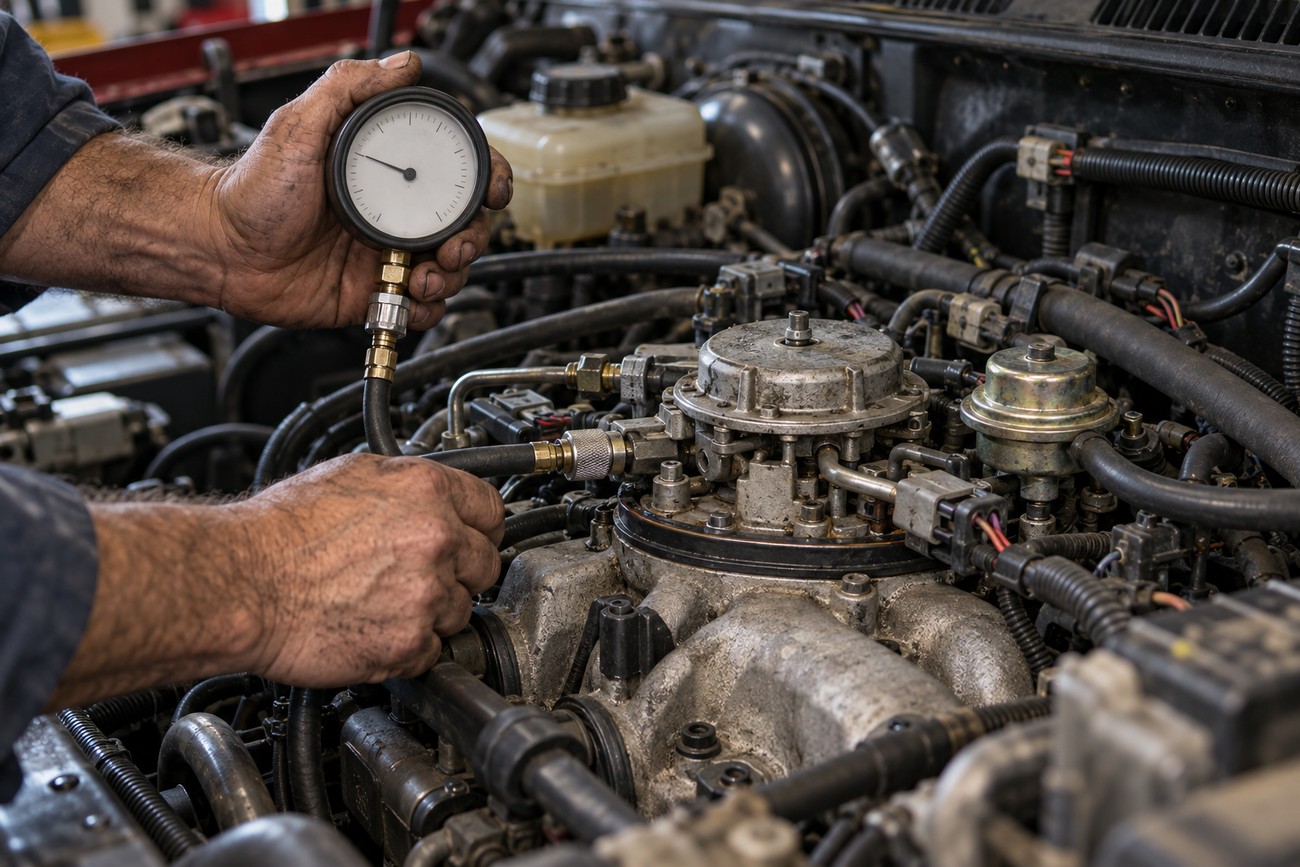
Hesitation, unstable idle, and stalling do not by themselves condemn the engine. Vacuum leaks and incorrect fuel pressure can produce the same complaints. Begin by recording the symptoms, checking for vacuum leaks, and measuring fuel pressure against the specification for the truck’s actual injection system.
If those checks point toward fuel delivery, examine the pump and regulator as well as the spider-injection components. Inspect intake seals for leaks before deciding the engine needs to come out. This order matters because a replacement that reuses faulty injection parts, sensors, or accessories can inherit the original complaint.
Measure fuel pressure and identify which spider-injection parts will be reused before ordering another engine. Otherwise, the same fault can survive the swap and make a sound replacement appear defective.
For a no-start after installation, work through the basics separately: confirm fuel delivery, ignition order, distributor base position, and the relevant sensor signals. A failed distributor or Hall-effect signal can resemble an ignition-installation error and prevent starting. Diagnose that signal before assuming the replacement engine has an internal fault.
Match the Entire Donor Package, Not Just the Engine
Before paying for a donor, inventory the engine, transmission, harness, ECU, sensors, fuel system, and emissions configuration together. Note what is present, what has been cut or removed, and what the recipient truck already has. An apparently inexpensive bare engine can become difficult to finish when its matching controls must be sourced separately.
Another GM 4.3-liter engine is not automatically a direct replacement. Compatibility is closest within suitable years, yet intake design, EGR equipment, sensors, connectors, ECU, and emissions configuration can differ. Compare part numbers and the recipient’s equipment rather than relying on engine displacement or an unsupported claim about particular years.
An LS paired with a 4L60E needs the same package-level check. Verify engine year, transmission, ECU, and electronic-throttle configuration together; the 4L60E name alone does not guarantee that the proposed combination will work. Establish the control plan before committing to a transmission or modifying the truck around it.
A complete donor also makes troubleshooting more orderly. When the harness, sensors, and controls belong to a known combination, you have a clearer basis for tracing a fault than you would with parts mixed from several years. Record the donor’s identifying details and confirm how its fuel and emissions equipment will be handled in your location.
The Systems That Turn an Engine Swap Into a Truck Build
Engine placement comes first because it sets constraints for the work that follows. Mock up the engine and transmission before making mounts, then check clearance for cooling components, exhaust routing, and service access. On the 2,751 mm Regular Cab Short Bed in particular, deliberate placement helps avoid committing to a heavy engine position before its effect on the truck’s balance is considered.
Cooling, exhaust, and fuel delivery must suit the finished combination rather than the engine in isolation. A V8 or LS project commonly needs changes in all three areas, along with wiring or ECU integration. Leave room to inspect connections and maintain components after assembly; a part that fits during mock-up may still be difficult to reach once the truck is complete.
Transmission choice affects more than the bellhousing connection. Check gearing, driveshaft length, and rear-axle configuration before settling on a gearbox, then measure the assembled layout for the driveshaft work it needs. Factory transmission ratios can vary by year and unit, so verify the actual parts instead of working from a general S-10 specification.
Added power also raises demands on the clutch or automatic transmission, driveshaft, axle, brakes, and cooling system. Inspect each component’s condition and suitability for the intended use; no stock part should be declared adequate solely because another builder kept one. The 2,995 mm Regular Cab Long Bed and 3,122 mm Extended Cab Short Bed change the layout to measure, not the need for those checks.
Buying the Truck: Inspect the Chassis Before Pricing the Swap
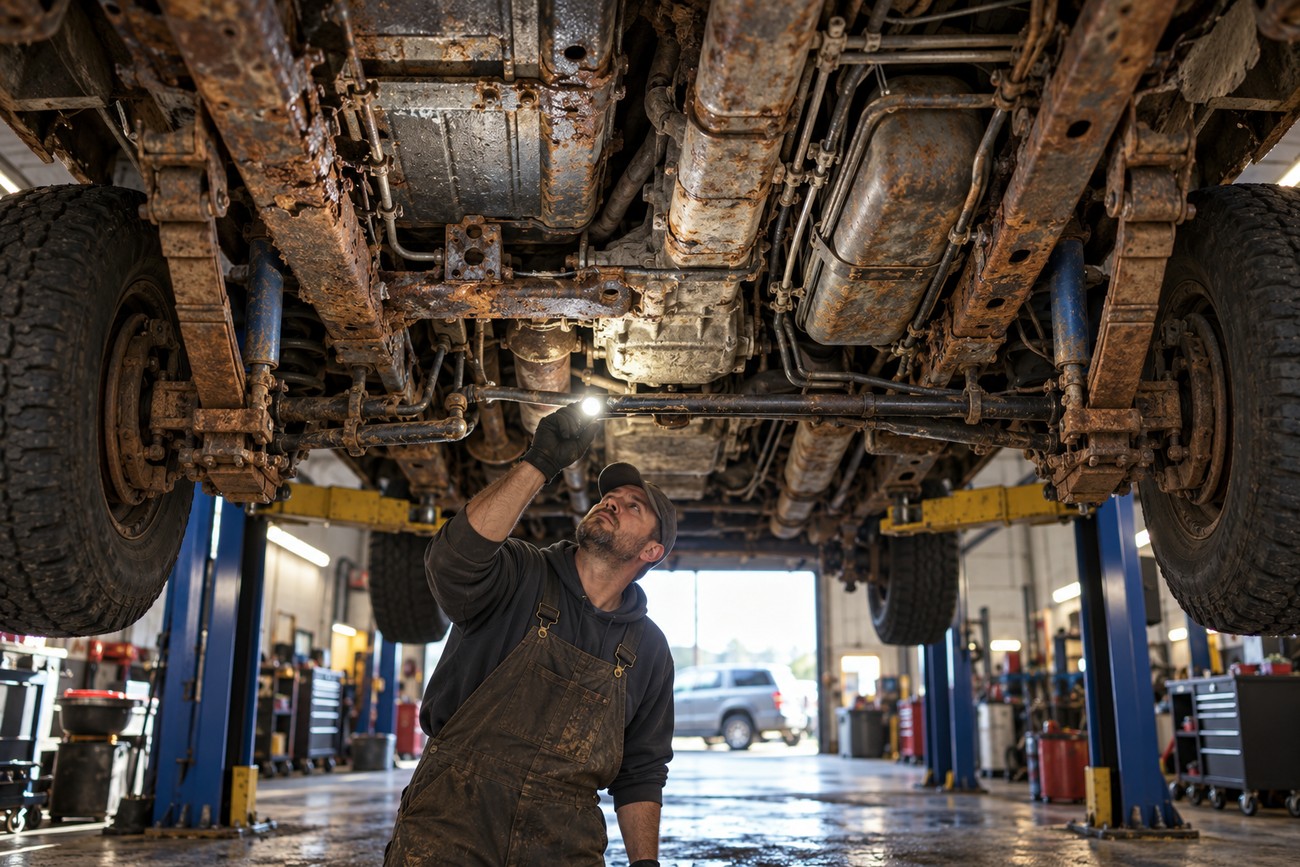
Start with the structure, preferably with the truck on a lift. Look around frame mounts, floors, leaf-spring attachment points, and steering components for corrosion and previous repairs. A clean-running donor engine offers little value if the recipient needs substantial structural work before it can be used safely.
Next, check the truck’s completeness against your chosen swap. Missing wiring, damaged fuel-system parts, or an unsuitable transmission can change the project more than a cosmetic defect. Confirm its specific payload rating if hauling matters: the cited 1,601 lb 1996 S-10 and 1,111 lb 2003 Extended Cab figures are different-year, different-configuration examples, not interchangeable ratings.
Build the budget around a complete donor and the systems needed to run it. Account for mounts, cooling, exhaust, fuel delivery, wiring, possible tuning, and driveline work instead of pricing only a bare engine. Keep a separate allowance for faults found during inspection, particularly where old chassis parts will carry the finished truck.
Check local emissions, registration, and inspection requirements before purchasing either vehicle or donor. Requirements vary by location and may affect which engine and emissions configuration you can use. Resolving that question early is less costly than discovering it after the mounts and exhaust have been made.
Frequently asked questions
Which year of the Chevy S-10 is best for a swap?
The best year is one whose condition and equipment fit your chosen donor package and local rules. Identify the engine, transmission, ECU, harness, and throttle arrangement you intend to use, then compare them with candidate trucks before choosing a year. Ask what wiring and emissions equipment must remain or be integrated, and confirm the answer under the rules where the truck will be registered.
What is a Chevy S-10 worth today?
A particular S-10 is worth assessing against comparable local listings, with adjustments for its condition, configuration, and completeness. Inspect the chassis and document missing or damaged parts, then estimate the repairs needed before the swap begins. An asking price is less useful if the truck needs structural work or the donor components you expected are absent.
Which Chevrolet S-10 years should I avoid?
A blanket avoid-year list is less useful than checking the individual truck. Research documented issues and parts compatibility for the candidate year, including the systems your planned donor must connect to. Then prioritize rust, prior repairs, wiring condition, and completeness; those findings determine whether that example is a workable starting point.
What paperwork should come with a swap donor?
Keep a record of the donor’s identity, engine and transmission details, purchase documents, and the parts supplied, including the ECU, harness, and emissions equipment. Photograph identifying labels and retain part numbers where available. These records help you order matching replacements, explain the build to a future buyer, and check what your local registration or emissions authority requires before installation.







