
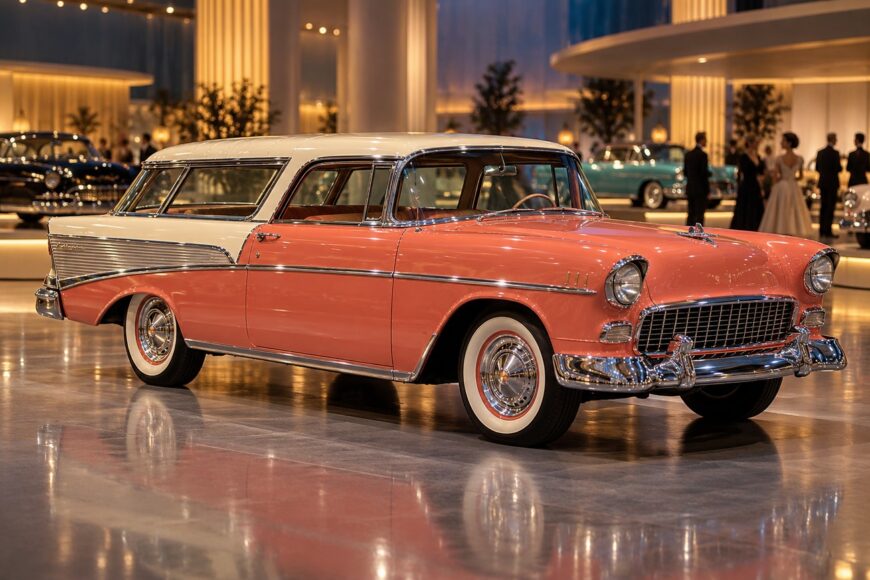
The 1955 Chevrolet Nomad arrived with the glamour of a GM Motorama dream and the practical shape of a station wagon. That combination still gives it unusual visual authority: a long, low body, two doors, and styling that looks designed for a display stand before it looks ready for a family errand.
It was also the first production year of the Nomad model, a niche two-door wagon built for a market that has since become far more interested in authenticity. A surviving car may be an original collector piece, a correctly restored example, a modern restomod, or an expensive project wearing convincing chrome. Those categories can look remarkably similar in photographs.
- Why the 1955 Nomad Became a Sport Wagon Icon
- What the 1955 Chevrolet Nomad Actually Was
- Factory Specification: Performance, Price, and Expectations
- Authenticity Is the Real 1955 Nomad Buying Test
- The Hidden Cost of Owning a Rare Two-Door Wagon
- Nomad Myths That Distort the Market
- Frequently asked questions
- How much is a 1955 Chevy Nomad worth today?
- How many 1955 Chevy Nomads were made?
- What is the difference between a Chevy Nomad and a regular Chevy wagon?
- How can you tell whether a listing is a real 1955 Nomad or a modified wagon?
Why the 1955 Nomad Became a Sport Wagon Icon
The Nomad’s identity began with design theater. Its image was shaped by GM Motorama and concept-car styling, where dramatic proportions and distinctive trim were intended to attract attention before a buyer considered luggage space or mechanical specification. The production car retained enough of that visual drama to stand apart from ordinary family wagons.
That heritage explains why the 1955 Nomad carries a stronger collector identity than its utility suggests. It was a serial-production two-door wagon, yet its roofline, side treatment, and presentation gave it the character of a specialty Chevrolet. The model turned a practical body style into a design statement within the Tri-Five family.
“Sport wagon” remains a useful popular description because it captures the Nomad’s proportions and attitude. It was not a formal factory vehicle class, however. The historically precise description is a two-door station wagon with unusual styling and premium positioning.
Icon status should be separated from financial certainty. The same styling that makes a genuine Nomad desirable also encourages replicas, heavily modified cars, and restorations assembled from uncertain parts. Visual impact starts the inspection; it does not finish it.
What the 1955 Chevrolet Nomad Actually Was
The 1955 Chevrolet Nomad was a serial-production two-door wagon built on the A-body platform. It belonged to the 1955–1957 Nomad series and formed part of Chevrolet’s Bel Air/Tri-Five family. That relationship matters because the car shares broad engineering and styling language with other Chevrolets of the period, while its body and trim give it a distinct identity.
Calling it “just a Bel Air wagon” loses the point of the model. The Nomad was associated with Bel Air, yet it was developed and presented as a separate two-door design with specialized body details. Those details affect both authenticity and restoration cost because ordinary Chevrolet wagon parts cannot automatically substitute for Nomad-specific components.
Technical references list seating for six passengers, a reminder that the car remained a usable wagon despite its show-car appearance. Its cargo and passenger function came from the station-wagon layout, while its two-door body and design-led presentation placed it in a much narrower part of the market.
The 1955 car should also be identified on its own terms. The 1956 and 1957 Nomads belong to the same production period, yet they are different model years with different styling, market perceptions, and collector expectations. A listing that treats all three years as interchangeable deserves careful scrutiny.
Factory Specification: Performance, Price, and Expectations
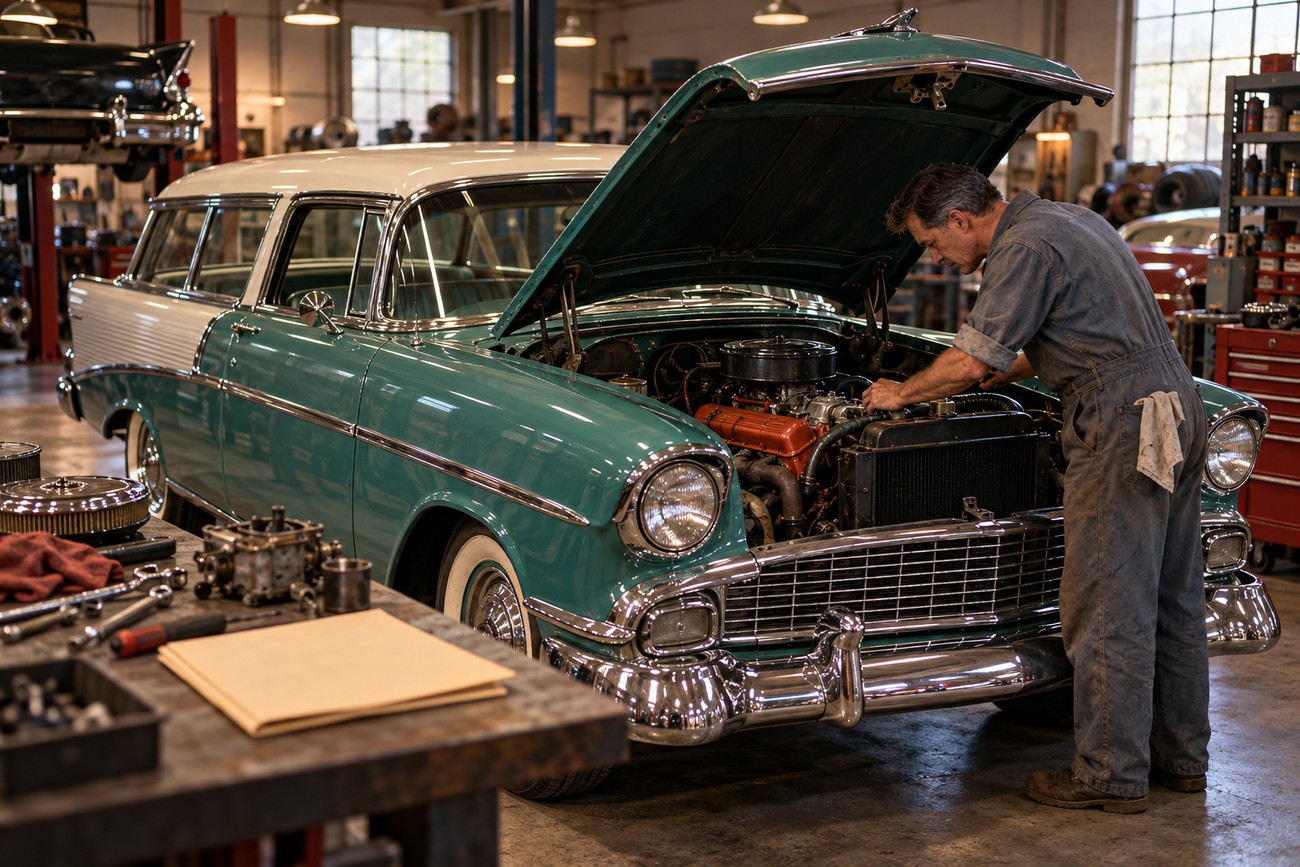
The defining mechanical development for 1955 was Chevrolet’s 265-cubic-inch overhead-valve small-block V8. The commonly cited base-V8 output is 180 hp, a figure that describes the period factory car rather than the power claims attached to many modernized examples.
Historical references also mention inline-six variants within the Nomad and series context. That makes the statement that every 1955 Nomad was a V8 too broad. A buyer assessing originality should establish the car’s documented engine history instead of assuming that a V8 is automatically factory-correct.
A professional review cites a 1955 price of $2,571. That positioned the Nomad among Chevrolet’s most expensive models after the Corvette, which helps explain its special presentation and limited niche. It was an ambitious Chevrolet, even though its basic role remained that of a wagon.
Modern advertisements often quote 300–400-plus horsepower. Those figures generally point to later engine swaps, rebuilt performance motors, or restomod drivetrains. They should never be used as shorthand for the original 1955 specification, and they tell you little about the car’s historical integrity.
Authenticity Is the Real 1955 Nomad Buying Test
Begin with identity rather than paint. Confirm that the claimed car is a 1955 Chevrolet Nomad and not a later Nomad, a modified Chevrolet wagon, or a project assembled from several vehicles. Documentation, year-specific body evidence, and clear photographs of the underside are more useful than a listing’s “all-stock” description.
Inspect the body as a collector component. Look closely at the Nomad-specific structure, trim mounting points, roof and side-panel work, door fit, floor repairs, and any signs of extensive replacement metal. A powerful engine can be changed relatively easily; incorrect or missing body structure and specialized trim can consume far more time and money.
Inspect the body, trim mounting points, and documentation before negotiating over a swapped engine because drivetrain upgrades are easier to change than missing or incorrect Nomad-specific structure and parts.
The engine bay should be photographed in detail, including casting marks where available, accessory layout, wiring, cooling equipment, and transmission connections. 350/383 V8 swaps and modern transmissions may replace the factory configuration, while a modern chassis or suspension can sit beneath an exterior that appears period-correct. Ask for disclosure in writing and compare it with the inspection.
Separate the categories before assigning value. An original car retains significant factory identity; a correctly restored car may use reproduction or rebuilt parts while preserving the intended specification; a restomod deliberately combines classic appearance with modern mechanical components. Each can be a valid purchase, but they serve different collecting purposes and should not be represented as the same thing.
The Hidden Cost of Owning a Rare Two-Door Wagon
Surviving 1955 Nomads are expensive because the starting point is scarce and the restoration work is specialized. A car that looks complete may still need body correction, trim repair, interior work, or mechanical sorting. The purchase price becomes only the first entry in the ownership ledger.
Specific body and trim parts can be difficult to source, especially when a previous restoration used incorrect pieces or removed original mounting points. This is why body condition often matters more financially than engine choice. A replacement engine can be located or rebuilt; a poor roof repair, distorted quarter panel, or missing Nomad-specific trim can define the entire project.
Decades of modifications create a second layer of risk. Swapped engines, modern transmissions, altered wiring, replacement chassis components, and changed interiors may improve performance or drivability, yet undocumented work makes future repairs harder. A visually coherent car can conceal a complicated mechanical history.
Many old or heavily modified examples are poor daily drivers unless their cooling, electrical, braking, suspension, and drivetrain systems have been thoroughly sorted. A finished show car may present well while offering limited evidence of dependable road use. Inspect the car’s actual function rather than treating polished paint as proof of readiness.
A rare Nomad is often a project with continuing expenses rather than a ready-made asset. Budget for specialist parts, careful inspection, storage, maintenance, and future corrections. The most satisfying purchase is usually the one whose condition and intended use are understood before the sale.
Nomad Myths That Distort the Market
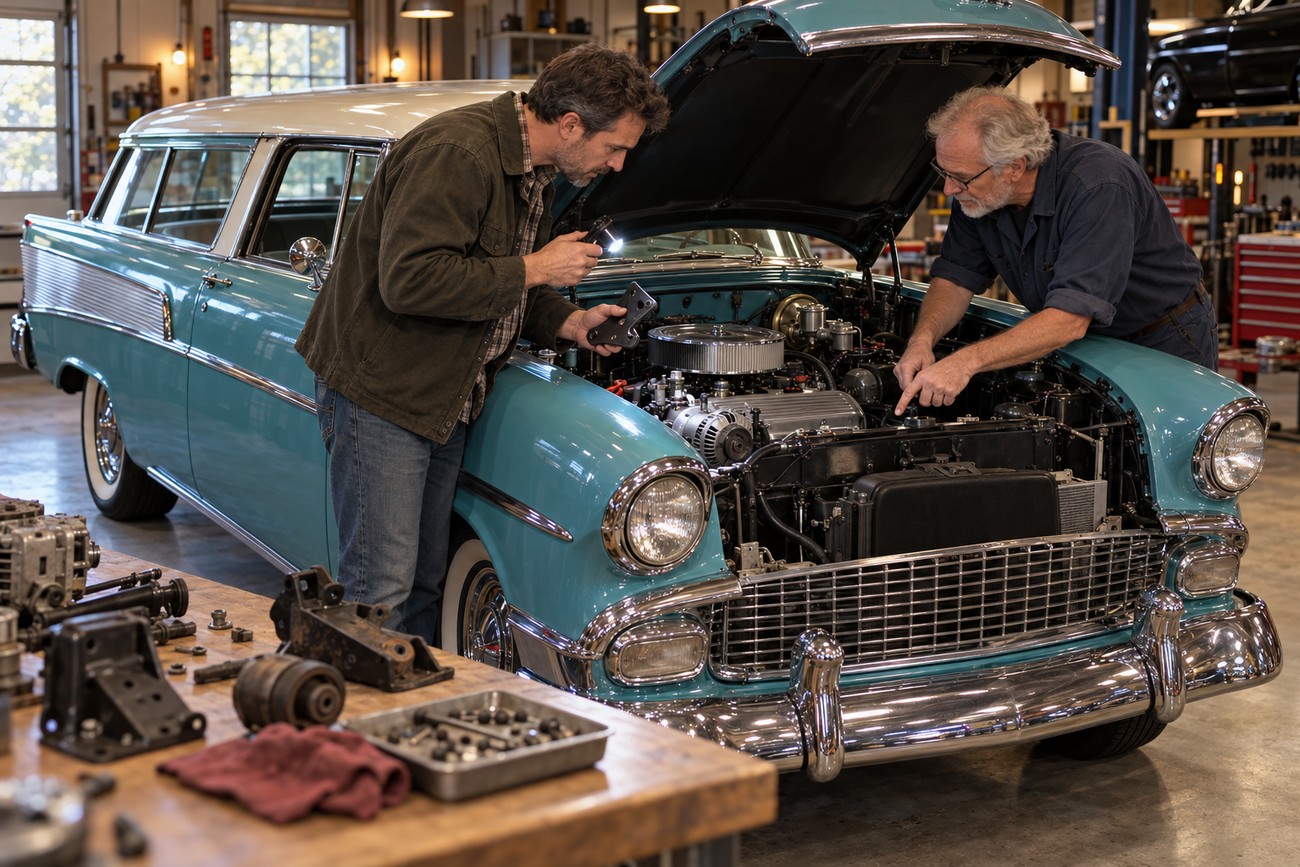
Myth: every 1955 Nomad was a V8. Reality: historical references also mention inline-six variants within the Nomad and series context. Engine identification therefore requires documentation and inspection, especially when a seller presents a later V8 as evidence of original specification.
Myth: the Nomad was simply a Bel Air wagon. Reality: it belonged to the Bel Air/Tri-Five Chevrolet family, yet it was a distinct two-door wagon with specialized styling and parts. That difference is central to its collector identity and to the cost of restoring one correctly.
Myth: a listing claiming 300–400-plus horsepower describes a factory 1955 car. Reality: those figures generally indicate a later swap or restomod modification. A modern engine may improve acceleration, but it also changes the car’s original specification and should be disclosed clearly.
Myth: rarity guarantees investment performance. Reality: rarity raises interest while originality, body condition, documentation, and restoration quality determine whether a particular example deserves a premium. A rare car with an uncertain body history can be less attractive to a serious collector than a correctly documented car with modest mechanical upgrades.
The useful market distinction is therefore simple: establish what the car is before deciding what it is worth. A period-correct survivor, a faithful restoration, a dependable restomod, and a partially completed project can all wear Nomad styling, yet they carry different responsibilities and different forms of value.
Frequently asked questions
The Nomad’s value depends on its identity, condition, and level of modification. Production figures also need careful interpretation because some commonly cited numbers cover the full 1955–1957 series. The following answers focus on the distinctions that matter when evaluating a 1955 example.
How much is a 1955 Chevy Nomad worth today?
No single responsible price follows from rarity alone. Evaluate originality, body condition, documentation, and restoration quality before comparing the car with other sales or listings.
A project may have authentic identity but require substantial body and trim work. A driver may offer usable mechanical condition with visible compromises, while a show car depends on the quality and accuracy of its restoration. A restomod can provide stronger road performance yet command a different kind of collector interest. The correct valuation begins by identifying which category the car actually occupies.
How many 1955 Chevy Nomads were made?
The commonly cited production figure is 8,386 for the entire 1955–1957 Nomad series collectively. It is not a verified 1955-only figure, and the supplied production evidence does not provide a separate breakdown for the first model year.
That limitation matters because sellers sometimes use a series total as though it proves the exact rarity of one individual car. Year-specific identification, documentation, and condition remain necessary even when the broader production number is known.
What is the difference between a Chevy Nomad and a regular Chevy wagon?
“Chevy wagon” is a broad body-style description, while the Nomad identifies a distinct two-door wagon with design-led styling and a specific collector identity. It was part of the Bel Air/Tri-Five Chevrolet family, but its specialized body and trim separate it from an ordinary Chevrolet wagon.
That distinction affects ownership as well as appearance. Nomad-specific parts can be harder to source, and a regular wagon converted to resemble a Nomad may lack the correct structure, trim mounts, or documentation required by a collector.
How can you tell whether a listing is a real 1955 Nomad or a modified wagon?
Use a short verification sequence: review the documentation, confirm year-specific body and trim evidence, request engine-bay and underside photographs, and obtain a complete disclosure of drivetrain and chassis changes.
Compare the seller’s description with the physical car. Check whether the interior, roof, side panels, trim mounting points, engine, transmission, and chassis history support the claimed identity. A car can look authentic while carrying a modern chassis, engine, or drivetrain, so inspection is essential before treating it as an original 1955 Nomad.







