
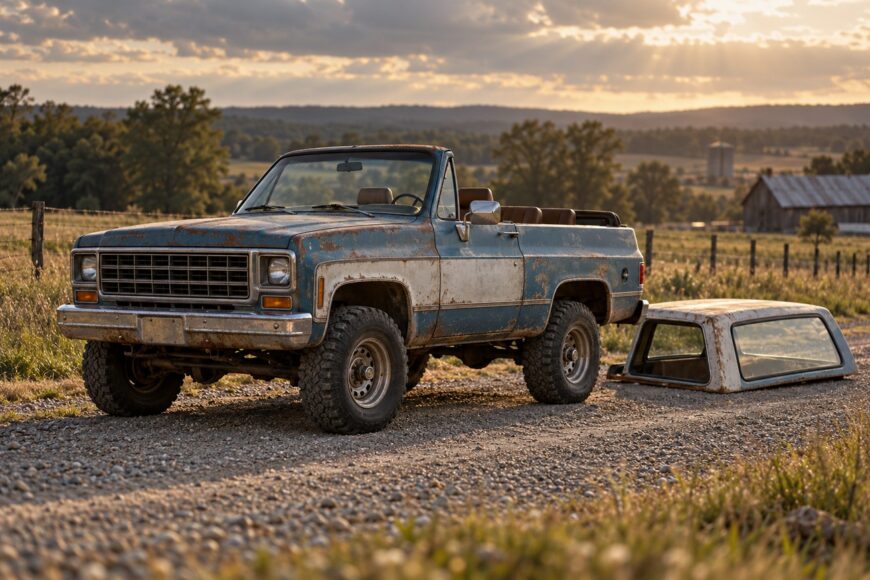
The Chevrolet K5 Blazer is one of the few classic SUVs that can genuinely deliver an open-air driving experience. Its removable roof, lowering rear glass, truck-based chassis, and simple four-wheel-drive hardware give it a character modern crossovers cannot reproduce. The same features also make it a demanding old vehicle, especially when the example has spent decades outdoors or has passed through several incomplete restorations.
This is a full-size machine with slow acceleration, substantial fuel consumption, scarce body parts, and age-related electrical and mechanical work. A sound K5 can be repairable and highly capable off-road, yet “simple” does not mean inexpensive. Condition, restoration quality, provenance, and drivetrain health matter more than the Chevrolet badge or the model’s legend.
- What the Chevrolet K5 Blazer Actually Is
- The 4WD System, Engines, and Size Behind the Image
- What Open-Top K5 Blazer Ownership Feels Like
- The Hidden Cost of the K5 Blazer’s Simplicity
- How to Inspect a Used K5 Blazer Before Buying
- Which K5 Blazer Makes Sense for Your Money?
- Frequently asked questions
- How much is a K5 Blazer worth today?
- What year does the K5 Blazer have a fully removable top?
- Which K5 Blazer is the most sought after?
What the Chevrolet K5 Blazer Actually Is
The K5 Blazer is a full-size, three-door SUV from the Chevrolet C/K family. Its proportions and mechanical layout come from pickup-truck engineering, so it feels closer to a shortened utility truck than to a contemporary family SUV. That distinction affects comfort, steering, ride quality, fuel use, and the kind of repairs an owner should expect.
The removable roof belongs to the second-generation K5 Blazer and is the feature that created its classic convertible-SUV reputation. The roof arrangement varies by vehicle and restoration, so buyers should inspect the actual body rather than rely on a photograph or a loose advertisement description. A later third-generation Blazer does not have this removable-roof configuration.
Another characteristic detail is the rear glass, which lowers into the tailgate. It adds ventilation and makes loading bulky items easier, while also introducing another mechanism, seal, and electrical circuit to inspect. A working rear window is useful evidence of careful ownership, although it does not prove that the rest of the vehicle is healthy.
Listings can mix generations, body styles, and model indices under the single name “Blazer.” That creates avoidable confusion for buyers seeking the open-top version. Confirm the generation, roof construction, drivetrain specification, and identity of the replacement panels before comparing prices or restoration quality.
The 4WD System, Engines, and Size Behind the Image
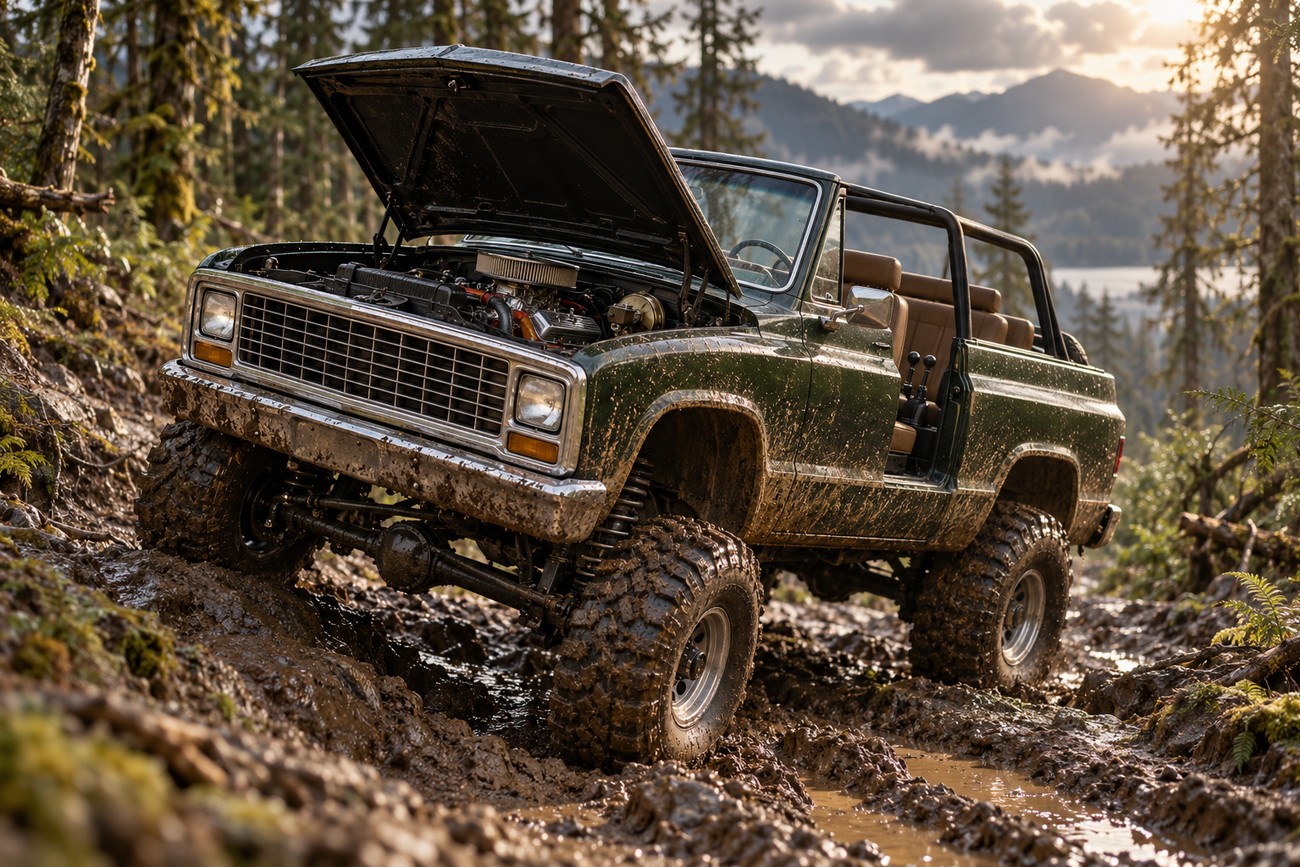
The K5’s typical four-wheel-drive system is part-time 4WD with a rigidly engaged front axle, a transfer case, and low range. This layout is effective on loose surfaces, mud, snow, and steep terrain when selected correctly. It also requires the driver to choose front-axle engagement when conditions demand it, so it does not behave like a modern permanent all-wheel-drive system.
Engine specifications vary widely across production years and catalog sources. Listed outputs range approximately from 105 to 213 hp, while late versions are associated with engines around 5.7–6.2 liters. Those figures should be treated as version-specific references, since an imported, modified, or rebuilt K5 may have a different engine, transmission, axle ratio, or calibration.
Reference dimensions are approximately 4694 × 2022 × 1875 mm, with a 2705 mm wheelbase. Factory weight references fall around 1850–1978 kg. This combination explains the vehicle’s planted stance and useful traction, while also explaining why even a healthy engine can feel unhurried.
Early or classic versions are sometimes listed at about 22.5 seconds to 97 km/h. That is a useful reminder that the K5 was designed around utility and low-speed work, not modern traffic performance. Overtaking, climbing, and carrying extra equipment require planning, particularly if the engine is tired or the vehicle runs oversize tires.
What Open-Top K5 Blazer Ownership Feels Like
A good K5 gives the driver a high seating position, clear sightlines, a broad cargo area, and a strong sense of mechanical connection. The roll-down rear glass improves airflow and access, while the removable roof changes the vehicle’s character completely in dry weather. These are practical pleasures when the hardware works properly.
Off-road, the rigidly engaged front axle and low range provide the kind of deliberate traction control that experienced drivers value. The driver must select the appropriate mode before the difficult section, then account for the vehicle’s width, weight, and limited maneuverability. On dry pavement, leaving part-time 4WD engaged can create driveline stress, so the system requires more attention than a permanent setup.
Road manners are firmly old-school. Steering and controls can feel heavy, acceleration is modest, and ride comfort depends greatly on suspension condition and tire choice. Owner-reported fuel consumption is roughly 15 L/100 km on the highway and up to 25 L/100 km in town, with real results affected by engine condition, gearing, traffic, and modifications.
Open-top use adds a separate ownership responsibility. Roof seals, weatherstripping, fasteners, and the tailgate glass must keep water away from the interior, wiring, and floor structure. A K5 that smells damp or shows stained trim may need more than cosmetic cleaning, because repeated water ingress can damage areas that are difficult to see without removing interior panels.
The Hidden Cost of the K5 Blazer’s Simplicity
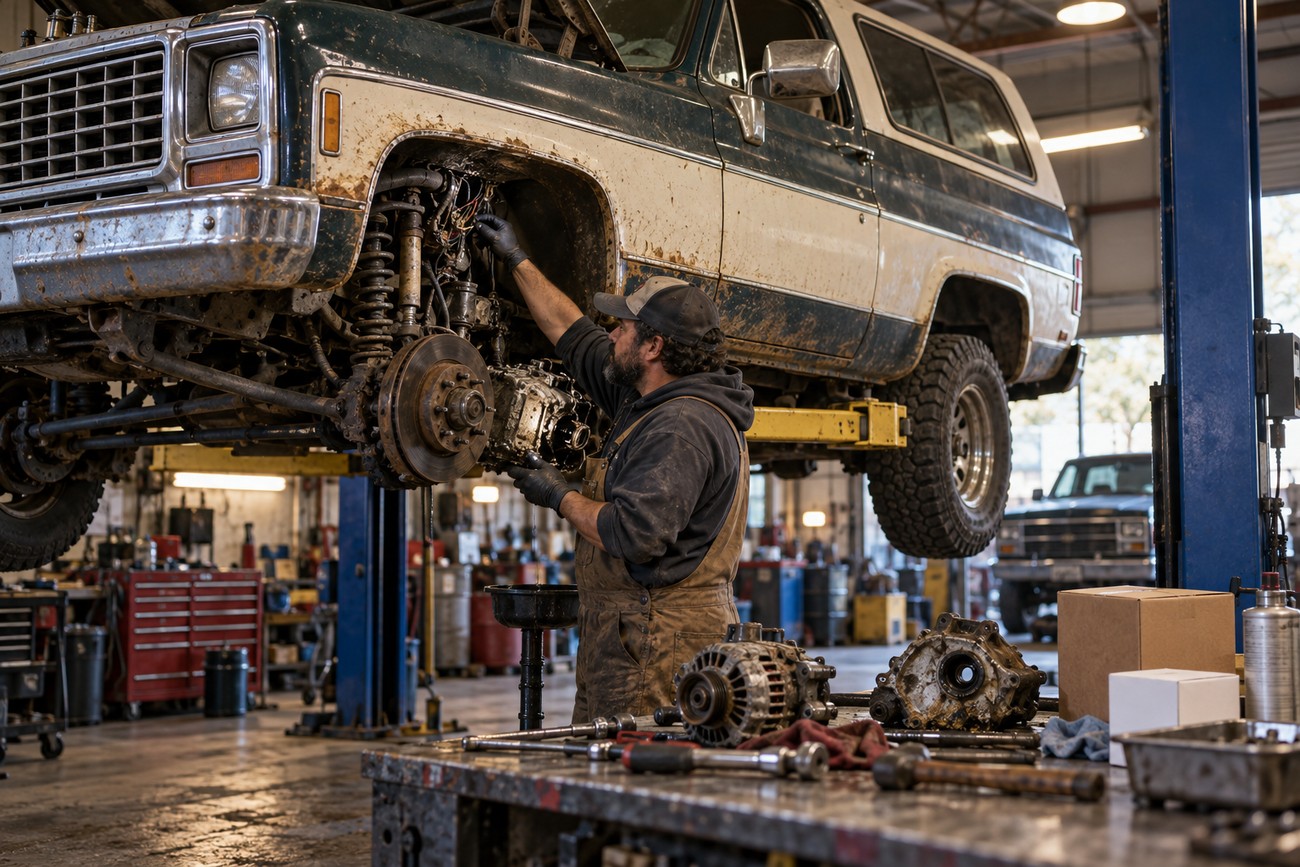
The K5’s mechanical simplicity can make diagnosis and repair more accessible, especially for a workshop familiar with older American trucks. It does not remove the costs of labor, consumables, machine work, or waiting for parts. Fuel is a recurring expense, and high consumption becomes especially noticeable when the vehicle is used for regular city driving.
Age creates a collection of smaller faults instead of one universal mechanical weakness. Electrical switches, wiring, charging components, seals, suspension joints, transfer-case controls, axles, and transmission-related parts may all require attention. A failed switch after a winter can be more disruptive than its price suggests if the correct replacement takes time to locate.
Parts availability is a major variable. Wear items may be obtainable through specialist suppliers, while body panels, trim, glass, and model-specific components can be difficult to source. A vehicle with a complete, documented parts history may be a safer purchase than a more attractive example whose repairs depend on improvised or unidentified replacements.
Downtime also has a practical cost. A K5 used as a weekend project can tolerate a vehicle sitting while a component is found; a daily driver cannot. The owner should separate repairability from total ownership cost: a simple truck may be easier to understand, yet still require substantial money and patience to keep reliable.
How to Inspect a Used K5 Blazer Before Buying
Start with the body, chassis, floor, and structural mounting points. Look beyond fresh paint for repaired seams, uneven panel gaps, trapped moisture, soft floor sections, and evidence of long-term water exposure. A clean exterior can conceal extensive work beneath the carpet, around the tailgate, or under newly applied underseal.
Next, establish what the vehicle actually is. Confirm the generation, roof construction, engine, transmission, axles, and transfer case, then ask which parts were replaced during restoration. Many market examples are projects, modified vehicles, or restored vehicles rather than untouched originals, and the quality of those changes matters more than the appearance of new paint.
Check four-wheel drive under load and verify transfer-case engagement before cosmetic details. A clean restoration is difficult to trust until its driveline, wiring, and replacement-parts history are documented.
Test the complete 4WD system on an appropriate surface. Verify front-axle engagement, transfer-case operation, low range, axle behavior, and unusual noise under load. Inspect for leaks at the transfer case, axles, and transmission, then check whether modifications have changed tire clearance, gearing, or driveline angles.
Operate every electrical function, including the rear-glass mechanism, switches, lighting, gauges, charging system, and heater controls. Inspect roof seals and the interior for dampness. Examine suspension movement, steering play, brake behavior, and tire wear, because these systems reveal use and neglect that a polished body can hide.
Finally, review provenance with skepticism. Receipts, photographs, part numbers, and a coherent sequence of repairs are more useful than broad claims about a “full restoration.” The condition spread is wide, from tired utility vehicles to expensive custom builds, and a professional inspection is sensible before committing to either category.
Which K5 Blazer Makes Sense for Your Money?
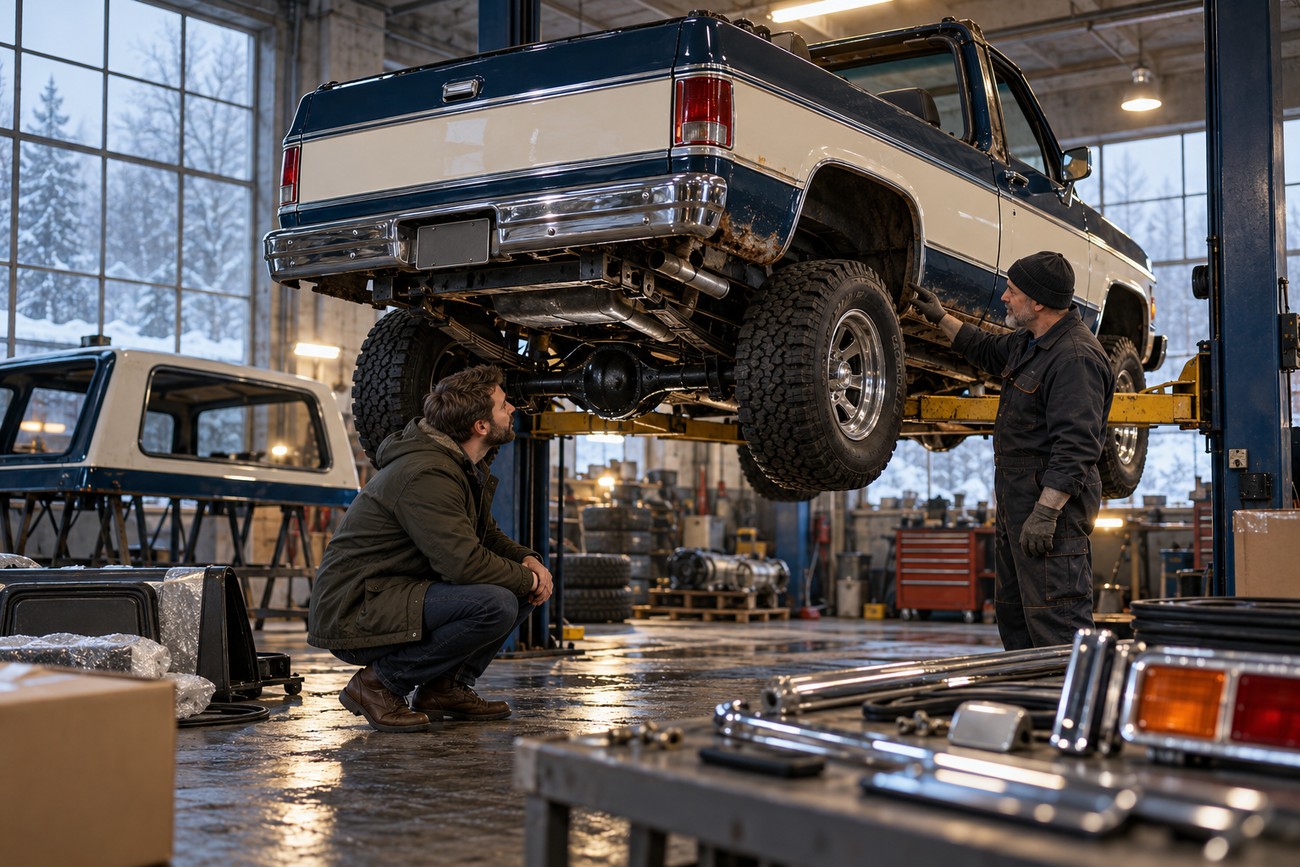
There is no useful single price answer for a K5 Blazer without knowing its generation, condition, provenance, originality, and mechanical specification. The Russian secondary market treats the model as rare, so a sound example can have a high entry cost. Rarity can also make the ownership process harder because suitable parts and knowledgeable repair support may be limited.
An original second-generation removable-top vehicle appeals to buyers seeking the classic convertible K5 character, but originality alone does not guarantee quality. A carefully restored truck with documented replacement parts may be more usable than an untouched example with corrosion, worn seals, and a neglected drivetrain. Modified vehicles can work well, although every change increases the need to understand compatibility and future parts supply.
A cheaper project is viable only when the buyer has workshop access, storage, time, and a realistic fuel and repair budget. Missing trim, uncertain body repairs, or a non-working transfer case can change the financial calculation quickly. Cosmetic progress is also easy to overvalue when the electrical system, axles, suspension, and water sealing remain unresolved.
A practical decision rule is simple: buy the best documented drivetrain and body you can afford, then match it to your intended use. The K5 makes sense for an owner who accepts downtime and wants a distinctive recreational 4×4. It is a poor fit for someone expecting inexpensive daily transport, predictable fuel costs, or immediate parts availability.
Frequently asked questions
The K5’s value, roof design, and desirability depend heavily on generation, condition, and restoration quality. The following answers address the most common buying questions while keeping those distinctions in view.
Because listings often use “K5” loosely, verify the actual body, roof hardware, drivetrain, and documentation before relying on a seller’s description.
How much is a K5 Blazer worth today?
Its value is determined by generation, originality, restoration quality, drivetrain condition, provenance, and parts availability. A second-generation removable-top vehicle with a sound body, working 4WD, documented repairs, and complete trim belongs to a different market segment from a modified project or an attractive truck with hidden corrosion.
Use the asking price only as a starting point. Compare the cost of correcting bodywork, seals, wiring, suspension, transfer-case faults, and missing parts, then include likely downtime. On a rare vehicle, the cheapest purchase can carry the highest final cost.
What year does the K5 Blazer have a fully removable top?
The removable roof is associated with the second-generation K5 Blazer. Listings often mix generations and indices, so confirm the body structure, roof hardware, tailgate, and vehicle documentation instead of relying on the word “K5” in an advertisement.
The third-generation Blazer does not have the same removable-top configuration. Buyers seeking the classic open-air design should inspect the actual vehicle and check whether the roof components are complete, correctly fitted, and weather-tight.
Which K5 Blazer is the most sought after?
Demand generally centers on well-preserved second-generation examples with the removable roof, sound bodywork, and functioning four-wheel-drive system. The configuration delivers the defining convertible-SUV character that many buyers associate with the K5 name.
A particular year is less important than originality, restoration quality, provenance, and mechanical condition. A documented, usable vehicle with complete parts can be more desirable than a rarer specification that requires extensive reconstruction.







