
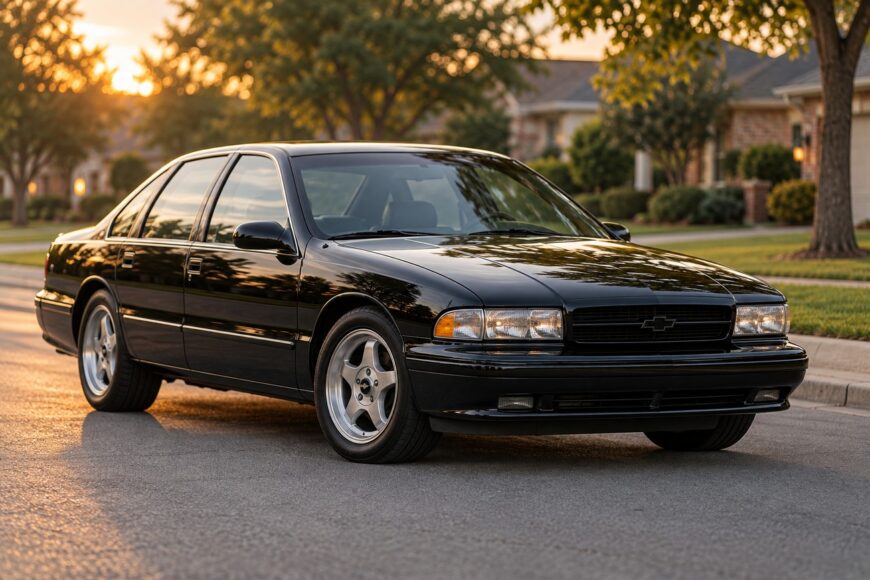
The 1994–1996 Chevrolet Impala SS is a heavy, rear-wheel-drive LT1 super sedan with the visual presence of a full-size American car and the mechanical complications of a three-decade-old performance vehicle. Its 5.7-liter V8 carries Corvette-derived credibility, yet the Impala’s weight and automatic transmission give it a different character from a lightweight sports car.
Low mileage helps only when supported by maintenance records and an honest originality check. Opti-Spark, the reverse-flow cooling system, the 4L60E transmission, aging brakes, fuel-system faults, and underbody damage can matter more than the odometer. A seller’s “all original” description also deserves verification, since engines, transmissions, interiors, exhaust systems, and electronic parts are often replaced over time.
- What the 1994–1996 Impala SS Really Was
- LT1 Hardware, Drivetrain, and the Super Sedan Trade-Off
- 1994, 1995, or 1996: The Differences That Matter
- The Expensive Weak Points Owners Actually Fight
- How to Inspect an Impala SS Before Buying
- LT1 and Impala SS Myths That Make Buyers Overpay
- Frequently asked questions
- Which Impala SS is the fastest?
- Why are Chevy SS cars so rare today?
- What is the rarest Chevy Impala?
- How can you tell whether an Impala SS still has its original drivetrain?
What the 1994–1996 Impala SS Really Was
The Impala SS returned for 1994 as a rear-wheel-drive Chevrolet B-body sedan. It used a full-size chassis and a roomy four-door body, then added a 5.7-liter LT1 V8 rated at 260 hp and 330 lb-ft. That combination made it a serious high-performance sedan for its era without turning it into a compact sports car.
The LT1’s Corvette connection explains much of the model’s reputation. Shared engine lineage brings useful hardware and strong aftermarket interest, but it does not erase the differences in mass, gearing, body shape, and chassis mission. The Impala SS is substantially heavier than a Corvette, so identical engine-family branding does not mean identical performance.
Its appeal comes from the way the components work together: rear-wheel drive, V8 torque, a limited-slip differential, and a large body that can carry passengers and luggage. The result is a car with genuine performance intent and a distinctly American sense of scale. Buyers expecting the responses of a light two-seat coupe may find the sedan’s character more relaxed and weight-led.
That distinction matters in the used market. The Impala SS is valuable as a complete super sedan, rather than as a Corvette substitute with four doors. Condition, drivetrain history, and structural integrity therefore deserve more attention than an engine-bay claim based only on the LT1 name.
LT1 Hardware, Drivetrain, and the Super Sedan Trade-Off
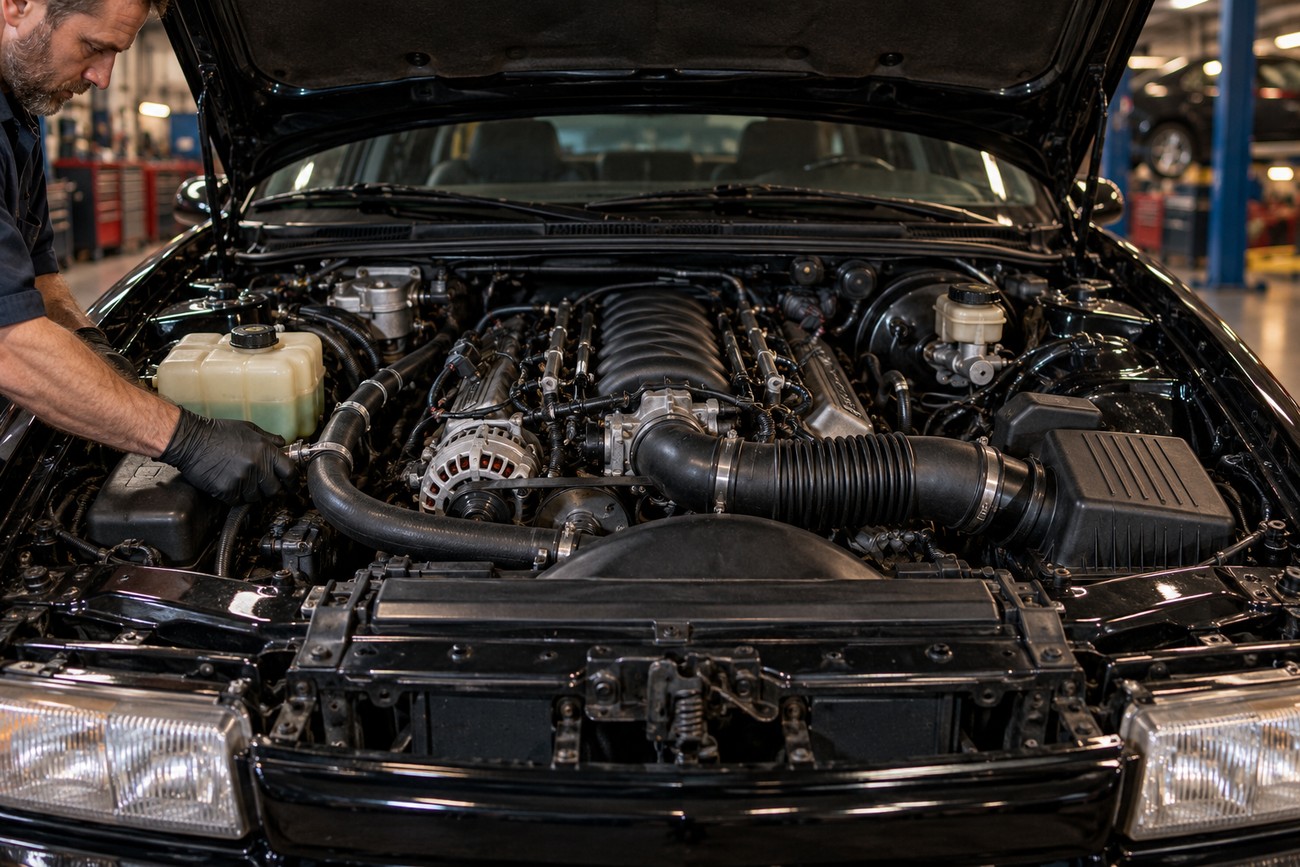
The LT1 uses sequential fuel injection and reverse-flow cooling. In practical terms, coolant reaches the cylinder heads first, which helps control combustion-chamber temperatures but makes the condition of the cooling system especially important. Leaks, degraded seals, and poor maintenance can create ignition problems in addition to ordinary overheating concerns.
Power reaches the rear wheels through a 4-speed 4L60E automatic transmission, a 3.08 final drive, and a limited-slip differential. This specification favors a broad, usable sedan character rather than the feel of a short-geared track car. The limited-slip unit also makes differential condition important, since it is part of the car’s traction and drivability rather than a decorative specification.
Factory wheels measure 17×8.5 inches and carry 255/50 tires. Braking comes from approximately 12-inch ventilated disc brakes with ABS. These components give the car a more substantial mechanical package than an ordinary B-body, while replacement parts and tire condition can still vary considerably among surviving examples.
The cooling system deserves inspection before any enthusiastic road test. A small leak near the water pump or its surrounding seals can send coolant toward the moisture-sensitive Opti-Spark distributor. The engine’s basic architecture can be durable, but its supporting systems determine whether that durability remains usable in an old car.
1994, 1995, or 1996: The Differences That Matter
The main year-to-year differences concern the dashboard and shifter. Equipment can vary by individual car, so the table is a buying guide rather than a substitute for inspecting the vehicle in front of you.
| Model year | Instrument cluster | Speedometer and tachometer | Shifter | Buyer implication |
|---|---|---|---|---|
| 1994 | Early-style cluster | May use a digital speedometer and may lack a tachometer | Column-mounted configuration | Verify the actual dashboard and wiring before assuming equipment from the year alone |
| 1995 | Early-style cluster | May use a digital speedometer and may lack a tachometer | Column-mounted configuration | Condition and documentation remain more important than the model-year label |
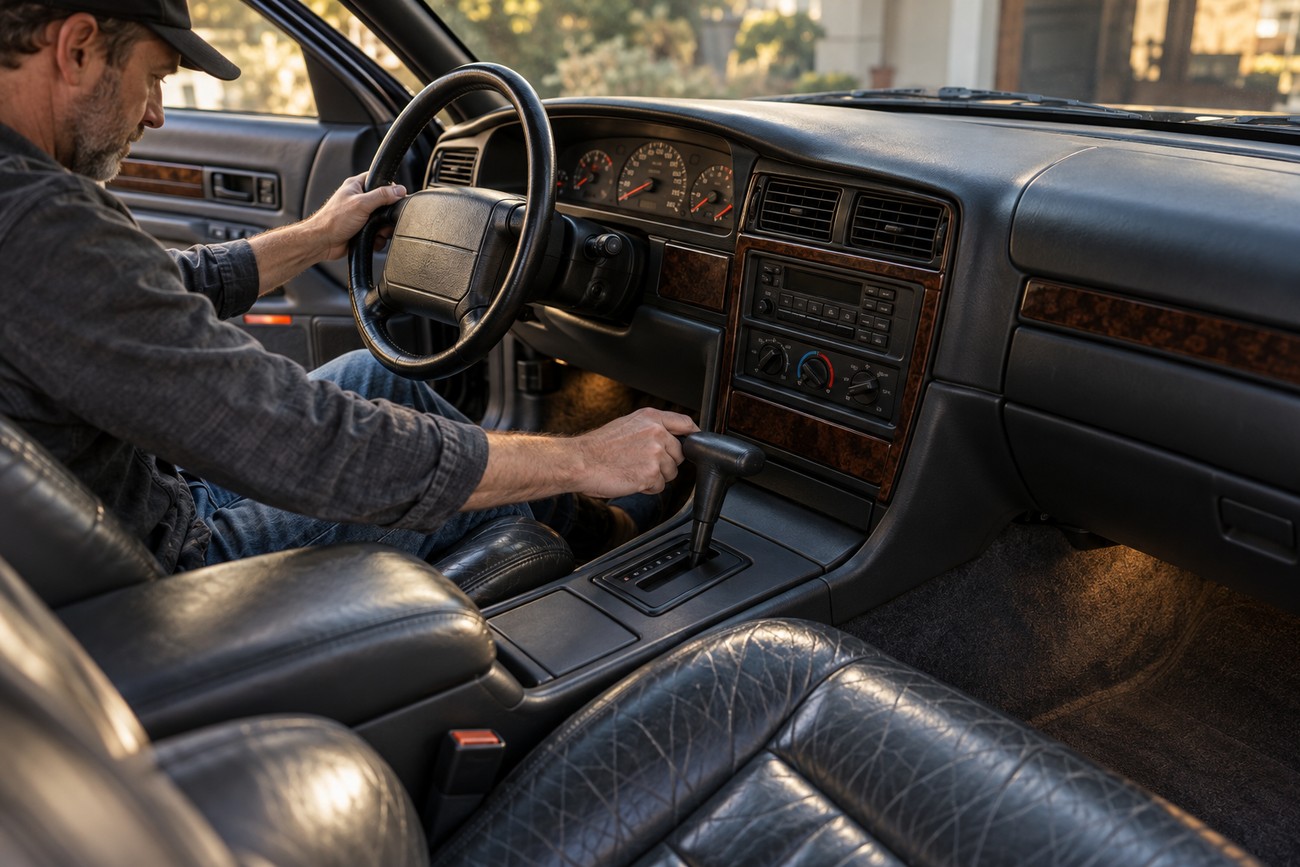
| 1996 | Full analog instrument cluster | Analog layout; verify the individual car | Floor-mounted T-handle shifter | Often easier to live with daily, provided the car has been maintained and remains correctly configured |
The 1996 car is often preferred for regular use because the full analog cluster is easier to read at a glance and the floor-mounted T-handle shifter gives the cabin a more conventional performance-car layout. These are practical improvements in daily driving, rather than proof that every 1996 example is mechanically superior.
Some listings mention a 160-mph speedometer, but that claim is not universal. Instrument equipment depends on the year and the individual vehicle, so a buyer should inspect the cluster and compare it with photographs, records, and the car’s documented configuration.
A well-maintained 1994 or 1995 can be a better purchase than a neglected 1996. Factory equipment, service history, body condition, and evidence of correct repairs should outweigh a simple preference for the newest model year.
The Expensive Weak Points Owners Actually Fight
Opti-Spark is the most famous LT1-specific concern. The distributor is sensitive to moisture, and a water-pump or nearby seal leak can allow coolant into the ignition area, producing misfires and difficult troubleshooting. Access is restricted by the front of the engine, so a seemingly minor cooling leak can become a labor-intensive ignition repair.
Replacing Opti-Spark without tracing the source of the coolant is a common waste of money. The replacement distributor may work correctly for a short time, then suffer the same fate if the leak remains. The cooling system therefore needs a complete inspection, including the pump, seals, hoses, and evidence of previous contamination.
Technicians trace the coolant leak before fitting another Opti-Spark, and they judge the 4L60E after the fluid reaches operating temperature. A cold, smooth shift does not prove that the transmission will behave correctly under load when fully warm.
The 4L60E can develop slipping, poor shifts, and other drivability problems as mileage and wear accumulate. Advertising sometimes implies 100,000-plus trouble-free miles, but that is not a factory guarantee. A practical Hagerty reference point notes that problems may begin around 120,000 miles, which should be treated as an inspection prompt rather than a fixed service limit.
Fuel-pump and fuel-level-sender failures are reported ownership issues, while long-stored cars may develop seized brake mechanisms. Storage can also leave stale fuel, hardened seals, and restricted movement in components that appeared acceptable during a brief visual inspection. Exhaust-manifold bolts create another practical risk: rear bolts may seize or break, and difficult extraction can potentially involve cylinder-head removal. That is a repair hazard, not a defect in every Impala SS.
How to Inspect an Impala SS Before Buying
Begin with age rather than the odometer. Rubber components, seals, wiring, suspension parts, and brakes deteriorate while a car sits, so a low-mileage example may need more immediate work than a higher-mileage car that has been driven and serviced consistently. Inspect the body, underside, wheel wells, and floor structure for corrosion, impact damage, poor repairs, and signs of long-term storage.
Start the engine cold and look for cooling-system leaks, unstable idle, misfires, and evidence that coolant has reached the Opti-Spark area. Confirm that the cooling fan operates correctly before a road test. On a stored car, verify brake freedom and fuel condition first; a road test should not be the first time a seized caliper or degraded fuel system is asked to work.
Evaluate the 4L60E both cold and fully warmed. Check engagement, shift quality, slipping, delayed response, and behavior under load, then inspect the fluid and service history. A transmission that feels acceptable during the first few minutes may reveal wear after the fluid temperature rises.
Inspect the rear 10-bolt axle, limited-slip function, driveshaft, mounts, and underbody for impact damage. Listen for driveline noise and check whether the rear axle behaves consistently during low-speed turns and controlled traction tests. These inspections help separate a complete, usable drivetrain from a car that has been cosmetically revived after years of neglect.
Finally, verify originality instead of accepting it as a slogan. Compare service records with casting and component evidence, installation details, wiring, interior trim, and the advertised equipment. Cold-air intakes, exhausts, programmers, replacement engines, transmissions, interiors, and body parts may all be present even when a listing calls the car original.
LT1 and Impala SS Myths That Make Buyers Overpay
The LT1 is often described as an engine that needs little beyond oil changes. Its basic architecture can be durable, but that view ignores the moisture-sensitive Opti-Spark and the reverse-flow cooling system. A buyer who checks oil condition while ignoring coolant history is examining only part of the engine.
Another misconception is that every Impala SS has the same gauges and cabin controls. The 1994–1995 cars may use a digital speedometer and may lack a tachometer, while 1996 introduced a full analog cluster and a floor-mounted T-handle shifter. A 160-mph speedometer claim also needs verification because equipment depends on the individual car.
A 4L60E described as guaranteed to exceed 100,000 trouble-free miles has been oversold. That mileage statement is not a factory guarantee, and possible problems around 120,000 miles are a practical reference point rather than a universal failure schedule. The transmission should be tested cold and fully warm, with records carrying more weight than a seller’s prediction.
Finally, a water-pump leak is not automatically a minor repair on an LT1. Because coolant can damage the Opti-Spark, the correct buying decision depends on finding the leak and checking the ignition system together. The platform remains compelling, but condition, documentation, and verified originality define its value.
Frequently asked questions
Factory specifications, individual-car condition, and unsupported rarity claims must be kept separate. The answers below use the supplied factory baseline and avoid treating every modified or surviving car as identical.
Which Impala SS is the fastest?
The supplied factory data does not establish a definitive fastest model year. The 1994–1996 cars share the 5.7-liter LT1 V8 rated at 260 hp and 330 lb-ft, along with the 4L60E automatic and 3.08 final drive.
Actual performance depends on drivetrain health, vehicle condition, tire choice, modifications, and calibration. A healthy, correctly configured car may outperform a more desirable model year that has a tired transmission, restricted exhaust, poor ignition components, or added weight from repairs and accessories.
Why are Chevy SS cars so rare today?
Age, attrition, storage damage, modifications, and replacement parts reduce the number of examples that remain in convincing condition. Surviving cars are also subject to selection bias: the examples seen in enthusiast listings are more likely to be restored, modified, or described as original than ordinary cars that have disappeared from regular use.
“Chevy SS” also covers different models and generations, so the badge alone does not define one population. For the Impala SS, rarity claims should be tied to the exact model years, body style, factory equipment, and documentation rather than to the badge’s general reputation.
What is the rarest Chevy Impala?
There is no responsible single answer without defining the generation, body style, factory options, and documentation standard. A rare color, unusual equipment combination, or surviving original drivetrain may matter to a particular buyer, but those details do not automatically prove that a car is the rarest Impala.
To verify an Impala SS claim, compare the vehicle identification information and factory equipment with period documentation, inspect the actual cluster and drivetrain, and review repair records. The car’s present condition and evidence of originality are more useful than an unqualified rarity statement in an advertisement.
How can you tell whether an Impala SS still has its original drivetrain?
Start with service records, then compare casting and component evidence with the advertised configuration. Look for consistent engine and transmission details, correct installation hardware, undisturbed wiring, and signs that the drivetrain has been removed or replaced. A clean engine bay alone cannot prove originality.
Confirm the 3.08 final drive, limited-slip differential, rear 10-bolt axle, driveshaft, mounts, and transmission behavior as part of the inspection. If the records, component evidence, and equipment do not agree, treat the drivetrain as unverified until a specialist can establish its history.







