
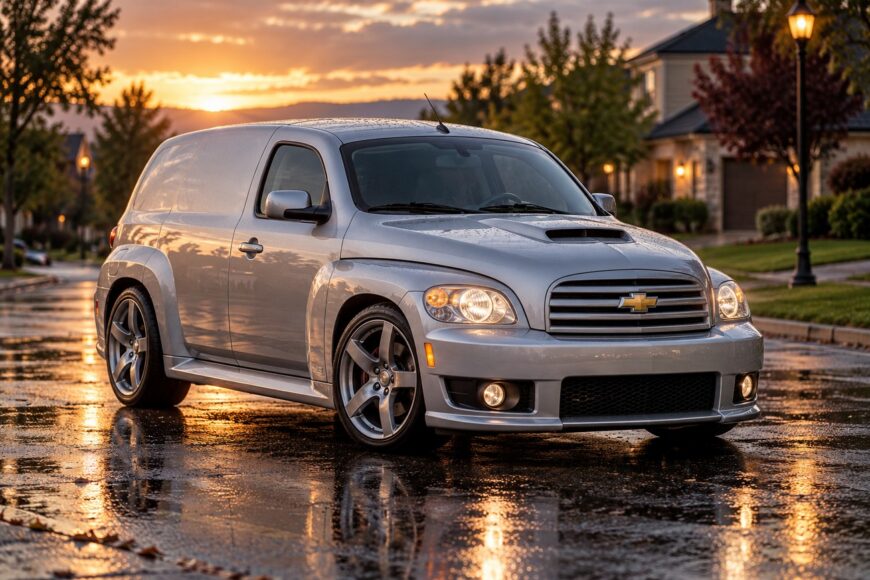
A retro, utility-shaped Chevrolet with a turbocharged 260-hp drivetrain sounds like a factory joke that somehow reached production. The Chevrolet HHR SS Turbocharged backs that image with a 2.0-liter Ecotec LNF, a manual gearbox, and enough straight-line pace to surprise drivers who see an old compact van.
The real appeal depends on whether that pace survives closer inspection. The HHR SS can be genuinely quick, yet it remains a tall, front-wheel-drive vehicle with substantial mass, a firm ride, and an age-related maintenance burden. Condition, drivetrain configuration, and ownership compromises matter more than the badge or headline power figure.
That is why the best example is rarely the cheapest one or the most heavily modified one. A documented, mechanically healthy car offers the unusual sleeper experience; a neglected example can turn the same specification into an expensive collection of turbo, clutch, cooling, and suspension problems.
- What the Chevrolet HHR SS Turbocharged Actually Is
- Chevrolet HHR SS Turbocharged Specifications
- Why the HHR SS Feels Like a Sleeper—and Where It Stops Feeling Sporty
- The Ownership Trade-Offs Hidden Behind the SS Badge
- How to Inspect a Used HHR SS Before You Buy
- Mislabeled Ads, Conflicting Specs, and Common HHR SS Myths
- Is the Chevrolet HHR SS Turbocharged Worth Buying Today?
- Frequently asked questions
- How many HHR SS panel vans were made?
- How rare is the Chevrolet HHR SS?
- How fast is an HHR SS Turbocharged in real-world conditions?
- How can you tell if an HHR SS is the Turbocharged model?
What the Chevrolet HHR SS Turbocharged Actually Is
The Chevrolet HHR SS Turbocharged was a short-lived performance version of the HHR rather than a standard model with cosmetic trim. Its defining hardware is a 2.0-liter turbocharged inline-four Ecotec LNF, commonly rated at 260 hp and 353 Nm, paired with a 5-speed manual transmission and front-wheel drive.
Chevrolet introduced the version in 2007 as a 2008 model and discontinued it in 2010. That brief production window helps explain why clean cars are difficult to find today, although public data does not establish a dependable production total for HHR SS panel vans.
The sleeper effect comes from the contrast between the HHR’s retro utility-car shape and its turbocharged performance. The body suggests practical transport and inexpensive commuting; the engine can deliver acceleration associated with much more conventional performance cars.
“Panel van sleeper” describes that visual idea and the way many enthusiasts talk about the car. It does not guarantee that every advertised HHR SS is a genuine Turbocharged model, a factory panel van, or even correctly described. VIN information, engine identity, transmission, and factory equipment deserve more trust than an advertisement title.
Chevrolet HHR SS Turbocharged Specifications
The figures below represent the commonly cited Turbocharged specification. Acceleration and fuel figures are commonly published or catalog data, so they should not be treated as universal factory-test results for every surviving car.
| Specification | Chevrolet HHR SS Turbocharged |
|---|---|
| Engine | 2.0-liter turbocharged inline-four Ecotec LNF |
| Power | 260 hp most commonly cited; some catalogs list 253 hp |
| Torque | 353 Nm |
| Transmission | 5-speed manual is the prevalent Turbocharged specification |
| Drivetrain | Front-wheel drive |
| 0–100 km/h | Approximately 6.3 seconds in commonly published data |
| Doors and seats | 5 doors and 5 seats |
| Wheelbase | 2631 mm |
| Curb weight | Approximately 1590 kg |
| Wheels | 18-inch wheels |
| Suspension | Sport suspension |
| Fuel tank | 61 liters in common catalog listings |
| Combined fuel economy | Approximately 9.8 L/100 km in catalog listings |
| Model timing | Introduced in 2007 as a 2008 model; discontinued in 2010 |
Why the HHR SS Feels Like a Sleeper—and Where It Stops Feeling Sporty
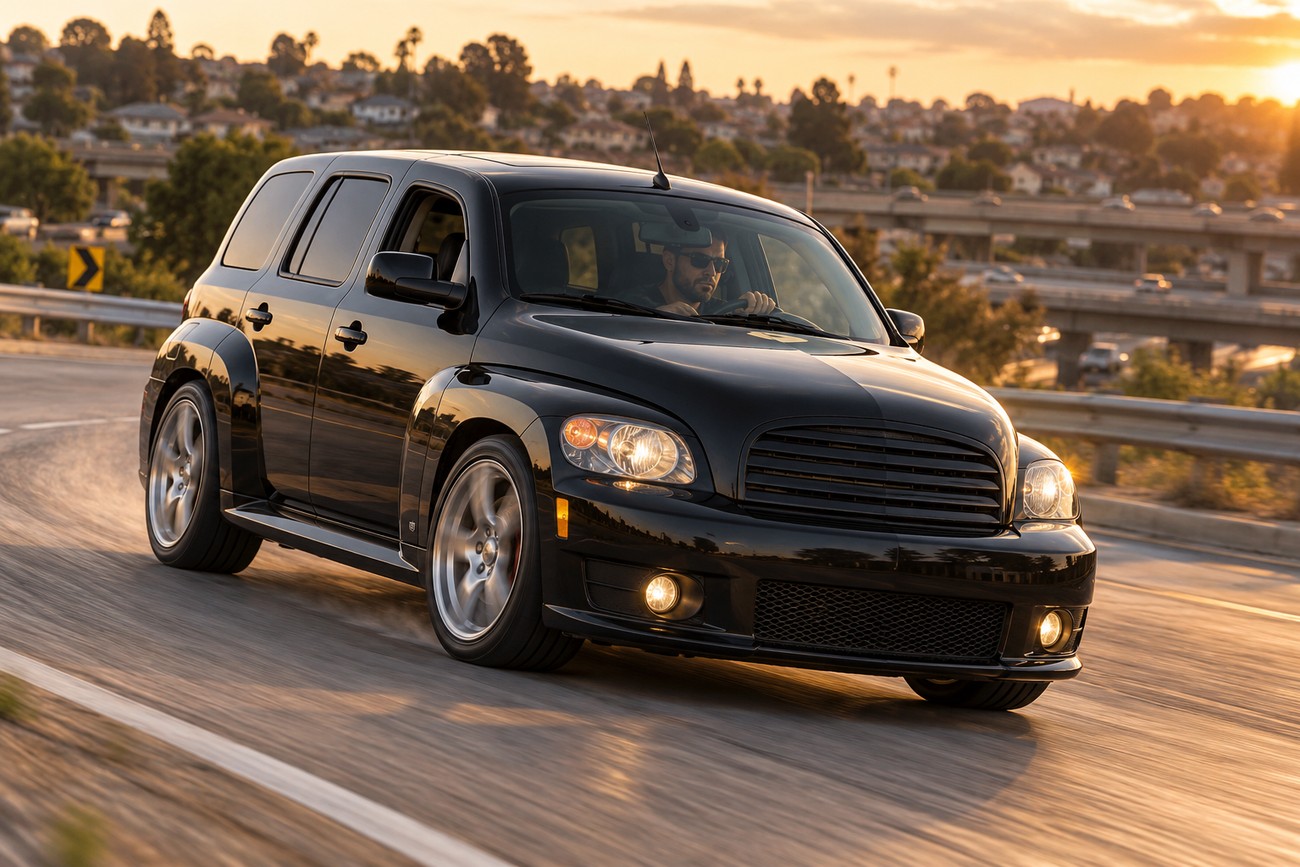
The commonly published 0–100 km/h time of approximately 6.3 seconds gives the HHR SS genuine surprise value. The LNF turbo engine has enough output to make the upright body feel unexpectedly urgent, especially when the road opens and the driver can use the manual gearbox effectively.
That straight-line performance should not be confused with sports-car behavior. Front-wheel drive, a tall body, and approximately 1590 kg of mass limit ultimate traction and cornering confidence. Hard launches can expose front-end traction limits, while uneven surfaces make the body and suspension work harder than the shape suggests.
Low-rpm response can also feel less linear than the power figure implies. Some drivers notice turbo lag or a delayed transition into stronger boost, particularly during ordinary urban driving. The result is entertaining when managed deliberately, yet less polished than a newer performance car with a more predictable torque response.
Tire choice has an outsize effect on the HHR SS. The front tires manage steering, acceleration, and much of the available grip, so worn, unsuitable, or mismatched rubber can make the car feel nervous and traction-limited. Good tires cannot change the vehicle’s architecture, but poor tires can hide its better qualities.
The Ownership Trade-Offs Hidden Behind the SS Badge
The 18-inch wheels and sport suspension sharpen the car’s visual and dynamic character while also making daily driving harsher. Broken pavement can produce noticeable impact and road noise, and the cabin may feel substantially less relaxed than that of a standard HHR.
The SS bodywork brings practical compromises of its own. A low front end and sport-oriented exterior reduce clearance in steep driveways, deep ruts, and winter conditions. Damage to the front bumper or other SS-specific pieces can be harder to repair because original trim is less common than standard HHR bodywork.
The manual transmission is central to the car’s character, but it makes clutch condition important. A car used for repeated hard launches may have a tired clutch even if the engine sounds healthy. Driver technique also affects ownership: frequent aggressive starts place more stress on the drivetrain than ordinary commuting.
Rare drivetrain and trim components can require searches by GM or Ecotec part references rather than simple HHR model descriptions. Modified examples add another layer of uncertainty, particularly around the turbocharger, clutch, suspension, intake system, and quality of the engine calibration.
How to Inspect a Used HHR SS Before You Buy
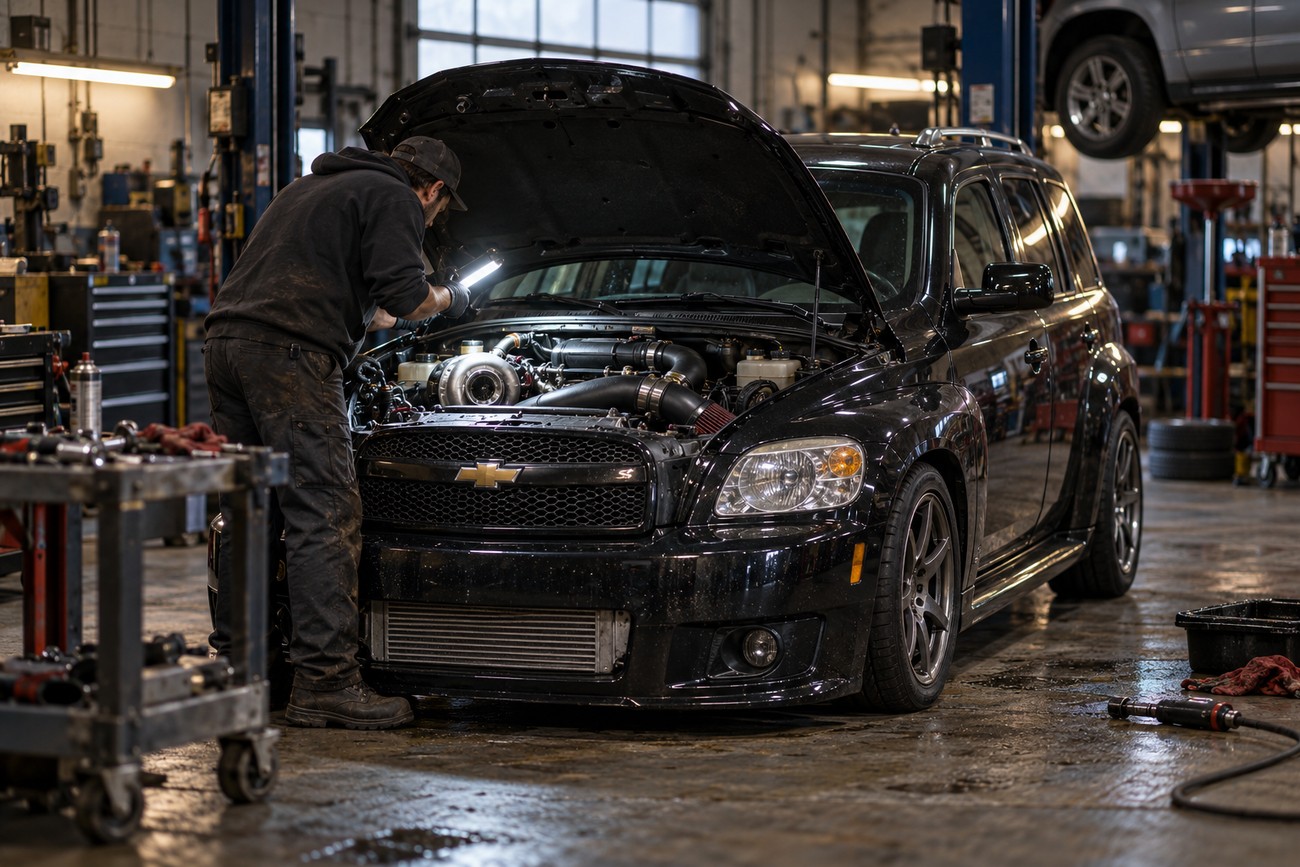
Start with identity rather than appearance. Confirm the VIN, the 2.0-liter LNF engine, the manual transmission, and genuine factory SS equipment. Check the body for the expected SS-specific parts and inspect the low front end for scraping or impact damage; a seller’s use of “SS” in a listing is not proof of the Turbocharged specification.
Next, assess the boost system. Inspect the turbocharger, intercooler, intake plumbing, and connections for signs of leaks, poor repairs, or improvised modifications. During a road test, pay attention to inconsistent boost, unusual smoke, hesitation, and power delivery that does not match a healthy turbocharged engine.
Boost-system integrity, tune quality, and cooling history deserve priority over cosmetic SS trim or the advertised horsepower. A clean-looking car with unreliable boost or questionable calibration can carry more risk than a less polished, documented example.
Cooling history matters because overheating can undermine confidence in an otherwise strong engine. Look for evidence of past cooling-system problems, repeated repairs, or modifications that appear poorly installed. A diagnostic inspection is especially valuable when the car has an aftermarket tune, altered intake, or other changes affecting boost pressure.
Test the clutch for slipping, poor engagement, or an unusually high bite point, and listen for drivetrain noises during acceleration and deceleration. Inspect the suspension, 18-inch wheels, tires, and alignment, then look underneath for impacts caused by the low front end. Uneven tire wear can reveal neglected suspension work or a car that has been driven harder than its exterior suggests.
Finally, separate a stock, documented car from a modified or track-used example. The latter may be fast and well built, yet it demands evidence of who performed the work, how the engine was calibrated, and whether cooling and drivetrain components were maintained accordingly.
Mislabeled Ads, Conflicting Specs, and Common HHR SS Myths
Regular HHR, HHR SS, and HHR SS Turbocharged descriptions are frequently blended together in listings and catalogs. That creates confusion over output, transmission, and equipment. The prevalent Turbocharged specification is 260 hp, 353 Nm, a 5-speed manual, and front-wheel drive.
Some catalogs list 253 hp or an automatic transmission. Those entries conflict with the dominant description of the Turbocharged model and may reflect mixed model data, regional differences, or inaccurate listings. Treat them as discrepancies to investigate rather than interchangeable specifications.
The HHR SS is also more than a standard HHR wearing an SS badge. The Turbocharged version uses the LNF engine and performance-oriented chassis equipment, while the car’s actual behavior remains shaped by front-wheel drive, a tall body, and approximately 1590 kg of mass.
Before committing to a purchase, verify the VIN, identify the LNF engine, confirm the transmission, and check the factory SS equipment. One advertisement, catalog page, or badge cannot establish the car’s exact identity.
Is the Chevrolet HHR SS Turbocharged Worth Buying Today?
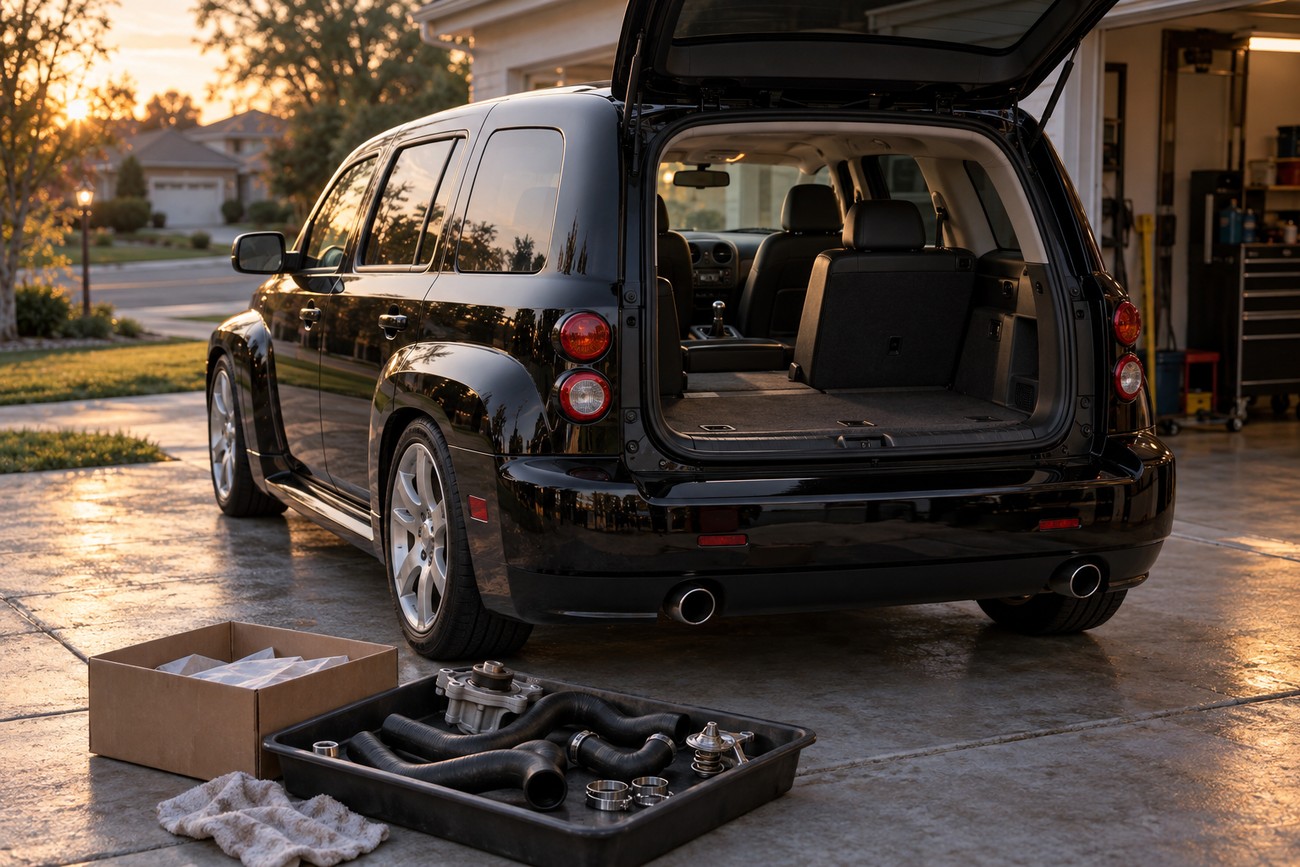
The HHR SS Turbocharged is worth considering for a buyer who values unusual engineering and real-world sleeper contrast. It combines a manual gearbox, turbocharged performance, and practical five-seat packaging in a shape that attracts far less attention than a conventional performance car.
Its limitations are equally specific. Age, ride harshness, limited clearance, rare SS trim, and difficult parts sourcing can make ownership less forgiving than the basic HHR design suggests. A modified car may offer more power, yet it also makes the quality of the tune, boost system, cooling, and previous use harder to judge.
The 260-hp figure should therefore be treated as a starting point for inspection rather than a buying argument. Service history, mechanical condition, documentation, and sensible modifications matter more than a cheap asking price or an impressive dyno claim.
Pursue one if you want an unusual, quick, manual front-drive sleeper and are prepared to inspect it carefully. Choose a simpler performance car if predictable parts supply, a quieter ride, and conventional handling matter more than the HHR SS’s distinctive character.
Frequently asked questions
How many HHR SS panel vans were made?
No reliable public production total for HHR SS panel vans is established in the available data. The short 2008–2010 model window supports the impression of rarity, yet it does not provide a verified production count.
Panel-van and SS listings are also often conflated. Some advertisements use “panel van” as a visual description of the utility-shaped body, while others mix regular HHR, SS, and Turbocharged specifications. A verified VIN and factory equipment list are more useful than an online count assembled from inconsistent listings.
How rare is the Chevrolet HHR SS?
The Chevrolet HHR SS is rare in practical ownership terms because it was sold for a short period and surviving cars are now old. Rarity should be judged by the number of documented, usable examples and the availability of correct parts, rather than simply by seeing few cars for sale.
A car may appear occasionally online yet remain difficult to support if SS bodywork, interior pieces, or drivetrain-specific components are missing. That distinction matters more to a buyer than the badge’s collectible appeal.
How fast is an HHR SS Turbocharged in real-world conditions?
Approximately 6.3 seconds from 0 to 100 km/h is a commonly published figure, but it is not a universal result for every surviving car. Tires, launch technique, boost-system health, modifications, road surface, and vehicle condition all affect the outcome.
A healthy, well-driven car can feel genuinely quick in a straight line. A worn clutch, poor tires, boost leak, or questionable tune can make the same specification feel substantially slower and less consistent.
How can you tell if an HHR SS is the Turbocharged model?
Verify the VIN, identify the 2.0-liter turbocharged Ecotec LNF engine, confirm the 5-speed manual transmission, and inspect for factory SS equipment. These checks are more reliable than the seller’s wording, an SS badge, or a catalog description.
Also compare the physical condition of the turbo system, intercooler, intake plumbing, and chassis with the claimed specification. A genuine Turbocharged car can still have extensive modifications, so identity verification and condition inspection must be treated as separate steps.







