
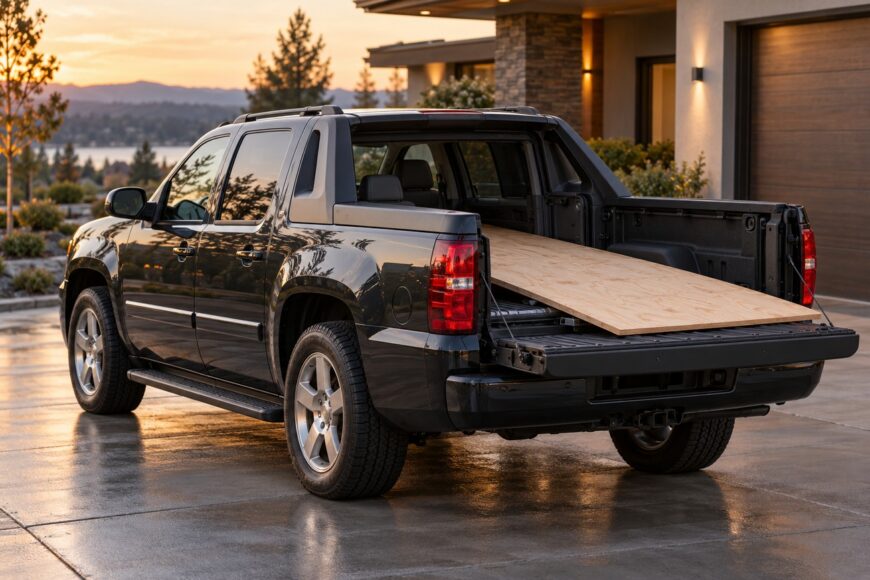
The Chevrolet Avalanche can switch between a covered pickup bed and an approximately 8-foot cargo area, but that flexibility adds sealing, loading, and rating complications. The Midgate folds down the cabin wall and rear window, extending the cargo area from approximately 5.25 to 8.2 feet.
That makes the Avalanche useful for occasional long loads, especially 4×8-foot sheets, while preserving a covered bed when the Midgate is raised. Buyers and owners need to separate that genuine utility from advertising numbers, because the extended length, payload, towing capacity, and water resistance all depend on how the truck is configured and maintained.
- Why the Avalanche Midgate Still Matters
- What the 8.2-Foot Cargo Claim Really Requires
- Payload and Towing: Read the Exact Truck, Not the Advertisement
- How to Find and Diagnose Midgate Leaks
- The Ownership Trade-Offs Hidden Behind the Feature
- Which Avalanche Should You Avoid?
- Frequently asked questions
- Which Chevy Avalanche should I stay away from?
- What is the best year for a Chevy Avalanche?
- What is the rarest Chevy Avalanche?
Why the Avalanche Midgate Still Matters
The Midgate changes the Avalanche’s basic layout by folding down the wall behind the front seats and moving the rear-window assembly out of the cargo path. In its standard position, the truck provides a covered cargo bed with the Midgate raised. That arrangement helps protect equipment from ordinary weather and keeps loose cargo outside the passenger compartment.
With the system transformed, the cargo area extends from approximately 5.25 to 8.2 feet. The open configuration is designed to carry 4×8-foot sheets, giving the Avalanche a capability that a short conventional bed cannot provide without an extended trailer or external support.
The feature works best as temporary flexibility. You can use the truck as a covered pickup for daily work, then open the Midgate when a long item needs to fit. Treating it as a permanently available long bed overlooks the time, cabin-space, and weather-protection compromises involved in the conversion.
What the 8.2-Foot Cargo Claim Really Requires
The approximately 8.2-foot length becomes available only after transforming the cabin and rear-window area. The rear seats must be folded, and the rear glass and Midgate must be lowered or stowed as designed. A buyer checking only the outside bed length will miss the physical steps required to create the full load space.
Some of the cargo then occupies the former passenger-cabin area. That reduces seating capacity and places dust, water, road noise, and unsecured objects closer to the occupants. Long sheets also need proper support and restraint, because the folded configuration does not turn the Avalanche into a conventional long-bed pickup with the same enclosed separation.
The practical advantage is the choice between a covered bed and temporary long-load capacity. With the Midgate raised, the Avalanche retains a covered cargo bed. With it open, you gain useful length for suitable loads while accepting greater exposure and more work before driving.
Payload and Towing: Read the Exact Truck, Not the Advertisement
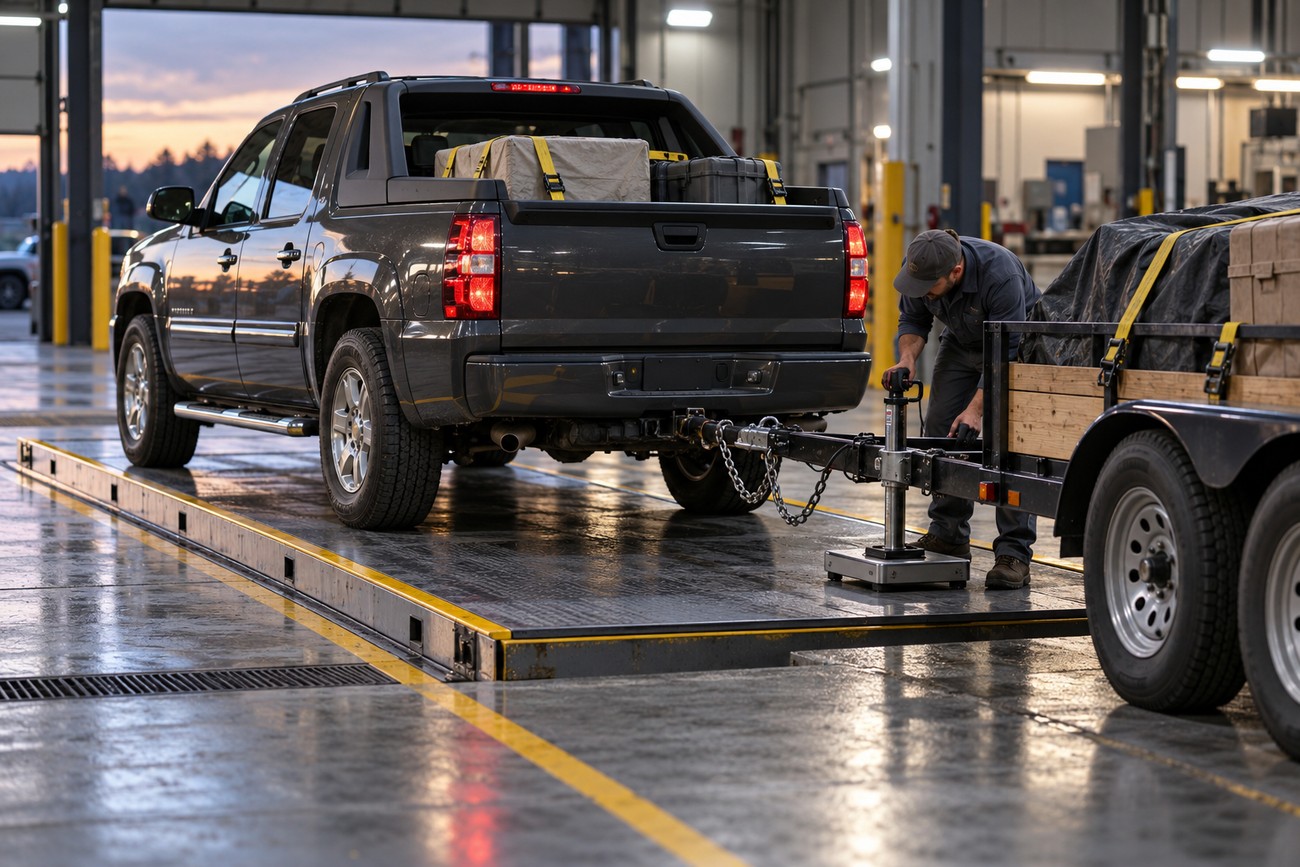
Payload is the weight the truck can carry, including passengers, cargo, accessories, and trailer tongue weight. GVWR is the maximum permitted loaded weight of the vehicle, so a large-looking bed does not provide unlimited carrying capacity. GM’s 2013 brochure lists payload at 1,120–1,700 lb, depending on version and equipment.
Towing capacity describes the trailer the truck may pull under the applicable configuration and conditions. GM’s 2013 brochure lists towing at 8,100–9,800 lb, depending on version and equipment. Those figures are ranges, not a universal Avalanche rating: drivetrain, engine, hitch package, and GVWR can change the applicable payload and towing limits.
Trailer tongue weight should be 10–15% of the trailer’s gross weight and counts toward the Avalanche’s GVWR. A trailer with a substantial gross weight can therefore consume much of the truck’s payload before passengers, tools, a bed cover, or other equipment are added. The correct calculation starts with the specific truck’s ratings and the actual loaded trailer.
Tow/Haul is most effective when the vehicle-and-trailer combination reaches at least 75% of GCWR. It can alter transmission behavior and improve control of a demanding combination, but it does not authorize exceeding any rating. Verify the truck’s identification information, rating label, and owner’s manual before relying on a towing number from an advertisement.
How to Find and Diagnose Midgate Leaks
Owners commonly report leaks around the Midgate, rear window, bed covers, and clogged drains. A partially closed Midgate can create looseness at the center section or glass, allowing water into the cabin and rear-seat area. The first inspection should confirm that the window, center section, latches, and seals close fully and align correctly.
Water can also start in the bed and become visible inside the cabin after traveling through seams or channels. Clogged bed drains allow water to build up near the Midgate and overflow inward, making a drainage problem look like a failed Midgate seal. This is why a dry demonstration tells a buyer very little about real sealing performance.
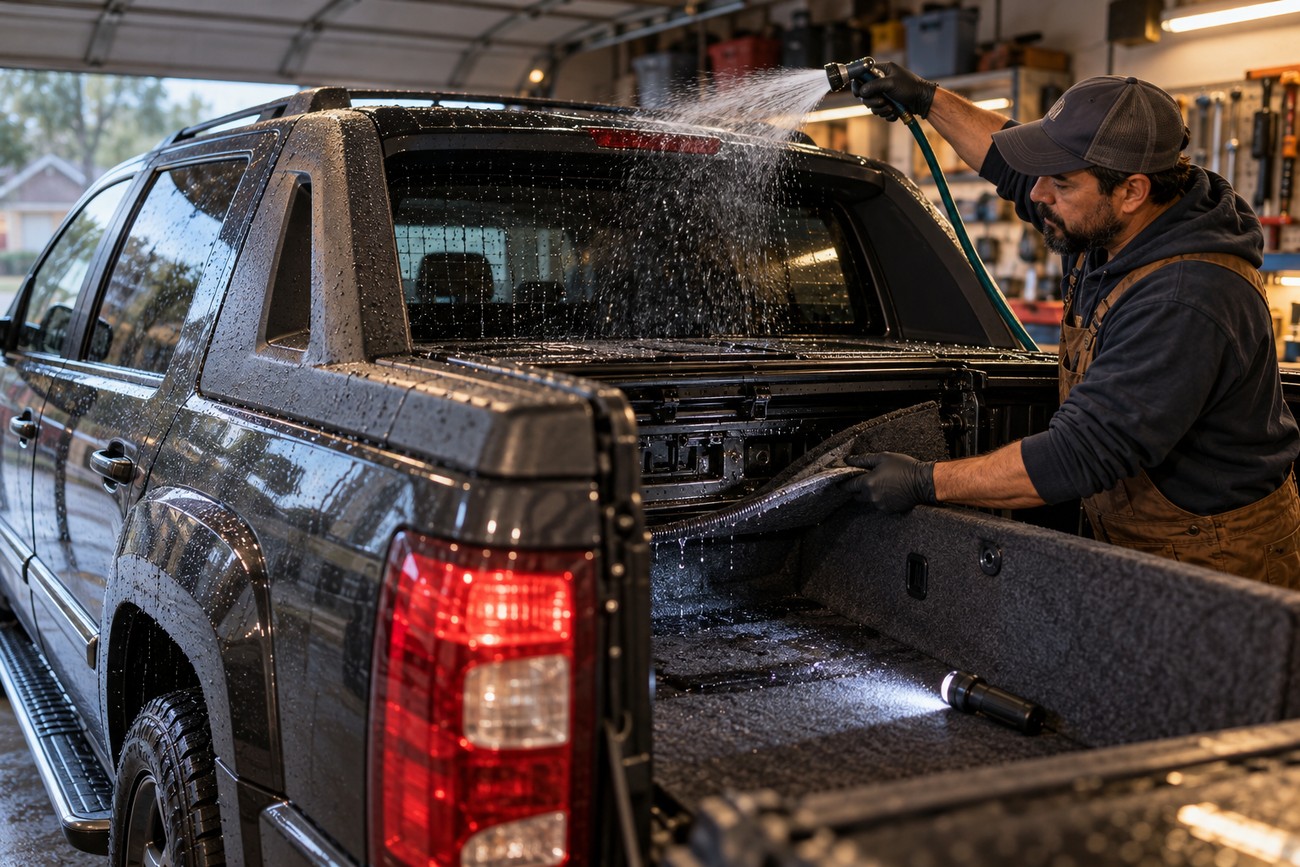
Test the bed, Midgate, and rear window as separate water paths before adjusting seals or applying sealant, because a blocked drain can mimic a Midgate failure.
Use separate water tests for the bed, Midgate, and rear window rather than soaking everything at once. Check the interior afterward, including the rear-seat area, carpet edges, and trim. Random sealant can hide the entry point or interfere with correct seal seating, while the underlying issue may be closure, alignment, a damaged seal, or a blocked drain.
Water testing is especially important on a used truck because the visible symptom may appear far from the source. Persistent dampness, staining, odor, or corrosion under carpets and trim deserves more attention than a mechanism that simply opens and closes in a dry lot.
The Ownership Trade-Offs Hidden Behind the Feature
The Midgate adds glass, latches, a center section, guides, seals, and drainage paths to the truck. Each part must remain correctly aligned for the system to operate and shed water. The Midgate is not a maintenance-free, completely sealed system.
Open-cargo use also changes what happens inside the truck. Dust, rain, noise, and poorly secured cargo can enter the former cabin area, while passengers must give up the rear seating position. That makes the feature valuable for occasional long loads, with a weaker case for owners who rarely carry sheet goods or other extended cargo.
Payload planning becomes more complicated as well. Passengers, tongue weight, accessories, and equipment all reduce the available payload. A truck that can physically accept a load may still exceed its rating once the people and equipment needed for the job are included.
Which Avalanche Should You Avoid?
Avoid an Avalanche with unexplained water damage, unresolved drainage problems, or ratings that cannot be verified for the specific truck. Later examples are often perceived by owners as less problematic for leaks, but this is not a universal rule. Condition and configuration provide stronger buying guidance than a blanket year-based blacklist.
Inspect the engine and frame, then continue with the Midgate. Operate it fully, check the rear glass and center section, inspect the seals and drainage paths, and perform separate water tests. Look under carpets and trim for evidence of past intrusion, because a seller may have dried a visible leak without correcting its source.
Confirm the exact year, drivetrain, engine, hitch package, and GVWR before judging payload or towing ability. A leak is not automatically a failed Midgate seal; bed covers and blocked drains can be the source. A truck with a clean mechanical presentation can still be a poor purchase if its water problem or configuration ratings remain unresolved.
Frequently asked questions
The Avalanche’s most useful answers depend on the individual truck’s condition and equipment. Owner impressions can help identify patterns, while official ratings and physical inspection should decide a purchase.
Which Chevy Avalanche should I stay away from?
Stay away from an Avalanche with water damage, unresolved drainage problems, or towing and payload ratings that cannot be verified for its exact configuration. Damp carpets, stained trim, corrosion, or a loose center section deserve a clear diagnosis before purchase.
Do not reject a truck solely because of its model year. A later example may be perceived by some owners as less leak-prone, but a well-maintained earlier truck can be a safer purchase than a neglected later one. Operate the Midgate, test the bed, Midgate, and rear window separately, and confirm the applicable ratings.
What is the best year for a Chevy Avalanche?
No universally best year is established by the supplied evidence. Later examples are often perceived by owners as less problematic for leaks, yet that impression is not a universal rule and does not replace inspection.
Choose the individual truck with sound seals, clear drainage paths, no evidence of water intrusion, and documented configuration ratings. The engine, drivetrain, hitch package, and GVWR can affect towing and payload, so the best choice depends on the job the truck must perform and the condition of the specific example.
What is the rarest Chevy Avalanche?
A rarity claim requires the exact year, trim, drivetrain, and equipment combination. An advertisement’s label alone does not establish that one Avalanche is universally the rarest.
Verify the combination through the vehicle documentation and equipment details rather than paying a premium for an unsupported description. For most buyers, condition, water resistance, service history, and usable ratings matter more than an unverified rarity claim.







