
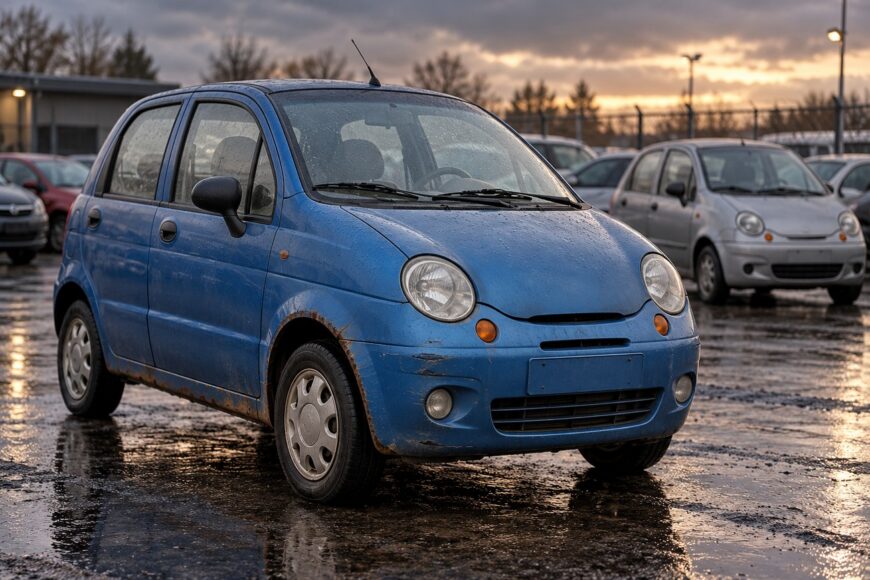
An unusually cheap city car can be tempting when you need basic transport rather than status. The Chery QQ offered small dimensions, simple petrol engines, and a purchase price that placed it among the least expensive new cars in several markets.
Its reputation, however, was shaped by more than low running costs. The QQ closely resembled the Daewoo Matiz, faced copying allegations, and attracted questions about crash protection, corrosion, and inconsistent build quality. A careful look is therefore more useful than either dismissing the car as a poor copy or treating every cheap example as a bargain.
- The Matiz resemblance that defined the QQ
- Why the QQ made sense as a new city car
- Safety: where the bargain demands caution
- The ownership costs the low price can hide
- How to inspect a used QQ without buying someone else’s repairs
- Who the QQ still suits—and who should walk away
- Frequently asked questions
- What happened to the Chery QQ?
- How can I verify whether a particular QQ has ABS and airbags?
The Matiz resemblance that defined the QQ
The original Chery QQ appeared in the early 2000s as an A-segment city car for China and other price-sensitive markets. It was also sold under names including QQ3 and QQ City, depending on the market and period. Its short wheelbase, around 2340–2360 mm, and compact body made it easy to place in narrow streets and crowded urban parking areas.
The styling quickly drew comparisons with the Daewoo Matiz. The resemblance was close enough to prompt accusations of copying and an international dispute. The QQ was not a licensed Matiz design, and the legal history is more complicated than describing it as a licensed clone.
That controversy became part of the car’s identity before many buyers considered its practical merits. Some shoppers saw the QQ as evidence of low-cost imitation, while others saw an affordable way to buy a new small car. The disagreement also encouraged broad judgments about Chinese cars that did not account for differences between markets, production batches, and individual examples.
For a used buyer, the design dispute matters mainly as context. It does not establish whether a particular QQ is sound today. Body condition, safety equipment, parts support, and maintenance history are more useful indicators than the car’s resemblance to another model.
Why the QQ made sense as a new city car
The QQ’s strongest case was its combination of a small footprint and a low entry price. It was among the cheapest new cars in several markets, which made basic motoring accessible to buyers who could not stretch to a larger hatchback. Its compact body also suited short urban trips, tight parking spaces, and low-speed traffic.
Typical first-generation engines were a 0.8-liter petrol unit producing about 51–52 hp and a 1.1-liter petrol unit producing about 68–69 hp. Both used relatively simple fuel-injection systems, although specifications and emissions certification varied by year and market. The smaller engine could manage city traffic, while the 1.1-liter version offered more reserve when carrying passengers.
Quoted fuel consumption was around 5–5.5 L/100 km. Owner reports more commonly suggest around 6–7 L/100 km in mixed use, with traffic, air conditioning, driving style, vehicle condition, and road conditions affecting the result. A neglected engine or a car used heavily in stop-start traffic may consume more than the brochure figure.
The same simplicity that helped keep purchase and repair costs down imposed limits. The small engines work harder on fast roads, with a full load, or during long climbs. A QQ used mainly for short urban journeys can make sense; one expected to cruise long distances regularly needs a more cautious assessment of engine, cooling, and transmission condition.
Safety: where the bargain demands caution
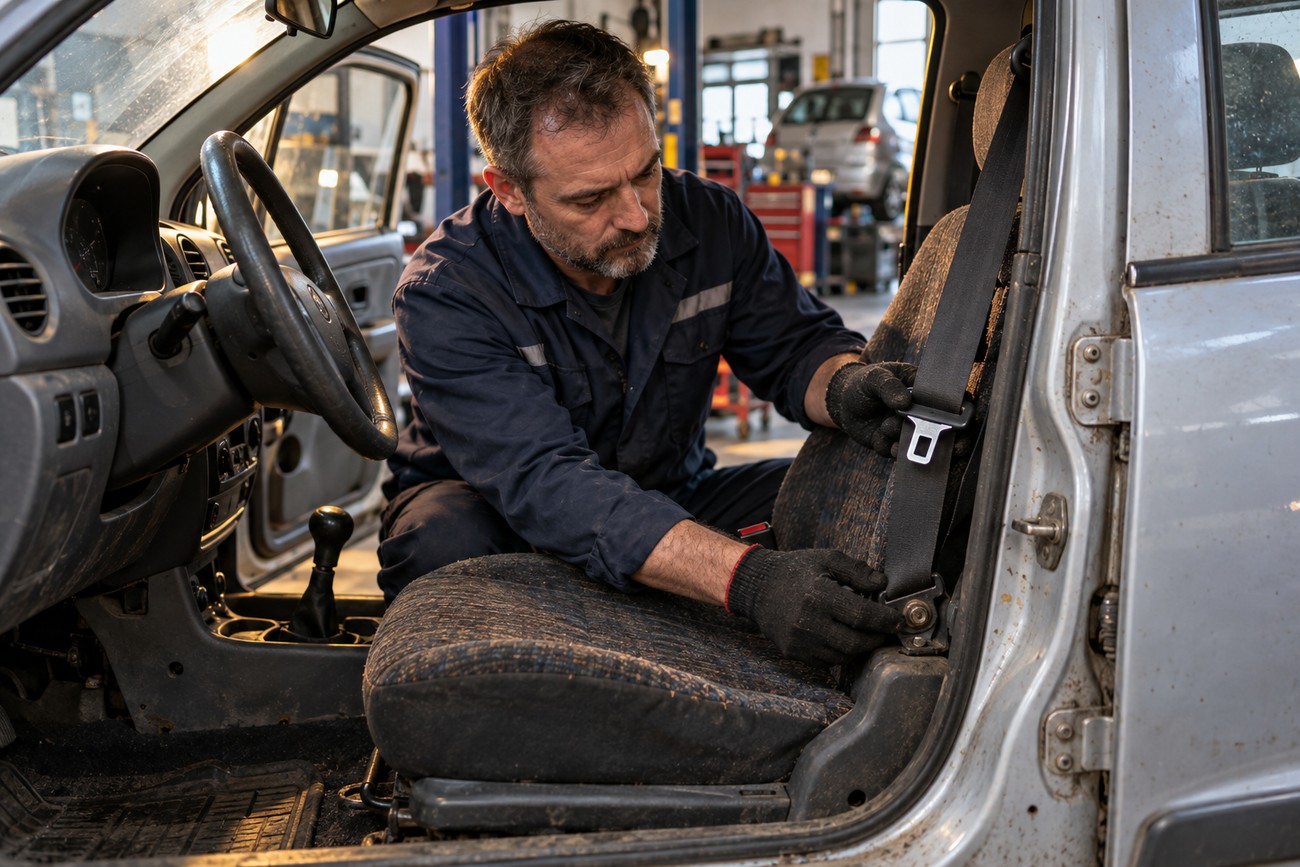
Safety equipment varied by market and trim. Some cars had one airbag, while ABS and two airbags were limited to better-equipped versions in some markets. The badge, body shape, or model name is therefore insufficient evidence of what a particular car carries.
Some marketing suggested safety comparable to European hatchbacks. Independent assessments raised concerns about weaker occupant protection, particularly in side impacts. No single safety feature, including an airbag, removes the importance of the body structure, restraint system, and condition of the vehicle.
Buyers should separate equipment from crash performance. ABS can help a driver retain steering control during hard braking, and airbags can reduce some injury risks, but neither proves that the passenger compartment will perform well in a serious collision. A version without those features deserves an especially conservative valuation.
Check the original specification where possible, inspect the airbag and ABS warning systems, and look for signs of previous crash repairs. If the seller cannot establish which equipment was fitted, treat the car as the lower-specification version for safety decisions and pricing.
The ownership costs the low price can hide
Corrosion is one of the main reasons a cheap QQ can become an expensive project. Reported trouble spots include sills, wheel arches, and metal beneath seals. In countries that use road salt or chemical de-icers, neglected protection can accelerate the problem.
Water ingress adds a less visible risk. Leaks around doors, the hatch, or other seals, combined with poor drainage, can leave moisture inside trim and body cavities. Owners sometimes report damp carpets, water in the luggage area, and the need to reseal parts of the body themselves. Surface paint may still look acceptable while corrosion is developing underneath.
Suspension wear is another recurring ownership complaint. On poor roads, owners report knocks and wear affecting bushings, stabilizer components, and dampers from roughly 30,000–50,000 km. This is not a fixed service life, because road quality, load, replacement parts, and driving style change the result, but mileage alone should not reassure a buyer.
Electrical faults are also reported, including unreliable sensors, incorrect instrument readings, central-locking problems, power-window failures, and interior-light issues. Build quality can vary between cars and markets, so one well-kept QQ does not guarantee that another with the same year and engine will behave similarly.
Everyday comfort is limited. Owners commonly describe substantial engine, road, and wind noise, awkward steering-wheel and seat angles, and little adjustment for finding a relaxed driving position. Stock headlights may be adequate on lit city streets yet feel weak and poorly distributed outside urban areas, which matters if the car is used on dark rural roads.
How to inspect a used QQ without buying someone else’s repairs
Start with the body before becoming distracted by a low asking price. Check the sills, wheel arches, lower door edges, hatch area, and metal beneath door or hatch seals. Look inside the luggage compartment and under carpets for dampness, staining, odor, or recently applied sealant that may be hiding a leak.
Next, inspect the underside and suspension. Listen for knocks over uneven ground, check for uneven tire wear, and look for leaking dampers or damaged components. Reported suspension wear can appear from roughly 30,000–50,000 km on poor roads, so a low odometer reading does not replace a physical inspection.
Test every electrical function, including the instrument cluster, warning lamps, central locking, windows, and interior lighting. Check engine sensors where diagnostic equipment is available. On the road, assess starting, idle quality, clutch or transmission operation, braking, steering, cooling, and the engine’s behavior under load.
Check parts availability before purchase, using the local model name, engine code, and chassis details rather than relying only on the word QQ. Original parts are limited in some markets, and replacement quality can vary. A professional pre-purchase inspection is worthwhile, particularly because a neglected car may cost more to put right than its purchase price.
- Confirm the exact year, market, engine, and safety specification.
- Inspect hidden corrosion and moisture areas before judging the paint.
- Check suspension, brakes, tires, steering, and signs of structural repair.
- Test all electrical equipment and scan the car where suitable equipment is available.
- Compare local parts prices and availability with the vehicle’s asking price.
Who the QQ still suits—and who should walk away
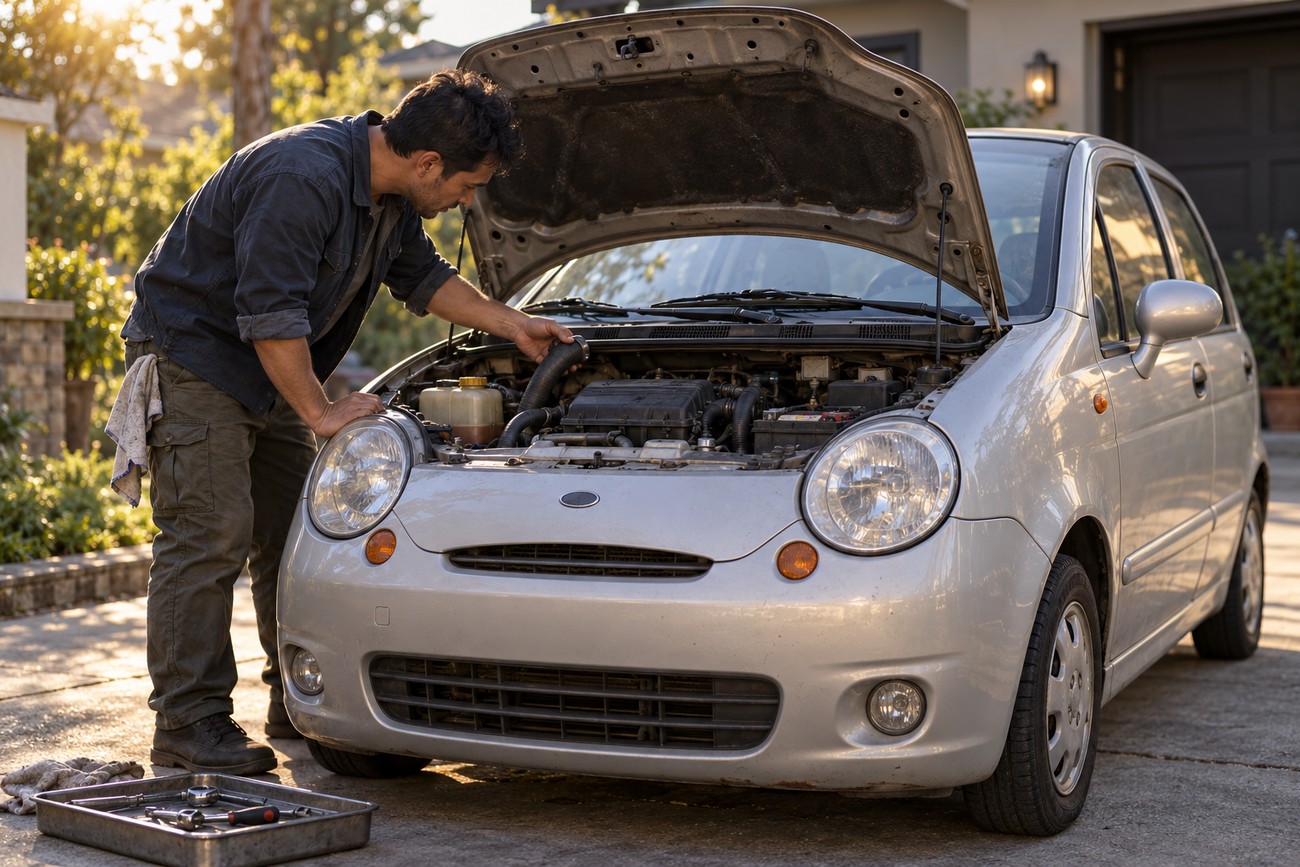
The QQ can still suit a buyer who needs inexpensive, short-distance urban transport and is prepared to maintain an old, basic car. Its simple layout can make routine repairs understandable, and owner communities in some countries share useful solutions for parts selection, sealing, lighting, sound insulation, and underbody protection.
Some owners report carefully maintained cars reaching around 150,000–200,000 km, while continuing to address smaller faults. That pattern shows that durability is possible with preventive maintenance; it does not turn every cheap example into a sensible purchase.
A buyer seeking stronger crash protection, quieter travel, comfortable seating, or effortless long-distance performance should look elsewhere. Safety equipment varies by version, and independent assessments raised concerns about occupant protection. The QQ’s modest engines and limited refinement also make heavily loaded highway trips less appealing.
Resale value depends heavily on visible condition. Even modest rust, a neglected interior, or evidence of improvised repairs can sharply reduce buyer interest. A clean, documented car may remain useful, while a bargain with extensive corrosion can become a costly way to postpone replacing the vehicle.
Frequently asked questions
Model names and equipment varied by market and year. That makes the exact version important when researching a used QQ. The answers below explain how to identify the car and confirm its safety equipment.
What happened to the Chery QQ?
The names QQ, QQ3, and QQ City were used for early cars in different markets. Later QQ-badged vehicles should not automatically be treated as the same model, because specifications and equipment changed over time. Check the local market, model year, engine, and vehicle identification details rather than relying on a single universal production end date.
The name may also appear in parts listings, registration documents, and owner communities with different naming conventions. Matching the engine and chassis information is safer than ordering components from a photograph or assuming that every QQ uses the same parts.
How can I verify whether a particular QQ has ABS and airbags?
Use the vehicle-specific specification, then confirm it through a physical inspection and qualified diagnostic check. Look for ABS hardware and warning-lamp behavior, inspect the steering wheel and passenger-side dashboard for airbag markings, and check whether the original documentation identifies the equipment.
Do not infer safety equipment from the QQ, QQ3, or QQ City badge alone. Market and trim differences mean that two visually similar cars can have different restraint and braking systems. A qualified inspector can also identify missing components, warning-system faults, or evidence that airbags were previously deployed.







