

A Kia Sportage may still drive normally after crossing a chemical spill while vapors and unseen damage continue to create risk. Treat an unknown liquid as hazardous until qualified responders or reliable official documentation identify it. The immediate priority is protecting people, avoiding further exposure, and preventing the substance from being carried into the cabin or spread across the vehicle.
Stop only where it is safe, preserve evidence from a distance, and avoid improvised washing or neutralization. A clean-looking body panel does not establish that the wheel arches, brakes, wiring, seals, or underbody are safe. The correct response depends on the chemical, its route of exposure, and instructions from emergency or road authorities.
- Stop, Isolate, and Keep Vapors Out of the Cabin
- Document the Scene Before the Evidence Disappears
- Why a Normal Wash Can Make the Problem Worse
- What to Inspect on a Kia Sportage After Exposure
- Hidden Damage and Symptoms That Appear Later
- Insurance, Service Records, and the Recall Question
- Frequently asked questions
- How can I find out what chemical was spilled on the highway?
- What should I do if the chemical smell remains inside the Sportage?
- What is the recall on Kia Sportage?
Stop, Isolate, and Keep Vapors Out of the Cabin
If the Sportage has just crossed a spill, move to a safe position only if doing so does not require driving through more liquid or approaching the visible area. Keep passengers away from the spill, avoid touching the substance, and contact emergency services or the relevant highway authority when the liquid is unknown. Treat an unknown liquid as hazardous until qualified responders or reliable official documentation identify it.
Isolate the area as far as conditions allow, then consider wind direction, terrain, and the movement of vapors. A visible puddle may be less dangerous than a vapor cloud carried toward the vehicle by wind or trapped by a dip in the road. Chlorine-, ammonia-, or solvent-like odors may indicate hazardous vapor rather than an ordinary puddle; do not use smell as a chemical identification method.
Keep doors and windows closed when vapors are moving toward the vehicle, and make ventilation decisions based on the direction and severity of the hazard. Avoid switching to outside-air intake if that could draw contaminated air into the cabin. Do not assume that water or wipers are universally safe for an unidentified substance, because they may spread contamination; follow official responder instructions first.
Do not attempt to neutralize the liquid with household products, detergents, powders, or other chemicals. An improvised reaction can create heat, fumes, splashes, or additional contamination. If anyone develops breathing difficulty, eye irritation, dizziness, or other symptoms, leave the area when safe and seek emergency assistance rather than remaining beside the vehicle.
Document the Scene Before the Evidence Disappears
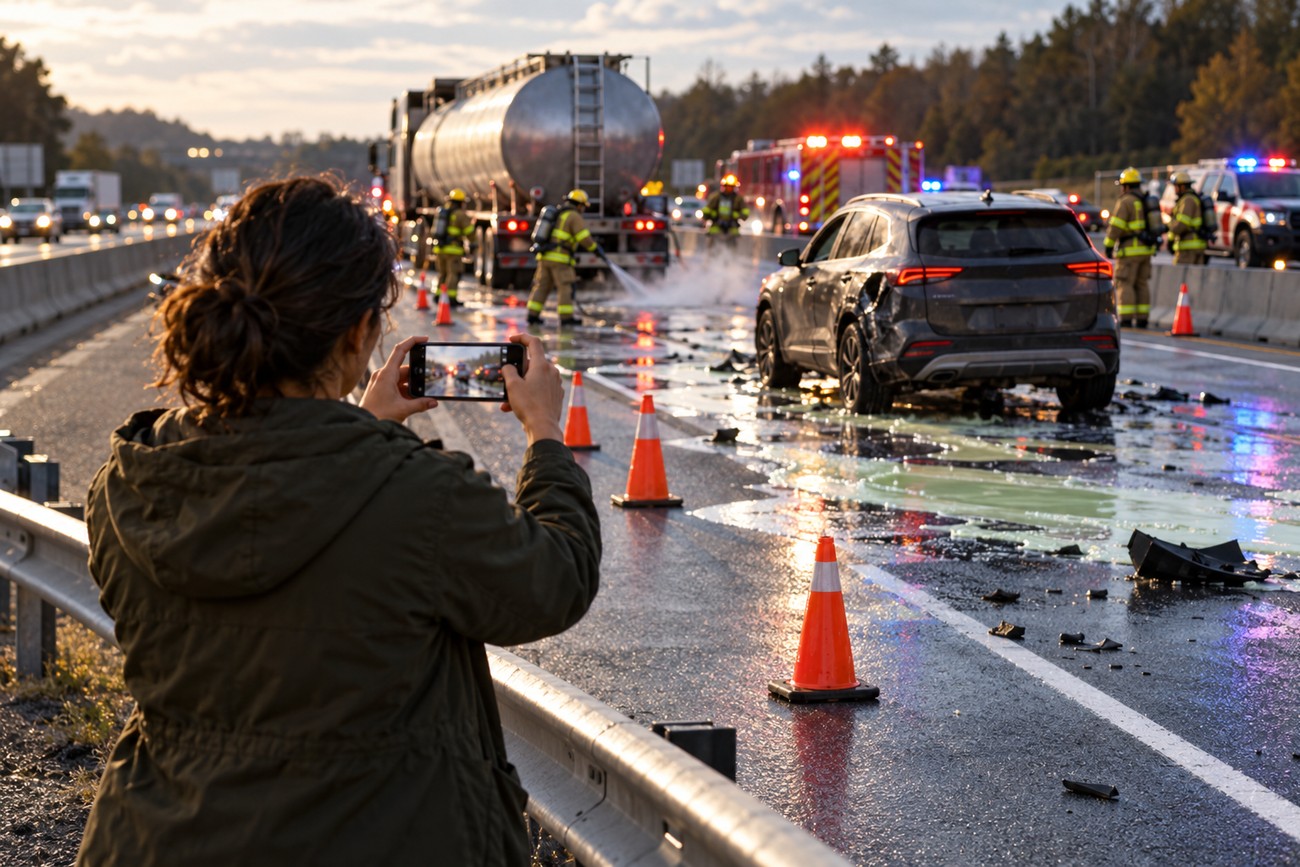
Record the location, highway direction, lane, time, weather, and apparent wind direction without approaching the spill. Photographs taken from a safe distance can show the road layout, lane position, vehicle location, warning signs, visible containers, markings, and the extent of the affected area. Do not step into traffic or move closer merely to obtain a clearer image.
Note whether road crews, emergency responders, or transport personnel are present, and retain any incident number or official report reference. If a container, tanker, placard, or shipping label is visible from a safe position, record it only if doing so does not expose you to the substance. The source, chemical identity, and official incident record are more reliable than guesses based on color or smell.
Clear-looking or nearly odorless liquid is not necessarily safe. Some industrial solutions provide little visual warning, and odor may be masked by weather, vehicle ventilation, or distance. Avoid posting an unverified chemical identification as fact; preserve the original images and write down what you actually observed.
Early documentation can become important if an insurer or repairer later disputes whether the event was an accident, contamination, or external damage. Keep photographs, authority reports, towing records, witness details, and communication with the highway operator together. A simple timeline can also show when odor, warning lights, paint changes, brake symptoms, or unusual noises first appeared.
Why a Normal Wash Can Make the Problem Worse
An ordinary car wash is designed for road dirt and compatible cleaning products, not an unidentified chemical. Pressure washing can move contamination across paint, wheel arches, splash shields, brakes, underbody parts, drainage paths, and nearby surfaces. It may also create spray or runoff that exposes the person washing the vehicle.
Some solvents, acids, and alkali can begin damaging paint or clear coat within minutes; the exact response depends on the chemical. Early damage may appear as cloudy areas, white marks, loss of gloss, or a matte surface, while deeper coating damage may require professional correction or refinishing. Delaying an assessment can allow a small visible mark to become a more difficult coating problem.
There is no universally safe water or neutralization method for every chemical. Water may be appropriate for some substances under controlled emergency guidance, while for others it can spread contamination or contribute to a reaction. Do not select a neutralizer from a general internet recommendation when the substance has not been identified.
Emergency decontamination, where required, should follow instructions from responders or a qualified specialist who knows the chemical and the vehicle exposure. The same caution applies to the cabin, tires, and glass. A visibly clean exterior does not prove that wheel arches, brakes, seals, or underbody areas are safe.
Any later inspection should include less visible surfaces rather than stopping at the upper body panels. The underside, wheel-arch liners, splash shields, sump protection, subframe, brake areas, heat shields, and drainage points can retain contamination after the outer paint looks clean. Disposal of contaminated wash water may also be subject to local rules, so avoid releasing it into roadside drains without appropriate guidance.
What to Inspect on a Kia Sportage After Exposure
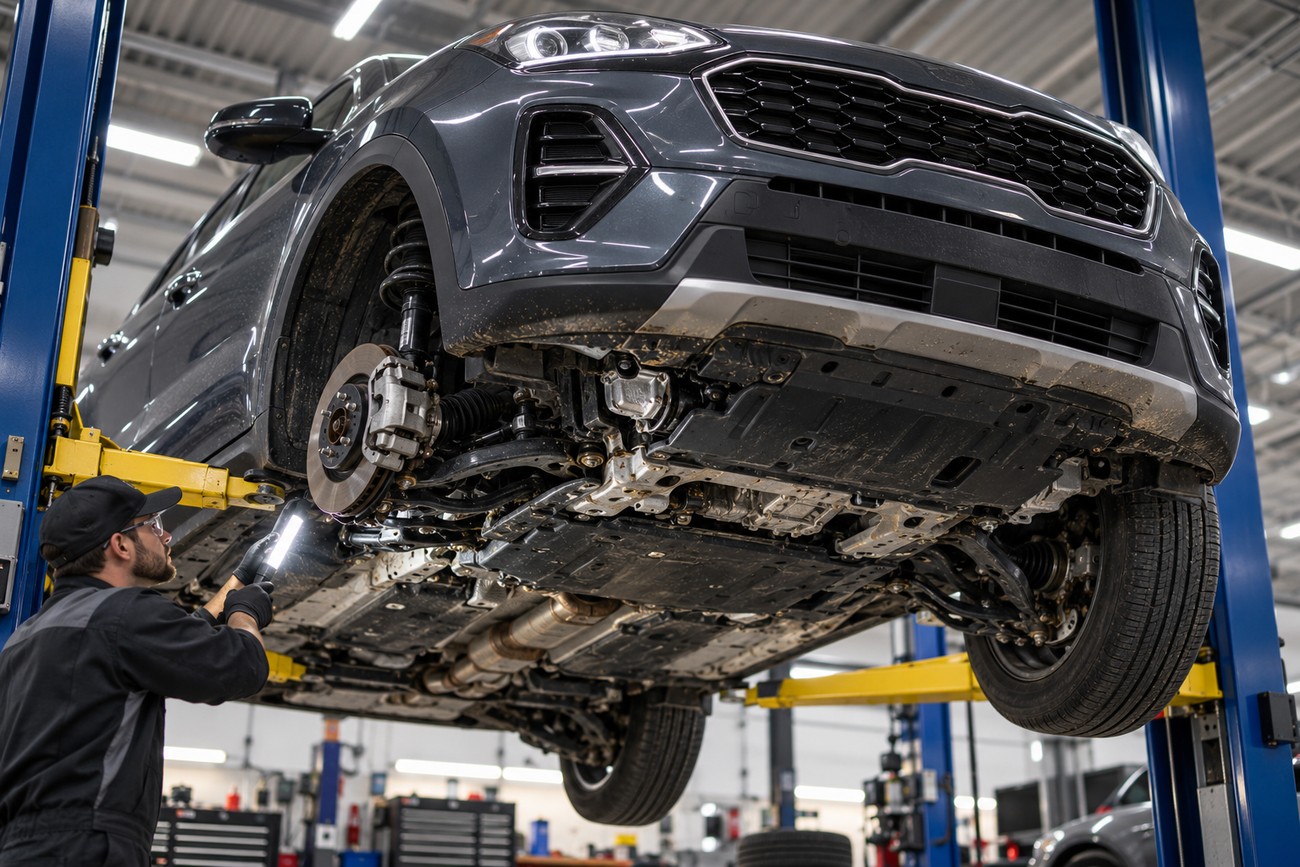
Exposure risk depends on the contaminated zone, not simply on the Kia brand or Sportage name. Road spray tends to reach the lower body, sump protection, subframe, wheel arches, splash shields, tires, brakes, and nearby wiring before it reaches upper panels. The vehicle may therefore require a bottom-up inspection even when the hood, roof, and doors appear unaffected.
A visual check can identify obvious residue, damaged paint, swollen rubber, cracked seals, altered tire surfaces, loose splash-shield material, or unusual deposits around the wheels. It cannot reliably assess the condition inside electrical connectors, behind liners, in hidden cavities, or beneath protective panels. A qualified inspection should consider ABS sensors, wiring, connectors, brake components, heat shields, underbody hardware, and HVAC intake areas.
Technicians check the underside, wheel-arch liners, connectors, brake areas, and heat shields separately because a clean upper body does not show whether contamination remains in sheltered zones or has reached components that fail later.
Paint, plastic, tires, and rubber may respond differently to the same exposure. Petroleum products can cause rubber swelling or aging, while strong oxidizers and solvents can accelerate rubber degradation. Chemical compatibility also varies between tire compounds, door seals, suspension boots, wiring insulation, and plastic splash shields, so replacing or cleaning a part should follow identification of the substance and an appropriate inspection.
Normal engine operation does not rule out damage. A Sportage can start, steer, and move while a brake component, connector, wheel-speed sensor, seal, or underbody fastener has been affected. If the vehicle must be moved before inspection, use the shortest safe route and stop if braking, steering, warning lights, tire behavior, or vapor conditions change.
Hidden Damage and Symptoms That Appear Later
Persistent odor is a common reason drivers return to a vehicle after an apparently successful wash. Vapors or aerosol can reach the cabin air intake at speed even without obvious splashes on the windshield. Odor may become stronger when the fan runs, the outside-air setting is selected, or the vehicle warms up, which can point the inspection toward the HVAC intake, cabin filter, carpets, seals, and nearby trim.
Cloudy or white marks, matte paint, plastic discoloration, and residue around seams may indicate coating or material damage, although appearance alone cannot identify the chemical. Noises from the wheel arches or suspension can have several causes, including displaced liners, ordinary road debris, or affected rubber components. Document changes and have them assessed rather than assuming every symptom proves chemical damage.
Brake contamination can affect braking performance, noise, or pedal feel and requires inspection. A warning light may appear immediately if a connector or sensor is affected, but electrical problems can also develop after residue and moisture remain in a connector or cavity. Corrosion and chemical aging of fasteners, wiring, seals, and hidden cavities may appear weeks or months after exposure.
Door seals exposed to chemicals may later stick, crack, or create wind noise, especially in winter. Tire or rubber changes may also become more noticeable with time rather than during the first drive. A bottom-up inspection should therefore record the condition of the tires, wheel arches, brake areas, underbody components, seals, connectors, and HVAC intake, along with any symptoms and their dates.
Insurance, Service Records, and the Recall Question

Notify the insurer promptly and provide photographs, authority reports, towing records, and any official identification of the chemical. Coverage and claim classification depend on the policy, evidence, cause, and exclusions. A spill may be disputed as an accident, contamination, or external damage, so a clear record of what happened and when is useful.
Ask the repair facility for an itemized inspection rather than a general statement that the vehicle was washed. The record should identify whether the underside, wheel arches, splash shields, connectors, brakes, seals, heat shields, and HVAC intake were examined. The most expensive issue may be diagnosing hidden wiring, seals, brakes, or underbody damage rather than washing.
Keep the chemical identity separate from assumptions about the vehicle. If responders or transport documentation identify the substance, add that information to the claim and service file. If it remains unknown, say so plainly; an unsupported label can complicate later decisions about cleaning, replacement, and liability.
A Kia Sportage recall is separate from spill damage and must be checked by model year and VIN through official Kia or government sources. A recall lookup may identify a manufacturer safety issue, but it does not establish that a chemical spill caused a particular symptom. Handle the two records independently.
Frequently asked questions
These questions address chemical identification, cabin odor, and recall checks after a spill. Official identification and professional guidance help determine appropriate decontamination. Recall research should remain separate from spill-related inspection and insurance records.
How can I find out what chemical was spilled on the highway?
Use information from emergency responders, the highway authority, shipping or container markings visible from a safe distance, transport documentation, and official incident records. Qualified specialists may also identify the substance through controlled sampling. Do not rely on color, smell, online photographs, or guesses from other drivers, because a clear or nearly odorless liquid can still be hazardous.
Record the location, time, lane, visible placards or containers, and any incident number. Do not approach the spill to read a label or collect a sample. Official identification is also important because safe vehicle decontamination depends on the chemical’s properties.
What should I do if the chemical smell remains inside the Sportage?
A persistent cabin odor warrants an inspection of the HVAC intake, recirculation components, cabin filter, carpets, door seals, and nearby trim. Avoid masking the odor with fragrance or household cleaners before the contaminant is identified, since this can add another substance and make assessment harder. If fumes cause irritation or breathing symptoms, leave the vehicle and seek emergency guidance.
Tell the repairer when the odor is strongest, such as during fan operation, outside-air intake, heating, or driving speed. This pattern can help locate the affected area, but it does not prove the source. Cleaning or replacing cabin components should follow chemical identification and suitable professional guidance.
What is the recall on Kia Sportage?
There is no single universal Kia Sportage recall answer. Recall status varies by model year, market, and VIN, so check the official Kia recall service or the relevant government vehicle-safety lookup tool using the vehicle identification number.
Keep recall research separate from spill damage. A recall may concern a manufacturer safety defect, while a chemical spill is an external event requiring its own evidence, inspection, and insurance assessment.







