
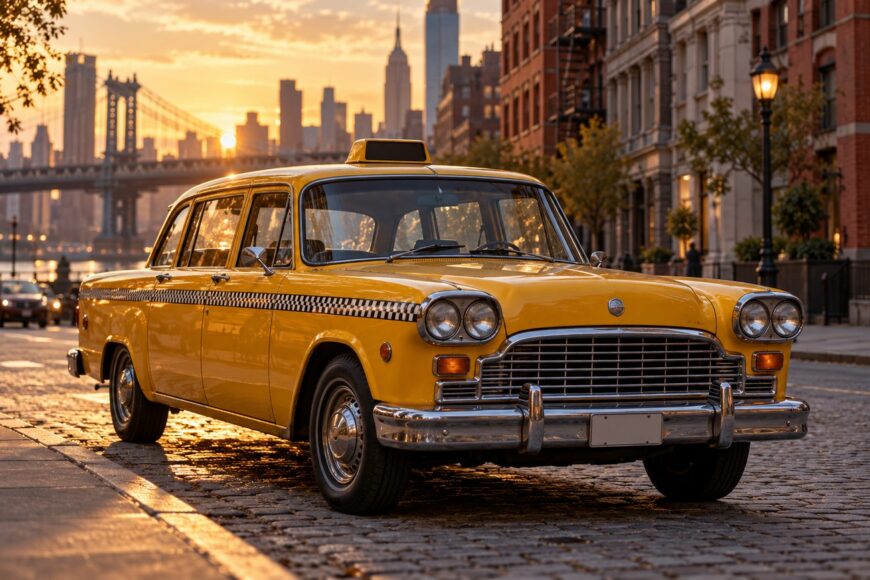
The Checker Marathon is one of the clearest visual symbols of old New York, with its square body, broad cabin, and unmistakable taxi presence. Ownership is less romantic. You are buying an old commercial vehicle shaped by hard service, winter salt, passenger abuse, and decades of repairs. Rust, scarce trim, mixed mechanical parts, and slow restoration work are part of the subject.
The useful buying question is not simply whether the car looks authentic. Its body, frame, mechanical condition, documentation, and access to parts must support the project. A freshly painted Marathon with tired structure can be a more difficult purchase than a rough-looking example with sound metal, complete records, and a workable supply of donor components.
- What the Checker Marathon Really Was
- Why Owning One Is Different from Owning a Classic Sedan
- How to Inspect a Checker Marathon Before Buying
- Parts, Repairs, and the Compatibility Trap
- The Real Cost of Making One Usable
- How to Use and Preserve a Former New York Taxi
- Frequently asked questions
- Who owns New York taxi cabs?
- How much is a Checker Marathon worth?
- Why did Checker Cab go out of business?
What the Checker Marathon Really Was
The Checker Marathon was based on the Checker A12/A11 line and was produced approximately from 1961 to 1982. It developed from a purpose-built taxi tradition rather than from an ordinary family sedan adapted for occasional commercial work. That distinction explains much of its appeal: the car was designed around passenger capacity, durability, and long hours in service.
New York made the Marathon culturally famous. It became one of the most recognizable and widely used New York taxi types, though it was not the city’s sole or permanently official taxi standard. The city’s fleet changed over time and included other models, so claims that every New York cab was a Checker flatten a more complicated history.
The square body and long wheelbase created a generous passenger compartment and useful load-carrying space. They also compromised aerodynamics and economy compared with contemporary passenger sedans. The reinforced construction and service-oriented chassis favored load capacity and structural toughness over quietness, sharp handling, or strong acceleration.
That compromise is central to the car’s identity. A Marathon feels like a working tool that became a cultural artifact, rather than a luxury sedan that happened to wear taxi colors. Its value today usually comes from that connection to New York street life, especially when the car retains convincing livery, period details, photographs, or other evidence of service.
Why Owning One Is Different from Owning a Classic Sedan
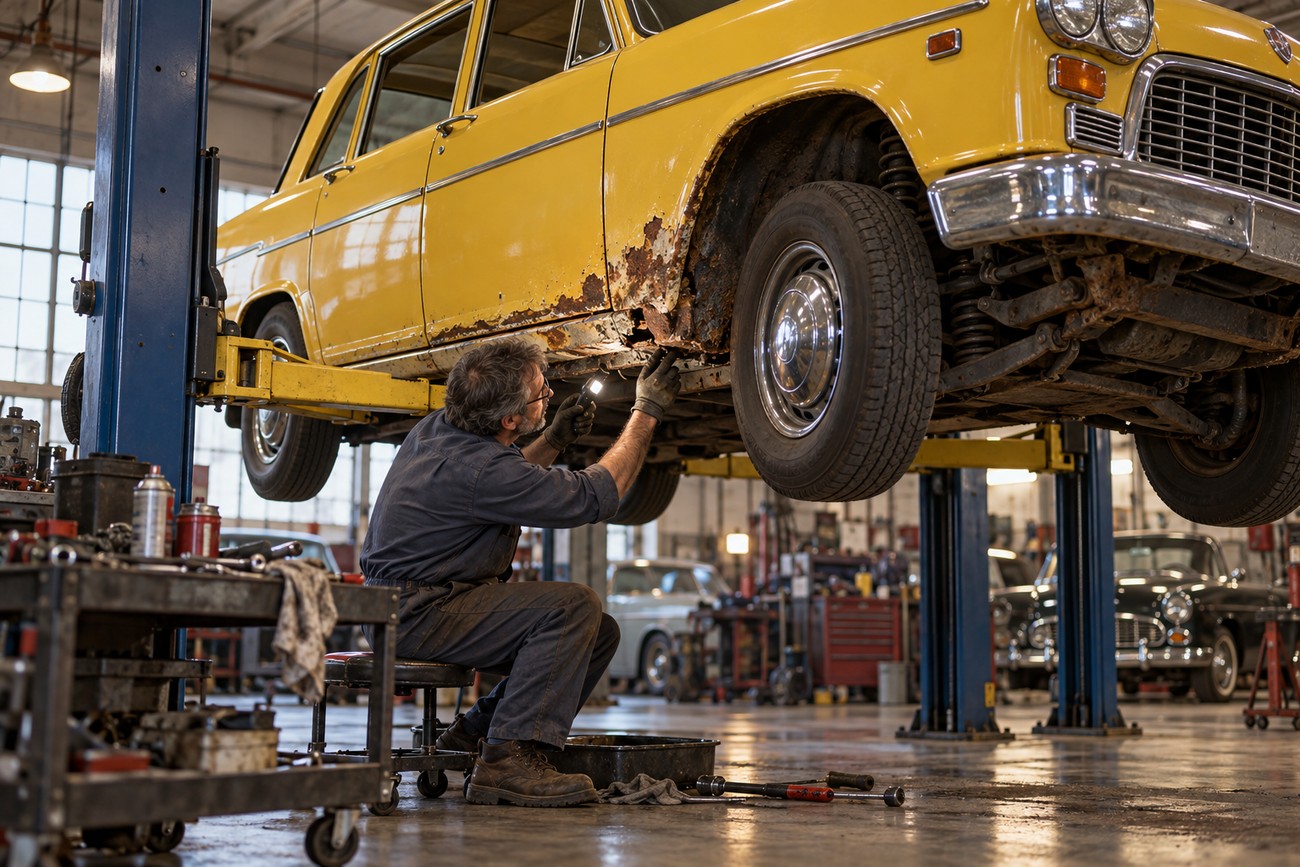
A former taxi has a different wear pattern from a privately owned American sedan. The Marathon was intended for heavy service, with reinforced structure, substantial load capacity, and durability prioritized over modern comfort and performance. That engineering can help a sound car survive, but it does not erase the effects of commercial use.
Many engines and major mechanical components came from mass-market GM, AMC, or Ford families rather than being uniquely Checker-designed. This can make some repairs more practical because the underlying components may be familiar to a specialist. It also means a surviving car may be a mixture of factory parts, later substitutions, and donor components from several eras.
The passenger cabin is spacious, yet access to some service points can be awkward. Noise, heat, weak insulation, and a softly controlled ride become obvious once the car leaves a short parade route and spends real time on the road. A Marathon can feel sturdy without feeling refined, and its age shows in braking response, steering precision, and temperature management.
High taxi mileage is reported in some collector descriptions, but it should not be treated as a universal, independently standardized rule. A commercial history may indicate a strong chassis, or it may indicate years of neglected transmission, suspension, fastening, and frame wear. The condition of the individual car matters more than the legend attached to the model.
How to Inspect a Checker Marathon Before Buying
Start underneath the car, preferably on a lift. Inspect the rocker panels, wheel arches, floor sections, frame rails, and structural mounting points for rust, patching, distortion, and fresh undercoating. Pay particular attention to where the body and frame meet, because attractive exterior paint can conceal repairs that have changed the strength or geometry of the structure.
Next, check the chassis as a system. Look for uneven ride height, worn bushings, loose fasteners, tired springs, damaged steering components, and brake problems. Inspect the tires for age and suitability rather than relying on tread depth. A car that spent years carrying passengers may have accumulated fatigue in places that a casual road test will not reveal.
Fresh paint is evidence of recent cosmetic work, not evidence of sound geometry. The underside, frame alignment, attachment points, and repair seams deserve attention before a claimed low mileage or polished engine bay carries any weight.
Mechanical inspection should include cooling performance, oil pressure, charging, wiring, transmission behavior, and evidence of overheating. Old electrical systems deserve particular care: improvised repairs, brittle insulation, and poorly protected additions can create failures that are difficult to trace. Confirm that previous work was engineered for the car rather than merely made to function for a short sale demonstration.
Glass, seals, chrome, dashboard plastics, upholstery, and interior trim often reveal the true scope of the project. Check for water entry, missing pieces, cracked mounting points, and signs that a replacement panel came from another year. Many surviving examples contain mixed-year or donor components, so originality must be verified rather than assumed.
Finally, treat the paperwork as part of the inspection. Commercial history and incomplete records can make true mileage, ownership history, and restoration extent difficult to verify. A seller’s description may be sincere and still incomplete; photographs, invoices, registration history, and close examination of repair layers provide a more reliable picture.
Parts, Repairs, and the Compatibility Trap
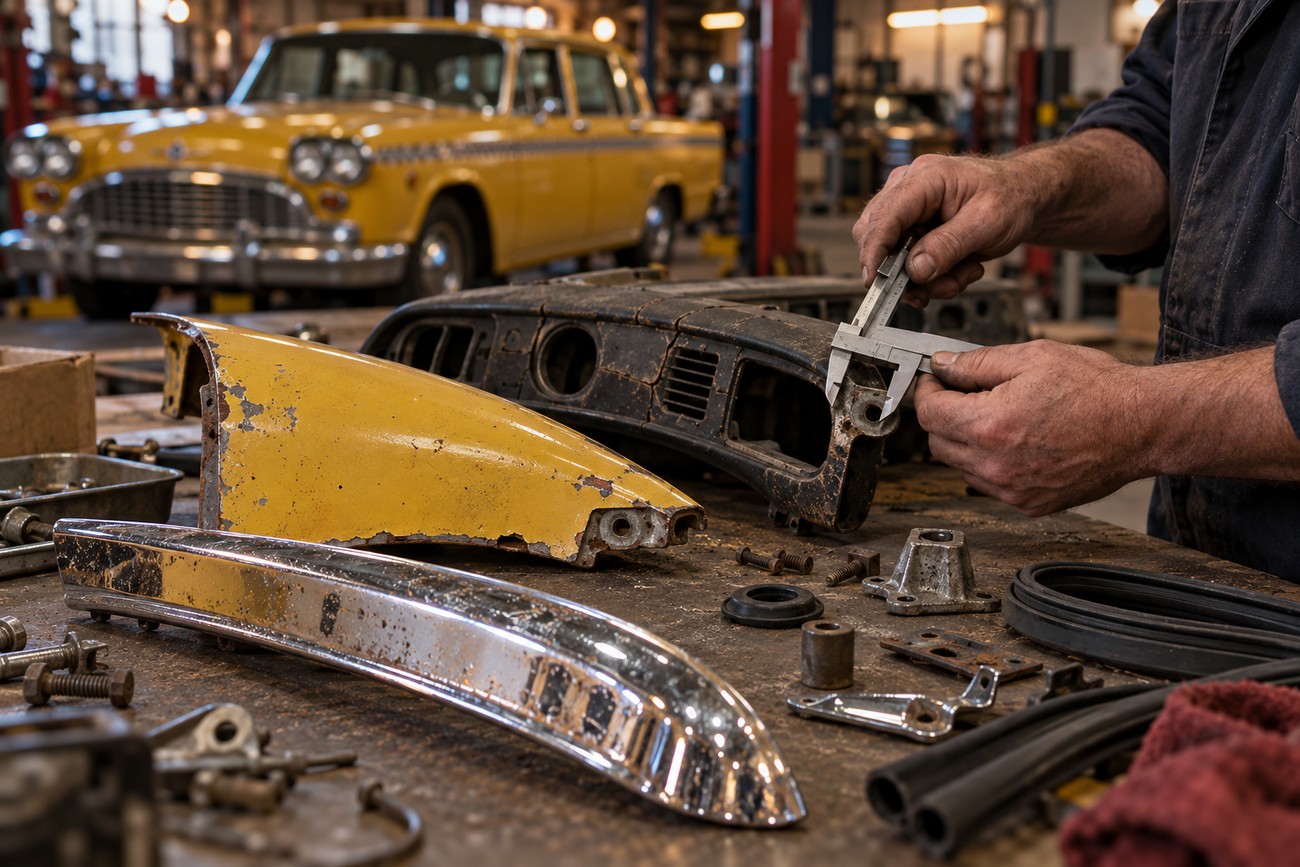
Mass-market GM, AMC, and Ford components can simplify some mechanical repairs, especially where the engine, transmission, suspension, or electrical equipment follows a recognizable family. That advantage is often overstated. It does not turn the Marathon into a car for which every replacement can be ordered by brand name and fitted without measurement.
Original body panels, glass, weather seals, chrome, upholstery pieces, and dashboard plastics are often difficult to source. Some parts appear similar across years while differing in dimensions, mounting points, or trim details. Before buying a substitute, confirm the year, modification, exact component, donor source, and required fabrication.
Repair work may therefore be slow. A specialist might need to locate a used part, rebuild an old one, adapt a compatible unit, or reproduce a missing piece. The mechanical simplicity of a component is less important than whether the part can be obtained, installed correctly, and supported later.
The practical ownership strategy is functional compatibility with documented decisions. A reliable brake component or properly rebuilt mechanical unit can be preferable to an unusable original part. Perfect authenticity remains valuable for a historically significant restoration, but it should be chosen knowingly rather than assumed to be the only sensible route.
The Real Cost of Making One Usable
The purchase price is only the first line in a Marathon project. Body corrosion, chrome, glass, rubber, interior details, old wiring, brakes, tires, and deferred mechanical maintenance can each create substantial work. Small missing items are especially dangerous because they may require disproportionate searching, shipping, restoration, or fabrication.
A car that looks restored may still need electrical correction, cooling-system work, suspension rebuilding, or brake attention. Cosmetic work often comes first because it photographs well, while mechanical work remains hidden. Inspecting the underside and driving systems is therefore more useful than judging the quality of the paint from several feet away.
Rare specifications can increase the difficulty rather than the value of ownership. A more common example with sound documentation, donor support, and repairable components may be the stronger project. The correct comparison is between the condition and support network of specific cars, not between their advertised rarity alone.
Decide early whether the goal is a functional driver, an event car, or a historically correct restoration. A usable Marathon may contain carefully chosen compatible parts, while a concours-oriented example requires deeper research into trim, livery, production details, and provenance. Both approaches can be valid, but their budgets and expectations are different.
How to Use and Preserve a Former New York Taxi
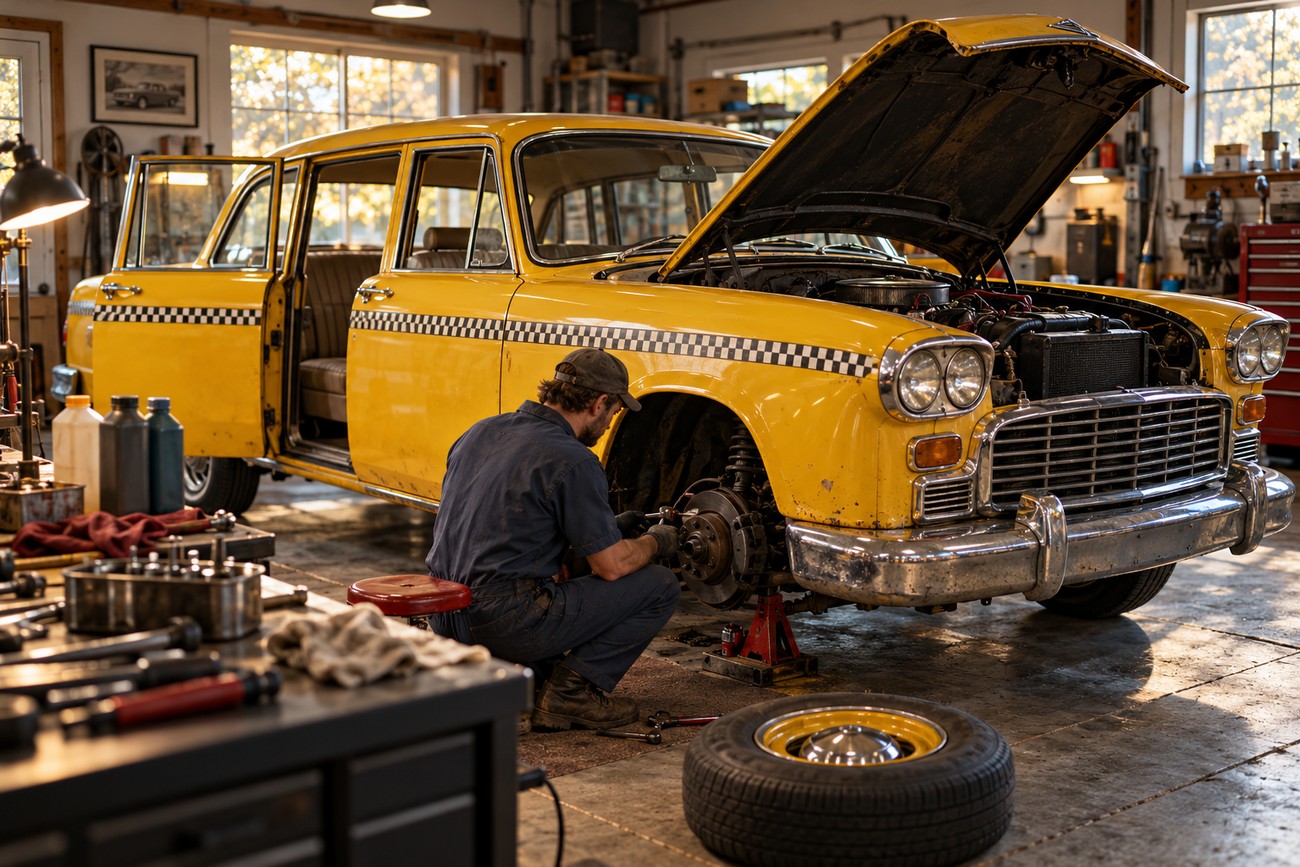
The Marathon is best approached today as a collectible, cultural artifact, image-bearing vehicle, or carefully maintained project. It can work for occasional driving, events, and display, but it is poorly suited to the expectations of a modern daily sedan. Its dated ride, noise, weak insulation, vague handling, and modest performance become tiring over longer use.
Before regular road use, establish a dependable baseline for brakes, tires, cooling, steering, and wiring. Temperature management matters in a heavy, older car that may spend time idling or moving slowly in traffic. Tire age and brake condition deserve attention even when the car travels only short distances, because limited use does not make old materials safe.
Preservation also means resisting unnecessary modernization that destroys the car’s evidence. A sensible upgrade can improve reliability, yet changes should be recorded and reversible where possible. Keep removed parts, photograph repairs, and retain documents so later owners can distinguish factory equipment, period taxi modifications, and modern substitutions.
Paint is only one part of the story. Service history, period photographs, original or convincing livery, fleet markings, and provenance can matter as much as polished metal. A Marathon with honest evidence of New York taxi service may carry greater cultural meaning than a cleaner car assembled without a credible connection to that past.
Frequently asked questions
The Marathon’s history intersects with modern taxi ownership, collector valuation, and the business history of Checker. These questions require context beyond the usual restoration checklist.
Who owns New York taxi cabs?
Ownership depends on the arrangement. A person or company may own the vehicle, while a separate owner controls the taxi medallion or operating authority. Drivers may also lease a cab or work through a fleet arrangement, so the person behind the wheel is not necessarily the owner of either the car or the operating rights.
This distinction matters because a modern taxi is governed by permits, licensing, and operating rules separate from the vehicle itself. The relationship is therefore different from buying a former Checker as a private collector car, where the owner generally controls the vehicle and its use without treating it as active commercial equipment.
How much is a Checker Marathon worth?
There is no universal value for a Checker Marathon. Price depends on body structure, running condition, documentation, originality, taxi provenance, specification, and restoration quality. A sound car with credible history can be worth more to a collector than a cosmetically attractive example with hidden rust and uncertain repairs.
Usability also affects the judgment. A correct but incomplete car may suit a specialist restoration, while a mixed-part example with reliable mechanical systems may be more useful for regular events. Compare inspection results and supporting records rather than treating a single advertised price as a model-wide valuation.
Why did Checker Cab go out of business?
Checker struggled with the economics of sustaining a specialized, low-volume vehicle maker. The taxi market changed, competition increased, and manufacturing scale made it difficult to spread development and production costs across a narrow product range. Larger manufacturers could often supply fleets with more standardized and economically produced vehicles.
The company’s taxi expertise gave the Marathon a distinctive identity, but specialization also limited flexibility. As fleet requirements, operating economics, and vehicle preferences changed, maintaining a heavy-duty platform for a shrinking market became increasingly difficult. Checker’s decline was therefore tied to market structure and manufacturing economics, not simply to the age or popularity of the car.







